Film review: “Love and Mercy” (2015)

0

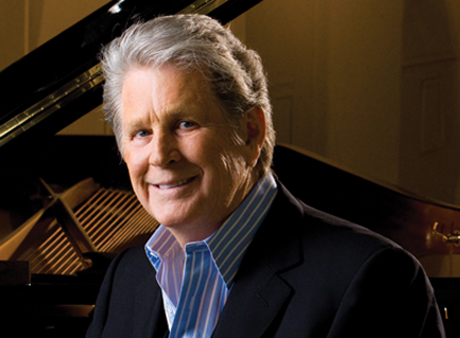
brianA fresh, unconventional exploration of musician Brian Wilson’s mind. Brian was the heart and soul of 60s pop group “The Beach Boys”, who like the Beatles started out their careers warbling catchy pop tunes that radio disc jockeys and record companies loved. Then, also as in McCartney-Lennon, Brian graduated to become an authentic musical genius in contemporary pop music, but not without a struggle along the way.
Brian was probably some variation of an adolescent schizophrenic. His symptoms came to fruit in about the right time frame. He metaphorically and literally “heard music” in his head, then set about transferring what he identified through others playing traditional musical instruments, or anything that could create a tone.

This is a gift that only a relative few have been given, and its translation can be difficult. In the 80s, Bob Segar reputedly threatened to fire his entire (Silver bullet) Band because the music they were playing wasn’t what he heard in his head. Brian’s band mates had little interest in any other than continuing their surfing song fluff that brought in a good living.

The film itself is as schizophrenic as its object, detailing Brian’s life as a young man played by Paul Dano and his older version played by John Cusack. In particular, Paul Dano totally nails the mental goings-on inside Brian Wilson’s head and brings them to life, instructing studio musicians, layering sound over sound while his vocalist brothers apply their portions into isolated microphones. John Cusack brings to life the burned out psychosis, serviceably controlled as with John Nash in “A Beautiful Mind (2001).

The film doesn’t solve the enigma of Brian Wilson, but it succeeds painting a wonderful portrait of his creative mind. The real Brian Wilson today at age 72 sings the song “Love and Mercy” in concert footage during the end credits, so you get a full feel for him.

The film is a bit disjointed and hard to follow, but the scenes of Paul Dano creating music are fascinating and worth the price of admission.

I give it four of five Theremins (on Good Vibrations).

Listen to some of the marvelous harmonies that came from the creative mind of Brian Wilson as they happened:

https://www.youtube.com/watch?v=d8rd53WuojE

Film Review: Ex Machina (2015)

1

machina_aA very interesting film, exploring some questions few have considered concerning artificial intelligence.

A quirky, eccentric computer ace with a ton of money from a Google-like background builds a super computer research lab out in the middle of the wilderness. He invited another computer whiz he’s thoroughly vetted into this facility to interact with an android he has constructed. The undertaking is to cozy up to the android to determine if her cerebral functions are real or simulated. Shades of Blade Runner (1982).

The android, Ava, is a mixture of human and machine. She whirrs when she changes position, but moves fluidly. The investigator’s task is to expertly inquire into the nuts and bolts of Ava through a series of interviews. To discern whether she can truly feel and think autonomously or whether all her emotions and human interactions are fluent simulations. A high tech speed date.

Through the course of the interactions, some spooky questions emerge. The investigator comes to doubt his own humanity when faced with questions as to the very nature of humanity. Is it possible for humans to discern synthetic humanity? Is the inevitability of “true” artificial intelligence a self-fulfilling prophecy, and if so, can it eventually evolve to self-awareness? Must human emotion and codes of morality necessarily become integrated with self-awareness? Could humans become like the bones of dinosaurs in time.

The film’s ending hints that a “Replicant” (after Blade Runner) can be programmed to have virtually any functional or even emotional qualities. They are quite capable of extremely intricate and directed human function with total honesty, but not necessarily a morality oversight. Some of these interactions are performed with exquisitely functional verisimilitude, begging lots of questions as yet unanswered.

Classic Blade Runner (1982) hinted at a lot of these issues, especially the increasingly difficult task of discerning real from Memorex. There are continuing arguments to this day over whether Deckard was, himself, a Replicant and there was no way to prove it one way or the other. When Deckard and Rachel escape along the Pacific Coast Highway, it’s unclear how much time either of them have but it is clear they intend to make the most of it, as anyone else would.

A classic scene of a Replicant’s death:

Ex Machina glaringly brings these questions into very clear focus. This film stands and refuses to fall with Swedish actress Alicia Vikander as Ava. The screen shines when she appears and dims when she’s not. She seduces the viewer instantly.

This is an excellent film. Highly recommended by me. I’m giving it a 5 of 5 mechanized silhouettes.

Review: “House of Cards” (Netflix)

0

UnknownNetwork television is famous for programming constructs appealing to the dumb and dumber. Irritating canned laugh tracks. Insipid plots guaranteed to offend no potential sponsors. Dumbed down dialog. Getting marginally better with Blacklist (NBC) and Blue Bloods (CBS) but the most talented writers and directors flock to more liberal cable channels in droves, closely followed by discerning viewers.

The “cable” experiment succeeded beyond the wildest expectations with amazing classics such as “Deadwood”, “Justified”, “Mad Men”, “Breaking Bad”, “Flashpoint”, “The Closer”, “The Wire”, The Shield”, “Hatfields & McCoys” and others. Well written, well performed, frequently with actors no one ever saw before.

Having tasted blood, Cable TV is maneuvering to lead a discriminating audience toward really good performance art. Recently: “A Killing”, “The Honorable Woman”, “Sons of Anarchy” and others. They are doing this by giving virtually total artistic freedom (and responsibility) to individual writers/directors who have no interest in beholding to sponsors or network suits. Nowhere was this more apparent than in “Deadwood”, arguably one of the most incredible series in the history of small screen film, lasting only there seasons.

Some of the names you’ll hear frequently are Vince Gilligan (Breaking Bad” and Better Call Saul), David Milch (Deadwood), Kurt Sutter (Sons of Anarchy), Graham Yost (Justified), Shawn Ryan (The Shield), David Simon (The Wire) and many more. So if you like good performance art on the small screen, sniff around and see what’s out there on cable.

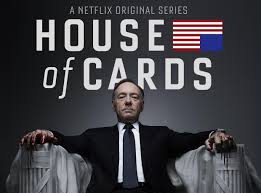
Then as spin off from these creative series, streaming resource “Netflix”, teetering on the brink of bankruptcy at the time, took a staggering winner-takes-all risk by creating 13 episodes of a new series: “House of Cards” starring bankable actors Kevin Spacy and Robin Wright. “House of Cards” was an astonishing risk. Netflix literally pushed the few chips they had to the center of the table and bet the farm on a hastily accumulated political drama with no precedent. A new concept of viewing, the entire season out in one big chunk for series gluttons. They succeeded beyond their expectations.

In Seasons 1and II, Francis Underwood (Kevin Spacey) schemes his way through convoluted shenanigans as the (very) Southern Democratic Senate majority whip out to get revenge on a new administration that promised him a cabinet position, then reneges. His reptilian wife Claire (Robin Wright) aids and abets from a uniquely predatory, lupine female perspective. House of Cards portrays the protocol of political power differently than “The West Wing”. The Byzantine plots are a much more complex chess game in which progress is planned five moves ahead and the baroque parliamentary gerrymandering is fierce to the point of brutality.

Underwood and his wife share a spooky relationship in which much of their communication is unspoken, but between the two of them, they relentlessly decide the fates of others with Machiavellian cunning. Their interaction with victims is meticulously crafted to gently facilitate their self-destruction. Those investigative journalists ferreting out the couple’s guilt fall into artful traps that brutally assure their own destruction. The result is a masterpiece of intrigue with a minimum of suspense. The viewer always knows where the path leads, and the series takes its time getting there, wringing out the intricate details along the way.

Kevin Spacey pauses along the way to step out of character and wink at the camera, offering up snarky quips: “I love that woman. I love her more than sharks love blood”. However, in Season III, the dynamics of this relationship fall into a convoluted maelstrom leading to one of the most stunning cliffhangers in TV film.

“House of Cards is an unexpectedly brilliant masterpiece that probably single handedly pulled Netflix out of receivership. Spacey’s delivery of menacing charisma is the freshest character on TV. Wife Clare’s emotional link marinated with ruthlessness augment the series’ magnetism. The other characters are perfectly placed.

I give it 5 of 5 Frank Underwood sneers (yes….FIVE). Highly recommended on Netflix. As good as it gets.

Film Review: “American Sniper” plus an extra

0

2015-01-23-20141003_AmericanSniper1I saw “American Sniper” earlier and I didn’t formally review it for a lot of reasons. I wanted to think about it for a while. Now it’s received a bit of criticism in the media so I guess it’s about time for me to weigh in with some perspective FWIW.

I have a little more practical knowledge about sniping as I ran into some of them out in the field in Vietnam circa ’68 – ’69. They were all specially trained Marines then. For gun nuts, they used Remington Model 70 rifles with 26” barrels and other modifications that weren’t advertised. The ones I saw used 220 Swift rounds as they had an extremely high muzzle velocity (4100 fps if memory serves), a light bullet and a very flat trajectory. Others used traditional 30:06 rounds. I’m stretching my memory now but I believe they could put a bullet behind the ear of a standing person easily at 500 yards. Those distances have extended through the years.

Sniping in World War II was a radically different proposition than both Vietnam and Iraq. Snipers simply put themselves in a position to take out “the enemy” whenever and wherever they pleased, prompting the ever-controversial Michael Moore to opine (in relation to WW II snipers): “My uncle killed by sniper in WW2. We were taught snipers were cowards. Will shoot u in the back”. This statement was completely true in that conflict, but Michael should have chosen his words more carefully as his many political enemies then politicized his statements J

Sniping in Vietnam, at least how I understood it having come into contact with them, was to set up shop extremely camoflaged in a remote area with a spotter and high-powered telescopes to wait for a previously determined human target to appear. That target was usually someone in a position of authority in a village that was suspected (with ample evidence) of being a Viet Cong collaborator. They would wait for long periods of time for the “right” shot. The target would step outside his hooch and go down never having heard the shot that killed him. There were other targets but these were the ones I remember hearing the accounts of.

Then comes a totally different kind of war, Iraq, where the sniper’s duty is to take out those in an otherwise protected position intent on mayhem toward American troops advancing or searching unsecured areas. This was the duty of Navy Seal sniper Chris Kyle, about whom the film was created.

The film depicts days in his life, particularly on the job protecting other troops from hidden bomb-throwers. Brad Cooper does an excellent job in this drama, but alas, there’s a problem with it. The same problem that affected “Selma” recently. What’s portrayed on the silver screen is not necessarily the “whole truth”. In fact, very little of “American Sniper” is completely true. It is NOT a documentary. If you want to see a documentary, see Ken Burns.

“American Sniper” is an almost wholly fictional docu-drauma about a guy that really did his best, and a good job as a soldier. The “real” story was highly embellished for the film.

Chris had one paragraph in his book about the “other sniper” Mustafa and had no contact with him. This character was actually taken out by another American sniper.

Chris was not the “deadliest” sniper in war history. 160 kills is not even close to a record. An Italian sniper in WW 2 took out over 400. A Finnish sniper took out over 500 Russians.

Chris is one of five soldiers to ever confirm a distance hit over a mile from a rifle. His was said to be confirmed at 2100 yards. One mile is 1760 yards. Carlos Hathcock held the record from 1967 to 2002 at 2,500 yd.   The current record is held by Briton Corporal Craig Harrison, of the UK’s Household Cavalry, at 2,707 yd in 2009 in Afghanistan

Chris did not shoot a boy with a grenade.

Chris never used a satellite phone to call his wife during real action.

Chris did suffer three gunshot wounds and was injured in a helicopter crash. He had numerous surgeries. He was awarded two Silver Stars and five Bronze Stars with Valor, so he was an authentic “hero” in every respect.

I personally know Marines that did all this and no one knows their name.

So I’m not happy with the film because virtually none of it is the real truth of the man. It’s the Brad Cooper show and it rates 4 of 5 peeps through a high power scope for good production. 1 of 5 for accuracy, but remember, one rarely if ever gets more than a contrived drama in “real” stories.

———————————-

MV5BMTQ0MDU4NTY0MV5BMl5BanBnXkFtZTgwMjAyNzU0MjE@._V1_SY317_CR5,0,214,317_AL_Quickie Freebie extra: “The Fall” (Netflix 2013-2014)

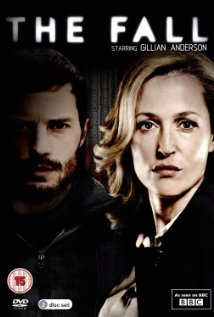
Sleeper of the year. A character study of the relationship between an extremely effective serial killer (Jamie Dornan) and the female detective (Gillian Anderson) pursuing him. Went by in 2013 virtually unnoticed until the 5th and last episode passed, then a second season came up my popular demand from addicted viewers. This mini-series filmed in Northern Ireland with mostly Irish actors is EXCEPTIONALLY good, very close to the ambiance of “The Killing” but not as dark.

Created, written and directed by ONE writer much like Sons of Anarchy, so it’s a singular vision, without dilution. Season II ended with MANY loose ends and so a season III is absolutely mandated. However, it’s unclear whether Jamie Dornan will be available if his star takes off in “50 shades of grey” opening Valentines Day. A great many enthusiasts are hoping for Season III.

It gets 5 of 5 icy glares. A MUST SEE on Netflix.

Film review: “Selma” (2014)

0

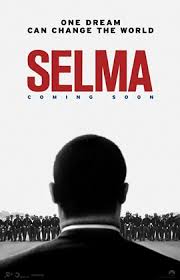
UnknownThe Film “Selma” depicts the circumstances of the Selma-to-Montgomery (Alabama) voting rights marches beginning March 5, 1965 led by several directorates of the Southern Christian Leadership Conference (SCLC) Southern Nonviolent Coordinating Committee (SNCC) including Dr. Martin Luther King.

Please indulge me a little historical observation as I lived in the segregated South and I was very close to all this, even to have stumbled (out of curiosity, I assure you) into a real Klan rally complete with hooded Klansmen and three big burning crosses. But that’s another saga.

This history is extremely complex and I can only summarize the high points here, some additional factoids before you see the film.

“Selma” is a partially fictionalized portrayal of the circumstances in Selma, Alabama following the church bombing that killed four young girls on Sept 15, 1963, marking a major turning point in the civil rights movement. This event was probably the major force in galvanizing the waves of protesters, “freedom riders” and civil rights pantheon of high-visibility personalities that focused on Selma thereafter.

On July 2, 1964, Lyndon Johnson signed the Civil Rights Law of 1964 but the actual enforcement of the law was delayed. Shortly thereafter, activist John Lewis led a number of black citizens to the Selma Courthouse to register to vote and they were turned away by then Sheriff Jim Clark. Voter registration continued to be denied until the media attention of Selma-Montgomery marches of 1965 forced the issue into the emerging public TV media.

There were actually three marches over several months, 54 miles long down a two lane highway, mostly campaigning for voting rights. The first march on March 7 was later termed “Bloody Sunday” after police and white citizens affiliated with the Ku Klux Klan attacked marchers. There were several deaths and many severe beatings. Parenthetically, there was another “Sunday Bloody Sunday” memorialized by the band U2 in 1983 following a confrontation with police in Derry, Ireland, not related.

The second march occurred on March 9 led by Dr. King that was turned around by court order before it actually began. King elected to follow the court order as a strategy to get more out the judge next time around. This march became known as “Turnaround Tuesday”. Marchers were later beaten by Klan affiliates. James Reeb, a white Unitarian Universalist minister from Boston was beaten so severely he was taken to the local public hospital in Selma who refused to treat him. He was then taken to Birmingham’s University Hospital two hours away where he later died on Thursday, March 11.

A week after Reeb’s death, on Wednesday March 17, a Federal Judge ruled that the State of Alabama (Governor George Wallace) could not abridge the protestors right to assemble. The media spectacle of “Bloody Sunday”, televised live on CBS prompted Lyndon Johnson to begin decrying the situation on public TV. On March 15, Johnson went on national TV to declare enforcement of the 1964 Civil Right Law, especially as it pertained to voting rights. Dr. King was quoted (while in jail): “It may be true that the law cannot make a man love me, but it can keep him from lynching me”.

The third march took place on March 21, along Alabama Route 80 protected by the Alabama National Guard called out by the President Lyndon Johnson. The third march proceeded without harassment. The route is memorialized as the Selma To Montgomery Voting Rights Trail, and is a U.S. National Historic Trail now.

The film itself is rather melodramatic and highlights the violence that occurred in pretty graphic detail. It also hits briefly on the human failings of Martin Luther King and Lyndon Johnson. But the big lapse is that it portrays then President Lyndon B. Johnson as using the civil rights movement more for his political currency than beneficence. This is historically inaccurate, and if anything, applies more to John and Robert Kennedy.

I find it very interesting that most of those in the theater were too young to have any conception of the events of 1965 and never heard of Selma. I once asked a gaggle of Fellows and Residents who Timothy Leary was; none had a clue. None of these theater audiences can comprehend any of it, and like Vietnam, it may eventually be forgotten, which means that the popular record of it may be films like “Selma” and “12 years a slave” which are NOT accurate documentaries, but stylized “docudramas”. Not the same thing.

Currently, there is a lot of unrest and consternation about the occasional black male shot by white guys (sometimes cops) in altercations, which seem to resolve in favor of cultural bias. There are political and legal resolutions of these problems in progress, and these will hopefully be effective although lengthy.

In the early 60s, the Ku Klux Klan, aided by the police instituted a well organized and systematized terror reign in which black (and white) advocates of basic civil right were routinely brutalized and killed using dogs, electric cattle prods, high pressure water hoses, tear gas, guns and clubs. Blacks were routinely lynched for appearing to admire white women. There was NO recourse. If any of the accused landed in a courtroom, they were routinely acquitted or given ridiculous sentences. Any discrimination occurring today is a thin shadow of the Klan in its heyday that few remember now.

“Selma” is a very good, stylized drama but remember that it isn’t an accurate documentary. It’s for entertainment value and it does that well. A word about David Oyelowo’s performance as Dr. King. He studied King’s diction and mannerisms for months and nailed it. I’ve seen and heard King and Oyelowo is as good a replica as anyone has ever seen. He hits every mannerism, especially when giving a speech. It’s an Academy Award meriting performance.

If you really want to understand civil rights in the 60s, the most comprehensive and accurate collection is from Pulitzer winning author Taylor Branch. The ultimate authority and his books are very readable. Highly recommended by me..

http://taylorbranch.com

I give “Selma” 4 of 5 attack dogs. Recommended by me for entertainment value.


Film review: “Wild” (2014)

0

UnknownYoung standard issue Blonde woman sinks to the bottom of multi-modal self degradation then resolves to “be the woman my mother wanted me to be” by walking 1100 miles of dangerous, treacherous terrain on foot with a big, heavy back pack?

Huh?

Something not quite right with this picture. The conventional wisdom seems to be that facing self imposed, prolonged arduous conditions provides more emotional catharsis than sore feet. The myth of (metaphorically speaking) the “open road” as a life-improving event.

Unclear if there is any real basis for this myth. History shows that the open road leads mainly to isolation and insanity as befell most of the 50’s Beat Generation. The caption on the “Easy Rider” poster in my den reads: “A Man went looking for America……and couldn’t find it”.

The higher reality is never revealed, that the media perception of the “open road “has effectively been pasteurized, homogenized, standardized and the loose ends connected.

This analysis from a guy (me) who ascended to the top of the world in Nepal in 1983 and rode a motorcycle alone 1000 miles through rain, fog and mountain passes along the Adriatic Coast in 2012. There was a huge difference between Cheryl Strayed and me though. When I reached to top of the world I was cold, exhausted, sleep deprived and Dyspneic. I didn’t do it to cleanse my soul. I just wanted to see it, and when I saw it, I had no interest in seeing it again. Nothing changed in my life other than I stored memorable photographs of the experience in my brain and my desktop Mac.

I tend to believe that journey’s like that of Cheryl Strayed for the purposes of emotional cleansing are a delusion. A controlled study of such journeys compared to a couple of months of “therapy” would yield few differences and I don’t much believe in therapy either. A jaded part of me thinks that this journey may have some roots in Cheryl’s potential to get rich off books and screenplays.

I remain not too impressed with “Wild” other than good photography.

I give it 2 of 5 seventy pound backpacks. Too heavy to be functional.

Film Review: “The Imitation Game” (2014)

0

the_imitation_game_a_pIt’s a little unusual to see a character so totally commandeer a film as Benedict Cumberbatch does in “The Imitation Game” (2014). He’s such a commanding presence the other characters seem to circulate around him, all simply adding perspective.

Decidedly odd Alan Turing was directly involved in solving the WW II problem of “Enigma”, the German cryptographic machine said to be impenetrable. 159 million million possible entries to decode a message. Turing opined that humans could never break it. It would take 12 million years for a human working 24/7 entering possible code interpretations. Turing saw that only a machine that could sort out probability much faster than the human brain was the only answer, and he was right.

Decidedly odd Alan Turing was directly involved in solving the WW II problem of “Enigma”, the German cryptographic machine said to be impenetrable. 159 million million possible entries to decode a message. Turing opined that humans could never break it. It would take 12 million years for a human working 24/7 entering possible code interpretations. Turing saw that only a machine that could sort out probability much faster than the human brain was the only answer, and he was right.

Of course, the film is not exactly true to the subject as there were many more events that combined to eventually crack the code, and some of the relationships within the Bletchley group are incorrect, poetic license for the purpose of highlighting Turing. Cumberbatch makes a very powerful stab at interpreting the workings genius but in the end the viewer only sees it as eccentricity.

However, it can rightfully be argued that movies are made for the purpose of highlighting performance talent, not scientific accuracy, so some of this can be forgiven to see the lead actor Benedict Cumberbatch do a masterful job of holding that audience’s attention. Even the young actor, Alex Lawther, that plays Turing in flashbacks does a really masterful job. Two other actors that stand out are Charles Dance who plays Turing’s boss and Mark Strong who plays MI 6 boss Stewart Menzies.

Much like “Birdman” (2014) this is a film that is simply built around a single actor who is turned loose to do pretty much what he wants. If you’re willing to forgive much of the rest of the film’s inadequacies, Cumberbatch does it extremely well. The production and cinematography are all excellent. Details of Turing’s personal life are preachy and extraneous.

The film itself suffers from some muddling and endless, tedious waiting as to whether the infernal machine will actually work, and when it does, how to deal with the aftermath.

Best quote: “Sometimes it is the people no one imagines anything of who do the things that no one can imagine”.

I give it a solid 3 of 5 Eggheads. Good isolated performance surrounded by props.

Film Review: Theory of Everything (2014)

0

eddie-redmayneA fresh, tender and loving story between two otherwise normal people laboring with extremely difficult circumstances. Eddie Redmayne labors on two fronts; trying to love a woman as a normal man while managing descent into a debilitating disease. He succeeds on both fronts simultaneously, masterfully effecting musculoskeletal deformity much as Daniel Day-Lewis did in My Left Foot (1989). The film handles the delicate issue of adult sexual needs in the face of physical disability elegantly, as this issue eventually broke up this couple’s marital bond but not their relationship.

That the real Stephen Hawking managed to carry off anything resembling a “normal” life to his current age of 73 after having been given 2 years to live in graduate school is a bit of a story in itself. Hawking has said that in a perverse way, his affliction (ALS) was lucky in that his cognitive brain was not affected and that’s basically all he uses. He’s quite possibly the most intuitive cosmologist (not cosmetologist) that ever lived; his signature resides on the rolls of the Cambridge Lucasian Professorship of Mathematics, the first signature on which is that of Sir Isaac Newton.

Hawking is more or less famous for his search for the Grand Unified Theory of the physical universe, a single equation that convincingly explains the physical properties of existence. Combining mutually incompatible features of Einstein’s theory of General Relativity and Quantum Physics. Were this to happen, man would understand the mind of God. An enormity of incomprehensible proportions.

(Taken from Wiki): “Freeman Dyson has stated ……………that pure mathematics is inexhaustible. No matter how many problems we solve, there will always be other problems that cannot be solved within the existing rules. No matter how many problems we solve, there will always be other problems that cannot be solved. Stephen Hawking was originally a believer in the Grand Unified Theory but (has recently) concluded that one was not obtainable”.

The film explores the human relations aspects of Hawking and his first wife Jane and does so masterfully. Eddie Redmayne is already buzzed for an Oscar. Felicity Jones as Jane puts in a guaranteed Academy Award nomination performance as well.

Highly recommended by me.

I give it four and a half electronic voice makers

Film Review: “Birdman” (2014)

0

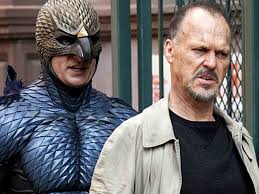
An actor (Michael Keaton) Unknownfamous for playing comic book caricature super hero’s from the past has fallen on hard times and decides to use his past connections to put forth a serious play on Broadway, proving that he’s not just a washed up hack. He opts to write, direct, and star in a show at the St. James in New York City based on the Raymond Carver story “What We Talk About When We Talk About Love”.

Keaton is thrown into a spiral of self-doubt and angst – second-guessing his own talent, personal relationships, career choices, and wondering whether audiences ever be willing to validate him again? The Birdman is a shadowy figure from Thomson’s past that haunts him as a voice to his self-loathing. A shoulder devil, a gripping source of temptation and self-destruction when the actor is vulnerable.

This film is technically listed as a “black comedy” but there is no comedic value I can see to it. It’s an exceptionally murky exploration of many things most people would prefer not to know about much less deal with. An artsy analysis of imperfect people struggling to navigate a cruel and feckless world, and there it pretty much stays for two hours.

Mexican filmmaker Alejandro González Iñárritu is noted for wringing unexpected performances out of his actors. He figured out Keaton has a lot of talent and so devised a self-contained entrapment for him to bring it out. Iñárritu created a time line within a single building, put Keaton at the beginning of it and allowed him to proceed along that timeline, interacting with other actors only as they dropped in to stimulate his creative process. What’s yielded is a series of Soliloquys as Keaton rolls along the rails. Each Soliloquy prompted by an interaction with a different actor.

There is no discernable plot of any substance just one heart-wrenching dilemma after another. The filmed is really billed as Michael Keaton on his way to an Oscar nod for surprising critics with an unexpected flash of brilliance. Maybe, but I doubt it. Audiences have been prompted to expect brilliance, and there are flashes of it, but mostly it’s depressing, gloomy and somber. If there are any Oscar hints, it will definitely be Ed Norton for Supporting Actor.

As far as Oscar nods for Best Actor go, from what I’m hearing and from what I’ve seen so far, Eddie Redmayne has a serious lock on it for Stephen Hawking in “The Theory of Everything”.

I thought Birdman was interesting but tedious, wearisome and not particularly entertaining after the first 30 minutes. Unless you like observing agonizing self doubt, you could easily wait till it comes to HBO and see it free.

I give it 3 of 5 off-camera wing flaps.


Something interesting going on in American Music. (2014)

0

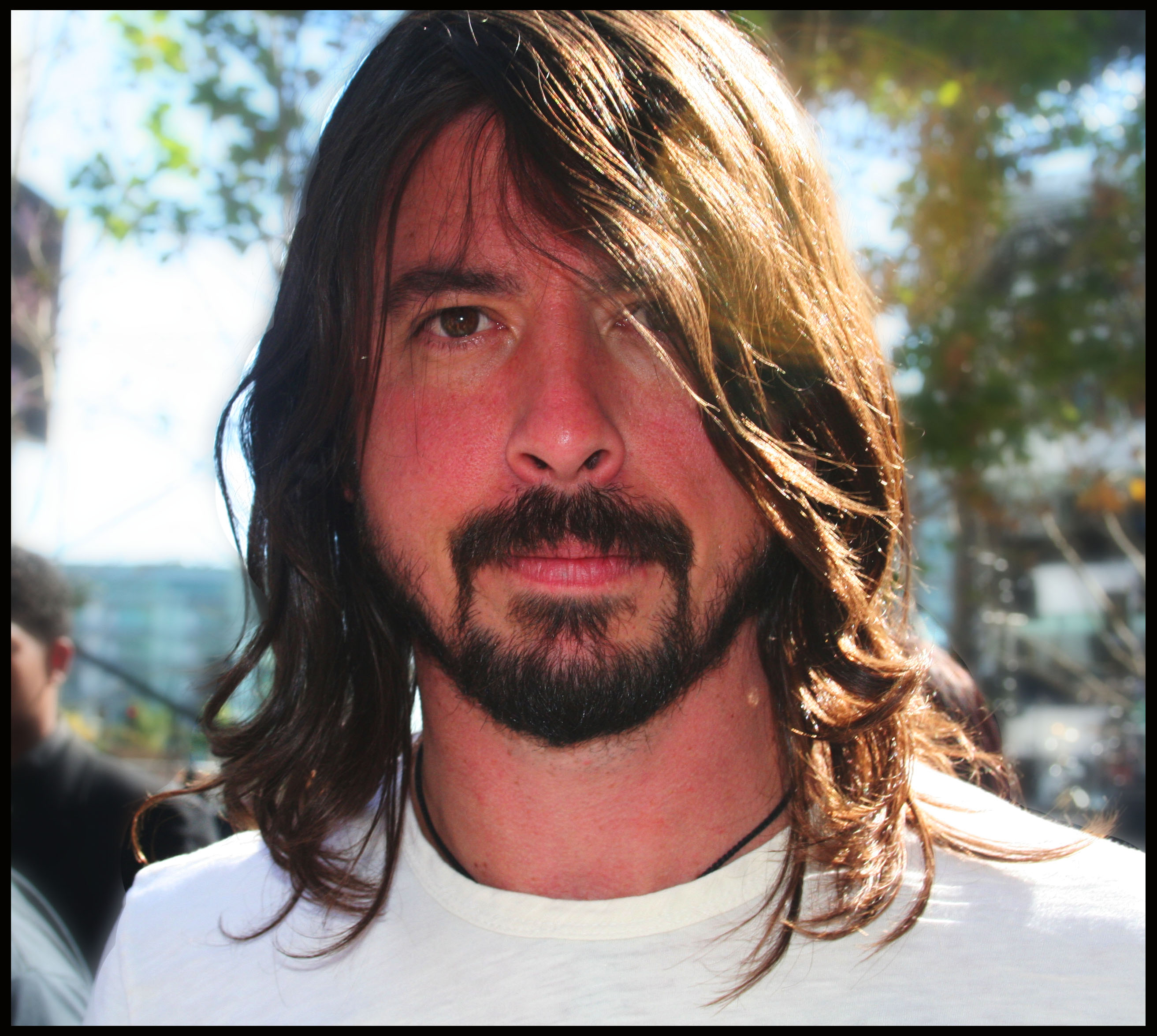
dave-grohlSomething very important to American music is going on right now. A couple of weeks ago there was a preview as David Letterman had The Foo Fighters playing at the show’s end every night for a week with remarkable guest artists. Ann and Nancy Wilson of “Heart”, Zak Brown rendering a thundering rendition of a Black Sabbath song, Rick Nielson of “Cheap Trick”. Each of these productions is simply incredible and predictive of what’s coming next.

https://www.youtube.com/watch?v=3qgdVZq1Pfk

https://www.youtube.com/watch?v=Fv5ekzTubwU

Dave Grohl and Foo Fighters are spending a week in each of eight cities, each with a specific musical heritage to absorb the unique vibes, then write a song at the end, the lyrics of which are gleaned using only quips and memorabilia learned by interviewing local musicians during the week. One side of the ledger is things learned, the other side lyrics cut and pasted from the experience. Grohl paired the music and documentary to give substance and depth to the final song, making for a tight emotional connection.

First city was Chicago where the Grohl explored the evolution of Chicago Blues and the legendary Buddy Guy, then the evolution of the punk rock scene that influenced many of the Chicago musicians. For the final song, they’re joined by Cheap Trick’s Rick Nielson to record the first song for “Sonic Highways”.

The second city is Washington, DC, home of most of the American punk scene in the early 70s. Punk band Bad Brains and Ian MacKaye of Teen Idles, Minor Threat and Fugazi, who all recorded at Inner Ear Studios in DC over the decades. Virginia-raised Grohl says that vibe “produced the entire soundtrack of my youth,” and he dwells on the punk scene of each city.

The “Punk” scene permeates all of American music, including early Nashville and Austin, Tx music. The American punk scene was remarkably different from the coincident European punks, a reaction to unemployment. The American punks embraced the concept of absolutely no limits in musical expression. Anyone anywhere could stand on stage and try their luck. By the sheer volume of those playing, a lot of creative music congealed and emerged.

Third city was Nashville and interviews with still productive country greats, Dolly Parton, Tony Joe White, Willie Nelson, and Emmylou Harris. Fourth city was Austin Texas, home of Austin City Limits, as exploration of the ingredients that brought legendary Stevie Ray Vaughn to greatness. Gary Clark Jr. Joins the Foos for the final songs “What Did I Do? And God As My Witness”. This is some of the best music I have ever heard. The final product, four cities yet to go, will be a very interesting interpretation of how environments shape music. This has never been done before.

Dave Grohl believes that all music can eventually be traced to a central origin that nurtures and modulates it and he’s working very hard to explore that path. The best way to explain the concept is to postulate the repository of music as an unstable star in the universe of existence, undulating and straining but not ready to explode just yet, waiting for the right stimulus. Back in the 40s, big band music was simple and staid, feeding upon itself. In the 50s, a fundamental instability began with skiffle in England that created the Beatles In the USA, be-bop and rhythm & blues, Gene Vincent and the Blue Caps, Little Richard, Jerry Lee Lewis and of course, Elvis. All of this boiled to the surface to bring the star to an explosive point in the early 60s, setting the stage for the cataclysm that occurred in the second half of the 60s when it all literally and metaphorically went electric. A musical revolution never before dreamed of and will probably never be seen again.

The star erupted sending chunks of musical expression out into the abyss. Lets make a quick & dirty list of just a few the blinding chunks flying forth to change the fundamental nature of music. Hendrix, The Animals, the Zombies, The Kinks, Cream, the Doors, Pink Floyd, The Velvet Underground, The Rolling Stones, Frank Zappa, Otis Redding, Creedence Clearwater, The Byrds, Simon & Garfunkle, Janis Joplin, James Brown, Miles Davis, The Who, Sly & the Family Stone, Paul Butterfield Blues Band, Buffalo Springfield, Procol Harum, Paul Revere & Raiders, Hollies, Dave Clark Five, Neil Young, Steve Miller Band, The Guess Who, Roy Orbison, Them, Beach Boys, Steppenwolf, the Temptations, Blood, Sweat & Tears, Jackie Wilson, Sam Cooke, Marvin Kaye, Jefferson Airplane all at once.

Each of these chunks shone brightly and independently, eclipsing other nuggets in similar situations. But in the end, like real stars, gravity rules and all the chunks were slowly drawn back into the mass of the star by gravitational pull, stabilizing it into a huge mass of encyclopedic, heterogeneous, eclectic sound and tone. There is no more critical mass. The star now allows a solar wind to emit from its surface, a temporary swell of unfiltered music that waxes & wanes in time. Disco, Britney Spears, Justin Bieber, “American Idol”,‘The Voice”, any black female singer with ironed hair. They’re all out there wafting around at the whims of the desultory solar mini-eruptions.

The solar wind occasionally allows some bright spots. There’s a lot of incredible music out there and if you seek it, there is one rule. Don’t follow the money. The money will lead you to hype, glitz and an empty box with a Kardashian brand on it. The performers that we’re still listening to pushing 50 years later wandered into Nashville or San Francisco on foot, broke with a Taylor or Telecaster strung over their back and played for five drunks in a dark bistro. They all shared one commitment and that was absolutely no compromise. The music was what it was and would not be altered for any commercial advantage. It was all about the music. They didn’t care if they starved as long as someone was listening.

Neil Young who never compromised a minute in his entire life wrote: “We may not compromise……I may not suit your taste tonight”. Kurt Cobain wrote: “”I’m too stubborn to allow myself to ever compromise our music or turn us into big rock stars,” Cobain said. “I just don’t feel like that.” When Kris Kristofferson arrived in Nashville, Sam Phillips of Sun Records said his shoes were “falling off his feet.”

These are the musicians I want to hear and you want to hear. That’s where the creativity is. The innovation, initiative, inspiration, artistry and vision. The further you get away from money, the better it gets.

Dave Grohl understands this and has explored it for 20 years with the Foo Fighters. A substantial book could be compiled on his formidable abilities as a musician, songwriter and producer since the death of Kurt Cobain in 1994. In “Sonic Highways” Dave digs deep into the musical history of each city and crafts a song for each in hopes of showing the differences. It isn’t perfect but it’s good. A musical map of America. Highly recommended by me:

http://www.hbo.com/foo-fighters-sonic-highways#/foo-fighters-sonic-highways/about/video/tca-trailer.html/eNrjcmbOYM7XLMtMSc13zEvMqSzJTHbOzytJrShRz89JgQkFJKan+iXmpjIXcjIysoGgdGJpSX5BTmKlbUlRaSoAUBcXOA==

All that said………

The one big paradox in American music is the ascension of mediocre talent to big money. No performer illustrates mediocre voice talent more than Taylor Swift. I’ve heard equal voice talent in local bar band singers. As it pertains to the nuts and bolts of voicing, tone and ear worthiness, Ms. Swift cannot stand on the same stage as Sharleen Spiteri of the Glasgow band “Texas”, who in 25 years continues to enjoy only local UK exposure.

Ms. Swift’s latest album of sophomoric personal narratives, “1989” sold 1.287 million copies in its first week, debuting at number one on the Billboard 200 and making Swift the first singer act to have three albums sell more than one million copies in a week.

Postulating that talent must (eventually) equal success, it’s difficult to explain how this can be.

The unfortunate reality is that lack of talent does not necessarily equal failure once marketing becomes involved. This is because the ears of the general public are mercilessly commuted by aggressive marketing techniques blending visual images into the mix.

Taylor Swift is an exceptionally attractive blonde young woman with a great body. Savvy marketers have worked this to the max and it’s extremely rare to see her without a full regalia of Avant guard clothing and makeup. Her concerts are full of frenetic flashing lights, glitz and costume changes. This product was created and tweaked by legions of experts to focus on a specific audience; probably teen and especially pre-teen girls (see Britney Spears elsewhere).

Looking at the big picture, selling “millions” of records isn’t that impressive compared to the number of listeners out there, especially ones that don’t purchase records. Recently, Charlie Rose interviewed actor Jake Gyllenhaal regarding his new film “Nightcrawler”. The conversation about a sociopath that creeps around Los Angeles at night photographing violent, salacious activities and selling them to local TV stations. The question of who could possibly be interested in such things arose.

The answer was interesting. Back in the 60s, television news was immune from TV station merchandizing for profit. This changed somewhere along the way and the news section was expected to generate a profit. This quickly produced what we see now on every local TV station in the country. Roving reporters looking for anything that might possibly be of interest to a population of jaded viewers bored with life in general. Weepy mothers decrying their kid shot dead just minding his business in the middle of a high drug exchange area at 3 am. Vivid car accidents. High visibility court cases, especially involving sexual infidelity. This is news? No, it’s entertainment and it draws viewers, which draws sponsors, which generates money. It is an inalterable fact of life.

In section three of Dave Grohl’s monumental HBO series “Sonic Highways” (Friday nights 11pm), Dolly Parton candidly discussed the poisoning of talent by progressive “business” practices fomented by bean counting money experts who have nothing to do with music. Nashville used to be a town where raw talent could arrive, pay their dues and eventually find at least sustenance and possibly fame.

Nashville is no longer about singer-songwriters. It’s about songwriters writing songs for singers who fit the profile for the proper amount of glitz and showmanship to generate money. The song matters less than the milieu of how it’s delivered, passing a gauntlet of financial and marketing experts who know moneymakers when they see them. Dolly opined that if she walked into Nashville today, no one would give her the time of day.

It naturally follows that Taylor Swift started out in Nashville. She worked it for years, plying the potential to make money while delivering at least a serviceable vocal product. For years the mentors gently nurtured her into a product that would fill the bill. None of this had anything to do with vocal talent. It was leaping onto stage from spring loaded boxes, dressed to show her figure as provocatively as possible and warble to the flashing lights and a swell of electrified instruments.

She learned her lessons very well, and as of this week, continues to learn them from the legions of business managers that surround her. In removing her material from Spotify (a realistically priced music streaming site), she remarked: “I’m not willing to contribute my life’s work to an experiment that I don’t feel fairly compensates the writers, producers, artists, and creators of this music.” Other critics suggest this move will generate more short-term dollars from fans forced to purchase her new album.

So the new flavors of popular music have quickly moved to sacrifice widespread listeners of their music for a higher marginal price to disseminate each portion of it.

Unclear where this will end if it ever does. In the days of singer-songwriters that strode into town, broke, unwashed, wrote their own music, stood on stage with minimal if any accouterment, played for endless hours for drinks and refused to compromise even a little are clearly over. This is where genius resided. The only environment that can nurture genius. If there are any more Kris Kristoffersons, Willie Nelsons, Steve Earles, Emmylou Harrises, Waylon Jennings we may have to catch a seat at the historic Bluebird Café to see them. There will be plenty of Taylor Swifts for sale.

Just some desultory thoughts while I watch my leg heal.