Film Review: Concussion” (2015)

0

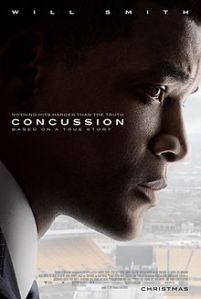
Concussion_posterThis is the second film demonstrating a disturbing trend previously observed in “American Sniper” (2014). The enhancement of an hour’s worth of facts to generate a two-hour movie. It’s disturbing because there are pretty glaring inaccuracies and embellishments, not identified as such, specifically created for dramatic effect. Like “American Sniper”, this is not a documentary; it’s a docudrama, with numerous liberties taken to make it more appealing to the box office, an understanding rigorously constructed by the film producers long before any film is made.

The bare bones story of Dr. Bennett Omalu, his “discovery” of chronic pathological brain changes in long-term football players at autopsy and his interaction with the National Football League (NFL) is all probably true and well documented as far as it goes. But the entire story would take less than an hour to tell and the dramatic value would not be sell-able to millions of fans, especially Pittsburgh Steeler fans unlikely to warm up to being lectured to about the game.

So embellishments of the facts of the case were dreamed up by producers to include characters that either didn’t exist (No record of Dr. Danny Sullivan’s abuse of Bennett) or the only reason for their inclusion is to appeal to the melodrama- a love interest that has nothing to do with the film’s theme. The FBI did raid Dr. Cyril Wecht’s office, but three months before Omalu published his research. Omalu did show up in court as a witness for Dr. Wecht’s prosecution and even made a bid for Wecht’s job (1). The scene of Omalu’s wife “followed” by a malevolent stalker, possibly leading to her miscarriage is said to be a figment of a producer’s imagination to stoke the dramatic intent of the story.

The family of former NFL player Dave Duerson considers the showing of a standoff between Duerson and Andre Waters, a former player whose application for benefits was denied by a retiree board (that included Duerson) to be fabricated (2). Waters committed suicide  at age 44, suggesting that Waters’ death could have been prevented if Duerson had been more compassionate with a fellow player. Dr. Joe Maroon’s portrait is said by the Pittsburgh Post-Gazette to be ill-considered. “Once Dr. Maroon understood what we were dealing with, he really brought it to the NFL” (3)

These embellished facts have been spun into melodrama wherein this devastating brain pathology seems to reliably and predictably destroy players minds, eventually leading to higher than average suicide rates. But this isn’t exactly true if you look at the rest of the literature. There is very little if any convincing evidence to suggest footballers, as a group, suffer a higher suicide rate than the rest of the population (4). Other cites suggest that football players live longer than average, even as their traumatic risk factors are increased (5,6), and are not statistically subject to an epidemic of suicide (7,8).

The pathologic basis for “Chronic traumatic encephalopathy has been around for decades. It’s not a new term,” said William Stewart, a neuropathologist at Queen Elizabeth University Hospital in Glasgow. Dr. Omalu neither discovered nor named the disease. “The only thing I would say that Bennet has done is that he identified it in an American footballer (9).”

None of the above is to suggest that repeated blows to the head don’t cause pathologic brain injury over time. This has never been disputed and all one has to do is observe Mohammed Ali to see the vivid results of it (10). And of course, a huge corporation (the NFL) making billions of dollars off an entertainment industry (Football) is not likely to embrace anything that threatens the money flow. The reaction to this research should never be dismissed, but this story embellishes the real “big picture” by the multi-billion dollar film industry for the same reason the NFL protects its multi-billion industry. It follows the money.

This film would have been a moderately interesting one-hour long documentary on PBS. But top-draw actors like Will Smith don’t do documentaries. The producers and director understood that such a documentary would be worthless at the box office so they simply used creative license create dramatic impressions for two hours, and they don’t advise the audience that the film is heavily influenced by that dramatic license. In response to critical reviews, the producers state: “The movie is emotionally and spiritually accurate all the way through”. This steaming line of bullshit allows many walk away thinking they’ve seen an authentic documentary.

Otherwise, the actors did a good job, particularly underrated actor David Morse.

It was an interesting drama but I must downgrade this film as it is intentionally disingenuous bordering on deceitful, and I cannot let that stand in an honest review.

It gets two of five extreme close-ups of Will Smiths mouth.

  1.  http://www.slate.com/articles/sports/sports_nut/2015/12/the_truth_about_will_smith_s_concussion_and_bennet_omalu.html


  1. http://www.nytimes.com/2015/12/17/sports/football/concussion-movie-smears-dave-duerson-his-family-says.html?_r=0


  1. http://www.post-gazette.com/ae/movies/2015/12/26/Former-Pittsburgh-Steelers-team-physician-Julian-Bailes-Concussion-movie-takes-few-detours-from-reality/stories/201512260025


  1. http://www.breitbart.com/sports/2014/01/13/the-nfl-suicide-epidemic-myth/


  1. http://www.nytimes.com/2012/05/09/sports/football/nfl-players-live-longer-than-men-in-general-population-study-says.html


  1. http://www.ajconline.org/article/S0002-9149(11)03387-X/fulltext


  1. http://www.ncbi.nlm.nih.gov/pubmed/26449269


  1. http://www.ncbi.nlm.nih.gov/pubmed/25177413


  1. https://www.bostonglobe.com/sports/2015/12/18/nfl-notebook-concussion-subject-bennet-omalu-role-disputed/uOxvpEMEV3g7Nlx24QPHFM/story.html


  1. http://articles.chicagotribune.com/1991-06-20/news/9102240520_1_ban-boxing-muhammad-ali-parkinson

Film Review: “In the Heart of the Sea” (2015)

0

HEART OF THE SEADirector Ron Howard was interviewed by Charlie Rose recently and proclaimed his more or less newfound love for Computer Generated Interface (CGI). Ron goes way back before this technology and knows how difficult it is to create props for sets. Now he says he can take filmgoers places they could never have visited before. Technically perfect sets depicting virtually anything.

So in his film, “In the Heart of the Sea”, audiences get to see what Nantucket really looked like in 1820, what it looks like close up to harpoon a whale and how a 97 foot long whale could have demolished a full sized tall ship. True to form for all Howard films, the story line is impeccable and the cinematography is spectacular, given more perspective by gentle 3-D technology. Truly, this is a film that simply could not be filmed without CGI. “Bruce the shark” really is no more.

BTW, Director JJ Abrams is said to be spending millions of dollars creating the new “Star Wars” with minimal CGI and real sets. He thinks the visual impact will be radically different. We shall see soon.

As the story proceeds, young, unknown author Herman Melville (Ben Whishaw) tracks down Tom Nickerson (Brendan Gleeson), the only surviving crew member of whale ship “Essex”. The real 1820 destruction of a this whaling vessel by a murderously pissed off bull sperm whale and the events that follow. Melville feels that Nickerson’s personal account will inspire his next novel but after hearing the account over a drunken evening, he decides to use the story as an “inspiration” rather than writing a historical biography. What emerges is “Moby Dick”, one of the literary classics of all time.

This is the second film Howard has directed Chris Hemsworth (recalled from his barefoot emergency room entrance in “Rush” (2014), inciting instant estrogen storm). Hemsworth is a very underrated actor who did an excellent job in this film, appreciated by guys too.

Also, as I have mentioned in the past, there is a big difference in the visions of directors. Some (Alejandro González Iñárritu) hand over a loose plot, then mandate the actors to fully explore it according to their own vision. Others, specifically Ron Howard, (American Graffiti, Apollo 13, A Beautiful Mind, Rush) presents his vision of the script and then directs the actors how to fulfill it. Expertly, I think.

The only problem with this film, if there is one, is that it explores a plot that really doesn’t pique the interest of most filmgoers. The CGI issue is a double-edged sword. The creativity aspect can be overwhelmed by its use to blitz viewers with pyrotechnic, gratuitous violence, something to which many have become accustomed and acclimatized. Sometimes it can’t save an otherwise pedestrian script.

The (other) reviews have not been stellar. One of the critics hit it hard: “The movie doesn’t know Dick.” The scenes of the big whale saving the crew are interesting, but if the whale is the most captivating screen presence, it should probably appear for more than a few minutes. The rest is a variation on the theme of “Lost” (TV Series) and “Cast Away” (2000).

I think it’s an entertaining film for the really outstanding cinematography and worth munching popcorn in a 3-D theater, but don’t expect much more.

I give it three of five whale tail slaps.

  •  Eagerly Awaited, (end of December), “The Revenent” by Alejandro González Iñárritu. Underrated Leonardo DiCaprio and rapidly upcoming Tom Hardy promises to be very interesting.


Film Review: “Spotlight” (2015)

0

Unknown“Spotlight” (2015)

Comes to Pittsburgh in limited release (only one theater- The Manor on Murray Ave) heavily hyped by accolades from all over as a fantastic film, destined to sweep the Oscars.

Not so much. It’s an interesting film with a bunch of really good actors but it’s all been done endlessly before and many times better.

It’s all about the meticulous inquisitorial collection of small bits of otherwise inconsequential data that when correlated over a period of time yields an informational goal intentionally obfuscated by interest groups. “All the Presidents Men (1976) did it better and “Zero Dark Thirty (2012) did it exceptionally well. The newsroom drama has also been done better- “Newsroom” (HBO 2012-2014).

The characters slowly come to realize that there has been a massive cover-up of some really egregious goings-on right under their noses for 20 years. The undercurrent is controversial and inflammatory to say the least. The more they sniff around, the bigger the mess gets, until it finally draws in a large number of Boston bureaucrats and Church authorities.

Interestingly also is the journalists acceptance in deadpan that the lawyers who went way, way out of their way to protect suspect priests were “just doing their job” and the city fathers opinion that if there was any hanky panky going on, it was acceptable collateral damage for all the benefits the city received from the church.

Interesting also, as you may recall, was the tirade of Irish singer Sinead O’Connor who famously tore up a photo of the pope on Saturday Night Live, Oct 3, 1992. “Fight the real enemy.” The stunned audience went completely silent. It has been speculated then and now that Sinead knew a lot more than she’s ever publicaly said about the roots of this tirade way back in ’92.

The slow, plodding progress of the film facilitates the emotional impact all around to be “spotlighted”. But in the end, the coherent driving force of five investigative reporters are diluted somewhat by each stepping out to showcase their own individual talents instead of blending as the real personages probably did in 2002. If it’s, as one critic opines: “Arguably one of the best movies about journalism ever made”, then journalism is pretty boring and maybe not good fodder to while away two hours enduring the mundane efforts thereof.

I give it three of five Micheal Keaton scowls. Interesting but others have done it better.

Disclaimer: Contents are extremely political and potentially inflammatory. This review is not to argue about content, just to dissect the film’s dynamics.

———————–

Eagerly anticipated: “In the Heart of the Sea” (Directed by Ron Howard) Out mid-December, 2015.

VERY eagerly anticipated: “The Revenant”, directed by Alejandro G. Iñárritu and starring among others, really interesting author Tom Hardy. Out end of Dec, 2015.

Film Review “SPECTRE ” (2015)

2

m4n0g53 years of James Bond, a perennial “Man’s Man”. Men want to be him, women want to be with him and adventure follows him.

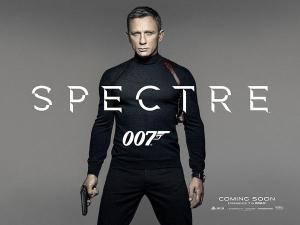
The 24rd Bond film, “Spectre” deftly but subtly nods to the past 50 odd years while portraying a more contemporary Bond than the Bond of the past. The film transitions Bond into a new world, and accordingly, many of his previous associates and logistics are in the process of age renewal.

At 47 years of age with greying whiskers, Daniel Craig is getting a little long in the tooth for the rigors of this kind of physical action, but he does an excellent interpretation of an aging Bond with all of his inadequacies rising very conspicuously to the surface.

Having seen all 50 years of Bond- the first one (Dr. No) as a high school student in 1962, (six years before Daniel Craig was born), allow me to point out some of the more interesting accouterments of Mr. Bond’s past.

In “Dr. No” (1962), Sean Connery flashed a brand new style of wristwatch in one of the action scenes, a black face Rolex Submariner. This was a radical departure for wrist wear and ushered in the era of “sport watches”. I lusted so heavily for one I drooled for years, but they cost US$200.00 in the early 60s, a lot of money from a watch. It was years later when I finally obtained one and I wore it for many years. It is still a superb timepiece, and phenomenally expensive now.

In “SPECTRE” Bond wears an Omega Seamaster 300 Spectre Wristwatch, a limited edition created only for Daniel Craig. Only 7007 made. US$7500 if you want one.

1964’s “Goldfinger” introduced the ”Bond Car”, a 1964 Aston Martin DB5 replete with numerous gadgets, including a rudimentary GPS screen, passenger ejection seat and revolving license plates. Jerry Lee, Owner of WBEB Radio in Philadelphia, PA originally bought the car from the Aston Martin Company in 1969 for US$12,000.  The DB5 was sold for 2,600,000 British Pounds Sterling in 2010. The silver car in mint condition is still capable of 145mph and most the gadgets still work.

For “SPECTRE”, a new Aston Martin DB10s is introduced, one of only ten made. Zero to 60 mph in 3.2 seconds. This car will not be offered to the well-heeled public but one of the DB10s will be auctioned next year at an undisclosed asking price.

Bond is nothing if not clad in cool gear. Daniel Craig wears a dark charcoal grey fine gauge mock turtleneck made of cashmere and silk from British company N.Peal, reminiscent of Steve McQueen in “Bullitt” (1968). The list of Bond fashions goes on and on:

http://www.jamesbondlifestyle.com/news/ultimate-guide-spectre-bond-24-products-and-locations

“SPECTRE” offers up a much more unsympathetic version of Bond’s basic persona than that idealized in the past. I get the distinct impression that Daniel Craig does NOT personally like his character and goes way of his way to portray him as a sociopathic sadist more than any previous 007. An Armani suited pathological narcissist who came in from the cold.

It’s magnificently filmed in Mexico City during the “Day of the Dead” celebration. The breathtaking opening scene begins with the predictable demolition derby leaving a trail of carnage that would make Quentin Tarantino consider retirement. After being grounded by “M”, Bond goes rogue, travelling to various beautiful European spots to track down the “Source of all his pain”, impeccably villainous Christolph Waltz and his evil organization “Spectre”, reviving a piece of 007 folklore dating back to the Sean Connery era.

Although It’s the most expensive 007 movie to date, at $250 million, “Spectre” is not as good as “Skyfall”. The film does explore new millennium questions of cyber-security, data privacy, and government authority, although somewhat simplistically. It’s too long at 148 minutes. The final hour is rather bloated with too many predictable plot twists and too many contrived characters. “The script of SPECTRE” is suspiciously close to the plot of “Mission Impossible: Rogue Nation” (2015).

I think two things about James and his films:

  1.  I think James is an anachronism of the past and needs to fade away, much like Jack Bauer. The entire scenario of licensing to kill on the whims of secret government organizations, improbable gadgets and always getting the girl has run its course. It’s all post –facto cold war stuff and this really is a new world with more politically correct people and institutions in it. James would be busted by ten cops during the first three minutes of his films, tasered then shot dead and a grand jury would hold that the officers had valid justification.
  1. I think the next James Bond will be a dumpy, mixed lineage transsexual with a “license to ill”, riding around in a rusted 1982 Ford Taurus shaking his (her) finger at passersby doing blatantly illegal things like sprinkling their lawn during a drought. In the pre-credits opening-scene, the screen will suddenly burst open and thousands of hungry, molten, pan sexual, meat eating, disease bloated monster snails will erupt and swarm over the audience before they could stagger to the door, which was locked anyway by someone who was also gummed up and eaten while screaming for help.

I give it three and a half of five shaken, not stirred martinis, professionally watered down by the bartender at a “no tip” watering hole in New York City.

Film review: “Steve Jobs” (2015)

0

steve_jobsA really interesting and creative diversion from the usual film biopic. All of the previous films portraying the life of Steve Jobs have been simply biographical. Replays of chronologic events, interpreted by actors interpreting what they think Jobs might have acted as he plodded through his life. Most of these previous films (starring Noah Wile and Ashton Kutcher) bombed at the box office because a chronological history of anyone loses interest in direct proportion to the length of the chronology.

This film chooses three different seminal episodes in Job’s life, exploring the 40 minutes in real time before each. The public launch of the original Macintosh in 1984, the follow-up neXT computer in 1990 and the colorful first iMac in 1998.

https://www.youtube.com/watch?v=2B-XwPjn9YY

https://www.youtube.com/watch?v=H07Xjom_GQA

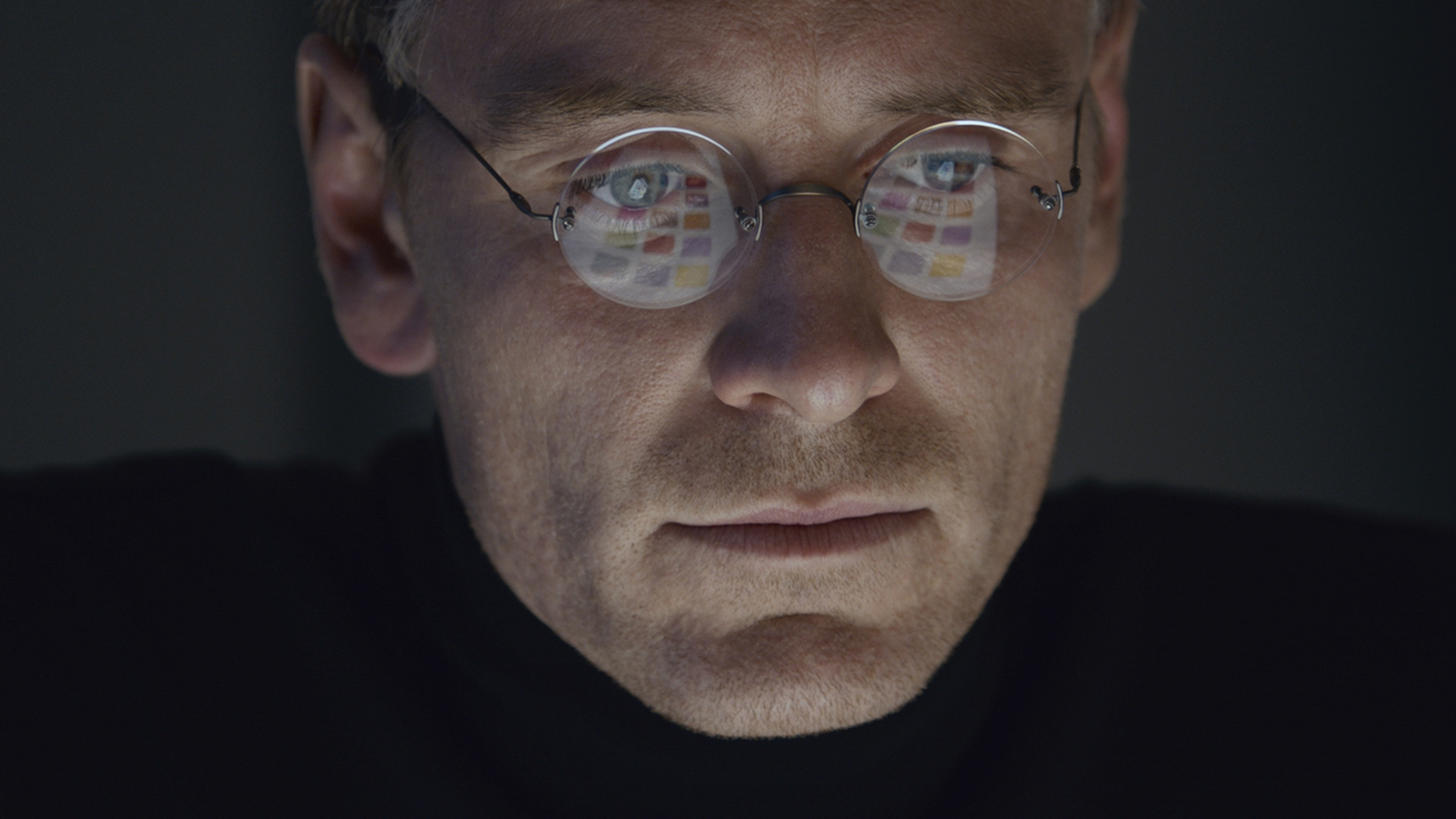
The screenplay writer Aaron Sorkin (The West Wing) and Director Danny Boyle (Slumdog Millionaire) make no bones about the fact that this film is neither a biopic or a documentary. It is a fictional substrate for the principle actor Michael Fassbender to deliver a performance said by many now to have the Oscar wrapped up for this year.

Job’s wife is said to have tried to block release of the film and all of the principle persons portrayed say the portrayals are not “accurate”. The film does not delve into whether the events portrayed are “accurate” or “Truthful”. In “Absence of Malice (1981), Paul Newman suggests to Sally Field that some facts may be “accurate” but not necessarily “truthful” because the truth depends on an observer’s interpretation and as per Heisenberg, observations change the behavior of variables. The “truth” is then a very sticky business to interpret, the writer and director wisely choose not to address.

Sorkin suggests he was “trying to do a painting, not a photograph. The film is (sort of) based on facts but Fassbender is given free reign to interpret those facts as he desires, and he pulls it off absolutely magnificently, even hampered by the fact that he does not look anything like Jobs. Steve Jobs passionately wanted to change the world and Fassbender passionately taps into that ethos with brilliance. Supporting cast Kate Winslet, Jeff Daniels and usually mediocre Seth Rogan are magnificent.

This is in direct contrast to a remarkably different aspect of changing the world, Johnny Depp’s said-to-be accurate portrayal of brutal thug Whitey Bulger in Black Mass (2015). A pointless exercise in “accurately” depicting cruelty and mayhem that goes nowhere except to maximum security.

“Steve Jobs” is an absolutely brilliant and outstanding fictional portrayal of a fascinating and complex man who did, in fact, go on and change the world. The portrayal of Jobs and his daughter Lisa’s relationship is psychologically brutal and difficult to watch. In the end Jobs explains his actions: “I’m poorly made”. It is superbly written and performed.

I give it five of five black turtlenecks. Highly recommended by me.

Film Review: Bridge of Spies (2015)

0

Tom_Hanks-2015-Bridge_Of_Spies

Tom Hanks is not merely a “bankable” star. He’s a star that has not made a major mistake in his entire career, not just star power but reliable watchability. Stephen Spielberg is the new millennium’s generation’s Stanley Kubrick. Combining the two virtually guarantees a wonderful film, even if it’s theme is a cold, bleak cold war setting. Bridge of Spies doesn’t disappoint. The Tomatometer gives it a solid 92% and I must agree, with only a minimal reservation as to the grim setting.

It’s the late 1950s. Hanks as James Donovan is charged with defending the undefendable Soviet spy Rudolf Abel. Donovan’s face ends up on the front page of New York newspapers making him persona non grata in New York City. Unpopular Donovan defends his client, successfully, arguing Abel off death row by suggesting he’d be a valuable bargaining chip if the Soviets ever capture an American. Of course this is exactly what happens in 1960 with U-2 pilot Francis Gary Powers (Not Bono, who was not born yet).

Spielberg can make an interesting film about the Kardashian’s broom closet. Much like the coldly observational “Schlindler’s List (1993), the austere backdrops evolve to a fascinating potboiler. Tom Hanks as an unlikely insurance lawyer juggling world-threatening intrigue brings life to the chilly proceedings.

Hanks has a remarkable ability to get completely lost in his character and it’s impossible to take your eyes off him when he gets on a roll, even with a touch of overacting. When Hanks gets into gear, he owns a film. The writing is sharp, the cinematography appropriately period correct and the directing classic Spielberg.

However, Viewers addicted to crash, burn and blast may think it a snooze fest, but if one is willing to absorb the nuances, it’s a festival of grey areas worth the watch.

I give it a tightly fitted 4 of 5 grey fedoras.


Film review: Sicario (2015)

0

EmilySicario (2015)

“Homeland” (Showtime cable TV) mind melded with Jack Bauer (“24”) all spot-landed at the Mexican/American border.

I had actually not planned to review this film as it didn’t get much notice and this was just a boring Saturday afternoon with everyone out of town but me. However, I was spellbound absorbing the blistering tale of the politics of revenge, the value of human life and the creative methods of saving/taking it.

Emily Blunt is superb as the otherwise idealistic FBI field agent, expertly trained in the tactics of drug interdiction, but by the book. She’s drawn into a densely woven strategy to do whatever is needed to take out a major drug kingpin. By “whatever is needed”, I mean no rules, no boundaries and no convention in an escapade run by very, very focused special-ops guys with varying rational for their actions.

This interestingly brings up the role of women in special-ops.

Recently, women were allowed to undergo U.S. Army Ranger training at Ft. Benning, Georgia. Three candidates successfully completed this incredibly intense training. I say more power to them. If they can hack it, they absolutely deserve to wear the black & gold patch as well as anyone else.

But there’s a “Catch-22”. Technically they are Rangers with all the rights & privileges but they are not allowed (yet) into “real” combat situations. It still remains unclear how they would function in a really nasty combat situation, no matter how well they trained for it. Training isn’t the real thing and they are different breeds of cat.

Women (females) are wired for nurturing and to some degree “rules following”. Through history, there are very few steely-eyed female killers; most of it involving sex in some fashion. Emily Blunt was thrown into a situation where she was well trained for her job here but in the clinch she backed off when faced with real steely-eyed killers in situations where the traditional rules of engagement weren’t being followed. Unclear if this is because of female hard-wiring or just individual taste. Unknown to the military as well.

So several interesting issues explored in this excellent film. The traditional rules-of-engagement for dealing with drug cartels are said to be about as effective as emptying an ocean with a teaspoon. The cartel leaders have no rules and so our rules simply hamper the effort to curtail them. The film suggests that if we are to really put a dent in the drug cartels, it will be necessary to simply play dirty, Jack Bauer-style.

That will, of course, require players that possibly have marginal interest in saving the world from drugs; more like having an interesting, adventurous career. Different species of players entirely and arguably “no place for a lady”. Is that the future of dealing with monsters? Do we have it right now and we just aren’t aware of it? After recent “leaks” of otherwise secret material, have they learned to hide it most effectively?

French-Canadian Director Denis Villeneuve creates extraordinary sets utilizing the amazing, color-saturated compositions of cinematographer Roger Deakins. The actors, Emily Blunt, Josh Brolin and especially Benicio Del Toro are intense and impassioned. It’s an excellent, nail biting story line. It is Del Toro who holds the audience in a hushed but rigid grip, the embodiment of an action character. A study in which the concept of ethics becomes moot to obtain a righteous goal, and if course, what constitutes a righteous goal.

This is an impeccably well-crafted film, highly recommended by me.

Disclaimer: some intense and disturbing scenes.

I give this film four of five Josh Brolin salacious smirks.

Concert Review: “The Zombies” (Oct 14, 2015)

0

ZombiesZombies (Oct 14, 2015) Carnegie Library in Pittsburgh

“Pre-British Invasion” group The Zombies arrived in Pittsburgh at the Carnegie and were well received by a full house. I say “pre-Invasion” because they were 19 years old in 1964 when their first song hit the charts and they were invited to play in America as scared kids. They were too deeply imbedded in the trees to see the forest. They had no idea they were the precursors of one of the biggest paradigm changes in popular music. Touring in America when the Beatles were sweating gigs at the Cavern Club in London. In 1965, the band appeared on the first episode of NBC’s Hullabaloo.

You’ll have to spare me a little dry history at this point. The band actually formed in 1961 listening to Buddy Holly, Gene Vincent, Little Richard and Jerry Lee Lewis. They played throughout Europe, following the dues paying path also trod by the Beatles (Hamburg). They perfected a very “Beach Boys” style harmony, then hit the charts with “Odessey & Oracle”, recorded at Abbey Road Studio in 1967. (Yes, it was misspelled by the graphic artist that did the cover.)

Odessey found it’s place as a great album in 1969, a year after the band had broken up. Named number 80 on Rolling Stone’s list of the 500 greatest rock albums of all time. The seminal single, “Time of the Season” was featured in the Robin Williams, Robert DeNiro film “Awakenings (1990)

https://www.youtube.com/watch?v=Xjf8F3v18DY

Of the original 60s group only keyboardist Rod Argent and lead vocalist Colin Blunstone remain. Argent remains a world-class keyboardist at age 70, mentioned in the same company as Keith Emerson (Emerson, Lake & Palmer), Rick Wakeman (Yes), Richard Wright (Pink Floyd) and Ray Manzarek (Doors). Argent went on in 1969 to form “Argent” (“Hold your head up”). The Zombies were nominated to the Rock & Roll Hall of Fame in 2014 but were not elected (yet). Lots of great artists are waiting for that nod (Bad Company, Deep Purple, Steppenwolf, Moody Blues)

Interesting to see those who attended the concert. A liberal supply of burned out hippies, shoulder length grey hair, wispy pony tails, clad in classic garb of the 70s. Many younger types arriving to see what the fuss of the 60s was about, covalently bonded to cell phones texting continuously. The guy next to me in the balcony was my age and a walking repository of Zombies history. We both took cell phone photos (prohibited and universally ignored) through the concert.

This was a good gig for these guys troding the nostalgia circuit, all of them over 70 years of age still packing (smaller) venues and still playing world-class music. Both Argent and Blunstone look good for their ages, trim and athletic. Both obviously color their hair. The other members of the band are appropriately grey. Following their extended rendition of “Time…..”, the entire audience gave them an extended standing ovation they very visibly appreciated. “I had an amazing balcony seat right next to the stage. At one point I leaned over the rail and caught Rod Argent’s eye giving him a thumbs up. He saw me, pointed and gave me the thumb back.        Ahhhh…..life is good.


Film Review: “The Martian” (2015)

0

martian-matt-01-800“The Martian”, a melding of “Robinson Crusoe on Mars” (1964)…..

http://www.rottentomatoes.com/m/robinson_crusoe_on_mars/

and “Gravity” (2013).

http://www.rottentomatoes.com/m/gravity_2013/

Stellar special effects, partly filmed in the Red Desert of Jordan. Better effects than the ’64 film and better acting than “Gravity.

An astronaut (Matt Damien) is thought dead from an accident and left on Mars when his team exits to avoid a deadly storm. But he’s very much alive and spends the rest of the film creatively fighting to survive until a rescue can be effected.

Based on Andy Weir’s best-selling novel, directed by Ridley Scott (Blade Runner, 1982), The Martian is a tour de force for Matt Damon, who definitely rises to the occasion aided by an excellent cast. He has a multiplicity of cool gadgets he MacGyvers, including high tech versions of “Wilson the volleyball” in “Castaway” (2000).

The Martian is a top-notch survival thriller, well acted and superbly photographed. A real potboiler that keeps you one the edge of your seat. 3-D really does a great job of bringing the film to full life without intentionally throwing junk at the viewer. Matt Damon is excellent, and halfway through the film, he brings up a very interesting facet of the maritime laws that might be expanded to inter-planetary exploration.

(Truncated) “If you’re not in any country’s territory, maritime law applies. So Mars is “international waters. After I board the rover, I will take control of a craft in international waters without permission. That makes me a pirate! A space pirate!”

A few words about the new 3-D process. In the past, I have disparaged 3-D on several levels. It was originally developed to give the audience a sense that things were being thrown at them just for shock effect, the glasses were uncomfortable, much of the process was nausea-genic and most great films really didn’t need the effect.

Not anymore. The new 3-D process isn’t for shock value. It lends more subtle perspective and attitude to the film. The viewer sees the action as it might actually be happening in real life. I have not heard any complaints of queasiness. I very much like the experience.
I give it an easy four of five really cool helmets I’d like to have one of.


Film review: “Everest” (2015)

0

1280x720--njFascinating film loosely based on the disaster occurring on Everest in 1996 in which 8 climbers died in a freak storm. Several books were written about it. Jon Krakauer’s version is considered to be a masterpiece on life and death at high altitude and is mandatory general education reading.

http://www.amazon.com/Into-Thin-Air-Death-Everest/dp/B00005B1WA

The plot involves the trek of two coincident expeditions, costing each climber US$65,000 to attempt the feat with no guarantee of success. However, because of pressure to succeed, both trek leaders Rob Hall (New Zealand) and Scott Fischer (USA) bend their own safety rules to accept more risk in hopes of making the summit. Both sets of climbers actually reach the summit but there is a delay in descending, allowing a sudden vicious storm to move in, wiping out 8 climbers including Fischer and Hall, both of whose bodies have never been recovered from the mountain. There are said to be over 150 bodies scattered around the mountain today.

The real saga, however, consists of the story of Dr. Beck Weathers from Dallas, Texas who, left for dead on several different occasions, manages to find the strength to descend the mountain in perilous condition. He describes in detail how it felt to be dead and for what reason he felt the desultory need to move on anyway. When he finally stumbled into a lower camp, they set him in a corner of a tent to finish the dying process. But he’s alive today and his book is fascinating for his descriptions of very existential concepts involving death and survival:

http://www.amazon.com/Left-Dead-Journey-Home-Everest/dp/0440237084

The cinematography is stunning and greatly enhanced by the new 3-D process that gives splendid depth to the visual effects. Of course, the effects are a little too good, suggesting the liberal use of Computer Graphics Interface (CGI). Most of the mountain scenes were filmed on the Tyrol in the Italian Alps for safety and cost-effective ergonomics. Some scenes were filmed on Everest but in the lower altitudes. Many panoramic shots of the mountain were superimposed with actors via computer effects, especially the high altitude scenes.

“Everest” is a very tense experience, but in the end the tension dissolves into sadness amid tearful goodbyes, violent storms and frozen corpses.

I give it five of five icy eyebrows. Highly recommended by me. Warning: the ending is a four-hankie weeper.

Addendum: I can offer some perspective on this film because I was on Everest in the spring of 1983.

I came upon a private group that wanted to go to Nepal to do some serious peak ice and snow climbing with all the accouterments. So after some discussion, they agreed to take my wife and I even though we didn’t have much practical experience. They said we could learn on the job and they would look after us. I studied up on high altitude issues and brought a supply of Diamox and IV solumedrol, antibiotics, decongestants and other things.

After some acclimatization time doing lesser peaks, we crossed the Khumbu Glacier uneventfully complete with all the scary cracking of the ice. We reached Everest Base Camp at around 18,000 feet and decided to go ahead and climb up the col to South Face Base Camp I at about 20,000 feet just to see it. It was pretty arduous.

There was no point in climbing up to Base Camp II at 21,3000 feet. The route to the summit begins there. It was really more of the same and we would have to spend more time coming back. These camps are nestled between steep ridges on both sides to the only way out is the way you came in.

The Base Camp and Base Camp 1 are famously filthy dumps, with abandoned oxygen bottles and other detritus laying everywhere. It looks like a junkyard with hundreds of climbers in season milling around waiting to go their way in whatever trail. At times in the past there has actually been a “traffic jam” of climbers trying to get to the various bases. Many of the would-be summiteers were famously inexperienced as were their guides, setting situations up for disasters in the “Death Zone” (over 26,000 feet) where many of the physical laws of God and man are suspended.

We swung around to the Southeast back over the Khumbu to the other peaks in the Nuptse vicinity. It was all ice climbing with crampons and ice axes, attached to each other via ropes through pulleys.

As we climbed, I progressively felt the effects of altitude. Over 21,000 feet or so, every step was a superhuman effort and required stopping to catch your breath such as it was.  Much of this for me meant no sleep. Every time I’d doze off I started hyperventilating and work up with a start. I also developed a very irritating persistent dry cough said to be common at high altitude. Acetazolamide helped somewhat until we got over 20,000 feet. I was pretty much sleepless the rest of the time.

Some of the things I saw were so spectacular I can close my eyes and see them now and I took a lot of photos but to be truthful, I have no interest in ever doing it again. It was a good thing to do at my then age, but it was definitely a one-time thing. For the life of me, I cannot remember the formal names of any of the peaks we climbed, if they even had one.

* A YouTube montage of other photos I took in the area. This montage is high-def and so you can open it up to full screen. (60’s-era Nikon FTn).

https://youtu.be/9ujmSnanEfI