Film Review: “Longmire” (Netflix)

0

longmirenasdsad“Longmire” now fourth season on Netflix, all ten new episodes streaming. A Western crime thriller adapted from the series of mystery novels by Craig Johnson had moderately successful three seasons on (cable) A & E, then was cancelled as A & E figured it had pretty much run it’s course after ratings dropped. They were decidedly wrong. Netflix has turned into a radically different audience than the “family” oriented A & E channel.

Longmire is the third major show Netflix has picked up after they were cancelled by other channels. Notably “Arrested Development” and “The Killing.”, both of which were superb. “Longmire” is a series for viewers who feel dumped for advertising ratings that otherwise mean nothing. They like cops and robbers and an interesting case to solve each week. “Longmire” is also a western filmed with beautiful cinematography in New Mexico. The show is also notable for the significant place it gives to Native American characters. Underrated actor Lou Diamond Phillips shines in his tense performances as does A. Martinez as a shady Indian tribal leader, Katee Sackhoff’s female interest and Gerald McRaney as a aggressive businessman. But the true shining belongs to the lead role of Robert Taylor, an Australian actor who totally aces the laconic American Southwestern Sheriff, craggy face and all.

Netflix has done two really important things with Longmire
“. They made it streaming so viewers could watch as much or as little as they desire to follow the progress of the show and they let the show take chances not available in a family oriented channel. A refreshed format with little concern over conventional ratings, elevated to a “mature” audience. In it’s new incarnation, it masterfully does exactly that. Season 4 wrapped up the lingering questions of Season 3 with a much stronger punch, riddled with subtlety and and kicking off new storylines.

Longmire is an EXCELLENT series and you can watch as much or as little as you like. The pilot episode and the surprising followup are about as good as it gets in cable TV.

I give it an easy 4 of 5 Winchester model 1873s, with a bullet. Highly recommended by me.

The Blue Ridge Parkway

0

blueridgeparkway07One of the most easily assessed and spectacular field trips in the country isn’t too far from here. The Blue Ridge Parkway, America’s longest National Park, meanders from Virginia to North Carolina, a distance of almost 500 miles. The pre-start of the ride begins in Front Royal, Virginia and is named the “Skyline Drive” down as far as the Waynesboro area, 109 miles where it turns into the BRP from then on. The Skyline Drive isn’t all that great but it’s the most direct lead-in to the BRP so it’s just as well you start there.

The “real” BRP connects Shenandoah National Park with Great Smoky Mountains National Park. It begins at Rockfish Gap near Waynesboro. You can easily do the entire length of the BRP and get home in about a week. It usually takes three days to traverse the entire length because you can’t go very fast. There are several lodges actually on the BRP road and they are about equidistant from each other and you can easily get off and back on for food and lodging along the entire route.

Click to access BLRImap1-1.pdf

By history, the construction of the BRP began as part of Franklin D. Roosevelt’s “New Deal”. Work began in 1935. The Works Progress Administration, the Emergency Relief Administration and Civilian Conservation Corps camps performed most of the work. During World War II, conscientious objectors were pressed into this construction. The parkway took over 52 years to complete, the last portion opening in 1987. 2015 marks the 150th year anniversary of the last Civil War shot fired east of the Mississippi near present-day Waynesville, NC.

The BRP is considered by many to be the gold standard of American touring trips. Many bikers and sports car clubs congregate to run all or part of the BRP. Most of the road consists of what bikers like to call “twisties”, tight corners and switchbacks in heavily forested areas with very little if any traffic. The elevation also varies dramatically from lower areas to over 6000 feet, changing the weather patterns from warm to downright chilly. The BRP is amenable for family sedans and SUVs, but of course not nearly as enjoyable as in a small open-air vehicle.

The traditional pinnacle of bikers’ rides, further west where Tennessee meets North Carolina is the “Tail of the Dragon”, an 11-mile stretch of US 129, an incredibly twisty road sporting 318 tight hairpin corners. However, the Tail has become overcrowded, especially with novices riding it much too fast and getting hurt pretty regularly.

If you follow the BRP on the map down to it’s near end where it makes a right turn toward Cherokee land, you’ll see a little town called Waynesville, NC. In that area, the crème de la crème of spectacular and sometimes challenging tours occur. Rides in this area are named and mostly bikers come from all over the world to access them. The “Moonshiner 28”, “Devils Triangle”, “Diamondback 226”, “Six Gap North Georgia”, “The Rattler” and the “Copperhead” to name a few. These roads were built long before Interstates and surveyors were forced to build them around the mountainous conditions with many twists and turns around obstacles. There is virtually no traffic on any of them anymore except sports car clubs and bikers.

http://www.motorcycleroads.com/75/1335/North-Carolina/The-Copperhead-Loop.html

I’ve been riding these areas for over ten years and I know all of it by heart. Last week was a time slot with nothing much to do and the weather was good so I decided to do it all again. I also decided to just ride down there on my venerable BMW R1150GS, the Rock of Gibraltar on two wheels, because having to deal with a trailer on several motel overnights would be a time wasting problem.

From my house to Waynesville, NC is about 560 miles. This is the area of all the fabulous rides so I decided to forego doing the entire BRP again as I’ve done it stem to stern in the past and didn’t have the time this trip. So I rode the Interstates to the area of interest and did it all in four days. I did do parts of the BRP in North Carolina this trip. On the return trip, I was weary of motels and so decided to ride it straight, 560 miles in about 11 hours. I wasn’t sure I could do it and so had the option of stopping along the Interstate anytime, but I did OK.

I’m now wondering if maybe I might try the “Saddle

sore 1000” put on by the Iron Butt Society (1000 miles in 24 hours). Would be cool to have the “World’s Toughest Motorcycle Riders” badge on the back of my Beemer. If you recall, former Chief CCM Fellow Erik Diringer did this ride successfully a few years ago but I was engaged elsewhere at the time and I couldn’t try it with him. At any rate, here are the photos of the trip, giving you some idea of the beauty of the area. Even along the Interstate. You’ll notice one photo with a red arrow. This is one I didn’t quite get showing two huge Confederate Flags on the porch of a home. Enjoy if you have an interest:

Film Review: “Mission Impossible: Rogue Nation” (2015)

0

31MISSION-blog427In virtually all his films, Tom Cruise does a great job in bringing his character to life. He’s been in some truly good films: Risky Business, Top Gun, The Color of Money, Born on the 4th of July, A Few Good Men. Everything he does reliably brings in a ton of money and big crowds, but Cruise has never received any serious artistic accolades. Never an Oscar in his 34-year career.

The thing about Tom Cruise is the differentiation between an “actor” and a “Movie Star”. For whatever reason, Cruise doesn’t fit the profile of an actor. He’s a true movie Star and they’re different breeds of cat. Actors generate “critical acclaim” even if their films flop after two weeks but movie stars always generate enthusiasm, crowds and money.

The differentiation between an actor and a Movie Star” is difficult to articulate. In 1964, Supreme Court Justice Potter Stewart grappled with the definition of obscenity. He said he couldn’t define it but he knew it when he saw it. Similarly, moviegoers know a Movie Star when they see one and they embrace him or her, but when they desire to see an actor, they embrace Robert De Niro, Tom Hardy, Brad Cooper or Clive Owens.

Tom Cruise’s audience knows a movie star when they see one in the contemporary “Mission Impossible” series, began in 1996 and the current iteration: “Mission Impossible: Rogue Nation”, number five in the series.

By history, the original television Mission series began in 1966 and ended in 1973. It originally starred Steven Hill as IM leader Dan Briggs (1966 only). The phrase “Good morning, Mr. Briggs…” began each episode as a tape recording which detailed that week’s task.

https://www.youtube.com/watch?v=ziIh6TKVwpI

After a year, Hill, an Orthodox Jew, left in a dispute over working on the Sabbath. Hill went on to star as NYC District Attorney Adam Schiff in “Law & Order” (1990-2000). Beginning in 1967, Peter Graves assumed the role of Jim Phelps, who remained the leader through 1973 for the remainder of the original series.

https://www.youtube.com/watch?v=MA2KmJMKFrQ

In 1996, the series moved to the big screen with Tom Cruise playing the super-spy Ethan Hunt. Leader Jim Phelps (John Voight) opens the film in similar fashion as the original series with a self-destructing tape, but the character is deleted from the series when found to be traitorous. The original cast members from the 60s were not happy with the film’s portrayal of Phelps and several walked out of the theater before the end of the film. However, the critics were generally kind to the 1996 film.

The Mission Impossible series, including the most current iteration, is VERY entertaining and very well photographed. The action sequences rival (but are not quite as good as) the James Bond franchise. Ethan is clearly a clone of Bond, but without Bond’s subtlety and character flaws that make him consistently interesting above and beyond the action sequences.

Tom Cruise is famously said to do a number of his own stunts, including riding at speed on a superbike (no helmet) and clinging to the side of an aircraft in “Rogue Nation”.

https://uk.movies.yahoo.com/post/123117423601/tom-cruise-says-mission-impossible-5-plane-stunt

The action sequences of “Rogue Nation” are VERY well done and Cruise is convincing. The motorcycle chases alone are incredible and scary enough to give Cruise’s insurance agent chest pain. Technically, best I can tell the bikes appear to be somewhere in the range of Honda CBR900RR models:

https://www.youtube.com/watch?v=HbSYCcHdlJ0

They’re scary, scary fast and these sequences with them appear for all the world to be real, with experts handling them (including Cruise cornering with his knee down in full racing position).

The 2015 iteration is very entertaining, the action sequences are excellent and it’s worth the bucks to see it on the big screen. Not out in 3-D which would have been interesting.

I give it three and a half of five toothy, windblown Tom Cruise grimaces.

Recommended by me if you like action flicks.

(Eagerly Awaited, “Spectre” (2015), the twenty-fourth James Bond film)


TV Series “Humans” review (2015)

1

AMC_HUM_S1_Promo_Anita-800x450As more truly contemptible “reality programming” garbage appears on network television, stinking up living rooms near you, a few very interesting series do pop up (on cable). I can’t tell you how many people I know that simply don’t watch TV anymore, but this isn’t fair because if you look around, there are some really well written, expertly performed and magnificently produced series around.

One of the more interesting is the British-American series “Humans” (with the “A” upside down), currently appearing on the AMC channel (and available in sequence on the venerable Pirate Bay for torrent freaks).

http://www.amc.com/shows/humans

The series debuted in June, 2015 for only eight episodes, but there promises to be more as the series has been well received by both critics and audiences on both sides of the pond. Renewal talks in progress right now.

The series is set in suburban London, taking place in the near future where a very useful addition for any busy family is a “synth” – an android eerily similar to a human in virtually every respect. The original creation by an MIT graduate scientist is meant to be pretty much devoid of any emotion, simply serving their families with a flat affect, doing virtually every kind of household chores, including driving the kids to school in the morning.

The “starring” Synth, “Anita” (London actress Gemma Chan) and her fellow synth actors were trained in a ‘synth school’ run by the show’s choreographer to rid themselves of any human physical gestures and become convincing in their roles. They are benignly creepy nearly to the point of being scary.

In time, there appears a hint that some of these androids are a little more intuitive than they’re supposed to be. It becomes apparent that Anita can do more than the laundry when the family’s husband discovers a patch that allows Anita to consummate sex, which he cheerfully indulges. Then of course, gets caught by his wife, whereupon a discussion occurs as to whether sex with a machine is the same kind of “cheating” as sex with another human. (Probably not a discussion you want to have with your wife).

Another intuitive synth informs Dr. Elster’s former partner (William Hurt) that she’s better than humans and lists the ways including no fear of death, whereupon Dr. Millican (Hurt) suggests that any creature without a fear of death doesn’t “live”, they only exist.

It turns out that their creator, MIT scientist Dr. David Elster, has surreptitiously endowed several of them with the ability to reason intuitively and pass for human in many ways. As these synths start to pop up in London causing trouble, it dawns on those involved that if machines can become as human as real humans, the entire fabric of society could be in danger.

The show’s creators try to show a potential for the consequences of unrestrained technology and how it could affect us in many ways we don’t think much about. We use iPhones continuously and rarely talk to each other now. The series explores interesting questions about how humanity would react to what amounts to extensions of an iPhone, a “singularity,” when machines are able to think and act on their own.

“Humans” is a variation on the theme of a previous film I reviewed that was equally interesting:

Film Review: Ex Machina (2015)

These creatures look and act like real humans but they wouldn’t be human in many very important ways. How would such creatures affect the development of human emotions such as empathy and social interaction if they evolved to simulate these features with near-perfect accuracy?

Unfortunately, there are only three more episodes left and it’s unclear whether the series will be continued. If you can find this series, probably on The Pirate Bay, I highly recommend it. I will take all eight episodes off the Pirate Bay when they all run and give them out on DVD to anyone with an interest.

I give it four of five deadpan glances from a spectacularly beautiful Asian woman. Very interesting series.

Bike trip to Tune town

0

Dells 1Somewhere on my bucket list was a trip back to Wisconsin Dells (Wisconsin), a shameless tourist trap drawing thousands of visitors to a town normally (in winter) housing only 2800 souls). Water slides, roller coasters, various carnival-type attractions over literally square miles now.

The original Dells tourist area was created for boat trips to see the limestone rock formations along the Wisconsin River. Then Tommy Bartlett created a big water ski show. An entrepreneur acquired an army surplus DUKW (an amphibious truck commonly called a “duck”) and opened a scenic duck ride to see the accumulating sights and the theme park followed.

My pal Gil Ross hit the description of rounding the bend into the Dells area perfectly. It’s like entering “Tune Town” (Who Framed Roger Rabbit, 1988)

Summer of 1964, my family had moved to Georgia and I was more or less on my way down there by car from our previous home in Menomonie, Wisconsin. As I passed through the Dells area, I ran into a friend from Menomonie who was working as a waiter somewhere and he talked me into staying. I found a room to stay cheaply and looked for work. Everything I owned was packed into my MG Midget.

First job was stuffing windshield wipers with Tommy Bartlett Waterski Show ads. 12 hours a day, seven days a week for 80 cents an hour. They supplied the old beat up junk car and I was expected to be in constant motion all day long. Every once in a while I noticed someone from the Bartlett show driving around checking on me. That lasted one day.

I then found a much better job at Paul Bunyan’s Logging Camp Restaurant as a table bus boy, clearing dinner tables. 90 cents an hour 14 hour days but one day off and all the food I could eat. This was a great deal.

Restaurant

College kids from all over the State descended on The Dells to work the various attractions, all for thinly veiled child labor conditions, but in the immortal words of ZZ Top, “they gotta lot of nice girls there…..”, and they did. The social life was pretty much full time. No one slept much. I met and went out with a lot of girls, taking one to nearby Madison to see a Beach Boys live concert (their white pants, striped shirts era) with Brian Wilson singing and playing bass. The show opened by the Kingsmen (“Louie…Louie”).

Took another one down to see the opening of the Beatles “A Hard Day’s Night” from which I emerged with a hearing deficit. Young girls screamed at the top of their lungs the entire show, could not hear one word of spoken dialog. Took another to the Museum of Science and Industry in Chicago to see the “Visible Woman” exhibit. A woman sliced vertically from tip of scalp to thigh and encased in glass both sides. All organs in position and visible. As far as I know it’s still there.

It was a good time and I look back on it as a very good part of my young life at age 21, before the next shoe dropped and I found out about responsibility. Going back there has always been on my bucket list but it’s at least 700 miles from me and I never got around to it till now.

Because of another trip postponement, I found myself with a full week with nothing at all to do other than hang around the house, so I figured this would be a good time to make a long distance bike ride of it. I’d much rather be on the road on a bike than a car so it seemed like a good trip. Part of that was to see how I would do considering I still have some residual weakness here and there from a flare-up of Guillain-Barre. I would make an attempt with the option of stopping or turning back if I got into trouble. I might get ten miles, 100 miles or make the whole trip. Unknown quantity.

As it turned out, I made the trip with minimal difficulty. I did note some weakness difficulties in my back, shoulders and upper arms but none enough to be a significant problem. My left hip continues to be a bit weak but quite stable on the bike seat so it never gave me a significant problem.

On arrival in the Dells, I found it to be much, much bigger and noisier than it was when I was there. In my day there was one thoroughfare, now there are several four-lane highways traversing the area. LOTS of water slides, roller coasters and theme parks now. Lots of shops and traffic.

Paul Bunyan is still there with the big statue of him and Babe the blue ox. The place is now about three times bigger than it was when I was there. Now ensconced in a maze of other attractions. In my day, it was pretty much stand-alone by itself at one end of town. Entering, one walks thorough a huge curio and tourist memento area before getting into the actual dining area.

My waitress dressed in logging attire asked if I had been to Paul Bunyan before so I sang the saga of the busboy experience in the summer of 1964 in five-part harmony. She and I talked for a while. The waitresses make $3.00 an hour plus tips and they still have to share part of their tips with the bus-boys, without whom they would not have table turn-around. When I was there, some of them tried to stiff the bus boys, who soon figured it out and cut back turning their tables. She was a sophomore at the University of Wisconsin and, yes, the social life there was still to die for.

The cuisine, such as it was, is still about the same, all you can eat of such staples as chicken and beef. The food was barely edible, but for tourist trap food it was fairly cheap to feed a family. I sat around and soaked up the memories for a while, rode around the area briefly, and then headed out for home.

The entire trip from stem to stern ran four days, 1500 miles averaging nearly 400 miles a day, three overnights along the way. So I marked off #379 on my bucket list. #378 coming up.


Dells 3


Dells 4

I get an Apple Watch: A review

0

When the original concept of the “iWatch”, (now the “Apple Watch”) came out, I loudly pooh-poohed it as cosmetic fluff. Too expensive, battery time only one day, too small for any meaningful function and doesn’t do anything the iPhone in your pocket doesn’t do. But I did eventually find a use for it that I would detail for anyone with an interest.

Remember the irritating “I’ve fallen and I can’t get up” TV ads a while back? That was a gadget oldsters wore around their neck that signaled the Federales to send help if they suddenly became incapacitated and couldn’t get to a phone. Cost $30 a month and probably well spent for those oldsters living alone.

So, it turns out that over the last year I had two medical urgencies requiring trips to the hospital and both times, my wife found out about them hours after the fact. She works in an operating room and her phone must be turned to silent. She can’t feel it in her lab coat pocket. Any call or text to that phone will be saved till she pulls out the phone and looks at it, which doesn’t happen often in her busy day.

The Apple Watch mirrors everything that goes on in the iPhone but quietly. It has a “thumping” function that thumps her wrist when a signal is sent. She then knows that there is a message she must look at urgently. Now, it turns out that the thumping (Haptics) is rather subtle and may be missed on an active wrist, but it does work in quiet rooms.

But more on that later.

So, we decided to get his/hers Apple Watches to make keeping in touch during potential urgencies more efficient. It does a lot of things that really are fluff, but what it does right, it does well. I’ll briefly outline the meat & potatoes of it for those with an interest, complete with illustrations.

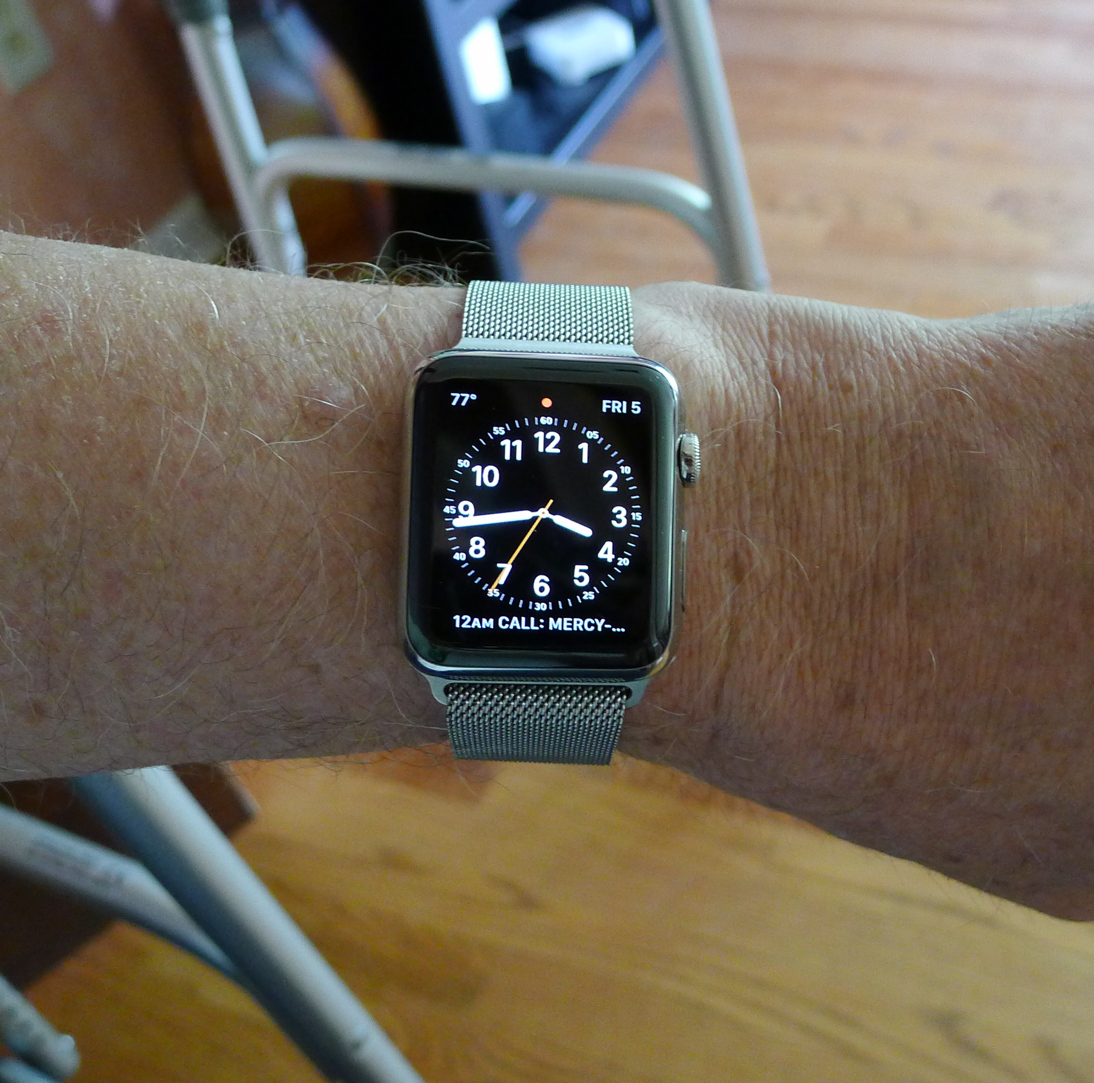
Photo 1PHOTO 1 shows one of the custom screen faces that can be chosen as I have done. I also customized the outside temperature, date and time and daily AMION as can be easily seen. There are many custom faces.

You’ll notice a small red dot on the top of the screen. That means there is a text or some other kind of message waiting. Swiping “down” the screen face with your finger brings the text up to read. Text size and bold can be customized. You can reply with some presets or when you actually speak into the watch just like Dick Tracy, It translates your speech into text (very accurately) and sends it along.

You can also put two fingers on the screen and it will send ten seconds of a thumping heartbeat Photo 2(PHOTO 2) that will tap on your intended’s wrist, getting their attention that there’s a text waiting. Again, this is rather subtle but it does work most of the time.

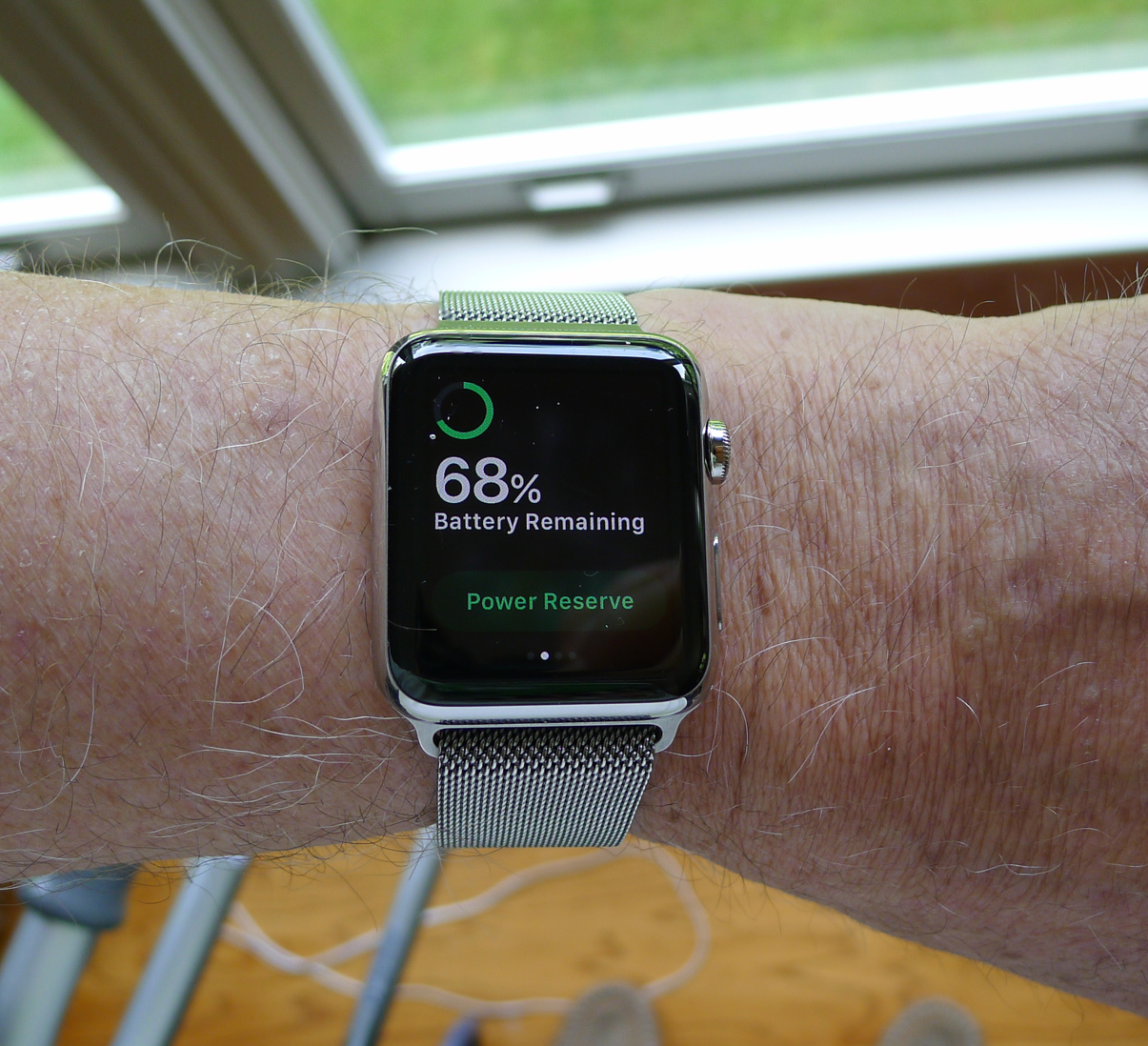
Swiping “up” on the screen brings up a list of “glances” for things that can be checked on, including battery time remaining Photo 3.(PHOTO 3).

Pushing the flat switch on the right side brings up your list of “favorites” Photo 4(PHOTO 4). As you can see, my wife leads the list and I have put photos of all people I contact frequently in place. Touching on the photo face brings up three possibilities of contact seen on the bottom of the screen Photo 5(PHOTO 5). To the left is the “phone” icon for phone calling, the middle is the “finger” icon for sending a thump and to the right is the “text” icon for sending text messages (voice translation). These all work well.

When there is an incoming phone call, the watch actually “rings” like a real telephone and the screen shows the phone number of the caller and a button to accept or reject the call Photo 6(PHOTO 6). When the call is accepted, you can clearly hear the voice of the caller from the watch and you reply by talking into it. Completely self-contained, but there is a quick way to bounce it all straight to your iPhone.

These are the functions that work quite well for us. She can get instant messages in the operating room (at least at St. Margaret). A glance shows if there’s a red dot, whereupon a message can be accessed immediately. She doesn’t have to know where her iPhone is as long as it’s somewhere in the same room. In our house, I can send and receive anywhere in the house if the iPhone is sitting on the living room counter.

If I happen to trash a bike somewhere in town, I can call the Federales (HAAAAAALP!!!) from my wrist instead of having to fish around for a phone. On longer trips I have a satellite emergency notification device on the handlebar that works anywhere in the world. This same device BTW worked after a friend’s crash in the middle of the Nevada desert, bringing an ambulance quickly from the nearest big town.

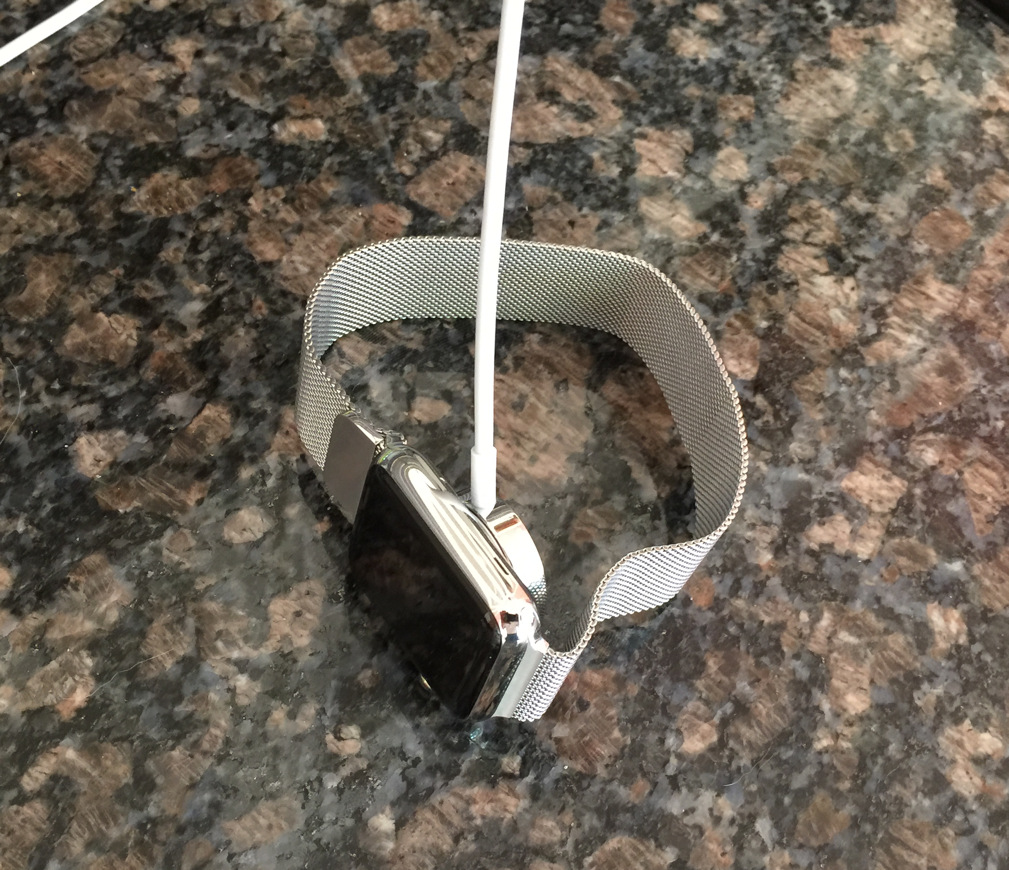
The battery lasts about 12-14 hours depending on use and charges in two hours from an external impedance device that catches the back of the watch by a magnet and charges it without having to plug anything in Photo 7(PHOTO 7).

Again, the watch does a lot of things I have no interest in, but what it does for me, it does well.


Film review: “Love and Mercy” (2015)

0

brianA fresh, unconventional exploration of musician Brian Wilson’s mind. Brian was the heart and soul of 60s pop group “The Beach Boys”, who like the Beatles started out their careers warbling catchy pop tunes that radio disc jockeys and record companies loved. Then, also as in McCartney-Lennon, Brian graduated to become an authentic musical genius in contemporary pop music, but not without a struggle along the way.

Brian was probably some variation of an adolescent schizophrenic. His symptoms came to fruit in about the right time frame. He metaphorically and literally “heard music” in his head, then set about transferring what he identified through others playing traditional musical instruments, or anything that could create a tone.

This is a gift that only a relative few have been given, and its translation can be difficult. In the 80s, Bob Segar reputedly threatened to fire his entire (Silver bullet) Band because the music they were playing wasn’t what he heard in his head. Brian’s band mates had little interest in any other than continuing their surfing song fluff that brought in a good living.

The film itself is as schizophrenic as its object, detailing Brian’s life as a young man played by Paul Dano and his older version played by John Cusack. In particular, Paul Dano totally nails the mental goings-on inside Brian Wilson’s head and brings them to life, instructing studio musicians, layering sound over sound while his vocalist brothers apply their portions into isolated microphones. John Cusack brings to life the burned out psychosis, serviceably controlled as with John Nash in “A Beautiful Mind (2001).

The film doesn’t solve the enigma of Brian Wilson, but it succeeds painting a wonderful portrait of his creative mind. The real Brian Wilson today at age 72 sings the song “Love and Mercy” in concert footage during the end credits, so you get a full feel for him.

The film is a bit disjointed and hard to follow, but the scenes of Paul Dano creating music are fascinating and worth the price of admission.

I give it four of five Theremins (on Good Vibrations).

Listen to some of the marvelous harmonies that came from the creative mind of Brian Wilson as they happened:

Crippen Mergers & Acquisitions Dept

0

Photo 1One of the interesting things about cable TV is its capability of creating a cottage industry. What’s happening now is an explosion of sites restoring “classic” objects that seem to be more desirable than those contemporary, certainly more valuable. “Ricks Restorations” (History Channel), will restore just about anything to pristine condition including old tricycles and kids wagons.

Nowhere is this trend more evident than in the restoration of “classic” automobiles. An increasing number of cable sites send guys out like zombies seeking brains. No garage or barn anywhere is safe from prying eyes and you’d be surprised at some of the cars found in such areas.

Amiable zanies from “Fast n’ Loud” (Discovery Channel) spend every day scouring the countryside for barn cars, even in pieces, to flip and sell for huge profits. Wayne Carini from “Chasing Classic Cars” (Velocity Channel) spends each episode finding incredible things. Check out the prices of his restored cars from his website:

http://www.f40.com/inventorymanager.php?reset_inventory=reset_inventory&filter=current&module=Vehicle&action=list&ajax=false&sortby=price%20DESC&offset=1

Inconceivable though it may sound, there are a LOT of cars sitting in garages and barns simply forgotten until the original owner (always a male) died and their wives want to clean out the garage.

A 1974 Studebaker V8 parked in a garage with a cover on it. The recently deceased owner drove the car 40 miles a year and his wife could only enter the vehicles shoeless. Total 7,600 miles after 41 years. Other than stale gas, the car was pristine with all original paperwork. Wayne pulled out his checkbook and told the lady to name her price.

Wayne found a Ferrari 330 GTS parked in a garage since the 60s. The owner (a doctor) drove it for a while, then it broke something in the engine, so it sat for 40 years. Cost new in 1967 was about US$7,000. Price at auction after restoration, went for just under US$3,000,000.

In the 60s, the average Ford or Chevrolet cost under US$3,000. Most or all of the usually foreign “sports” models were twice that, unaffordable for most in that era. Now it has become incredibly profitable to find, fix, restore barn cars and sell them for incredible prices at the many auctions seen on cable TV. Virtually all are totally unaffordable for anyone that works for a living now.

If anyone ever thought they could have a 60s or 70s twelve cylinder Ferrari, they can forget it now. They’re all over a million dollars. A 250 GTS once owned by Steve McQueen went recently for just under ten million dollars. Pre-1974 Porsche 356 series now routinely go for over US$100,000. 60’s Corvettes fully restored cannot be had for anything under US$80,000.

I can’t afford anything like that, nor would I spend that kind of money for something that might cause me severe financial issues if anything untoward happened to it. Plus, I can forget about obtaining insurance for anything like a US$100,000 car even if I could afford it. I would be terrified to drive it in Pittsburgh traffic even if I could afford the maintenance and upkeep. These are toys for people that don’t pay enough taxes.

So what’s a “car guy” to do?

There are creative options for having fun with “classic” vehicles affordably. One is to collect “classic” motorcycles, all of which can be restored to near perfection affordably and ridden safely. But if you’re just into cars, there are affordable “classic” cars out there if one does the research, and I found one.

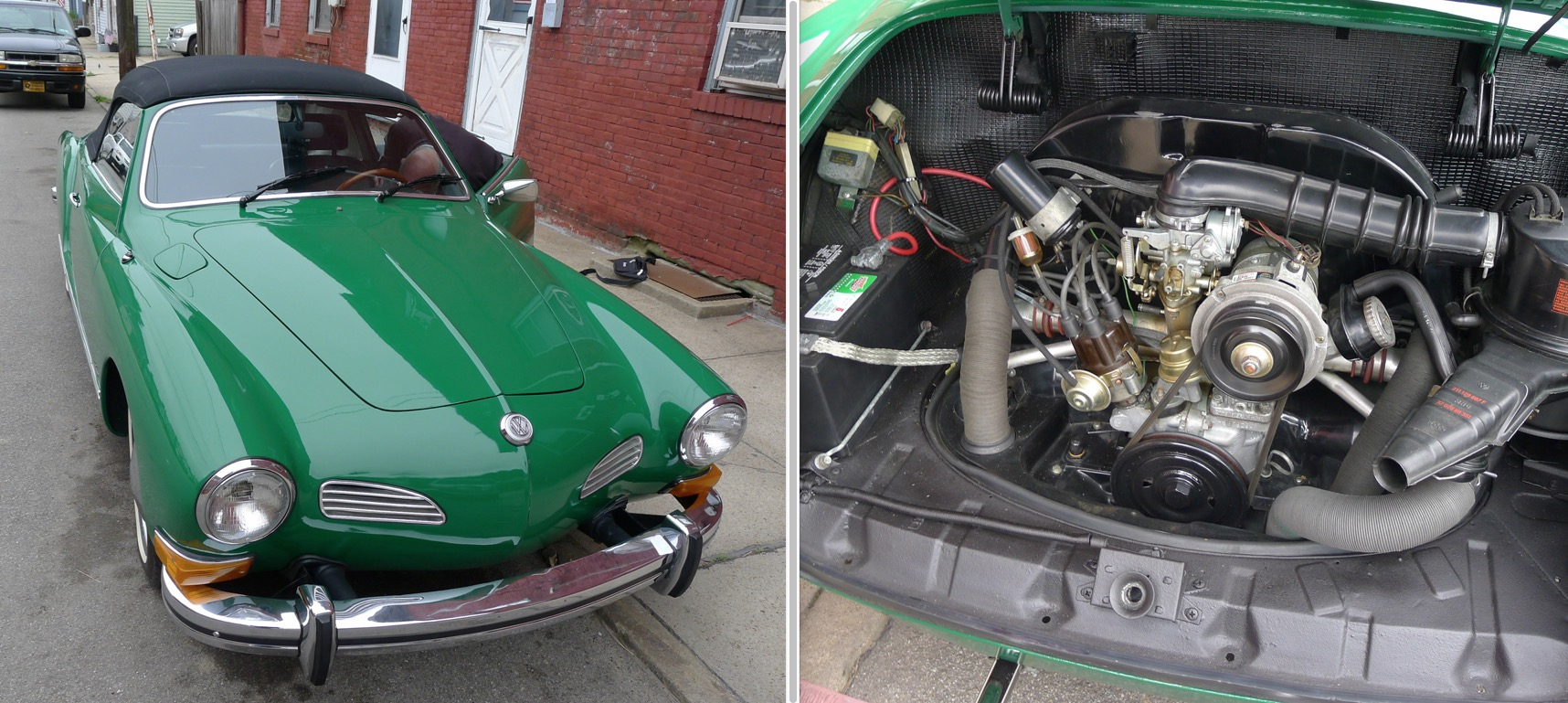
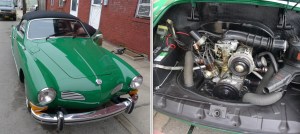
Forget about Ferraris and Porsches. I found a “poor man’s Porsche”, 1974 Karmann-Ghia convertible, completely restored from the ground up, a Southern California car (with papers) with no rust anywhere. I had an independent mechanic that does evaluations go over the car and he gave it an “A” rating. (PHOTO 1)

The Karmann Ghia is a true “sports car” built by Volkswagen but styled by Luigi Segre of the Italian designer Ghia and hand-built bodywork by the German coachbuilder Karmann. It has all the right curves and is a comfortable driving car but underpowered, a 50 hp Beetle engine.

The Karmann was not meant to be a hot rod, but more reliable and less expensive maintenance. A 15,000-mile service on a Ferrari requires pulling the engine and costs US$10,000. Service on the Karmann requires changing the oil and filter, under 50 bucks.

The price for the Karmann, especially the classy convertible hasn’t entered the ionosphere yet, but there is an increasing interest in them because the Porsche 356 prices continue to go up with no end in sight. There will be more of the Karmanns entering the market as they are found and restored and those prices will escalate as well. I’m starting to see some beautiful restored models advertised at prices around US$30,000. This for a car that cost $4000 new.

I got an excellent deal for this car, purchase price negotiated by a very knowledgeable professional car restoration friend here in Pittsburgh. The insurance for everything, liability collision and other damage or theft is equally affordable and I can get an “Antique” license plate, obviating the car from yearly State inspections. As you can see from the photos, the car is absolutely pristine. Original Blaupunkt radio and wood steering wheel.

Everyone that fiddles with these cars does something to increase the engine power. But there’s a limit thereof. Edward van Halen regularly blew up Marshall amplifiers by dialing a variac transformer to more voltage to the tubes. Similarly, it’s possible to get into trouble by overpowering a car meant to handle a paltry 50 horsepower.

These engines are frequently replaced with Porsche engines that fit perfectly. However, a serviceable 356 engine is increasingly hard to find and expensive. Porsche 912 engines triple the horsepower but they’re heavy, expensive and the suspension would have to be modified to handle the increased power.

I’m not particularly interested in those options. This car is not meant to be a hot rod. It’s a comfortable, cool, beautiful driving car. The engine just needs a little help.

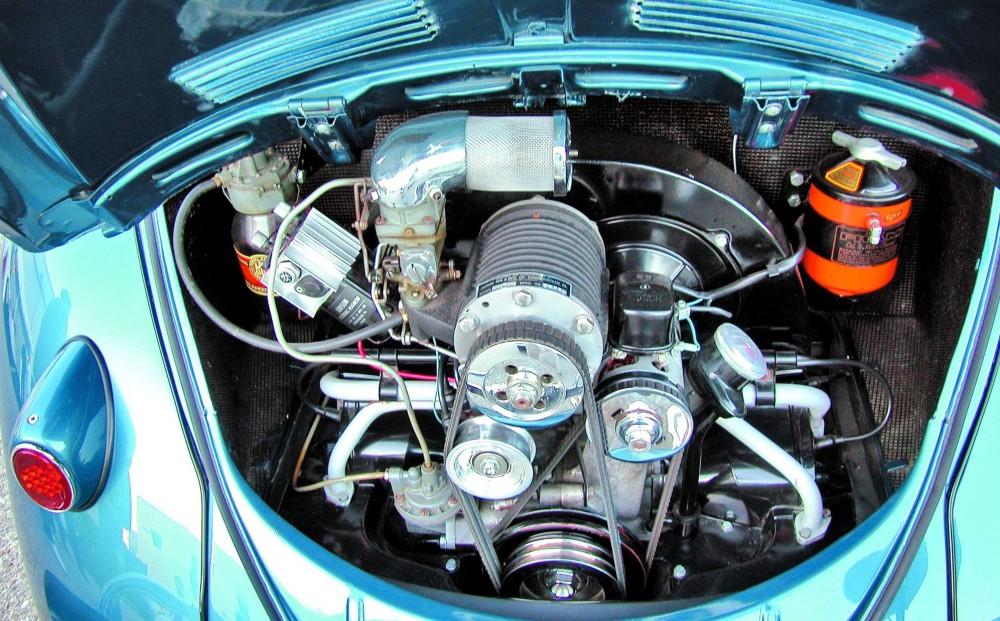
Some of you may remember the “Judson Supercharger” from the 60s that was especially built for the VW engines. (PHOTO 2) It was a bolt-on device that doubles the horsepower while adding no appreciable weight. They don’t make them anymore and used, restored ones are very hard to find. I have some feelers out but it’s probably unlikely I will find one.

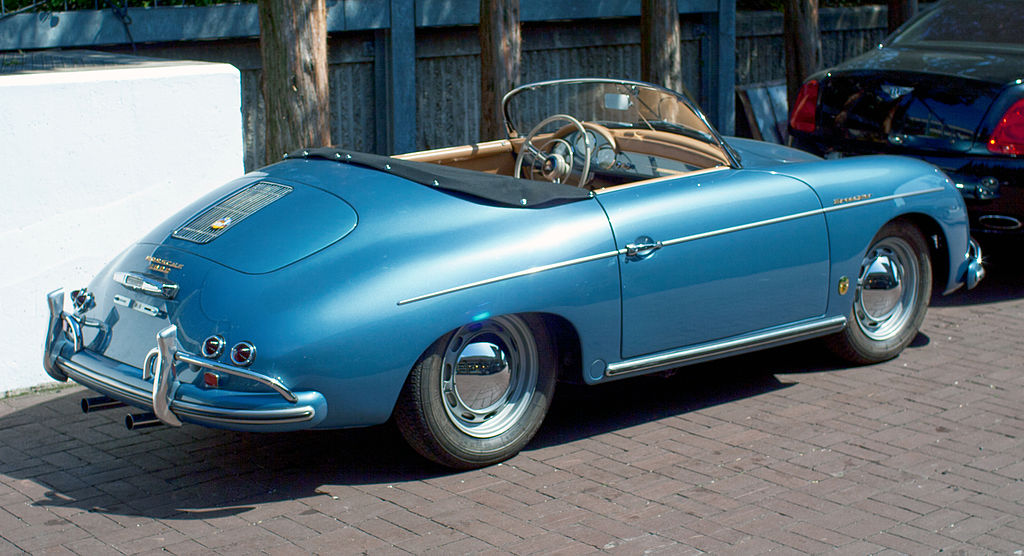
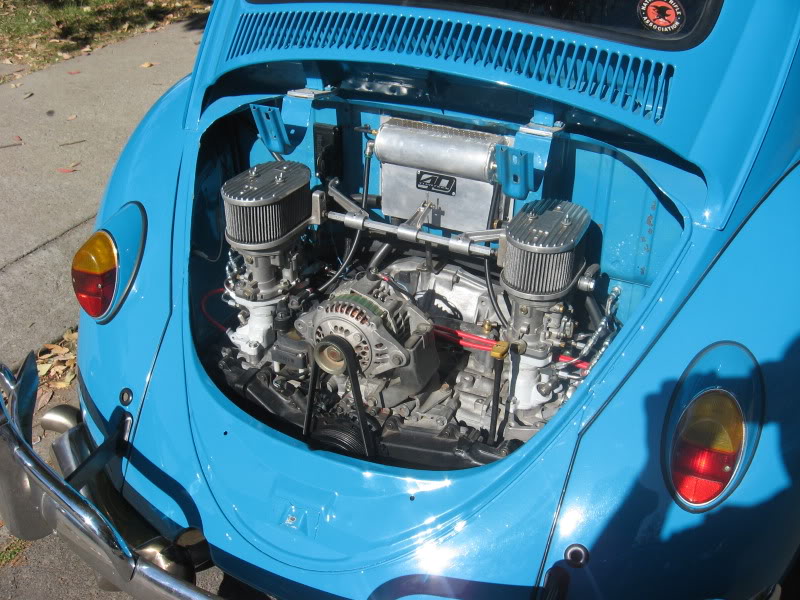
Failing that, the original engine is very little different than the baseline Porsche 356 (PHOTO 3) I can replace the stock single throat carburetor with twin double throat Weber carburetors positioned on either side of the engine combined with a low restriction exhaust system (PHOTO 4). This is basically the 356 setup anyway and would increase the horsepower to about 60, which the original Porsche 356A had as stock. That would probably do the job. If a Judson becomes available, it would actually increase the value of the car considerably.

Photo 2

PHOTO 2


Photo 3

PHOTO 3


Photo 4

PHOTO 4

Film Review: Ex Machina (2015)

1

machina_aA very interesting film, exploring some questions few have considered concerning artificial intelligence.

A quirky, eccentric computer ace with a ton of money from a Google-like background builds a super computer research lab out in the middle of the wilderness. He invited another computer whiz he’s thoroughly vetted into this facility to interact with an android he has constructed. The undertaking is to cozy up to the android to determine if her cerebral functions are real or simulated. Shades of Blade Runner (1982).

The android, Ava, is a mixture of human and machine. She whirrs when she changes position, but moves fluidly. The investigator’s task is to expertly inquire into the nuts and bolts of Ava through a series of interviews. To discern whether she can truly feel and think autonomously or whether all her emotions and human interactions are fluent simulations. A high tech speed date.

Through the course of the interactions, some spooky questions emerge. The investigator comes to doubt his own humanity when faced with questions as to the very nature of humanity. Is it possible for humans to discern synthetic humanity? Is the inevitability of “true” artificial intelligence a self-fulfilling prophecy, and if so, can it eventually evolve to self-awareness? Must human emotion and codes of morality necessarily become integrated with self-awareness? Could humans become like the bones of dinosaurs in time.

The film’s ending hints that a “Replicant” (after Blade Runner) can be programmed to have virtually any functional or even emotional qualities. They are quite capable of extremely intricate and directed human function with total honesty, but not necessarily a morality oversight. Some of these interactions are performed with exquisitely functional verisimilitude, begging lots of questions as yet unanswered.

Classic Blade Runner (1982) hinted at a lot of these issues, especially the increasingly difficult task of discerning real from Memorex. There are continuing arguments to this day over whether Deckard was, himself, a Replicant and there was no way to prove it one way or the other. When Deckard and Rachel escape along the Pacific Coast Highway, it’s unclear how much time either of them have but it is clear they intend to make the most of it, as anyone else would.

A classic scene of a Replicant’s death:

Ex Machina glaringly brings these questions into very clear focus. This film stands and refuses to fall with Swedish actress Alicia Vikander as Ava. The screen shines when she appears and dims when she’s not. She seduces the viewer instantly.

This is an excellent film. Highly recommended by me. I’m giving it a 5 of 5 mechanized silhouettes.

40th anniversary of Vietnam reunification.

0

Stuff you never heard of and had little interest in 😉

saigon-tankThis date (April 30, 1975) marks the 40th anniversary of the day North Vietnamese tanks rumbled through the streets of Saigon and broke through the fence at the Presidential Palace to formally re-unify North and South Vietnam. Today, this action is called Reunification Day (Ngày Thống nhất) and is a public holiday in Vietnam.

https://www.dailyherald.com/article/20150429/news/150428483/

This action signaled the bitter end of the “Vietnam War” (technically more of a “conflict”), known in Vietnamese as Kháng chiến chống Mỹ (“Resistance War Against America”). It was the start of the transition period beginning July 2, 1976, when the Provisional Revolutionary Government of the Republic of South Vietnam and North Vietnam merged to form the modern-day Socialist Republic of Vietnam.

I bring this date up for two reasons. First, because I would like you to think just a little about Vietnam. It was one of the most important events in modern history, in many ways shaping the new millennium. But the Vietnam Conflict is quickly headed for obscurity if for no other reason than the exigency of our current nonsense conflict in Afghanistan. A war that can never be won by anyone, as the Russians previously proved in the 80s.

Secondly, I want to passionately recommend to everyone in earshot to find and view a new documentary by Rory Kennedy (Robert F’s daughter): “Last Days in Vietnam”. This documentary can be viewed on the PBS channel intermittently and also free on some of the PBS websites. It can be watched free on several sites:

http://www.pbs.org/wgbh/americanexperience/films/lastdays/player/

It can be easily downloaded off iTunes as well.

This is a very objective and important documentary because it vividly portrays the human aftermath of extremely bad political decisions. It is painful to watch but necessary to give a perspective to the human suffering that occurs following imperious political policy. The bad decisions of the French resulted in 1,726 killed in action and 1694 missing in action in about 6 months at Dien Bein Phu. The Russians were unceremoniously thrown out of Afghanistan after 13,310 soldiers had been killed, 35,478 wounded. Those lessons should have been heeded.

I went back to Vietnam in 2011 after 43 years and I have some profound reflections on things pertaining to it. Vietnam has changed so radically and yet has so stayed the same. In 1968, the entire country was a big American military base. Many troopers never saw any of the cities or the rest of the country. Ankhe City didn’t exist. Camp Radcliff dwarfed the entire region. Same for Camp Holloway In Pleiku, Camp Eagle in Phu Bai and endless others.

In 2011, I saw the real country for the first time without the Army green and camouflage that had obliterated every landscape. Therefore, that trip was much more of a simple tourist effort than a trip back in time. Many in my present reality were not alive in 1968. Coming back to that place was a much emptier experience than I had previously anticipated.

Most or all of the areas where I Iived my life are no longer recognizable. I felt no particular clarification or verification of any of my life as a result of going back to the past. Whatever I might have been seeking has eluded me. Thomas Wolff was right on more accounts than one; you can’t go home again and you can’t go back in time to re-live either. Trust me, I have tried.

Perhaps I yearn for a “Somewhere in time” where Chris Reeves desires to go back so intensely and approximates himself into a time warp so accurately it actually happens and he is given another chance at another path to take. But alas, in the end it might be possible to have it transiently, but the coin always lurks that brings it all tumbling down.

And so we come back to the clearing at the end of our road and make what we can of it.

“Goodbye to all my friends at home
Goodbye to people I’ve trusted
I’ve got to go out and make my way
I might get rich you know I might get busted
But my heart keeps calling me backwards
As I get on the 707
Ridin’ high I got tears in my eyes
You know you got to go through hell
Before you get to heaven”

Steve Miller Band (1977)