An actor (Michael Keaton) famous for playing comic book caricature super hero’s from the past has fallen on hard times and decides to use his past connections to put forth a serious play on Broadway, proving that he’s not just a washed up hack. He opts to write, direct, and star in a show at the St. James in New York City based on the Raymond Carver story “What We Talk About When We Talk About Love”.
Keaton is thrown into a spiral of self-doubt and angst – second-guessing his own talent, personal relationships, career choices, and wondering whether audiences ever be willing to validate him again? The Birdman is a shadowy figure from Thomson’s past that haunts him as a voice to his self-loathing. A shoulder devil, a gripping source of temptation and self-destruction when the actor is vulnerable.
This film is technically listed as a “black comedy” but there is no comedic value I can see to it. It’s an exceptionally murky exploration of many things most people would prefer not to know about much less deal with. An artsy analysis of imperfect people struggling to navigate a cruel and feckless world, and there it pretty much stays for two hours.
Mexican filmmaker Alejandro González Iñárritu is noted for wringing unexpected performances out of his actors. He figured out Keaton has a lot of talent and so devised a self-contained entrapment for him to bring it out. Iñárritu created a time line within a single building, put Keaton at the beginning of it and allowed him to proceed along that timeline, interacting with other actors only as they dropped in to stimulate his creative process. What’s yielded is a series of Soliloquys as Keaton rolls along the rails. Each Soliloquy prompted by an interaction with a different actor.
There is no discernable plot of any substance just one heart-wrenching dilemma after another. The filmed is really billed as Michael Keaton on his way to an Oscar nod for surprising critics with an unexpected flash of brilliance. Maybe, but I doubt it. Audiences have been prompted to expect brilliance, and there are flashes of it, but mostly it’s depressing, gloomy and somber. If there are any Oscar hints, it will definitely be Ed Norton for Supporting Actor.
As far as Oscar nods for Best Actor go, from what I’m hearing and from what I’ve seen so far, Eddie Redmayne has a serious lock on it for Stephen Hawking in “The Theory of Everything”.
I thought Birdman was interesting but tedious, wearisome and not particularly entertaining after the first 30 minutes. Unless you like observing agonizing self doubt, you could easily wait till it comes to HBO and see it free.
Recall several months ago I wrote some editorial opinions on where I thought critical care was headed, some of them not too kind. I foresaw a critical care world full of Physicians Assistants (PA) and Nurse Practitioners (CRNP) doing patient care and critical care physicians as their handlers in executive roles. The actual experience and training of the critical care fellows to do that more and more attenuated as they eschew night call and direct patient care the PAs and CRNPs are more than happy to provide.
I see it already in the surgical specialties. I saw the guy that fixed my ruptured Achilles Tendon once, the day of surgery. Everything thereafter was handled by his PA. No way to contact him even if I wanted to. I saw the guy that fixed my femur fracture once, the day of surgery. The followup visit three weeks later was handled by his PA.
I was told a while back by the head of our Department who happens to be a long time personal friend that my weakness was that I wasn’t into teaching the fellows the algorithms and protocols that are ruling critical care, and that direct patient care is becoming overrated as it really won’t be done by physicians much anymore. It will be “directed”. the critical care physicians job will be to know every possible parcel of literature and to be involved in some form of research, because that’s where the institutional prestige (and probably money) is.
My response to that was that the directorial critical care physician will be more of a figurehead as he or she gets less and less hands-on experience, especially at night when all disasters happen. That’s, of course, not to say that these people won’t do an outstanding job. It is to say that either you’re a physician and trained as such or you’re not. That distinction is becoming more and more blurred.
So, as I go down the road, predictably this Paradigm is bearing very visible fruit in my case. First time ever, my “faculty reviews” broke the bottom end of 4 (5 being the highest possible). 3.8 for this partial year (this year has been tough for me). That means bottom end of “Very Good” because of a number of “satisfactory” marks given me (3.0).
Now, you have to understand that this is a lot like “Officer Efficiency Reports” in the Army. If a guy gets a completely fair report, his career is over. The only acceptable report is hugely inflated, and mostly bullshit. Pretty much the same here. The report detailing the statistics for all clinical attending here glows for anything over 4.25 and anything under 4.0 is mentioned only as an anchor dragging the Department down.
So, if you examine my strength and weakness numbers, you see that my highest numbers are involved with the issues of (quotes) “Faculty should promote patient care that is compassionate, appropriate, and effective for the treatment of health problems and the promotion of health”. “Faculty should promote knowledge of established and evolving biomedical, clinical, epidemiological, and social behavioral sciences, as well as the application of this knowledge to patient care”. Faculty should demonstrates respect, compassion, integrity, and altruism in the maintenance of professional relationships with patients, families, and colleagues. Meets all professional responsibilities with regard to patient care. Highest score: Faculty explains the ethical, economic, and legal aspects of Critical Care Medicine as well as the psychosocial and emotional effects of critical illness on patients and family”. Creates an appropriately relaxed, cordial, positive, and stimulating learning environment. Briefly reviews expectations of the fellow at the beginning of the rotation or at the start of time on service.
Lowest scores: “Faculty should promote the ability of trainees to investigate and evaluate their care of patients, to appraise and assimilate scientific evidence.” These scores were low enough to bring my average down below 4, first time ever. A fairly dramatic change from years past.
I’ve cherry picked here as much of this is much more complex but I give you the skinny. What’s happening is that the CCM Fellows are being told what is important. What is important is less hands on direct medical care and more ability to honcho others to do it based on current literature cites and research data. If they don’t feel they are getting what’s important, they downgrade those they don’t think are giving it to them.
So, I think it is happening and it’s happening fast. My fear is we are graduating more intelligent, intuitive doctors that have less and less experience in dealing with direct patient care and more experience bringing forth the latest cite on any subject. Direct patient care will more and more be done by non-physicians. . Unclear where it ends and what the sudden, unexpected aftermath will be. Maybe it will work out fine. If so, the curricula of medical college will begin to approximate that of PhD programs.
Comment: Much of what has happened is a result of supply, demand and market forces here in the south. Few intensivists, fewer who will choose to be up all night, and relatively plentiful NP/PA who value training and practice in critical care.
This has been a steady process of deterioration here for the past few years and fighting it is impossible since prospective fellows can choose to enter a “Pulmonary, Allergy and Critical Care” fellowship that has NO night call and get jobs identical to those coming out of multi-disciplinary fellowships that demand night call as a learning experience. We actually started seeing a deterioration in qualifications in our applicants until we cut back on night call. I think currently they have to do one night a week and at the rate we are adding PAs/CRNPs, most of that is just hanging out watching other people work.
Comment: Our challenge becomes finding an effective and efficient strategy to train up those physicians who are willing to work hard to an ever higher standard. My bias–and this is a personal, not corporate bias–is that we need to get to progressively more realistic simulations that expose trainees to more problems and issues in 4 hours than we ever encountered in a fortnight.
I think the pool of those would-be physician trainees is dwindling and dwindling fast. In fact, physician trainees willing to deal with the hassles of direct patient care is dwindling. Why should they. Nuclear medicine and radiology specialists are well paid and they all go home at five. Physical Medicine and Rehabilitation. Rheumatology. Sleep medicine. Hematology. Physician trainees are choosing specialties that come with a built in barrier to being bothered after hours.
So we are building a full compliment of clinical intellectuals who know everything there is to know about subjects that fully insulate them from after hour disasters. Who’s there in the middle of the night when the dying happens. Emergency Physicians, but they are normally not credentialed for in-house care. Hospitalists? Jury out. It will be PAs and CRNPS because it seems they are more affordable. The legacy of affordability has yet to be confirmed but I see the hazy vision as it forms.
Comment: One view is that the technology to achieve this is “too expensive”. Another view is that whoever pulls it off could create a national sim center that operates around the clock for primary and recurrent training.
This is another factor I’m seeing come to fruit here. My medical students all look at their watches mid-morning during or after rounds and decry they are late to the “sim-center” where presumably they spend the rest of their day. I am on record that if the day ever comes and it might, that students get most if not all their time dealing with clinical emergencies via simulators, we are all in deep, deep trouble indeed. The worst possible place to end up would be a hospital where providers translate virtual reality to real reality.
I landed in a hospital in the middle of the night with a femur cracked from stem to stern, a hematocrit dropped to 26 and hypotensive. Even as a long term attending physician at this institution I took pot luck when it came to a provider that knew how to deal with this issue. When Dr. X cruised into my room, had a look at me and the films and told me he’d take care of this I could have kissed him. By the time I got to the operating room it was something like 4 am and he’d been operating all day. The conversation in pre-op went like this : “Him (Putting his initials on the skin of my leg): “you up for this?”. Me: “better question- YOU up for this?” Him: “(stretching)…..You bet. Lets get this done”. Four hour procedure started at 0400 hrs, masterfully done.
Young guy seven years out of his fellowship in trauma and orthopedics. Literally putting my life and my future ability to ambulate in the hands of someone I don’t know. Trusting him with my life and livelihood? How long do you think we’re going to have these spirited guys willing to beat themselves to death for the benefit of people they never saw before. I genuinely fear we are not headed for more of them.
Comment: I do not think there’s much point in bemoaning the new division of labor. We need to consider how to concentrate training and broaden experience at the same time. At risk of sounding like a “broken record ” (for the younger list members, please Google this archaic expression), aviation figured out the importance of high-fidelity simulators a while ago.
Dealing with the infinite clinical nightmares all conspiring at the same time is NOT like high resolution avionic training. I genuinely fear for sick people in ten years. Hospitals may or may not have the ability to care for them. I am not optimistic, Tim. Making the best of an inherently bad situation for the worst possible of reasons (diminishing funds) isn’t the same as streamlining provision logically and intuitively.
Here’s what I see happening to critical care in the next ten years.
Insurers will become more and more tight with funds as they discover the multitude of patients transferred to ICUs simply to die after a massive wallet biopsy to chronicle their impending demise. But politically, it’s impossible to “say no” to it so they will find other ways co cut funds for “critical care” that can’t be traced back to bean counters. As a result, the time and energy needed to prove admissions are deserving of “critical care” will become progressively ponderous and difficult. Critical Care physicians will become experts in reimbursement policy and will spend most of their time doing it.
Most if not all of the clinical catering will be accomplished by mid-level providers, PAs and CRNPs, and they will all do a great job because if for no other reason most of the day-to-day patient care isn’t all that intuitive. Busy work looking after numbers, cultures, vitals and so on. Acute decompensation in the middle of the night will be addressed mainly to keep the patient alive until morning when higher levels of expertise will come to bear.
I have always said that the day will come when I can tap into a huge global multi-million patient data base, punch in my patient’s particulars and show the family what the real mortality will be and when it will occur no matter what treatment is afforded. I think that day is close. Similarly, that same data base could be used to create algorithms and protocols showing the best possible outcome according to how those millions in the data base did with any treatment scheme.
Accordingly, morning rounds will consist of input from executive levels of critical care physicians who will select the proper clinical protocol for the patient to be on. Protocols based on “evidence based medicine” (consensus of journal articles on the subject), and there will be one for every possible disorder. Respiratory, cardiac, gastrointestinal, neuro and do on. Of course there will be a trailer at the end of each suggesting that they may be modified by “clinical judgment”, but since the critical care attending has long since lost any experience in clinical judgment, that won’t matter. Variations of response to protocols will be met by more protocols, and if the patient dies, it will be because he had no ability to respond to good, standardized care.
As medicine becomes more complex and the information base has increased beyond the ability of individuals to contain it, we go more to the tender mercies of collective clinical judgement (from the literature). Individual clinical judgment is not amenable to control or standardization which is a situation that can’t be condoned.
When I walk into a patients room, the entire ambiance of illness and infirmity flows into my own personal database. I see and feel things that only someone who has spent 35 years at the bedside sees & feels and I intuitively know a lot of things that I don’t need to test against a computer database of the literature to see if it’s valid for THAT patient.
However, I might be wrong because I also have human frailties. And if I am wrong, then my wrongness will be measured by the database of “evidence based” literature which will always be right, especially since it didn’t need to be consulted for THAT patient.
So, current thought is that in the end, everything will be measured by “evidence based” data. The BEST chance for success is to plug everything into a protocol that reflects “evidence”. Although sometimes brilliant, individual care plans suffer from poor quality assurance. Sometimes they can be lousy and there isn’t sufficient ability to separate the two.
So, the whole point of a protocol is that’s it’s uniformly followed to the letter. Deviations result in uncertainty which cannot be condoned. It’s like letters from the Internal Revenue Service. A half page informing you that money is owed and you have been identified as the person owing it, then five pages of what they’re going to do if you don’t pay up.
Protocols are not for thinking processes of whether they should be followed. Protocols are to be followed or those refusing will die the death of 1000 meetings to explain why to stern faced administrators.
Are protocols a good thing that will improve patient care. Unknown. Will be eventually seen. My personal brand of clinical intuition is clearly dead and if I last the next couple of years before forced retirement, I’ll be lucky.
I am the last of my kind.
There will be no place for medical education as we understand it in this scheme. There will be no point in medical students dealing with these patients because they are cut out of the protocol loop. Medical students will spend 90% of their time on simulators watching the numbers fly by and the robot twitch. Any direct patient care performed by resident staff or medical students will be for routine hospital care. Anything resembling an emergency for a hospital patient will be dealt with by mobile emergency response teams who will arrive at the bedside to usurp the continuity of the previous trainees who will observe the goings-on from the back of the pack.
That this will occur (and is occurring now) is a lead pipe cinch guarantee unless……………..
The big joker in this deck is now political. (FL now suspends previous prohibition against political diatribe temporarily because it is integral to this discussion).
As the cost of health care continues to escalate and the reimbursers continue to find novel and bulletproof ways to cut funding for it, the “real” predictions of how this will all go are just that. The scenario I presented above is what’s happening right now and what will progress all other factors remaining equal, but other factors will not remain equal. Everything is now changed as of the mid-term elections where we now have a radically different power structure and a VERY unclear picture of what the Presidential situation will be in 2016.
The Affordable Health Care Act of 2008 was created to do several important things including to make health care portable and affordable by spreading the cost over all those involved. This became a political football and as of today survived those who would destroy it. However, the barbarians previously at the gate are now in charge and so it is now very unclear whether the AHCA will survive. If it doesn’t, and it may not, then we will drop back to our previous system of “private” insurance for those not eligible for Government health insurance. That insurance has been in the process of escalating the cost of indemnification yearly to as much as 50% a year and will continue to do so as long as demand exceeds supply until it collapses under it’s own weight. When it does, there is nothing else in sight for non-Medicare and Medicaid patients other than “self pay” which guarantees instant lifetime financial insolvency for a routine illness requiring hospitalization or surgery.
I also believe then that if the AHCA fails, the next step is European style National Health Service, which is the ultimate affordable system. It gets X amount of $$ and that’s it. Use it wisely. If and when that occurs, my previous predictions above are dashed on the rocks and we will be sailing through completely uncharted waters.
Something very important to American music is going on right now. A couple of weeks ago there was a preview as David Letterman had The Foo Fighters playing at the show’s end every night for a week with remarkable guest artists. Ann and Nancy Wilson of “Heart”, Zak Brown rendering a thundering rendition of a Black Sabbath song, Rick Nielson of “Cheap Trick”. Each of these productions is simply incredible and predictive of what’s coming next.
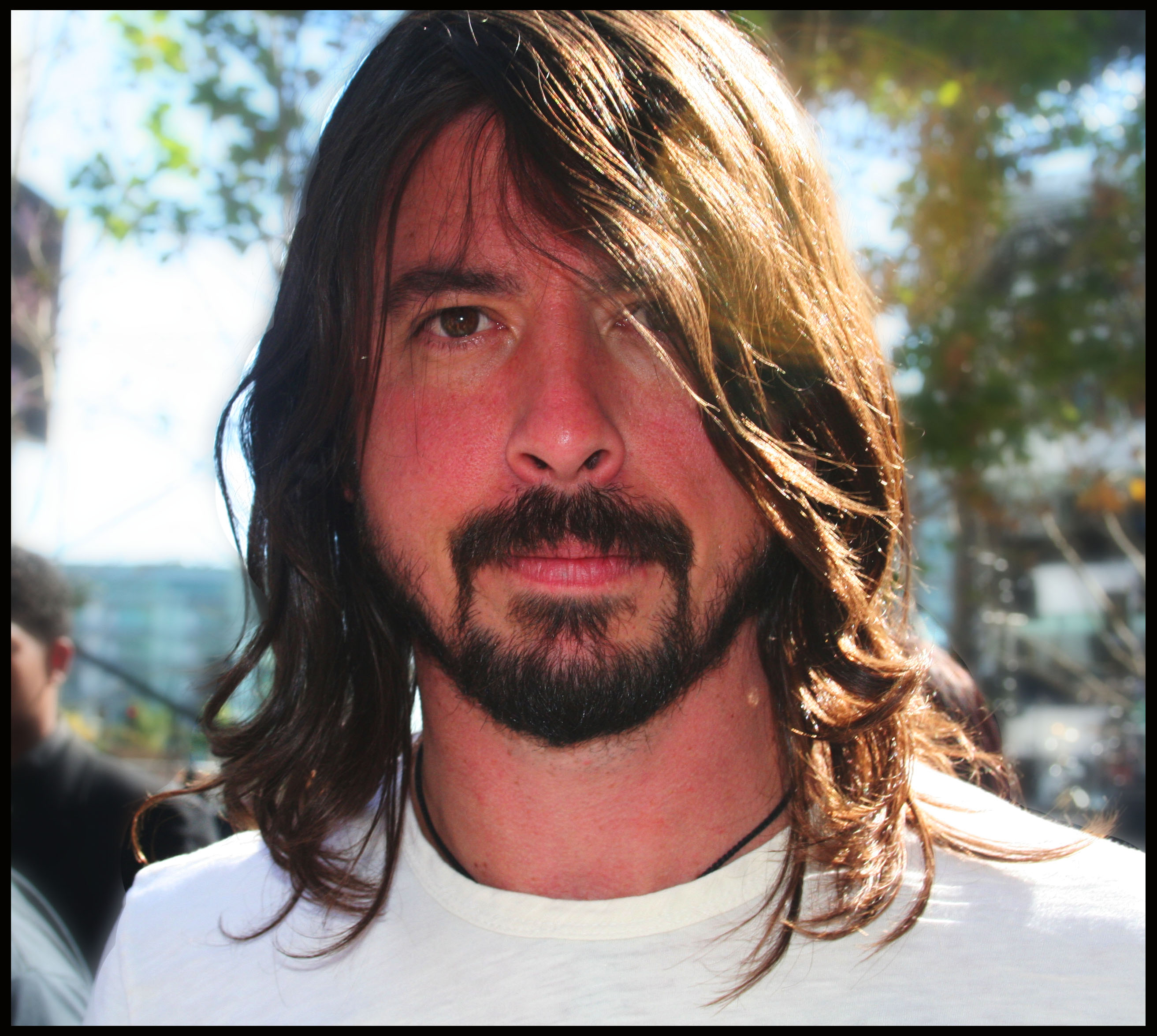
Dave Grohl and Foo Fighters are spending a week in each of eight cities, each with a specific musical heritage to absorb the unique vibes, then write a song at the end, the lyrics of which are gleaned using only quips and memorabilia learned by interviewing local musicians during the week. One side of the ledger is things learned, the other side lyrics cut and pasted from the experience. Grohl paired the music and documentary to give substance and depth to the final song, making for a tight emotional connection.
First city was Chicago where the Grohl explored the evolution of Chicago Blues and the legendary Buddy Guy, then the evolution of the punk rock scene that influenced many of the Chicago musicians. For the final song, they’re joined by Cheap Trick’s Rick Nielson to record the first song for “Sonic Highways”.
The second city is Washington, DC, home of most of the American punk scene in the early 70s. Punk band Bad Brains and Ian MacKaye of Teen Idles, Minor Threat and Fugazi, who all recorded at Inner Ear Studios in DC over the decades. Virginia-raised Grohl says that vibe “produced the entire soundtrack of my youth,” and he dwells on the punk scene of each city.
The “Punk” scene permeates all of American music, including early Nashville and Austin, Tx music. The American punk scene was remarkably different from the coincident European punks, a reaction to unemployment. The American punks embraced the concept of absolutely no limits in musical expression. Anyone anywhere could stand on stage and try their luck. By the sheer volume of those playing, a lot of creative music congealed and emerged.
Third city was Nashville and interviews with still productive country greats, Dolly Parton, Tony Joe White, Willie Nelson, and Emmylou Harris. Fourth city was Austin Texas, home of Austin City Limits, as exploration of the ingredients that brought legendary Stevie Ray Vaughn to greatness. Gary Clark Jr. Joins the Foos for the final songs “What Did I Do? And God As My Witness”. This is some of the best music I have ever heard. The final product, four cities yet to go, will be a very interesting interpretation of how environments shape music. This has never been done before.
Dave Grohl believes that all music can eventually be traced to a central origin that nurtures and modulates it and he’s working very hard to explore that path. The best way to explain the concept is to postulate the repository of music as an unstable star in the universe of existence, undulating and straining but not ready to explode just yet, waiting for the right stimulus. Back in the 40s, big band music was simple and staid, feeding upon itself. In the 50s, a fundamental instability began with skiffle in England that created the Beatles In the USA, be-bop and rhythm & blues, Gene Vincent and the Blue Caps, Little Richard, Jerry Lee Lewis and of course, Elvis. All of this boiled to the surface to bring the star to an explosive point in the early 60s, setting the stage for the cataclysm that occurred in the second half of the 60s when it all literally and metaphorically went electric. A musical revolution never before dreamed of and will probably never be seen again.
The star erupted sending chunks of musical expression out into the abyss. Lets make a quick & dirty list of just a few the blinding chunks flying forth to change the fundamental nature of music. Hendrix, The Animals, the Zombies, The Kinks, Cream, the Doors, Pink Floyd, The Velvet Underground, The Rolling Stones, Frank Zappa, Otis Redding, Creedence Clearwater, The Byrds, Simon & Garfunkle, Janis Joplin, James Brown, Miles Davis, The Who, Sly & the Family Stone, Paul Butterfield Blues Band, Buffalo Springfield, Procol Harum, Paul Revere & Raiders, Hollies, Dave Clark Five, Neil Young, Steve Miller Band, The Guess Who, Roy Orbison, Them, Beach Boys, Steppenwolf, the Temptations, Blood, Sweat & Tears, Jackie Wilson, Sam Cooke, Marvin Kaye, Jefferson Airplane all at once.
Each of these chunks shone brightly and independently, eclipsing other nuggets in similar situations. But in the end, like real stars, gravity rules and all the chunks were slowly drawn back into the mass of the star by gravitational pull, stabilizing it into a huge mass of encyclopedic, heterogeneous, eclectic sound and tone. There is no more critical mass. The star now allows a solar wind to emit from its surface, a temporary swell of unfiltered music that waxes & wanes in time. Disco, Britney Spears, Justin Bieber, “American Idol”,‘The Voice”, any black female singer with ironed hair. They’re all out there wafting around at the whims of the desultory solar mini-eruptions.
The solar wind occasionally allows some bright spots. There’s a lot of incredible music out there and if you seek it, there is one rule. Don’t follow the money. The money will lead you to hype, glitz and an empty box with a Kardashian brand on it. The performers that we’re still listening to pushing 50 years later wandered into Nashville or San Francisco on foot, broke with a Taylor or Telecaster strung over their back and played for five drunks in a dark bistro. They all shared one commitment and that was absolutely no compromise. The music was what it was and would not be altered for any commercial advantage. It was all about the music. They didn’t care if they starved as long as someone was listening.
Neil Young who never compromised a minute in his entire life wrote: “We may not compromise……I may not suit your taste tonight”. Kurt Cobain wrote: “”I’m too stubborn to allow myself to ever compromise our music or turn us into big rock stars,” Cobain said. “I just don’t feel like that.” When Kris Kristofferson arrived in Nashville, Sam Phillips of Sun Records said his shoes were “falling off his feet.”
These are the musicians I want to hear and you want to hear. That’s where the creativity is. The innovation, initiative, inspiration, artistry and vision. The further you get away from money, the better it gets.
Dave Grohl understands this and has explored it for 20 years with the Foo Fighters. A substantial book could be compiled on his formidable abilities as a musician, songwriter and producer since the death of Kurt Cobain in 1994. In “Sonic Highways” Dave digs deep into the musical history of each city and crafts a song for each in hopes of showing the differences. It isn’t perfect but it’s good. A musical map of America. Highly recommended by me:
The one big paradox in American music is the ascension of mediocre talent to big money. No performer illustrates mediocre voice talent more than Taylor Swift. I’ve heard equal voice talent in local bar band singers. As it pertains to the nuts and bolts of voicing, tone and ear worthiness, Ms. Swift cannot stand on the same stage as Sharleen Spiteri of the Glasgow band “Texas”, who in 25 years continues to enjoy only local UK exposure.
Ms. Swift’s latest album of sophomoric personal narratives, “1989” sold 1.287 million copies in its first week, debuting at number one on the Billboard 200 and making Swift the first singer act to have three albums sell more than one million copies in a week.
Postulating that talent must (eventually) equal success, it’s difficult to explain how this can be.
The unfortunate reality is that lack of talent does not necessarily equal failure once marketing becomes involved. This is because the ears of the general public are mercilessly commuted by aggressive marketing techniques blending visual images into the mix.
Taylor Swift is an exceptionally attractive blonde young woman with a great body. Savvy marketers have worked this to the max and it’s extremely rare to see her without a full regalia of Avant guard clothing and makeup. Her concerts are full of frenetic flashing lights, glitz and costume changes. This product was created and tweaked by legions of experts to focus on a specific audience; probably teen and especially pre-teen girls (see Britney Spears elsewhere).
Looking at the big picture, selling “millions” of records isn’t that impressive compared to the number of listeners out there, especially ones that don’t purchase records. Recently, Charlie Rose interviewed actor Jake Gyllenhaal regarding his new film “Nightcrawler”. The conversation about a sociopath that creeps around Los Angeles at night photographing violent, salacious activities and selling them to local TV stations. The question of who could possibly be interested in such things arose.
The answer was interesting. Back in the 60s, television news was immune from TV station merchandizing for profit. This changed somewhere along the way and the news section was expected to generate a profit. This quickly produced what we see now on every local TV station in the country. Roving reporters looking for anything that might possibly be of interest to a population of jaded viewers bored with life in general. Weepy mothers decrying their kid shot dead just minding his business in the middle of a high drug exchange area at 3 am. Vivid car accidents. High visibility court cases, especially involving sexual infidelity. This is news? No, it’s entertainment and it draws viewers, which draws sponsors, which generates money. It is an inalterable fact of life.
In section three of Dave Grohl’s monumental HBO series “Sonic Highways” (Friday nights 11pm), Dolly Parton candidly discussed the poisoning of talent by progressive “business” practices fomented by bean counting money experts who have nothing to do with music. Nashville used to be a town where raw talent could arrive, pay their dues and eventually find at least sustenance and possibly fame.
Nashville is no longer about singer-songwriters. It’s about songwriters writing songs for singers who fit the profile for the proper amount of glitz and showmanship to generate money. The song matters less than the milieu of how it’s delivered, passing a gauntlet of financial and marketing experts who know moneymakers when they see them. Dolly opined that if she walked into Nashville today, no one would give her the time of day.
It naturally follows that Taylor Swift started out in Nashville. She worked it for years, plying the potential to make money while delivering at least a serviceable vocal product. For years the mentors gently nurtured her into a product that would fill the bill. None of this had anything to do with vocal talent. It was leaping onto stage from spring loaded boxes, dressed to show her figure as provocatively as possible and warble to the flashing lights and a swell of electrified instruments.
She learned her lessons very well, and as of this week, continues to learn them from the legions of business managers that surround her. In removing her material from Spotify (a realistically priced music streaming site), she remarked: “I’m not willing to contribute my life’s work to an experiment that I don’t feel fairly compensates the writers, producers, artists, and creators of this music.” Other critics suggest this move will generate more short-term dollars from fans forced to purchase her new album.
So the new flavors of popular music have quickly moved to sacrifice widespread listeners of their music for a higher marginal price to disseminate each portion of it.
Unclear where this will end if it ever does. In the days of singer-songwriters that strode into town, broke, unwashed, wrote their own music, stood on stage with minimal if any accouterment, played for endless hours for drinks and refused to compromise even a little are clearly over. This is where genius resided. The only environment that can nurture genius. If there are any more Kris Kristoffersons, Willie Nelsons, Steve Earles, Emmylou Harrises, Waylon Jennings we may have to catch a seat at the historic Bluebird Café to see them. There will be plenty of Taylor Swifts for sale.
Just some desultory thoughts while I watch my leg heal.
The one obvious question is: Does this, yet another war film, an amalgam of “Saving Private Ryan” and “Platoon” deserve a stellar “88” rating from rottentomatoes.com? The answer is yes, with a couple of caveats.
The characterizations are stellar. The principals unconditionally depict the emotions, stress and tragedy of brutal war scenarios that seemingly never end. Yes, Brad Pitt is excellent (and has clearly ascended to the A-List) as the stalwart that holds his flock together through it all. Shia LaBeouf), as loader Grady Travis is outstanding. Jon Bernthal and Michael Peña evolved to steely eyed, unrepentant killers with no concept of a future other than more of the same.
The other actors support the premise with excellence but it’s Logan Lerman as Norman Ellison, a benign clerk/typist pulled from the ranks to be a rookie tank driver, wholly unprepared for combat, that steals the show. Norman’s horror at the perpetual atrocities his fellows treat as a routine part of their day are mirrored by the audiences horror at watching him progressively acclimatize to it. Director David Ayer captures the suppressed agony of men in brutal combat with immediacy and accuracy, which brings up an interesting paradox.
What is the real value of violence in film, especially video game computer-graphic interface that festoons half the films out there? Normally, nothing other than to sell tickets to those attracted to that sort of thing. However, “Fury” is remarkably different, I think. The particular species of violence in the film seems necessary to bring out the reactions to it from the gifted cast. So, the violence in this film is part and parcel of the performances. Without it, none of those emotions would have the same intimacy and congress. It works for “Fury”.
Extras: Look for Michael Peña in the new series “Gracepoint”. Also keep your eye out for Clint Eastwood’s son from 1987 from a flight attendant, Scott Eastwood who plays Sgt. Miles. The birth certificate of Scott Eastwood bears the notation of “Father declined” and he has gone by his mother’ last name, Reeves.
Best part: Tender moment between Norman and a frightened German refugee girl and the aftermat
Weakest part: Not much. A little too long, as most of them are.
This review will be somewhat different than usual in that I cannot divulge much if anything about the intricate, convoluted plot without risking spoilers.
So I will say that the plot is exceptionally intelligent and imaginative and brought to the screen quite accurately from the book of the same name by Gillian Flynn, (who wrote the screenplay). So imaginative I think, that this writer mush have had some personal experience in this kind of story line. It’s difficult to conceive of an individual dreaming up something this labyrinthine. That gives you an idea of how this plot goes.
Several things do stand out:
A very interesting and very scary view of relationships, the giddy, hormonal beginnings followed by waking and smelling the coffee years later. The soft underbelly of the most superficially shining relationships that could be any one of us.
This film lays out a very accurate picture of how tiny bits of otherwise meaningless information congeal together to form a coherent plot (sort of a media version of “Zero Dark Thirty”) expertly guided by the impeccably evil tabloid media. The film accurately mocks Nancy Grace, but made her more or a caricature than the truly evil queen bee of all things tabloid she is.
It also reaffirms the age old advice of every attorney I have ever known and even, truth be told, most cops, that anyone under even the slightest suspicion of anything must never, NEVER answer any questions from a police officer without an experienced defense attorney by their side.
Rosamund Pike as Amy is exceptionally good in this role and very believable. An excellent performance. Ben Affleck serviceable but not quite up to Pike.
Some shortcomings:
Like most films today, it’s too long, straining the audience’s ability to follow the plot for the full length. Two and a half hours of this intricate plot is a long sit-through. The book was 400 pages.
They work the tabloid press angle to a bit of an extreme, washing half the film in satellite dish-carrying local news trucks parked outside everyone’s house, swarms of screaming, microphone-carrying drones pushing and shoving to demand statements.
The audience is left with the uneasy feeling that the tabloid media depicted in the film totally controls all the outcomes and even our own reality. Not the “real” truth but its perspective. All that matters is how it’s portrayed on a screen
That’s the argument made with Gone Girl, and it’s done very convincingly.
I stumbled on this after the star, Maggie Gyllenhaal showed up as a guest on Craig Henderson’s late, late night show and briefly discussed the film. She was incredibly articulate and described the film in such a way that I really got interested in it.
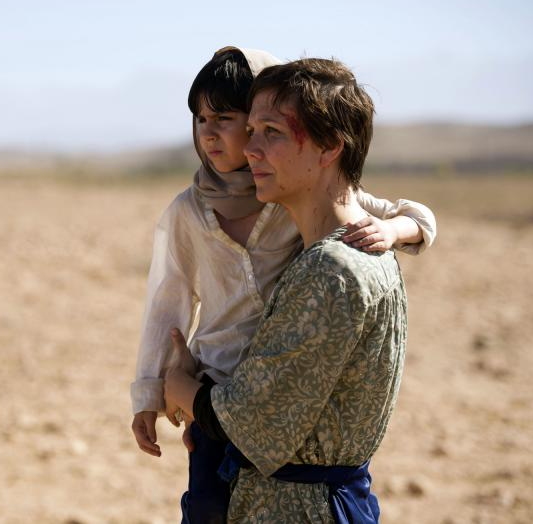
Set in Israel, the story line consists of a brother and sister who took over their father’s extensive business in the Middle East after he was assassinated. The series focuses on Nessa Stein (Maggie Gyllenhaal), the British daughter of a Jewish businessman who dealt weapons to Israel and was subsequently murdered before her eyes as a child. When Nessa inherits the company, she decides to take it in a more altruistic direction, contracting with a Palestinian to lay cable that would provide high-speed Internet to Gaza. Nessa is catapulted into a conflict with spies and terrorists that leaves her struggling.
Nessa’s warm, fuzzy intentions are sucked up into the vortex of the region’s conflict: a history of violence, distrust and uncertainty. The evolving situation is made infinitely more complicated by the interaction of several spy groups heralded by the great Stephen Rea as a seedy M6 spy trying to get to the bottom of the intricate mess.
The plot is exceptionally complex, made more so by trying to decipher heavy foreign accents. The double-crossings, the complex machinations, the flashbacks gave some exceptional performances room to breathe, creating characters both compellingly flawed and very human. There is a full bill of phenomenal female characters including Lubna Azabal as Atika (right), Nessa’s translator and companion that would directly lead to political actions replete with murder and mayhem along the way. The power-plays between the sneaky and ambitious Monica (Eve Best), the gutsy intelligence chief Julia (Janet McTeer) and morose Hugh (Stephen Rea) directly participate in the unravelling of the Stein family.
Excellent writing. The tension and suspense of this eight part series, punctuated by unexpected violence and murder is heavy enough to cut with a knife. The dense narrative thickets, moral entanglements and damaged complex characters are beyond compelling. Be prepared to run the film back frequently to understand subtle things easily missed first time around due to heavy accents. This is an excellent film in virtually every regard with fine performances from the characters.
I give it 4.5 of 5 heavy beards. (Can be found on Comcast)
Disclaimer: Contains exceptionally offensive and violent scenes involving women, and also contains a significant amount of Middle East politics without pointing fingers at either side.
Today for no particular reason and having little else to do, I chose to catch a film I knew little about simply because 84% of the Rotten Tomato viewers liked it. That film, “The 100 foot journey” was simply a gem.
Thrown out of India because of violent politics, the Kadams end up wandering around France looking for their fate. The brakes give out on their jalopy within view of a charming French village and after they are assisted into town, they open an Indian restaurant right across the street from a very haute French place boasting on Michelin star. The strategy and tactics of war begin.
Papa veteran Indian actor Om Puri plays Kadam to perfection. Helen Mirren convincingly conjures up a character we has devoted her entire life to running one of the finest restaurants in France. Manish Dayal as Hassan is desirous of learning about French cooking. Charlotte Le Bon as Marguerite rounds out the cast as the obligatory pretty girl.
Perhaps you might remember a while back I tried to analyze a really bad film for what made it so (Anatomy of bad film:“Divergent”)(2014). This time I’ll analyze what makes a good (and underrated) film.
There are no computer-generated effects, explosions, rattles of automatic gunfire, exploding universes and green monsters with tentacles.
The director has world-class credentials. Lasse Hallstrom directed the Oscar nominated 2000 film “Chocolat”.
The film contains understated performances from every single actor working together to interpret a plot that is well constructed, interesting and holds up through the entire film.
The cinematography is vivid, beautiful and captures the European countryside and kitchen interiors with style and accuracy.
Everyone ends up with a partner of sorts in the end. 🙂
Of course, there are always excesses. The film is too long and the final third enters a realm that doesn’t quite fit tithe the beginning. But all things, considered, it’s an excellent film, well crafted, thoughtful and devoid of hype and glitz. A film you can just relax within and enjoy.
Best quip: Restaurateur in Paris showing the dining room to Hassan: “This is the beast with 1000 mouths. To please it, you must be innovative”
I give it four of five newly picked mushrooms. Must-see for my Indian friends
The true mastery of making someone laugh is as much an art form as Chopin, Van Gogh or Segovia. It’s a skill that cannot be learned and by & large cannot be imitated. It’s innate and those randomly chosen need no training, only discovery.
Some of the chosen are not so much inherently funny as they can deliver jokes written by someone else smoothly and they have an innate ability to work audiences. Johnny Carson, Jay Leno and Jimmy Fallon. David Letterman had the gift for a while but burned out with time. All of them get rich and enjoy their lives. None have the frenetic “real” gift of Richard Pryor, Rodney Dangerfield, George Carlin, Craig Ferguson and Robin Williams.
Traditionally, the popular media describes genius in association with “divine madness”, wondering which comes first, the divinity or the madness. I don’t think it’s a matter of an association. I think it’s the genome. For whatever desultory reason, the chromosomes on the ring of the truly gifted comic lie next to aberrancy. Hypomania, compulsive disorder, drug attraction and dependence. It’s difficult to tease apart all the components of this kind of genius. They integrate with each other and the result is an admixture of all.
They have the innate ability to pull from any experience or occurrence instantly and re-interpret it to make it funny. Speed is implicit. They don’t need pre-formed jokes to deliver. They can come back with a humorous response to virtually any stimulus instantaneously. When delivering humor they move from concept to concept seamlessly never knowing what’s next till it pops into their head.
It’s said the undisputed master, Richard Pryor, never knew what he was going to say in front of an audience till he started talking. It just flows like Segovia’s fingers. He doesn’t have to think about it. He’s somewhere else. Dangerfield worked exasperation to the hilt. Carlin made the complexity of language funny.
One might predict that the brilliance of a comedian varies directly with an intensity they cannot sustain indefinitely. Richard faded away into pedestrian movie roles and somatic drug damage. Rodney to heavy drinking. George to drugs and alcohol.
The unfortunate Robin Williams literally flew across the sky in a hypomanic blaze, then, like Hunter Thompson, got old and became irrelevant, reduced to occasional guest spots on hackneyed talk shows. Victims of new ages they both outgrew and both ended the hurt on their own terms. Pretenders such as Leno, Fallon and Letterman remain fat & sassy.
This brings me to examine the comedian I continue to think is the funniest man in the world, Craig Ferguson. In his standup routines, Craig is in constant motion, working himself and the audience up to explore creative concepts of everyday life. His TV show producers too cheap to provide a “sidekick”, he created literal personalities of a ridiculous robot and fake horse such that the audience believed these creatures. They come alive when he talks to them. No one has ever seen anything like this before.
Craig makes light of how surviving past alcohol and cocaine addiction shaped him, but he’s clearly hypomanic and the impression persists that these things aren’t too far from where he is now. That volatility defines his inimitability, and uniqueness defines his genius. Sadly, after ten years of presenting an innovative face to comedy, he’s quitting cold turkey in December 2014.
This is very worrisome. Those that have gone before him: Hunter Thompson, Kurt Cobain, Ernest Hemmingway, Alexander McQueen, Sylvia Plath, Vincent van Gogh all suffered the fate of Robin Williams when the intensity of their creative process faded. They quit life when it wasn’t fun anymore.
Mike Darwin has forever said that death quickly follows retirement for such people. I fear for Craig Ferguson.
This is an analytical and interpretative review of the book “Tune In: The Beatles – All These Years”, a comprehensive and detailed scrutiny of the phenomenon that was the Beatles. This is volume one, two more to come.
This kind of historical volume joins several other detailed multi-volume examinations of history, including “The Civil War” by Shelby Foote, “America in the King Years” by Taylor Branch and “The years of Lyndon Johnson” by Robert Caro.
“Tune In” is totally unlike glossy tabloid chronicles containing open-ended anecdotal factoids. It is a richly detailed and referenced history of each Beatle beginning at their birth and proceeding along in time, accumulating experiences that eventually brought them together. The incredibly detailed narrative is sometimes hard to wade through but there is a point to it. These details matter because the diversion or omission of any one of these experiences could have ended the story before it started.
Post-war Liverpool was a tough, wearying slum full of violence and alcohol. Women as wives learned to make-do with the little they had and maintain their families under extremely trying conditions. This made for very close family ties. Fathers all worked at various trades for low wages. Each strongly pressured their sons to swap non-paying interests for the security of a steady job no matter how mundane. The expression emerged: “Trade – Made” “No Trade – Mad”.
Into this unforgiving environment emerged four working class teens each with several important conditions in common. They were raised by very strong women, some to the point of social non-conformity. Lennon & McCartney’s female role models died suddenly, leaving a potent impression that was to shape them in many ways. The author suggests this generated an intimate resilience in them that also shaped their future.
Emerging youth in Liverpool had two-career choices- becoming a tradesman or getting good enough grades in school to enter some kind of academic career- teaching or art. At several points in their youth, each of the four refused to apply themselves in school, generating poor grades not even good enough to be accepted in trade school. They’re portrayed as intelligent and able, but with no particular interest in their future other than open ended optimism. Boredom even when performing something they had the potential to do well assured a clear path to the bottom of the barrel as simple laborers, a fate they accepted.
Working class existence in Liverpool was pretty sparse, full of obstacles and necessitating many sacrifices. In the late 50s there was no conception of “birth control”; teen hormones ruled absolutely. Paul McCartney’s then girlfriend Dot became pregnant and if she had not suffered a spontaneous miscarriage, Paul would have been a married tradesman to support a family as was his father’s plan for him. John entered into a shotgun marriage with pregnant girlfriend Cyn but later in their career. Ringo spent literally years in a hospital as a youth and came very near dying on several occasions. George came very near becoming a tradesman at the point of departure for the band simply because he was dead broke and had no food.
So at the emergence of young manhood, their lives were shaped by penury, the specter of pregnancy, and traumatic loss of close family members or devastating near-fatal illness. Each demonstrated ability without any particular ambition. Additionally, each demonstrated a severe case of teen rebellion against virtually every staple of their lives. Education, clothing, social mores and attitude. Ego, open-ended ambition and no future plans.
Into this circa 1958 mix was injected……..Elvis!
It’s hard to overestimate the impact of Elvis Presley on the then rather staid and traditional music scene. Elvis was a nuclear bomb. No one had ever heard anything like him. Elvis was the culmination of their incomplete lives. Each now had direction for their rebellion and each vowed to become England’s answer to all that Elvis stood for- sexual frenzy, raging passion and contempt for convention that was to define “Rock & Roll”. “Heartbreak Hotel”, “Blue Suede Shoes”, “Jailhouse Rock” and “That’s all right, Mama” on their rudimentary three-tube radios was the first watershed event that instantly changed their lives forever and eventually brought them into proximity with each other
Of course, the phenomenon of Elvis quickly spawned others of his ilk or highlighted other similar musicians of color that no English white kids had heard of before, specifically “Little Richard” (Penniman) and other black “rhythm & Blues” musicians plying the American chitlin’ circuit. Clones naturally followed the Elvis theme- Gene Vincent and the Blue Notes, Buddy Holly and the Crickets, Don & Phil Everly, Jerry Lee Lewis, Eddie Cochran, Duane Eddy, Linc Ray and the Raymen and a host of others emerging to fill the newly created niche.
From middle school, John, Paul & George found each other to employ the field expediency taught them by their mothers to form a rudimentary “combo”, initially covering “skiffle” bands such as led by Lonnie Donnigan. Real guitars were too expensive to purchase. The would-be band members eventually found cheap poorly constructed junk instruments. Lennon used four banjo strings early on, transposing to six string chords as best he could. Washboards were employed for the rhythm section and broom-handle basin bass section could barely be heard. Each eventually found 45 rpm records of Elvis songs and slowed them down manually to catch each note till their fingers bled.
The trio trod the path of all nascent musicians, playing for anyone that would listen for no remuneration. They didn’t have to be good. They just needed to proceed along the gauntlet surviving by dumb luck and by “just being there” when no one else good showed up. Anything to be seen and heard in any way possible. Terrible performances with inadequate equipment to electrified audiences of their peers hungry for anything resembling the phenomenon of “Rock & Roll”.
Erstwhile musicians came and went with no consistency. Most went back to work in factories when they ran out of funds. Importantly, the JP&G persisted, and at this state of their career, learned to pull portions of the musical works of others to generate styles of their own making. Also importantly, “mentors” evolved to nurture the business of bands, assist them getting gigs wherever possible and promote them. The combination of their persistence and acquiring a rudimentary “agent” eventually led them to a bar gig in Hamburg, Germany……A monster cultural turning point in their lives that was to set the stage for their future.
It almost never happened. Numerous events came close to scotching the Beatles before they made it to their watershed in Hamburg. John couldn’t find his birth certificate to get a passport and almost the trip. The stevedores initially refused to put the band’s musical gear on the boat to Europe (too bulky). German customs very nearly confiscated all the band’s musical gear at the border for taxes. Had any one of these events come to pass, it’s probable no one would know any of them now.
Hamburg was the breeding ground for the band to become professional level virtuosos. They played continuously every day with minimal sleep. They evolved to become not only consummate musicians but also polished performers. Sex, drugs, Rock & Roll and cheap thrills killed Janice Joplin, Jimi Hendrix and Jim Morrison but it nurtured the nascent Beatles and made them stronger.
In his book, “Outliers”, Malcolm Gladwell introduced the concept that there is no “natural talent”, but 10,000 hours practice will allow anyone to become the compleat master of an endeavor. Bill Gates was used as an example (using code). The elite don’t just work harder than everybody else. At some point they fall in love with practice to the point where they want to do little else. Eddie Van Halen regularly skipped school to practice guitar sitting on the edge of his bed as long as 18 hours a day.
The nascent Beatles endured abhorrent working conditions, equipment and environment. The audiences were unappreciative and they were poorly paid, but the Hamburg experience generated at least 10,000 of playing time forced them to master their game. By 1962 they were playing eight hours per night, seven nights per week. By 1964, the year they were discovered by American kids, the Beatles had played over 1,200 concerts. In comparison, most contemporary bands don’t play 1,200 times in their entire career.
As the Beatles grew in musical skill, confidence and charisma, audiences demanded more performances and when they returned to Liverpool, they did so as accomplished performers in great demand. They also returned cold, hard, rebellious, leather clad iconoclasts. They had the attitude and innovation Rock & Roll mandated. As a practical matter, they may have been the best Rock group in the world, not just Liverpool. Brian Epstein arrived as their manager and forced a cohesiveness on them as to on-stage dress and behavior that was to prove a great value later on.
Shortly after arriving back in Liverpool, the Beatles were still using Pete Best as their drummer. Everyone agreed that Pete was at best a mediocre percussionist and more importantly a boring personality. Pete never bonded with the rest of the group and this was to be his eventual downfall. Richard Starkey (Ringo Starr) had been drumming for several groups around the Liverpool area and knew only knew JP&G casually. On several occasions when Pete called in sick, Ringo was asked to sit in and was well liked by JP&G.
Brian used his record company connections to get them an audition for a recording contract. This was a disaster as their equipment was perfect for The Cavern but not amenable to a recording studio. This plus a bad case of nerves all around rendered a bad performance and rejection from Decca Records, the manager of which opined that Rock & Roll was a temporary fad and guitar groups would eventually fade with it.
There were more disappointments in store. Ultimately the Beatles did make a record that didn’t sell any copies; didn’t even make the top 100. But what didn’t kill them definitely made them stronger and part of the key to overcoming their jinx was to finally get rid of Pete Best and install Ringo Starr, an uninspired but methodical, consistent drummer with personality. Pete was inconsistent. Ringo could keep a 4/4 beat like clockwork, maintaining the cohesive rhythm of the other musicians.
In a final apocalyptic event, Pete was dropped (very precipitously) in August of 1962, replaced by Ringo who had been floating around the music scene with little structure and happy to play with mates he got along with. This was followed thereafter with a serendipitous connection with emerging mega-engineer George Martin (and EMI) combined with the emergence of Lennon-McCartney songwriting. The combination of these events changed the entire landscape and propelled the Beatles toward fate at literally the speed of sound. But their true destiny waited across the big pond 3465 miles to the West. If this fortuitous timing hadn’t been almost to the month and year, the Beatles would most likely have remained hometown favorites.
President John F. Kennedy was assassinated in November 1963. Kennedy had assured America they had a cause they could believe in and a leader they could follow. Something, call it innocence or hope or optimism, was lost that day in Dallas. Shock and sorrow marked the revelation that Camelot (if it ever existed) was over and a new age of uncertainty was to follow.
American youth began to explore alternatives to the gentle, self-fulfilling prosperity of the Eisenhower ‘50s. Bland “Pop” musical trends of the early ‘60s evolved to harder edged “Rock” played by more unconventional groups with attitude and a heavy beat who wrote and performed their own original material. The era of Buddy Holly and Jerry Lee Lewis arrived after 1963. American kids emerged ripe for what was happening as well in England.
The Beatles fulfilled a lot of what Americans were looking for post Camelot collapse. Something harder edged, innovative but in-touch. Beatles were “cute”, had different hair, different attitude and they might be just a little dangerous but within limits. They played their own instruments with a defined danceable beat, wrote their own songs the lyrics of which American youth could identify with and looked cool in their mop tops, matching outfits and Cuban heel boots.
So ends Volume One chronicling the Brownian motion that came together in a non-linear series of events producing one of the unlikely phenomena in world history. Had any significant event not occurred, it would have poisoned the dynamic and all four would have gone back to the trades as their parents had originally desired.
Or maybe not. Was there a predestination component? Each event in their lives contributing to a fate that could not be diverted? Would it have mattered if ANY error occurred in the life map. Was the phenomenon of The Beatles serendipity or kismet? The author suggests that possibility and as the reader absorbs the accumulating details, they can only wonder if each fork in the road would lead them to the same place because they were a phenomenon that had to be.
A chronicle of James Brown’s rise from poverty to become an influential musician in the funk style, a different universe of music of the 60s but quite a bit of crossover from white audiences. James had some extremely complex moves, rivaling those of Michael Jackson, including quick-steps unique to his performance art.
Given the challenge of reproducing the intricacies of James Brown, Chadwick Boseman gets it stunningly right. Boseman looks just like James and has all the right moves (however, he did not sing). Viola Davis is incredible as his mother, a stellar performance. Brandon Smith as “Little Richard” gets a great spot. The rest of the characterizations were superb with the exception of Dan Aykroyd who sleepwalked through his few spots.
Minimized during the film was Brown’s trademark on stage collapse during the performance of “Please, Please, Please”. Brown sagged to his knees in tears after working himself to exhaustion, prompting one of his flunkies to come out, drape a cape over his shoulders and try to escort him off the stage. As Brown was escorted off, his vocal group, the Famous Flames continued singing the background vocals. Brown then ostentatiously threw off the cape and staggered back to the microphone emitting a blood-curdling scream to continue the song. He did this several times. The crowd went totally bat shit crazy.
However, the progress of the film is muddied by with repetitive flashbacks, noncontributory visual gimmicks, and vapid fantasy sequences creating a disjointed, more ambitious film than it’s ability to produce.” But watching Boseman in action simply electrifying. He doesn’t imitate James Brown, he inhabits him. He has Soul Brother #1, Mr. Dynamite, the Godfather of soul and the hardest workin’ man in show business nailed from A to Z.
Best feature: Chadwick Boseman. One can’t help but wonder if he’ll be an awards-season contender.
Not so best feature: Disjointed flashbacks to Brown’s childhood detract from the progression of events.
Notice if you’re quick: The early Beach Boys in their blue flannel shirts in a side room awaiting their performance.
Big technical mistake: one of the Famous Flames plays a Fender Telecaster several years before they were in production.
The film has some weak points but Bozemans and Viola Davis’s performances are worth the price of admission.
I give it four of five toothy refrains of “Please….Please….Please….”.
Eagerly awaited in the future: Andre Benjamin as Jimi Hendrix in “All Is By My Side”. Amy Adams as Janice Joplin in “Get it while you can”.
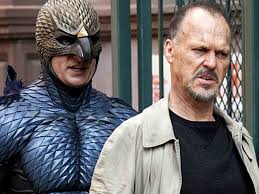 famous for playing comic book caricature super hero’s from the past has fallen on hard times and decides to use his past connections to put forth a serious play on Broadway, proving that he’s not just a washed up hack. He opts to write, direct, and star in a show at the St. James in New York City based on the Raymond Carver story “What We Talk About When We Talk About Love”.



 Gonzo66's Blog