Category Archives: Personal Notes
Things having to do with my personal life (not too personal)
Vietnam Photographers
0Photo journalism in Vietnam (1963 – 1975)
Studies in sadness
Compiled by David Crippen, MD
I returned to Vietnam in 2012, visiting one of the museums and I noted a display of the photographer Robert J. Ellison (1944-1967), killed in action at Da Nang after less than a year in Vietnam. One of the few known personal photos of Eliison in Da Nang was displayed alone on a wall. Look at that face for a long time and you’ll see the pain and passion showing the reality he saw through those eyes. It brought me to tears.

Rob Ellison landed in Vietnam in early 1967 with no credentials, one duffel and three cameras. He finessed his way out to Khe Sanh on a supply helicopter with a case of beer and box of cigars.
On arriving at the violence-infested area, Rob insinuated himself into the full fury of the action, cheek by jowl with the Marine grunts, photographing the action as it happened in the unimaginable fiery Hell that was Khe Sanh in the early months of 1967. Rob was killed when, as a passenger, the C-130 took rocket fire and crashed killing everyone on board. The bodies were not identifiable and are all buried in a mass grave in Missouri. Rob Ellison was 23 years old.
Posthumously, Ellison has been rated as one of the top young photographers in the world. The Newsweek edition of March 18, 1968 carried eight pages of photos by him of the battle for Khe Sahn. His photographs were graphic illustrations what the Vietnam conflict was like in real life, not watered down media depictions.
Journalists covering action in Vietnam (or elsewhere) try to paint a word picture in the minds of readers describing what they see. Some more successfully than others as those words are amenable to social or political bias. The genius of Van Gogh translated to a photographic vision. I stood heartbroken, feeling the vibrations of his urgent passion and what I knew he had to do to seek it out. I had to know him. I went on to collect many of his photos and they spoke to me, as they will for you.
135 photographers from either sides of the Vietnam conflict killed or missing presumed dead.
This collection is a memorial to them and their photographs, a VERY important piece of history that I need to dwell on for many reasons. Those of us that were involved in Vietnam are now in our 70s and we’re dying out. Soon, no one will remember Vietnam, a fate that awaited a similar political mistake, Korea in the 50s. The mistakes that led to Vietnam still being made today, events that are important and need to be accurately recorded vividly.
Today’s young people now largely forget the extraordinary decade that set the stage for much that’s happening in our culture. I frequently toss out some 60s icons to my young doctors on rounds just to see the reaction. They’re usually greeted by blank looks. None of them have a clue of the location of Alice’s Restaurant, visualize that deaf, dumb & blind kid Tommy or recall how Timothy Leary shaped the culture of the era. They will possibly read word accounts of what happened in that era that profoundly shaped our world but It’s important to understand the passion behind the words. A tragedy, as they are so important to history.
A video presentation of Vietnam photographers from the ’60s & ’70s is compiled from my Powerpoint collections. You will find it in the “Personal Notes” section of this blog and also a video version in the “General Interest” section. Each slide is 10 seconds long and can be stopped and started to read text or contemplate a photo by clicking the cursor on the “Pause” at bottom left of each slide. You can make the presentation full frame, bottom right each slide to show more detail. Several of my Viet photos are near the end of the presentation.
DC
Photographers in Vietnam (A photo book). Move photos along by right side mover block.
0More updates on climate change
0Crippen update- FWIW There are some very important things coming down the road you should take very, very seriously.
1. You need to take the global warming threat very, very seriously. Right now it directly threatens everyone in the USA and even the world, especially since a seemingly large population chooses to reject it as a blind political decision.
Rising temperatures have worsened extreme weather events and sorry, that’s not politics, it’s a natural fact. The heat extremes in the Western USA are incompatible with human life. Asphalt highways are cracking down the middle. Huge numbers of people without air conditioning are huddled in cooled warehouses. Water reservoirs dependent on winter snow banks are drying up. Lakes and rivers are drying up and as they do so, drinking water for western states will dry up as well as crops that the eastern USA depend on. There is no way to create alternate drinking water resources for the huge demand in California, Nevada, New Mexico and Arizona. Distilling seawater is phenomenally expensive, unaffordable except by raising already oppressive taxes.
Over 81 percent of the river’s hydropower capacity comes from the Hoover and Glen Canyon Dams. Hydropower dams along the Colorado River and its tributaries are a significant source of electricity for over 780,000 households per year. Approximately 30 million people rely at least partially on the Colorado and its tributaries for fresh water. As the Colorado River drops its level due to heat related dehydration, the ability of the Hoover Dam to provide electrical energy and fresh water to users is in serious jeopardy. Climate change is predicted to further decrease stream flow and reservoir storage along the Colorado, dramatically decreasing hydropower capacity at a time when electricity demand is increasing due to regional population growth. Policymakers must adopt incentives that promote sustainable energy alternatives, and reduce energy demand throughout the region. All ignored by Trump, et al.
Wildfires are again burning completely out of control. This is the worst fire season the American West has ever seen. Wildfires in California have consumed more than 4 million acres this year, an area roughly the size of Connecticut. In Oregon and Washington, another 2 million acres have gone up in flames. Major cities such as San Francisco, Portland and Seattle have suffered some of the most polluted air on the planet. The Stanford Institute for Economic Policy Research estimates that poor air quality from this year’s wildfires will kill thousands of people in California alone, most of them elderly. As wildfires become more common because of climate change, such deadly consequences will increasingly be felt across the country.
Huge chunks of ice in the Antarctic the size of New Jersey have broken apart and there is already evidence that the water level in coastal cities is rising and will continue to do so. This is a recipe for catastrophe in New York City, all of coastal Florida, New Orleans and other areas at risk. The amount of money that will be lost to the economy as well as the loss of physical infrastructure is stunning. Coral reefs have been bleached and are increasingly at risk for the delicate oceanic infrastructure we all depend on for seafood. Mosquitoes are expanding their territory spreading more disease that will require huge resources to eradicate if it’s even possible.
Why is all this happening? Its happening because of GLOBAL WARMING, we humans burning fossil fuels and chopping down forests, causing average temperatures to rise worldwide. Earth has already warmed by about 1 degree Celsius, or 1.8 degrees Fahrenheit since the 19th century, before industry started to boom. That global warming trend is increasingly disrupting our climate. What can be done to interdict this frightening trend? Not much but there are some things everyone should at least consider.
A. As a group with power to address laws and regulations that affect us, Republicans largely refuse to believe that global warming exists and work hard to ignore the obvious, a plot by radical leftists. This is a recipe for inevitable disaster. Do what it takes to insure Republicans don’t get into power in congress. Go out and vote against them. Insure that their current strategy to limit voting rights doesn’t do so. Make sure everyone in your area gets out to vote against the likes of obstructionist McConnell, hypocrite Lindsay Graham and mental defective Marjorie Taylor Greene.
B. Do whatever you can to keep Donald Trump from being re-elected in 2024. Donald Trump has been to climate regulation as General Sherman was to Atlanta.Whatever you think of President Biden, he has restored many of the 100-plus environmental regulations that Trump rolled back and mercifully got us back into the Paris Accords. Putting Trump back in office again will guarantee, among other atrocities, that he will reinstate as many of these detrimental anti-environmental policies as he can.
Carbon dioxide levels in the atmosphere first hit the critical amount of 400 parts per million in 2016, the year Mr. Trump was elected. But Trump put economic growth above emissions targets, arguing that climate and other environmental regulations were harming job creation. Meanwhile, carbon dioxide levels reached 417 parts per million, the highest-level recorded in human history. Biden is doing what he can to try and fix this.
2. The issue of non-polluting energy sources.
a. Wind energy. 100% non-polluting. Reduces dependence on fossil fuels. Wind energy industry supports a large domestic industrial force, currently employing over 88,000 people and growing. Harnessing offshore wind is especially promising for coastal cities. The benefits of this include wind energy being more abundant, consistent, and stronger than land-based wind. Our wind energy generation is growing. In 2015, wind represented the largest source of all newly installed US electricity generation. In the past, Trump has ignored this benefit.
b. Solar energy. 100% non-polluting. Unlike fossil fuels, solar energy does not deplete its resources. One of the biggest benefits of solar energy is the always-ready availability of the source, the amount of sunlight the earth receives per year making the sun the most abundant source of energy worldwide, trumping coal and other fossil fuels. Trump says this form of energy decreases jobs. This is nonsense. Good paying jobs in the expanding solar energy are expanding. Consider installing this source of renewable energy to your home.
c. Electric cars. I predicted the exponential explosion of all- electric vehicles shortly after the introduction of the Toyota Prius, a hybrid vehicle that only increased gas mileage because the engine stopped at red traffic lights. As of 2019, the global stock of pure electric passenger cars totaled 4.8 million units. By the end of 2020 there were more than 10 million electric cars sold, an increase of 41% from prior year. Several countries have established a phase-out of fossil fuel vehicles, and California, which is one of the largest vehicle markets, has an executive order to ban sales of new gasoline powered vehicles by 2035.
My wife currently drives a Chevrolet Bolt, an all-electric vehicle with an effective range of around 240 miles that has virtually no upkeep cost. The dealer plugs it into their computer once a year for upgrades. Battery technology is increasing exponentially and although a recognized risk, battery fires are exceptionally rare. My wife’s Bolt sits in our garage next to my dinosaur Ferrari 360 that gets 10-mpg gas mileage of super premium fuel in town. My wife is absolutely crazy about her Bolt and it’s about as fast as my Ferrari, using no fossil fuel.
The Tesla is the fastest selling electric car with an effective range now of over 350 miles. The fascinating thing about the Tesla is the large terminal screen that shows the position of the car in real time along with the positions of any other vehicle in front of, by either side or behind, as they all roll along the road. Currently, there are huge numbers of new American electric vehicles on the road including a new Mustang, a Ford 150 pickup and a plethora of new Japanese cars. Charging stations are popping up all over the country like dandelions. There are many government incentives to purchase electric vehicles. Tesla is testing a rapid 30-minute battery change instead of charging for freeway travelers.
These are things to think critically about, especially the issue of insuring Republicans stay out of the power to obliterate clean, renewable sources of energy in favor of the Governor of West Virginia’s coal resources.
Photo journalism in Vietnam (1963 – 1975)
0Journalists covering action in Vietnam (or elsewhere) try to paint a word picture in the minds of readers describing what they see. Some more successfully than others as those words are amenable to social or political bias. Joe Galloway was successful describing the horror in the Ia drang valley in 1965, but only in prosaic terms requiring the reader to create form and function from that void.
Studies in sadness
Compiled by David Crippen, MD
135 photographers from either sides of the Vietnam conflict killed or missing presumed dead.
This collection is a memorial to them and their photographs, a VERY important piece of history that I need to dwell on for many reasons. Those of us that were involved in Vietnam are now in our 70s and we’re dying out. Soon, no one will remember Vietnam, a fate that awaited a similar political mistake, Korea in the 50s. The mistakes that led to Vietnam still being made today, events that are important and need to be accurately recorded vividly.
Today’s young people now largely forget the amazing decade that set the stage for much that’s happening in our culture. I frequently toss out some 60s icons to my young doctors on rounds just to see the reaction. Ha! Usually greeted by blank looks. None of them have a clue of the location of Alice’s Restaurant, visualize that deaf, dumb & blind kid Tommy, recall Timothy Leary, how the Jefferson Airplane, Strawberry Alarm Clock, Moby Grape, Foghat, Creedence Clearwater Revival, The Zombies, The Byrds, Country Joe & the Fish and The Mothers of Invention shaped the culture of the era.
They will possibly read word accounts of what happened in that era that profoundly shaped our world. The assassination of Jack Kennedy, Robert Kennedy, Civil rights, Medicare and Medicaid, Freedom riders, the assassination of Dr. Martin Luther King, the Berkeley Free Speech Movement, a man on the moon, the Weather Underground and the Days of Rage. These things can be testified by TV talking heads, but photographs detail the passion involved, not just the dry details. It’s IMPORTANT to understand the passion behind the words because if they aren’t collected, young people today will never know them. A tragedy, as they are so important to history.
I returned to Hanoi in 2012, visiting one of the museums and I noted a display of the photographer Robert J. Ellison (1944-1967), killed in action at Da Nang after less than a year in Vietnam. One of the few known personal photos of Eliison in Da Nang was displayed alone on a wall. Look at that face for a long time and you’ll see the pain and passion showing the reality he saw through those eyes. It brought me to tears.
I was absolutely devastated by this display and it prompted me to assemble this collection photos by Vietnam photo journalists, some killed in action. I tacked on some of the photos I took in 1968-69 as an aside.
Rob Ellison landed in Vietnam in early 1967 with no credentials, one duffel and three cameras. He finessed his way out to Khe Sanh on a supply helicopter with a case of beer and box of cigars. On arriving at the violence-infested area, Rob insinuated himself into the full fury of the action, cheek by jowl with the Marine grunts, photographing the action as it happened in the unimaginable fiery Hell that was Khe Sanh in the early months of 1967. Rob was killed when, as a passenger, the C-130 took rocket fire and crashed killing everyone on board. The bodies were not identifiable and are all buried in a mass grave in Missouri. Rob Ellison was 23 years old.
The genius of Van Gogh translated to a photographic vision. I stood heartbroken, feeling the vibrations of his urgent passion and what I knew he had to do to seek it out. I had to know him. I went on to collect many of his photos and they spoke to me, as they will for you.
Posthumously, Ellison has been rated as one of the top young photographers in the world. The Newsweek edition of March 18, 1968 carried eight pages of photos by him of the battle for Khe Sahn. His photographs were graphic illustrations what the Vietnam conflict was like in real life, not watered down media depictions.
Rare female photographer in hot zones, Dickey Chapelle was killed after the lieutenant in front of her kicked a tripwire mortar shell booby trap. Chapelle was hit in the neck by a piece of shrapnel which severed her carotid artery. Clip shows Marine Chaplain giving photographer Dickey Chapelle last rites.

Larry Burrows covered the war in Vietnam from 1962 until his death in 1971. His work is cited as the most visually caustic photography from the war. One of his most famous collections was published in LIFE Magazine on 16 April 1965. Burrows died in a helicopter shot down over Laos in 1971. The scant remains of Burrows and fellow photographers Huet, Potter and Shimamoto were honored and interred at the Newseum in Washington, D.C.
Robert Capa accompanied a French regiment at the ill-fated battle for Dien Bien Phu in 1954 that should have been a massive red flag for further military adventure in Viet Nam. His photos graphically captured the agony of the futile holdout. On May 25, 1954 Capra passed through a dangerous area under fire and stepped on a land mine. He is buried in Westchester County, New York. The Overseas Press Club created the Robert Capa Gold Medal in the photographer’s honor.
It is impossible to understand Vietnam without reading “Hell in a very small place” (The siege of Dien Beien Phu,1954) and “Street without joy” (a clear warning about what American forces would face in the jungles of Southeast Asia). While accompanying a company of the 1st Battalion 9th Marines on Operation Chinook II in the “Street Without Joy” (Thừa Thiên Province) in 1967, Fall was killed after stepping on a Bouncing Betty land mine.
There are many others in “Requiem”, many heartbreaking.
I have collected some of these photographs in a Power Point presentation for you to peruse and etch into your general education memory. I would ask you to take a few minutes and view them, as they are really important history. Also included are some photos I took between 1968 and early 1970 if anyone has any interest. (see enclosures). It was necessary to keep these Power Points under 10 MB each or they’ll hang up on the server so I had to reduce the size of some, reducing their resolution.
Some notes on Cuban trip December 3-7, 2018
0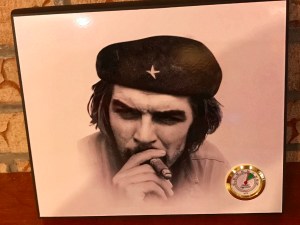 Only 90 miles or so from Miami but much more a foreign flavor. Only recently opened for foreign visitors by Obama who reversed the Bush embargo in 2009. Embassies appeared in 2015. Any US citizen can attend any professional meeting in Cuba but a visa must be obtained. Unclear what hoops must be jumped through to just be a tourist.
On December 3 – 7, the International symposium on altered consciousness and brain death was held. The very gracious Dr. Calixto Machado hosted us. We stayed at the Habana Librae, the enormous hotel where the meeting was held. The hotel advertised Internet access but it never became available.
The meeting was interesting. It was mostly about the Jahi McMath situation and brain death. I’ll pass on comments regarding that as Michael Kuiper has summarized the daily activities for CCM-L.
My interest really lay in the awesome collection of vintage automobiles that filled the streets of Havana. Mostly 50s and 60s cars, many converted as taxis to show tourists the city. We did an hour and a half tour in a 1955 Chevy convertible. It was fascinating (see photos later).
Our aim was to see “old Havana” and we did. Old Havana was named a notable historic city centers by UNESCO in 1982. Restored areas of Old Havana features styles from Baroque and neoclassical to art deco. It reminded me of parts of New Orleans a bit was very scary in some respects. Not terribly safe to walk about. Over 28,000 people currently live in unstable dwellings that could collapse without warning. USA Today recently reported almost 4000 building collapses from 2000 to 2013. In 2016, Havana has a shortage of over 200,000 dwellings. Havana officials are using mostly tourist revenue to solve these problems.
The people of Havana are exceedingly friendly and helpful to foreigners, including Americans. The food in restaurants is always excellent and there is virtually no violent crime. It’s safe to walk anywhere. There are no guns. Interestingly there are also no McDonalds, Burger King, Wendys or any other fast food place.
However, Americans are discriminated against within the economic system, No one in Cuba accepts any credit or debit card from any American bank. It’s cash and carry. American dollars are subject to a 10% tax when converted to Cuban Pesos, plus a 3% service fee. So converting an American dollar will get you 87 cents. However, one Euro will get you 1.14 Cuban Convertible Pesos, but when you go to convert dollars to Euros, the exchange rate at the airport is awful. I changed 700 dollars and got 550 Euros. So you get stiffed coming and going, exchanging anything.
You know me; I’m always on the lookout for interesting knick-knacks. One of my wife’s friends begged her to bring back some Cuban cigars for her husband. I could have cared less. All cigars smell like dead cats, but I tagged along to the cigar shop just to see them. On arrival, I noticed a decorative (empty) humidor box with Che Guevara’s likeness (smoking a cigar of course) on it in high-resolution porcelain (see photo below). I looked at it for a long time while my wife purchased a box of ten cigars for what amounted to US$100. Yes, ten bucks per cigar, and there were much more expensive ones available.
By the time I got back to our room, I was obsessed with it and had to have it. I went back and paid a bundle for it. It now graces my mantle. Note in the video also some female (very female) stick figure single cigar holders. I would have bought the entire collection but I ran out of money and had no way to get any more.
Che’s likeness is everywhere in Cuba, many next to Fidel. Che isn’t really a very high-end role model, but I kept my mouth shut about both him and Fidel.
Now for some interesting history about both Fidel and Che. After it became apparent that Castro was a bull blown “Communist” and was quickly aligning his new society after that of Soviet Russia. After the disastrous “Bay of Pigs invasion in April of 1961, Castro’s paranoia became exponential and he became convinced the Kennedy would follow this attack up with much heavier weapons, including nuclear arms. Castro begged Khrushchev to send arms for the protection of Cuba. Khrushchev saw this as an opportunity to place nuclear weapons in the Western hemisphere, under the nose of Kennedy who he considered a weak sister following the poorly planned and executed Bay of Pigs and the building of the Berlin Wall in 1961. Khrushchev didn’t think Kennedy was decisive enough to do anything about it. So off they went, as the Cubans worked to build bases where these weapons could be housed, all quickly spotted by U2 planes. The rest of this is history.
But what isn’t so clear is the nature of Castro’s fervor to revolutionize the world by violent means. Following the Cuban Revolution of 26 July 1959, Che became Castro’s right hand man for the spreading of the gospel of revolution to other Latin countries. Che was actually a physician but never did anything medical after becoming radicalized by witnessing the sorry plight of Latin America at the time. Che trained the Cuban military forces that repelled the Bay of Pigs attack and was central to the negotiations that would have brought nuclear weapons to Cuba. He wrote a seminal manual of guerrilla warfare. Che became convinced that most of the woes of the world were a direct result of Imperialism and capitalism (Americanism) that required a violent world revolution to counter it.
Che left Cuba in 1965 to foment revolution initially (and unsuccessfully) in the Congo but ending up in Bolivia where American CIA quickly captured him assisted Bolivian troops and summarily shot without fanfare. Following his death, Che rose to the position of a revered and reviled historical world figure and his likeness with the star beret was cited by the Maryland Institute of Art and “the most famous photograph in the world” (pretty doubtful But it’s up there in the top 20 maybe). Time Magazine named him as one of the top 100 most influential people of the 20th century.
However, Che was also an advocate of brutal violence to create a utopian world that would quash any dissent, an anti-imperialist Marxist and outspoken anti-capitalist whose image has been made an idealistic commodity not unlike that of Robin Hood and Don Quixote. Che was involved in hundreds, maybe thousands of executions of those opposing the Revolution in several South American countries. Che openly despised the United States and everything about capitalism and a Republic governing system. He was very interested in starting a nuclear war with the Imperialists (us) and probably would have worked it out had the missiles from the USSR had actually been delivered to Cuba (diverted by Kennedy). The whole point of those missiles were to be used against “enemies”. He was a brutal Communist agitator and all of his history is filled with death.
So for what it’s worth, I have a really interesting portrait of him that continues to fascinate me. I also acquired a pastel painting I’ll frame this week. You’ll see it in the film.
Interesting trip that will become clearer as you watch the video below. A collection of some of the photos I took.
Enjoy if you have an interest.
D. Crippen, MD
Antarctica, February 2018. Crippens.
0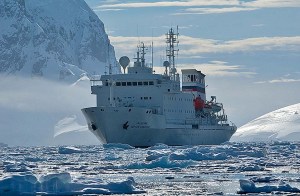 They made it clear from the beginning; “This is not your father’s cruise”. This was an exploration, not a cruise. The plan was to traverse the usual peri-Antarctica islands and peninsulas to make our way through the Antarctic Circle to actually set foot on the continent. A rare event due to quirky weather and shifting ice masses.
The good ship Akademik Sergey Vavilov is a high tech wonder, outfitted with two fully functional engines, each with all redundant outfitting. Powered by a high efficiency fuel that if spilled, would float on top of the sea to be broken down by ultraviolet rays. 117 meters long, top speed 14.5 knots and strengthened for dealing with ice. She holds 97 souls and ten “Zodiacs” (outboard powered rubber boats each seating up to ten people and all their camera gear). The ship can go where most ships can’t and the Zodiacs can and do go anywhere.
Getting to the jump-off point, Punta Arenas, Chile was a very long and stressful series of airplanes and airports. For the trip to the Antarctic Peninsula, we flew in what appears to be the standard for crossing the infamous Drake Passage (more about that later). A curved wing, four engine plane built in England I suspect set up for short take-off and landing. We landed at the Chilean Air force Base on one of the peri-Antarctic peninsulas, basically a strip carved into the rock covered with permafrost.
We were really not prepared for the shock of our introduction to Antarctica. The aircraft landed on it’s left wheels down, right wheels up to assuage against the 30 knot 90 degree cross wind. It took three hops to get on all the wheels. The landing strip was build of rock and sand. On departing the plane we were greeted by intense cold, wind and snow. A barren landscape that could have been the moon. Then a one-mile walk from the landing strip the moored ship about a mile offshore, all the participants transported by Zodiac. Once on board the ship we were made very comfortable. Bunks and a shared bathroom.
The ship is of Russian registry and staffed by an all Russian crew and staff. When not touring in season, it goes back with Russian scientists to study the Antarctic area. The exploration was exceptionally well organized and operated by a Canadian group, “One Ocean”. They were magnificent and we felt very well cared for along this highly stressful trip. The food was excellent.
https://www.oneoceanexpeditions.com/antarctica
60% of the participants signed up through Cheeseman Ecology Tours but those guys were pretty much passive observers, having little if anything to do with running the ship and tour. They were available to discuss the ecology of the area and they did an excellent job. Ted Cheeseman is doing a PhD in Whale studies through an Australian university.
On the first day into the trip it all began. Up for breakfast at 7 am, donning heavy layers of dress and boots for cold conditions, out exploring in the Zodiacs till noon-ish, back for lunch, then out again in the afternoon till supper around 7 pm. Three or four layers of clothing takes about 30 minutes to get on, including heavy clunky rubber boots. Waterproof backpack to hold camera gear adds weight. Walking with all this stuff was like walking in a spacesuit.
Then climbing down a gangway from the ship deck to the Zodiac, gauging the bounce from waves to step in, hopefully not falling. Seats are along the sides of the rubber boat, I think a real risk for falling in the 2 degrees C water if the boat zigs and you zag. There were near misses. The Zodiac, armed with an experienced pilot and a 60 horsepower outboard, went on its way to search for things of interest and no-where was off limits. All of us on board were experienced photographers. Weather variable. Sometimes bright, sometimes wind, snow and freezing rain. Camera gear protected by waterproof sleeves. It got cold and miserable out there. Trying to get out of the Zodiac by swinging legs over to slippery rocks, then climbing varying distances was extremely difficult for me. Many times no place to sit.
At this point the best way to show you the trip is to show you the photos. I will introduce you to the Youtube videos I made from this trip.
The Youtube presentation photos were all taken with my Sony and high resolution. Watch it in full screen. I sorted through about 1000 photos to get what’s in these presentations, so they might be a little long but I could have easily put 500 photos into a collection.
This was a ten-day, high-energy expenditure, high stress endeavor, not counting getting to the ship from Pittsburgh. My aging physiology hit the wall about day 6. I learned that my physiology’s response to high-energy expenditure and high stress was to set limits on what it was prepared to mount to meet it. My body simply de-tuned and refused to meet any challenges. So I began to function at a de-tuned level. My appetite went completely, and the food aboard was great. I developed increasing weakness in my left leg, then all over and required assistance on the rolling decks. Urinary incontinence at night. My thinking processes slowed down. I became listless and apathetic, having to force myself to move.
So I learned I had to lower my energy expenditure, beginning day 6 limiting myself to one Zodiac excursion a day instead of two, sleeping in- skipping breakfast and taking my time dressing. I thought clinically about what I really needed to do to get through the day and worked to cut out any excess for the last four days. I may have missed some things but I’m pretty sure I didn’t miss much.
Then the coup-de-grace, crossing the brutal Drake Crossing from Antarctica to Ushuaia, Argentina (considered a necessary part of the Antarctic experience). The Passage divides the cool, sub-polar conditions of southernmost South America from the frigid, Polar Regions of Antarctica. 600 miles and two days of reliably bad weather, high waves and rolling, bouncing decks. Passengers were lined up in front of the ship’s doctor’s door. Mercifully, I did not get seasick but it was pretty uncomfortable trying to eat and sleep when you’re chasing food across the table and holding on to avoid being tossed out of my bunk.
It was a hard trip from stem to stern and when I finally got home after two days in airports and airplanes, I just collapsed for a day. But it was truly a once-in-a-lifetime event not many get to experience.
Addendum: a word about Whales.
99.9% of the entire whale population was decimated before the year 2000. It became obvious that something had to be done so an International consortium was formed to regulate the issue and harass scofflaws (Japan). Most of the blubber rendered in Norway is used to make margarine. Today, the hunting and killing of whales is no longer the main cause of their population decline. It’s now them getting snagged in lobster and shrimp traps and getting hit by fast moving ships in shipping lanes. Strategy for “saving whales” is ongoing by very hard working scientists and populations are increasing.
Whales have to “think-to-breathe” because they must coordinate a deep breath every time they dive. They can dive to very deep regions and stay down a long time. They collapse their lungs when they dive. They can regulate their heart rate (slow it) so blood flow to blubber is minimized and flow maximized to internal organs. Their hemoglobin is specialized to allow a much longer period of time for absorption of oxygen to the tissues.
Besides humans, their only natural enemy is the Orca, (Killer Whale- not a whale, a dolphin). Orcas are the “wolves of the sea”. An Orca will place itself on top of a whale not allowing it to surface to breathe. They can tag team a whale, another team Orca taking over when one gets tired. The whale eventually drowns and is made a hearty meal for every Orca in the vicinity.
Interested in such a trio? Be sure you’re ready for a LOT of stress and energy expenditure. There is nowhere to go if you get sick or hurt. Contact me if you are considering such a trip.
The Crippen visit Alaska (May, 2017)
0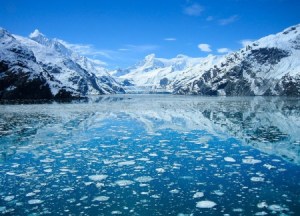 We had decided to visit the Alaska coast and glaciers before global warming melted it all. Much of it is only accessible by either aircraft or boat, so a formal “cruise” seemed to be the best way to see it all in comfort. There are many of them registered in several countries; we chose the “Princess” line for no particular reason, and for the most part it worked well for us. I’m told that most other lines are similar and they all plod the same route.
I’ve already mentioned the nightmare of having to get into Canada through the monstrously huge port of Vancouver, standing for hours, then standing for hours again getting back into the USA to get on the ship. Then came the comical x-raying of all luggage entering the ship looking for any form of alcohol (they discard it).
Yes, no one can bring any alcohol aboard. They sell it to you at a tidy profit, along with any other form of liquid other than water and coffee or tea. Every can of coke, mixed drink, glass of wine, cup of hot chocolate must be individually signed off against your tab and it piles up quickly. I must say an extremely irritating nickel & dimeing for their profit margin.
Otherwise, the stateroom was quite comfortable and accommodating. Each has a private deck overlooking the water. A TV set with a pretty lousy array of programming. Internet access was satellite and expensive, 69 cents a minute and each minute trying to connect to the system was counted. I spent ten minutes waiting (and paying) before I figured out the system was too slow to work.
The ship was a huge, Leviathan-like beast that cruised along about 16 knots or so but was big enough that seasickness wasn’t an issue. All the logistics of moving about the ship were flawless. No standing in line anywhere. There were multiple restaurants of all types, the food was excellent and there was a lot of it. All kinds of things, art shows, live entertainment, lectures by experts in various things, exhibits. There was plenty of room on various decks to lounge around. The staff were all very kind and accommodating.
First stop was Ketchikan, Alaska where we had arranged a seaplane flight up into the rain forest fiords. This was an interesting trip but the pilot was particularly interesting. The woman bush pilot that owned and flew the plane originally came from Nebraska to visit and she stayed. She started out with a light Cessna 172 carrying people around, then graduated to a more powerful 182 then finally she ended up with an old but venerable 1959 de Havilland Beaver, the classic work horse of Alaskan bush pilots.
This beast has a rotary piston engine, can take off and land in short distances and carry a lot of weight (see photo in my youtube presentation at the end). We had a great flight into the wild and I got some good photos. No way to see any of this except by air. No roads at all.
This gal exemplifies “fiercely independent” doing it all her way all the way. She’s in her 50s now, flying since she was 16 years old. But she’s worried about her future. This (and most of the other) aircraft use 100-octane low-lead aviation gasoline, which is expensive. The maker of that fuel isn’t making enough profit and so they’re threatening to quit making it, which will bring most of these kinds of aircraft to a halt.
Also, 9 pistons in a rotary fashion move the unique crankshaft of this engine and it needs to be re-built every so often as there are a lot of stresses on it. These planes are getting old and are disappearing as they age. The numbers of serviceable crankshafts are slowly disappearing and no new ones are being made. This aircraft could die on the vine in time. They’re already expensive to maintain, around US$100,000 a year for an aircraft that costs half a million dollars to buy To convert to a turbine engine probably a million $.
Speaking of aircraft in Alaska, only about 10% of the flying pilots have a “real” pilot’s license. There are a lot of pilots. 90% of the state is wilderness only approachable by air. There are no four-lane interstates in Alaska and few roads. Driving into any of the airports, there are hundreds of small aircraft, many on pontoons that can cost US$10,000 for a set. One of the favorites is the venerable Cessna “Super-cub” an extremely light plane that can take off and land in very small fields. When fitted with oversized super-fat tires, it can take off and land virtually anywhere in the bush. Cost US$4000 per tire. Slots for pontoon craft at one of the connecting lakes near Juneau are a 15 year wait to get one, sort of like Pittsburgh Steelers season seats.
In Juneau we boarded a helicopter to go out and view one of the big glaciers, then actually land on it and walk around with a lecture for about 30 minutes. It was a fascinating experience and none of this could have been seen by any other than air transportation. Photos later.
Ultimately the ship entered a large fiord where at the end of it several glaciers emptied into the water. It was deep water so the entire ship turned 360 degrees twice, affording spectacular views of the glaciers from any spot on the ship. The weather was perfect, cool, clear and blue sky.
The glaciers were stunning, but in the middle of the pack lay one particularly large glacier that didn’t look like one. It was pointed out as a glacier “in trouble” as it wasn’t moving. Normally they advance in the winter and recede in the summer. This one receded and then just stopped like a dying star. Just a flat line of rocks. Maybe the fate of all of them eventually as global warming takes its course.
So, if any of you are thinking of taking this trip, here are the pros and cons:
Pro: The trip is not terribly expensive as 6-day full service tourist trips go. The logistics of the trip are well thought out and very smooth. I think probably cheaper than Disney World with no standing in line, a deal breaker for Disney. The accommodations are very nice and roomy, the food is excellent, there’s a lot to do and see on the ship, seasickness is rare and the sights are spectacular. The logistics of coming and going in ports are flawless.
There are lots of side trips at each port, mostly air trips that we enjoyed. You can also go out with a musher on a dog sled trip and do some hiking, small boating and similar athletic things in the area. The cities ported are amenable to “walking around” and some of the local handcrafts are excellent quality and real art, not cheap tourist junk. Food is good on shore. Photographic opportunities are excellent.
Cons: Flying from Pittsburgh to Vancouver is a long trip. Getting into Vancouver, through Canadian customs, then back through USA customs just to board the ship is a terrible, exhausting trial. I guess technically that’s how it needs to be done. Once on the ship, the only nickel & dimeing is for drinks of any kind. Mainly for any kind of liquid other than water and coffee. Want a glass of wine at dinner or a glass of Coke? Sign here first. I found that extremely irritating. Otherwise passengers are quickly made comfortable.
The Anchorage International Airport is rudimentary by most standards, and for unclear reasons, most flights depart from 9 pm to 2 am daily. Since most ships dock at 8 am on the day of home departure, you’ll get to sit around somewhere all day and most of the evening before departing out on a red-eye. Quite irritating. This is an overbite trip but Delta doesn’t treat it like an intercontinental voyage so seats in first class go back about three inches. I can’t sleep that way so I completed a full book read all night long while my wife sawed logs next to me. I think women can sleep anywhere.
Everything considered, I definitely do recommend this trip as the benefits outweighed the detriments. The sightseeing possibilities are diverse and always interesting (not cheap but affordable). Very much OK for kids to enjoy. I can honestly give this trip 3 of 5 spinning ships. I’d give it 3.5 but the extra half-ship would sink. Probably a once in a lifetime for most. See it before it all melts, I think. I would take this trip before going to Disney World in a heartbeat.
Here are some of my photos I’ve made into youtube. It’s high resolution so you can watch full screen:
On Suicide…..assisted or otherwise
1 Recall that in England, back in the day, it was technically illegal to commit suicide. Actually the English cared nothing about whether they offed themselves, it just gave them a chance to confiscate their property. This from the guys that shipped the Irish to America because it was cheaper than feeding them during the potato famine and shipped social undesirables to Australia simply to get rid of them.
Taking one’s life in America is not technically illegal, but very, very unfashionable. Any unsuccessful attempt landed the individual in a position of “substituted judgement” where they can land in an emergency department or a psychiatric facility with no civil rights until they “get their mind right”.
https://www.youtube.com/watch?v=8CBqjZX6FjE
Suicidal ideation has been a marker for “incompetence” to understand that “life”is always better than death” (italics mine), and choosing death for whatever reasons is a marker for “involuntary treatment” to get the afflicted person to understand that reality. After treatment, the afflicted person has their mind right and voluntarily chooses life because they have come to understand it’s always preferable.
However, as I mentioned in my previous missives about aging musicians and others choosing death, those rationales are different than endogenous depression. They feel they lived what they wanted to and after the blaze of their streak across the sky extinguishes, they no longer have any desire to live in the new world. That’s a different thing, and we’ll see much more of it as there are a LOT of persons out there (much of it because of the baby boom) that are out of the loop and life in the new loop doesn’t work. That said, many are prosperous in their 70s (Paul McCartney, Neil Young et al). But there are a LOT of their ilk out there that no one hears from till their obit appears.
 Now, in the new millennium, a whole different agenda for suicide is appearing, that of terminally ill persons that aren’t quite bad off enough for traditional hospice but definitely suffering with no respite. The classic example that has been brought up is that of Robin Williams, deciding to cope “his way” with progressive Lewy Body Dementia, a particularly cruel, progressive disease that doesn’t spare the victim any misery
https://en.wikipedia.org/wiki/Dementia_with_Lewy_bodies
Again, traditionally, the best course for many is hospice where suffering can be alleviated by a titrated treatment plan. But Hospice is usually thought of as an end stage remedy, when it’s “time to die”. Because of our ability to “prolong life” by a high intensity clinical care program, we’re lengthening the distance between ambulatory, functional suffering and the “death spiral”. As this distance increases, suffering persons want the legal and moral ability to decide when they’ve had enough, and that time may come before the “death spiral”.
More people are now deciding it should be their call as to when to end their suffering, but the nuts & bolts on how to accomplish that goal remain murky. The way out for some of these afflicted is sometimes painful and uncomfortable. Death by hanging or shooting. Robin should not have had to hang himself when he decided his time was up. He should have received “humane” treatment by someone that cared enough about him to respect his wishes and that he was competent to express those wishes.
This will inevitably become a legal issue, the reciprocal of the issue of a woman controlling what goes on within her own body, a firestorm that’s on the way. There are a few States that allow physicians to assist in a suicide and as far as I can see, those plans work well and are not misused. I think it’s time for us as physicians to start looking at this issue through the lens of the new millennium. It’s isn’t our father’s world anymore.
A great many of us are aging reasonably well but the specter of “not so well” is always shadowing us. At age 73 I’m still doing pretty much everything I want to do, albeit a bit more clumsily but I still feel the same passions I felt in my 20s. I’m working pretty hard to maintain my physical strength to match my expectations for as long as I can. But the day will come when I will not function as I desire due to progressive age and God knows what other disease that could grasp me.
When that day comes and I’ve hopefully reached the bottom of my bucket list, I could deal with lying around in a personal care home for a while, photos of glory days on the wall, with a cable TV and a laptop to keep up with what’s happening in the world. If the day came where I was a burden to anyone, was uncomfortable and unable to get around, I have a hidden stash of sixty tabs of 10 mg Propranolol and ninety 10 mg Ambien tabs. I might very well decide when it’s right to exit stage left, and you know me, I’m neurotically maintaining notebooks of virtually everything I’ve ever done in my life so those that come after me will get a chance to know me.
Do not go gentle into that good night,
Old age should burn and rave at close of day;
Rage, rage against the dying of the light.
Though wise men at their end know dark is right,
Because their words had forked no lightning they
Do not go gentle into that good night.
Good men, the last wave by, crying how bright
Their frail deeds might have danced in a green bay,
Rage, rage against the dying of the light.
Wild men who caught and sang the sun in flight,
And learn, too late, they grieved it on its way,
Do not go gentle into that good night.
Grave men, near death, who see with blinding sight
Blind eyes could blaze like meteors and be gay,
Rage, rage against the dying of the light.
Dylan Thomas (1952)
David Crippen, MD, FCCM
Professor Emeritus
University of Pittsburgh (Ret)
A political/medical care observation for the New Year
0 It is after all Sunday and this is a bit more of a time for a “Village Green” observation by your FL, for what it might be worth. What I’m about to say involves an obligatory observation on National politics because it impacts what’s happening in medicine today and in the near future. My observations are NOT so much for public debate here as they are simply pointing out facts, as they are readily apparent. Please just reflect on this, not start arguments. Med-Events does that very nicely. If you want to argue about politics, join Events.
A paper came across my desk (enclosed) suggesting that the potential for health care providers’ autonomy is under assault and eventually will all but disappear. I think there are clear reasons for this. The demand for medical care continues to increase but the supply remains relatively static. All kinds of schemes have been developed though the years do decrease the demand (cutting the price). Denying service for pre-existing conditions, “managed care”, “rationing by inconvenience” and yet the cost of health care continues to increase yearly.
The “Affordable Care Act of 2008” (Obamacare) hoped to put a dent in that by spreading the cost out over a very large population, some sick, some well, and of course, “opt-outs” wouldn’t be allowed, as they would eventually turn up in emergency rooms demanding care even though they hadn’t paid the premium. Part of this plan would have been the “public option” to take care of outliers.
There isn’t really much argument that this plan would have worked pretty well, allowing for adjustments, had it been implemented as formulated. Not perfect but a very good start to get people covered for their health care affordably. What happened was a bit unexpected. We didn’t realize at the time that opponents of the President became the “party of no” vociferously obstructing, delaying and destroying everything and anything that came out of that White House. The ACA then became a political issue and was widely advertised by the Party of No as something it wasn’t. Then the Public Option was killed, removing much of the efficiency of the entire program, followed by allowing healthy people to opt out of the program leaving a large population of sick ones.
Of course, as a natural consequence of supply and demand, the price per individual rose, as it would have (and did) for any kind of health care indemnification. Blamed on the program, of course. I had lunch with a very intelligent, perceptive friend (not the only one I have that supports repeal of the ACA) who solemnly advised me that she couldn’t wait to see the ACA repealed because middle class people couldn’t afford it and it was literally bringing the economy down. Never mind that any- and every health care indemnification program in the country was similarly raising their rates, including mine.
Enter the stimulus for all this, the current President-Elect of the USA, Mr. Trump, and his new best friends, ultra-conservative Republicans now in control of congress and soon to be also in control of the Judiciary. Mr. Trump, a very talented and experienced huckster knows nothing about any of it, but his new friends do and they’re now after many years of trying, in place to do damage to health care and a great many other things in our lives.
As is widely observed, the election of Mr. Trump caught virtually every observer by surprise, but not me. They that Pennsylvania is a state with two cities on either end (Pittsburgh & Philadelphia) with Alabama between, and that turned out to be true last Nov 8). I saw it coming as I rode bikes around the rural center of Pennsylvania, spotting Trump signs on virtually every home or business in small towns and country areas. I knew all these people would vote and they intended to “shake up” the establishment that no longer worked for them (not suspecting they had the potential to destroy it).
So now, before the new President-Elect actually takes power, we’re already getting a view of how it’s going to be.
- The institution of a Presidential Cabinet full of officers dedicated to untried and unlikely theoretical political ideals, not necessarily the benefit of the population.
- The dissolution of a health care system that currently serves about (said to be) twenty million should to one degree of another with the promise of something to replace it someday.
- A President-Elect that has publically disputed the opinion of every single individual in every single intelligence and law enforcement office regarding the illegal and intrusive activities of Russia in our political-social system. “The difference between skepticism and disparagement”
- As of Friday, the funding of a wall separating the USA from Mexico asked to be funded by congress with a bill to be sent to the other side with no mechanism to collect it. Estimated cost ~ 25 billion $ and estimated by most experts to be worthless.
- Active plans to decrease any and all funding for the poor and disadvantaged, active plans to decrease taxes for the well-off, active plans to get more guns on the street and eliminate “Planned Parenthood”, a service that benefits many women.
All this even before January 20.
Now, again, I ask not for argument. The above remarks are above argument, they simply exist and can be substantiated anywhere. It’s just my humble personal observation and it all matters in our health care future, which is why I bring them up.
Our current health care situation is quickly falling apart for at least two reasons (I’ll omit my scathing remarks on what’s going on in medical education).
1. I honestly believe that there is about a 50-50% chance that Mr. Trump’s coalition will collapse completely within 30 days of Jan 20. He has no clue about the delicate realities of global politics and his Cabinet members have no real experience in any other than “business” and that isn’t the way any of it works. Any number of other countries in the world could hurt us more than we could hurt them if they took a mind. Mr. Trump’s coalition fully intends to create a society built on unlikely or untried theoretical political conditions as a practical matter. It is absolutely not out of the question that the fabric of our society could be ripped apart into chaos and very quickly.
It’s already started. An increasing number of Republicans, his own party, have figured out he has no firm foundation for any of his Tweeted opinions, all capricious ramblings of what he happens to think at the moment. They’re making it known they’re re-thinking their support for him. This brings up another potential reality, that Mr. Trump et al will become very quickly bogged down in a system of government meant for- and created for bipartisan cooperation to get things done. If Mr. Trump’s coalition descends into the same kind of stubborn non-participation that has marked the past eight years, then nothing (again) will go forward and our system of government will descend into vicious and bitter fighting, wasting time and money in a very dangerous world. So much for “fixing” broken government. I do NOT see Mr. Trump actually achieving many if any of the advertised platform (such as it was) that elected him.
2. If any of that hat happens, our currently fragile health care provision system will collapse, if for no other reason than our current strategy to cope with administrative rationing will fail with it. Insurance and government strategy is to make reimbursement increasingly complicated so that those unwilling or unable to comply don’t get paid. What we’re doing now is allowing “middle management” and “financial specialists” to deal with the increasing complexities of reimbursement. There are now an entire hall full of administrators and financial people where a lot of doctors used to be (including me). These guys peck at computers all day long all getting excellent salaries and benefits.
Now, at this point, everyone on this List should download and read every word of the following Time Magazine site (let me know if it doesn’t open for some reason).
http://content.time.com/time/subscriber/article/0,33009,2136864-1,00.html
Pay particular attention to the justifications given for incredibly outrageous charges by an automated service “Chargemaster” for patient caught in the middle- too young for Medicare and too many resources for Medicaid. Both Medicare and Medicaid pay providers only a small fraction of “Chargemaster” bills and they’re accepted. Also pay attention to the salaries for middle managers, CEOs, COOs and the like. You’ll note somewhere in the middle that the CEO of the University of Pittsburgh Medical Center’s salary (before bonuses) was close to 6 million $ per year. The same guy that mandates draconian budget cuts for the clinical departments, including mine every year.
W
e as providers are losing the battle of self-determination. We are losing that battle because we’re handing middle managers and financial officers the authority to order health care in an administrative system that considers us irrelevant. It considers us providers that create demand and they want to limit demand. They formulate policy and let us know how we fit into it, which is why the majority of us are not “hospital employees”. We can be controlled.
This is the state-of-the-art now for providing medical care for our population and I can assure you that if the administration, such as it is, of Mr. Trump collapses, this will all collapse with it. If Mr. Trump’s administration becomes embroiled in an endless fight with everyone creating chaos and stasis, this system will follow suit. If Mr. Trump is successful in killing the ACA, there will be a lot of people left wondering what and when their promises will be kept, even if it could be financed which is unlikely if he spends 25 billion on a useless wall. It took Obama two years to formulate the ACA and it wasn’t perfect. We’ll see what Republicans dedicated to “conservative principles” can come up with and when they can come up with it.
To end this diatribe as I sit here “retired” with a cup of coffee and my trusty iMac, I am very, very fearful for the future of the country, the health care system or the world for that matter and I’m not by nature a terribly pessimistic person. I am now an observer. We’ll all observe in time.
 Gonzo66's Blog