A Passing. Little Richard (1932-2020)

0

“Little Richard” (1932-2020) was far more than a founding father of Rock and Roll, he was literally the “architect of Rock”. Richard Penniman was born in Macon, Georgia in the same era as the Allman Brothers, Otis Redding and James Brown. His daddy sold bootleg whisky around the area. His flamboyant style of piano playing began in the mid-50s as a blend of gospel spirituals, country and what was then Rhythm and Blues originating in the Mississippi Delta area. He was an influence for everyone from Elton John to the Beatles. Rolling Stone said Elvis popularized Rock and Roll, Chuck berry was the storyteller and Little Richard was the archetype.

Richard’s band consisted of multiple instruments, many electrified, raised the energy level of Rock several levels. Jimi Hendrix played guitar in one of Richard’s bands at age 18. James Brown is said to have sang backup briefly at a young age. Richard’s pumping piano was usually accompanied by frenetic songs with a barely hidden sexual orientation (sometimes clouded by gibberish to white audiences but understood by blacks present). The Beatles masterfully sang several of Richards songs in the same style. Several of Richard’s songs (Long Tall Sally, Tutti Frutti) sans the energy and spirit were notoriously covered for white audiences by Pat Boone.

If uniting black and white audiences was a point of pride for Little Richard, it was a cause of concern for others, especially in the South. Shaped by then social issues, Little Richard’s style music followed certain inevitable paths throughout the South, The tributaries that feed the “Chitlin Circuit”, an entertainment venue safe for black musicians started in Louisiana, became manifest in Mississippi through Alabama and Georgia. The path swung up through the Eastern Seaboard as far New York City, including the famous “Cotton Club” and the Apollo Theater in Harlem. Paul McCartney said that the first song he ever sang in public was “Long Tall Sally,” which he later recorded with the Beatles. Bob Dylan wrote in his high school yearbook that his ambition was “to join Little Richard.”

A large number of notable performers have trod the Chitlin Circuit over the years including Count Basie, Ray Charles, Duke Ellington, Ella Fitzgerald, The Jackson 5, Aretha Franklin, Jimi Hendrix (with Little Richard), Billie Holiday, John Lee Hooker, Lena Horne, Gladys Knight & the Pips, Wilson Pickett, Otis Redding, Smokey Robinson, Ike & Tina Turner, The Temptations, Muddy Waters. It was considered a monster breeding ground for talent. Richard was one of the first ten inductees into the Rock and Roll Hall of Fame in 1986. He appeared in several period films and most of his life is too plentiful and colorful to detail here.

It’s said that talent is born, grows up, streaks across the sky, then ultimately expires. What’s left is how long and how bright. Some talent like Nick Drake and Pete Ham flash brightly but briefly. Others like Little Richard, Elvis, Chuck Berry and Jerry Lee persist in the sky leaving a trail of devotees that carry on the glow.

Enjoy:


https://youtu.be/LVIttmFAzek

https://youtu.be/kxT0DcRR9cQ

There is a very complete biography by Charles White, Foreword by Paul McCartney:


Some history that might affect us in 2020

0

Some history that might affect us in 2020

David Crippen

The great famine in Ireland, 1845 -1849.  During the worst of it, 1847, one million Irish died and another one million were put on ships bound for America. A microorganism, the “potato blight” was actually found first in Philadelphia and New York City. Winds spread the spores to the rest of America and it crossed the Atlantic into most of Europe but settled most in Ireland because of its dependency of a single susceptible variety of potato, the “Irish Lumper” The blight also affected Germany, leading to the deaths of 700,000.

In 1846, three-quarters of the Irish harvest was lost to blight. By December, a third of a million destitute people were forced on the dole or straining meager public works. Since over three million Irish people were totally dependent on potatoes for food, hunger and famine were inevitable. By February 1847, there were huge snowdrifts and the poor had no warm clothes to work outdoors in cold and wet weather. When the father of a family became sick or died after working on the public works, the women or children in the family tried to take over the work but it was very hard and involved carrying heavy loads or digging. This type of work was not useful in helping the people who were starving.

English landowners quickly figured out it was cheaper to purchase tickets to the new world for their Irish tenants than support them through a blight no one knew the potential length of. New York, three times the size of Boston, was better able to absorb its incoming Irish. Throughout the Famine years, 75 percent of the Irish coming to America landed in New York. In 1847, about 52,000 Irish arrived in the city with a total population of 372,000. The Irish were not the only big group of immigrants arriving. A substantial German population totaling over 53,000 also arrived in 1847.

Unlike many other nationalities arriving in America, the Irish chose to huddle in the cities partly because they were the poorest of all the immigrants arriving and partly out of a desire to recreate the close-knit communities they had back in Ireland. The Irish loved each other’s company, but the daily pressures of living in America at the bottom rung of society also brought out the worst in them. Back home, the Irish were known for their honesty, law-abiding manners, and chastity. In America, old social norms disintegrated and many of the Irish, both men and women, behaved wildly. In the hopeless slums of New York, prostitution flourished and drunkenness occurred even among children.

So many Irish drifted into the five points of New York City, a repository of the poorest, most disadvantaged and exploited of all the immigrants, including the Irish and the Blacks. Since virtually all Irish were Catholic, the burgeoning supply of them fostered fear of the Papacy, which became fear and hatred of the Irish.

The original Five Point in New York City are no longer there as they were in the mid-1800s. They existed off Centre Street to the west, Bowery to the east, Canal to the north, and Park Row to the south. The Civic Center and Chinatown also bound this area now. The Martin Scorsese film“Gangs of New York (2002) , accurately depicted a long running catholic/protestant feud erupted into violence fueled by Irish immigrants rebelling against low wages and social repression and an influx of freed slaves with similar repression. This mix of low wages, lack of jobs, racism and social repression generated frustration and anger finally brought to a head by the onset of conscription into the Union Army (in New York) in at the time of “Draft Week”(Mid July, 1863).

The actual riot boiled over July 13-16, 1963.  Working class discontent and smoldering anger were a function of white working-class men, mostly of Irish descent, who feared free black people competing for work and resented that wealthier men, who could afford to pay a $300 fee to hire a substitute, sparing them from the draft. Initially focused on frustration and anger at the draft, the protests evolved into a race riot. The death toll was thought to be around 120 individuals. Herbert Asbury, the author of the 1928 book “Gangs of New York” upon which the 2002 filmwas based, puts the figure much higher, at 2,000 killed and 8,000 wounded.

The military swinging up from the residual of Gettysburg did not reach the city to create martial law until late in the second day of rioting, by which time the mobs had ransacked or destroyed numerous public buildings, two Protestant churches, the homes of various abolitionists or sympathizers, many black homes.  The “Colored Orphan Asylum”  at 44th Street and Fifth Avenue was burned to the ground. Eleven black men were hanged over five days.  The area’s demographics changed as a result of the riot. Many black residents left Manhattan permanently with many moving to Brooklyn. By 1865, the black population had fallen below 11,000 for the first time since 1820.

Reading through the narrative of the New York City situation in the mid-1800s, reveals several things that stand out. A populous stranded by low or nonexistent wages into squalor and miserable living areas full of crime and death. A populace unable to get reasonable paying jobs. Rampant disease and no real protection from it. Psychologists suggest that these conditions have the facility to alter the normal adaptive human brain to a “Mob Mentality”. Humans tend to imitate each other’s behavior in certain situations.  Crowds can easily become uncontrolled and frenzied once a critical mass of numbers is reached, exerting a hypnotic impact resulting in otherwise unreasonable and emotionally charged behavior the individuals would ordinarily indulge in. When angry and frustrated individuals congeal into a large group, they “deindividualize”, absorbing the power and authority of the anonymous mob, then they become capable of striking out violently at issues not original to their complaint. The violence becomes the remedy for their complaint, which usually broadens quickly.

A study of riots in the 60s and 70s show that original complaints of poor, crowded living conditions, few jobs, police hassle of a poor black population and no viable hope of any improvement eventually boiled over into massive riots that did millions of dollars of property damage, and death, most of it doing more damage to the original complaints of the rioting population. Seemingly minor issues sparked many of these riots. The Watts riot started when a Los Angeles police officer tried to arrest a Watts resident for drunk driving. The Watts riot lasted for six days, resulting in 34 deaths, 1,032 injuries and 4,000 arrests, involving 34,000 people and ending in the destruction of 1,000 buildings, totaling $40 million in damages. Rioting to make a social point vanishes when rioters destroy and loot business establishments they would ordinarily protect.

But all that was then. This is now but we have some of the same pressures building and we should be aware of them because we’ve been there before. What we have now for the first time in 100 years is a massive social and physical disaster that threatens to bring back some of the factors that created mob violence in the past.

  1. Coronavirus has the capability to relentlessly incapacitate virtually human on the planet. It’s like the “Terminator” (1984) Listen, and understand! That Terminatoris out there! It can’t be bargained with. It can’t be reasoned with. It doesn’t feel pity, or remorse, or fear. And it absolutely will not stop…”. We canmore or less “flatten the curve” of its longevity and potential to kill humans, but not obliterate it. It moves and shakes in its own schedule.


2.  In “flattening the curve”, we perpetrate on ourselves a style of living that doesn’t work well for our longstanding social order. “Social Distancing”, voluntary or involuntary quarantining, involuntary closing of all but (seemingly) necessary businesses, creating virtual ghost towns.


  1. Large masses of citizens forced to be out of work with no consistent end in sight, none of their usual funds to pay for rent, transportation, food. Promises of Federal money to offset this, none seen as of yet. Panic within the population that their homes, cars and especially their jobs are at risk.


  1. Previously healthy persons not predicted to succumb to this strain of flue, unexpectedly dying, sometimes very quickly. The realization that first line defenders of the population, doctors, nurses and other medical providers seen to be wrapped up like modern day mummies, many lined up to (legitimately complain bitterly about their lot on Cable News Network (CNN).


  1. Federal Administrators promising to insure all the needed materials to buttress the viral Pandemic, face masks, gowns, gloves, goggles/face shields, ICU equipment, mechanical ventilators. These promises are inconsistent and the identified individuals in charge, mostly politicians have not come through as yet, leaving the population with the impression there is no protection from the virus.


The point of this long diatribe is to point out how some of the above factors have led to violent riots in the past.


  1. A seemingly inalterable scourge will continue seemingly unabated, picking out innocents to infect everywhere and anywhere. Open-ended fear and anxiety that death looms unpredictably.


  1. Loss of normal social interaction (distancing and quarantining) creating lonliness, antisocial ideation, open ended anger at a threat that cannot be seen or felt. Looking for something to rage at.


  1. Loss of the extremely important social interactions inherent in meaningful performance of work that generates a paycheck that an individual can maintain social visibility by paying his bills. No convincing evidence this situation will resolve before the job is lost.


My point is that if all this comes to a substantial head, a critical mass of angry, frustrated citizens ready to find something to rail at, riots are possible. History shows that some of the factors that created riots like the Draft Day riot of 1863 can be superimposed over some of the factors involved in the Pandemic of 2020. A hated but otherwise indistinct metaphysical object (the Draft), uncomfortable living conditions, loss of jobs, social breakdown, inconsistent political assistance (Boss Tweed) and fear of unpredictable death from the environment. That we haven’t seen any yet, only means the requisite critical mass has not been reached, but it could happen if some of these factors don’t start resolving fairly quickly.

A critical mass can be a very dangerous thing. Camp of the Saints (Jean Raspall- 1975)  a dystopian fiction novel depiction the destruction of western civilization by the mass migration of the “third world” (the poor and disadvantaged) to France and the West, like locusts in the western United States. The critical mass of humanity was reached to enable them to move as one force, absorbing everything in their way.

Copyright DWC, 2020


Film Review “1917” (2020)

0

“1917” is an unusual film, somewhat like “Dunkirk” (2017), a vision of war through the eyes of individuals. Two men have to trek across a dangerous terrain in order to save the lives of 1,600 others, and time is a factor. It’s said to be the opposite of “Saving Private Ryan (1998), one soldier on a mission to save 1600 rather that a group trying to save one. There are two really interesting sides to this film.

1. The filming. The cinematography by Roger Deakins (nominated for an Academy Award) is simply phenomenal. This is the same guy that thrilled audiences with “Sicario”, “Skyfall”, “No Country for Old Men” and “Blade Runner 2049”. Seemingly filmed with one camera in real time with no apparent cutting, making the film apparently seamless. One long shot. The color and set is magnificent, I would imagine as accurate as how it actually appeared in 1917. Director Sam Mendes takes the audience along for the ride through the carnage rather than just as observers, and it’s a sad, deadly journey that seems to go on with no end.

2. The film depicts the death and brutality of the First World War (WW I) in very graphic terms, sparing little. The enormity of WW I is not fully appreciated today if for no other reason than the participants who would remember it are all dead and the incredible senselessness of the whole affair (which was thought by Great Britain would be over in a few weeks). In the previous 40 years before 1914, Great Britain had been involved in the minor leagues of conflict. In 40 war skirmishes Britain lost less than 40,000 men. However, in the Somme Offensive in France (1916), 58,000 Allied soldiers were dead in one day’s fighting, the bloodiest single day of face-to-face (non-atomic) ground warfare in the history of the English speaking world. For perspective, in the Franco-Prussian War of 1870-71, France suffered an estimated 270,000 battlefield casualties. France surpassed that number in the first three weeks of WW I. In a two-year span, the life expectancy of a French male dropped to 27 years of age.

Roughly ten million soldiers and 6 million civilians died in WW I, mostly as a result of incredibly absurd battle tactics designed to kill huge masses but resulting in extended stalemates. All this for what amounted to an extended royal family feud acting out old grievances. The sheer incompetence of strategy and tactics was exceeded only by their callousness toward those dying for them. The two survivors, Britain and France would be so shattered as to never fully recover.

Warning- not for children, very vivid slaughter and devastation scenes.

Some interesting asides- Over 5,200 feet of trenches were dug for the film (just under one mile). The verse that Schofield recites to the French baby is part of the poem “The Jumblies” by Edward Lear. In the scene where a soldier bleeds to death, his face gets paler and paler until it’s paper-white. This is a medical reality that many films overlook when someone bleeds out.

I give this film 4 of 5 Lee-Enfield .303 bolt-action rifles. Recommended by me. (Best Picture nomination for 2020)

David Crippen, MD, FCCM
Critical Care Medicine (ret)

A treatise on aging and dementia

0

I read with great interest Mike Darwin’s essay on aging and potential dementia. I decided to add some to that, including a perspective of my own experience- how it applies to me as I age. (76 years of age this month).

The issue of dementia has become more prevalent for a very interesting reason. In my research for my 60s music appreciation class at Pitt I ran across a very interesting statistic. Because of the huge birth rate during and following WW II, all those kids landed in the same place at the same time.  Do the math.  Born 1945, in 1965 half the population of the USA was under 21 years old. This formed the platform for the 60s cultural and musical era that never would have happened otherwise. Then all the 21 year-olds continued along the line until now ~2015, add 50 years and they’re all in their early 70s.  50% of the 2015 population is over 65 years of age.

That age group is responsible for at least two discrete population dynamics: a much larger population getting sick and a much larger population living longer and suffering from various degrees of dementia.  In the early 1960s, the average life expectancy in the United States was 70.2 years. In 2013, the average life expectancy was 78.8 years. However, the quality of life of aging Americans has not increased commensurately. In the 1960s, the incidence of dementia among people approaching death was less than 1%. Currently, the incidence of dementia in Americans is between 5% and 7% for adults’ age 60 or older. Starting at age 65, the risk of developing some form of dementia doubles every 5 years. By age 85 years, between 25% and 50% of people will exhibit signs of Alzheimer’s disease or some degree of nonspecific dementia.

The issue of subtle, age-related deterioration of brain function is difficult to sort out. The “heart too good to die” concept as espoused by Peter Safar does not apply to the brain. The heart is usually amenable to restart by traditional resuscitation. The brain has proven to be dramatically less so. The brain is a rather frail organ, rapidly damaged during hemodynamic or metabolic disasters and difficult to resuscitate.

Cerebral atrophy occurs naturally in aging and is accelerated between the ages of 70 and 90. But the process actually begins sub-clinically in gray matter of the cerebral cortex at a much earlier age. It’s unclear whether “normal” cerebral atrophy during aging affects each brain the same way or how each cognitive area is affected. Cognitive abilities such as verbal fluency increase until the mid-50s but start to deteriorate in the sixth decade, after which most of the neo-cortex continues to degenerate until death. Many people in their fifth and sixth decades experience “word searching” and a transient inability to recall previously known names. This variety of cognitive deterioration is associated with hippocampal inadequacy.

Interestingly, aging people have a propensity to trade cognitive decline for enhanced judgment. As processing speed slows in late life, logic, reasoning, and spatial abilities remain generally well preserved. Older individuals’ life experience, their long accumulation of knowledge, and their maturity and wisdom offset some of the losses during processing decline. For instance, an adult tells a child to play in their safe yard and not in traffic. The child has the knowledge and enhanced ability to play with great vigor but lacks the wisdom to refrain from dangerous behavior.  This, of course, proceeds into the teen years.

Now, I’m 76 years of age and much like Linda Ronstadt, I can feel the onset of something wrong before it actually happens. Poor Linda. In her time, one of the most beautiful voices in the universe. In the movie of her life she said one day she instantly knew something was wrong because she could feel the prodrome no one else could hear. She went on to get Parkinson’s so severe she was too frail to travel to Cleveland to get her award at the Rock & Roll Museum.

If I could name one deficit that started about age 65 and continues to encroach on my life much like Darwin’s slope of deterioration, it would be the extremely irritating and debilitating issue of “word-searching”. It’s reached the point where holding a conversation with friends is punctuated by instant inability to remember the formal name of persons, places or things. “Yeah, I went to the ……….(blank) concert and it was great! I knew what I wanted to say. It was safely ensconced in my memory bank, but I couldn’t recall it in the time available. I meant to say “I went to the Electric Light Orchestra with Jeff Lynn concert…..”, but when asked to recall it instantly, I just look blank and offered “I’m blocking”. I watch “Jeopardy” on TV and I actually know the names of many of the questions but I can’t produce them in time to hit the button before any of the contestants.

My general physical condition began to deteriorate at about age 70 and unrelentingly progresses yearly, as does my word-searching. When writing something, I frequently use Google to pull up the name I’m trying to remember. I’m a victim of a phenomenon of the 1940s (baby boom) that silently followed me for two generations until we’re all the majority of the population now, collectively consuming huge amounts of medical care to keep us alive longer, but our quality of life has not necessarily followed increased with our viability. Not what we anticipated in the 60s.

So I’ll leave you with the masterful philosophy-of-life according to Pete Townshend of “The Who” (currently age 75):

“People try to put us d-down

Just because we get around

Things they do look awful c-c-cold

I hope I die before I get old”


                          The Who, “My Generation,” 1965


Film Review: Ford v. Ferrari (2019)

0
Well, this film “Ford v. Ferrari” is a very surprising hit that I
never expected. It never crossed my mind that the subject matter would
be of the slightest interest to most of the movie-going population. But
it was the number one grossing film following its weekend debut and
Rotten Tomatoes gave it a very healthy 92% with an audience approval
rating of 98%. So I guess it rates a review by me.
Now, I must tell you before you start that there is no way to review
this film without recalling how the history proceeds, avoiding
recounting the drama that’s most of the film. My version concentrates
on history and that might be a bit lengthy. So find a quiet time when
you’re not doing much else to absorb this review. I think you’ll
find it interesting even if you don’t know a Ferrari from a fuzz-ball.
The film recounts a lot of history between Henry Ford II of Detroit and
Enzo Ferrari in Modena, Italy. Ford’s acolytes, including Lee Iacocca
were looking to expand the brand and got interested in buying Ferrari as
a sports car portion of their brand. Enzo Ferrari had been racing with
Alfa Romero in the 1920s, eventually to start his own car construction
company around 1933, named after him and flying the iconic black
prancing horse, borrowed from an Italian WW I fighter planes’ nose
cone. Enzo Ferrari’s strong personality and controversial management
style became notorious. He poured all of his passion (and money) into
racing, very successfully, especially in the 60s. Only a few Americans
had ever driven for Ferrari, Phil Hill, the only American Ferrari driver
to win the Formula 1 championship in 1961. Mario Andretti was born in
Italy.
However, Ferrari’s business went bankrupt, as the income from his road
cars could not sustain the flood of money into racing for virtually
every category. A 12 cylinder Ferrari 275 would sell for about US$6000
in 1965. They’re worth millions if you can find one now. Henry Ford
figured he could pick up Ferrari for pennies on the dollar and so sent
Iacocca to Italy to make a lowball offer. The old man then went to Fiat,
showed them the Ford offer and negotiated a much better deal including
Ferrari’s continuance in their racing efforts. Ferrari then went out
of his way to insult the entire Ford team, especially Henry II and
Americans in general.
This prompted a furious Henry to get even and he figured the best plan
was to outrun Ferrari in one of the most famous races in the world, the
24 hours of Le Mans, where Ferrari had been dominant for years and
Americans had never put forth much effort. Carroll Shelby, a very
successful American car builder (Cobra cars) became involved and along
with mechanic/driver Ken Miles, designed and constructed a GT racing car
to compete with the very Successful Ferrari 330P at Le Mans in the
mid-60s.
In 1964, Ferrari won Le Mans first, second and third (one of the drivers
Lorenzo Bandini, I’ll discuss later). However, a Shelby Cobra was in
the game, winning 4th place, arriving at the flag before two other
Ferraris. In 1965, the Ferrari contenders all blew head gaskets and
didn’t finish. Porsche took most of the places. In 1966, however and
where most of the film takes place, the American Shelby GT cars took
1,2,3 all arriving at the flag together. The Ferraris blew engines
trying to keep up with the Fords. This was the highlight of the Ford
effort. In 1969, the Ford GT took 1,3,5 but in 1970, Porsche wiped the
field. The American effort essentially fizzled at this point due to the
incredible amounts of money spent that, like Ferrari, threatened to
bankrupt Ford.
Le Mans is the most famous race in the world. It’s the third leg of
the “Triple Crown” (Indianapolis 500, Le Mans and the Monaco Formula
1 Grand Prix). Unlike Formula 1, it’s an endurance race on a mix of
closed public roads and dedicated sections of racing track, in which
racing teams must balance the demands of speed with the cars’ ability to
run for 24 hours without mechanical failure. Of the 60 cars that
qualified for the 2018 race, 41 cars lasted the full duration. There are
many varieties of non-GP cars actually racing at the same time,
including, interestingly, the Austin Healy “Bugeye” Sprite (42
horsepower). The course is 8.5 miles long and in 24 hours, the cars will
traverse over 3100 miles. The infamous Mulsanne Straight was 3.7 miles
in length and in the old days, before it was shortened in the 90s. The
only speed limit for the GT cars was how many RPM they could reach
without the engine blowing up. 240 MPH was not unusual.
In the original race, drivers stood opposite their cars on the opposite
side of the track. When the flag dropped, the drivers ran to their cars,
jumped in, started them up and proceeded onto the track in a big crowd.
Any of you have Porsches; you’ll notice that the key/ignition is on
the left side of the steering wheel (most are on the right). This is
because Porsche figured out a driver could jump in the car and turn the
ignition with the left hand while simultaneously shifting into gear with
the right, conserving a second or two on the start. All Porsches still
have left hand ignition.
In the film and in real life, there was a very angry and pitched
competition between the Fords and Ferraris. In the film, there are a few
cuts of the Ferrari drivers seated in their cars as they fought for
place in the race. The Ferrari drivers appeared very elegant, with
barely a smirk as they passed the Fords. (Who are these posers??). I
suspect these Ferrari drivers are remembrances of Lorenzo Bandini who
Won Le Mans in 1963 and was driving a Ferrari in 1964 when Ford arrived.
He was a very smooth, unflappable driver. Of note, Bandini helped
director John Frankenheimer with his movie ”Grand Prix” (1966) by
recommending an interesting location, the Harbor Chicanes at Monaco, for
a crash scene. This spot would be the site of Bandini’s death in the
Formula 1 race one year later.
The film is very well done, the actors are suburb and the racing scenes
are really exciting, well photographed. There is a real plot to the
film, unlike Steve McQueen’s version in 1971. Those not particularly
interested in the cars would enjoy the progress of the plot. One of the
interesting characterizations was a thought expressed by Carroll Shelby
(Matt Damon), and I paraphrase here, it would be sad if a person never
found meaning in their lives and it was very admirable if a person found
a calling that satisfied them. But some find an overwhelming passion
that saturates everything they do and those persons “must” satisfy
this passion. There is no other option. It saturates their life
completely.
Such a person was driver/mechanic Ken Miles (Christian Bale) who
“became” part of the car they were building, understanding the
smallest minutia of the car, driving and improving every part of it for
hours and days at a time. Ken was directly responsible for the success
of the car and was one of the winning driver team at Le Mans in 1966. He
was killed testing a car at Riverside in August of 1966. The steel roll
cage in the Mk IV mandated as a direct result of Miles’s death probably
saved the life of Mario Andretti, who crashed during the 1967 24 Hours
of Le Mans but escaped injury because of the added structural
protection.
An interesting aside: Keep your eye on the two (consecutive)
wristwatches Matt Damon is wearing. In the early part of the movie,
it’s a white face with two black sub-dials. Later in the movie, it’s
a white face with three black sub-dials. There was some discussion
about this and the preponderance of opinion seems to be that these
timepieces are the Heuer 3647 Carrera white/two black dials (value now
about $3500). Heuer Carrera panda three dial chronograph ($5500) Heuer
didn’t become TAG Heuer untill 1985 (see photos).
So if you’re still with me, I definitely agree with Rotten Tomatoes,
this is an interesting film on every level. They’ve played fast and
loose with real history, but it isn’t really noticeable and most of
the history is accurate. I’ve tried to augment the drama with
historical context.
I give it easily four 7000 RPMs out of five.
Here’s what it looks like to go 220 miles per hour in a Mazda GT (Yes,
Mazda- they did well in these races). It’s fascinating. Probably
1989, pre-shortening of the Mulsanne. Wait a bit till he enters the
Mulsanne to get the proper feel for it. You’ll know when he’s there.

Review: “The Joker” (2019)

0

UnknownReview:  “The Joker” (2019)

The DC Comics “Batman” trilogy The Dark Knight” told the full story of the Batman. The first of the trilogy was “Batman Begins” (2005) with an all-star cast including Christian Bale. Later, “The Dark Knight” (2008), starred the late Heath Ledger (Posthumous Academy Award) and “The Dark Knight Rises (2012)” finished off the trilogy, The Joker first appeared in the debut issue of the comic book “Batman” April 25, 1940 and has been a consistent villain, played by various actors including Jack Nicholson and Jared Leto.

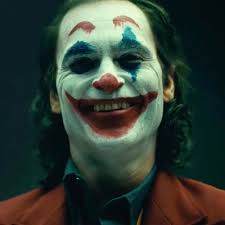
“The Joker” (2019) is very different film than you might have expected. This film delves into an intense character study of Arthur, an authentically “mentally Ill” man without any recourse or even remedy. Arthur has been abused in various ways since a small child. He has “never experienced a happy moment in his entire life”. He absorbs brutality as an adult from bullies all around him with no conception of recourse. It’s just a usual part of his life. He attends weekly interviews with some variety of public health nurse who tells Arthur he needs to try harder with no real vision of what may make a difference in his life. She gives him prescriptions for several different drugs and he goes about his life as if on rails.

Then a well meaning friend gives Arthur a gift that he really doesn’t understand at first, but which comes into a clear meaning later during one of the familiar bullying episodes that postmark his life. From then on, mental illness exacerbated by abuse takes on a different vibe. The chronic misery and anguish of brain dysfunction begins to see an outlet never conceived of before, an outlet that taps some previous skill sets previously concealed by shambolic brain wiring.

The previously simple man evolves to a very simple but dangerous man indeed. A nemesis of Batman for 80 years of DC Comics. The performance by Joaquin Phoenix is exceptional. A florid, Pagliacci-like sad clown turned mad-on-a-mission clown. If it’s possible to transmit the emotions of anxiety, depression, pathos and confused life-paths from a screen to humankind in an audience, beware. This film accomplishes that intent extremely accurately via the direction of Todd Phillips (Borat- 2006, War Dogs- 2018), Produced by Bradley Cooper et al and cinematography by Lawrence Sher.  “The Joker” is a vivid connection for Arthur to his expanding universe, brutally shared with the audience.

This examination of the character and life course of the hopeless mentally ill with no real recourse to anything better is truly remarkable as the viewer experiences an evolution to one of the possible, maybe inevitable outcomes that society facilitates.

Interesting aside:  Watch for “White Room” by Cream near the film finale.

I give this film 5 of 5 whiteface makeups.  Requires attention and focus.  Some violence. Adults only. Must see.


Some interesting 1960s stuff

0

While researching some things for the Pitt class I teach on 60s music appreciation, I picked out a bunch of dead vintage musicians over the past ten years or so. Never mind those that expired in the 1970s. I split them into suicides for those that couldn’t make the transition into the new millennium and, of course the inevitable drug deaths, some accidental using the spectacularly dangerous drug (in amateur hands) Fentanyl.

Then comes a very interesting category, those 60s and 70s rockers that died of “old man diseases”. Now, recall that statistics show that something like 38% of the American population was less than 21 years of age in 1965. This, of course, greatly contributed to how the culture evolved through the 60s, including the psychedelic years. Now, assuming most of these guys were around 21 years old in 1965, do the math. Add (rounded off) 55 years to these guys to the present and most of them exceed the 70 years old range. The range where many of the “old man” diseases start occurring, heart disease, cancers, obesity, diabetes, hypertension and trauma.

To me, if you were a world class rocker in or around 1965, as most of these guys were, 70 is an independent marker of “natural” death once drugs and suicide is ruled out.

Suicide

Butch Trucks (Allman Bros)

Keith Emerson (ELP)

Kurt Cobain (Nirvana)

Brad Delp (Boston)

Richard Manuel (The Band


Drugs

Prince

Chris Cornell (Soundgarden)

Tom Petty Heartbreakers)

Bobby Hatfield (Righteous Bros)

Ike Turner (Ike & Tina)

John Entwistle (The Who)

Dee Dee Ramone (Ramones)

Owsley


Old age/Old man disease (and their age at death)

Alvin Lee (68)

Ritchie Havens (72)

Lou Reed (72)

Jimi Jamison (72)

Jack Bruce (71)

Dallas Taylor (66)

Percy Sledge (73)

BB King (89)

Cory Wells (74)

David Bowie (69)

Glen Frye (67)

Paul Kantner (74)

Scott McKenzie (73)

Ray Thomas (67)

Danny Kirwan (68)

Marty Balin (76)

Otis Rush (84)

Gregg Allman (69)

Daryl Dragon (76)

Peter Tork (77)

Eddie Money (70)

Rik Ocasek (75)

I have excluded all the 60s rockers that expired in the 70s. On Oct. 4 in 1970, singer Janis Joplin was found dead of a heroin overdose on the floor of a motel room at the age of 27. Janis was the second of a triumvirate of exceptionally talented people that pushed the envelope of a “no rules” life and paid the price of admission they didn’t anticipate.  Jimi Hendrix, age 28 (Sept 1970) and Jim Morrison, age 28 (July 1971). A large number of very talented people found out those consequences the hard way in the late 60s.  Perhaps prior lessons learned from the existential philosophers, most of whom went mad or suffered violent deaths, should have been heeded. Forty years later, Jim remains an example of the fate that awaits those who reach too far for answers unobtainable.

Dave Grohl believes that all music can eventually be traced to a central origin that nurtures and modulates it and he’s working very hard to explore that path. The best way to explain the concept is to postulate the repository of music as an unstable star in the universe of existence, undulating and straining but not ready to explode just yet, waiting for the right stimulus. Back in the 40s, big band music was simple and staid, feeding upon itself. In the 50s, a fundamental instability began with skiffle in England that created the Beatles In the USA, be-bop and rhythm & blues, Gene Vincent and the Blue Caps, Little Richard, Jerry Lee Lewis and of course, Elvis. All of this boiled to the surface to bring the star to an explosive point in the early 60s, setting the stage for the cataclysm that occurred in the second half of the 60s when it all literally and metaphorically went electric. A musical revolution never before dreamed of and will probably never be seen again.

The star erupted sending chunks of musical expression out into the abyss. Lets make a quick & dirty list of just a few the blinding chunks flying forth to change the fundamental nature of music. Hendrix, The Animals, the Zombies, The Kinks, Cream, the Doors, Pink Floyd, The Velvet Underground, The Rolling Stones, Frank Zappa, Otis Redding, Creedence Clearwater, The Byrds, Simon & Garfunkle, Janis Joplin, James Brown, Miles Davis, The Who, Sly & the Family Stone, Paul Butterfield Blues Band, Buffalo Springfield, Procol Harum, Paul Revere & Raiders, Hollies, Dave Clark Five, Neil Young, Steve Miller Band, The Guess Who, Roy Orbison, Them, Beach Boys, Steppenwolf, the Temptations, Blood, Sweat & Tears, Jackie Wilson, Sam Cooke, Marvin Kaye, Jefferson Airplane all at once.

Each of these chunks shone brightly and independently, eclipsing other nuggets in similar situations. But in the end, like real stars, gravity rules and all the chunks were slowly drawn back into the mass of the star by gravitational pull, stabilizing it into a huge mass of encyclopedic, heterogeneous, eclectic sound and tone. There is no more critical mass. The star allows a solar wind to emit from its surface, a temporary swell of unfiltered music that waxes & wanes in time.  Disco, Britney Spears, Justin Bieber, “American Idol”,‘The Voice. They’re all out there wafting around at the whims of the desultory solar mini-eruptions. That’s maybe the new music of the new millennium. Unknown if or when the next big eruption will occur.

Peter Fonda (1949 – 2019). Last of his kind

0

Peter Fonda, maybe the last living icon of the 60s idealism he never let go of, is dead at 79. Lung cancer. The 60s officially died with the Manson murders in August, 1969 but the ideal of free spirits taking the cathartic road to find and immerse in the unknown remained in the background with Peter. He is best known for his paean to “On the road” (Jack Kerouac, 1957) riding custom motorcycles instead of cars. It’s said that vision from motorcycle riding is the closest thing to flying.

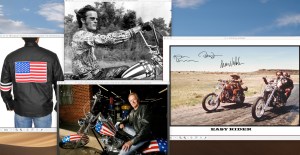
“Easy Rider (1969).  Two hippies riding custom bikes accumulate a cash stash from a drug deal (Phil Spector) in Southern California, then ride cross-country searching for spiritual truth. On their journey, they experience unexpected bigotry from small-town America and also meet with other travelers, all seeking alternative lifestyles. After a “bad trip” in New Orleans, the two counterculture bikers discover there is no peace and love anywhere in America.

The custom bike Peter rode was a highly modified 1942 Harley-Davidson Police Special. There were actually two made. One for the progress of the film and another to be trashed at the end. The trashed bike was restored and is now on display somewhere in California. The street version disappeared, presumed stolen and now resides in someone’s living room somewhere. It has never been found and probably never will be.

Watching “Easy Rider” is not much of a fun experience anymore. It’s so horribly dated. Virtually all of it ceased to exist many years ago, the film remaining as a hallmark in vintage memorabilia museums somewhere. I have a full size poster, signed by Peter Fonda, Dennis Hopper and Jack Nicholson hanging on my den wall. I also have an original “Captain America” leather bike jacket with the full size American flag on the back. You can get the jacket still but not the one with the flag. I wear it out on the road now and then. It always generates remarks. (I have included stock photos of both, as I don’t have actual photos of mine at the moment).

“Easy Rider” was not Fonda’s first reach into filmdom (Generated by the family name). He had somewhat limited success starring in other similar films, most notably “The Wild Angels” (1966) directed by Roger Corman. Wild Angels began the biker forum that persisted into the 70s and introduced the “Hell’s Angels” to film. Wild Angels was a pretty crummy second or third-rate film full of gratuitous sex, violence and notably Harley-Davidson motorcycles (ridden by real Hell’s Angels). The Angels were pointed out as authentically “free spirits”, ignoring convention; riding around all day enjoying whatever came. In fact, dealing with the Angels was a risky proposition as they impossible to control, had virtually no respect for anything or anyone and would start fights for virtually no reason.

There have been books written and documentary films produced about the Angels and they are an interesting culture. Perhaps the best was written by Hunter S. Thompson in 1967:  Hell’s Angels: The Strange and Terrible Saga of the Outlaw Motorcycle Gangs. Here is a representative clip from that volume:

They were a bunch of overgrown adolescents,

stuck in their religious mind-set as a way of life. 

They defined themselves by their opposition to

any and everything.  The strength of their

antagonism was the source of their faith, and

like all holy wars, their greatest enemies and

their greatest source of bloodshed was from

within, battles against rival competing for

bottom of the barrel status.”

 The Angels are still around, still wearing their “colors” but not much noticed any more than any other drug dealing gang in Southern California.  Peter Fonda never lost his interest in immersing into what remained of the counterculture, even far after it passed into obsolescence. Peter is maybe the last of the true 60s riders into the unknown, never finding more than appearing for a few minutes on a Harley as a guest star in “Wild Hogs” (2007):

“Why do you think I don’t wear the colors, Jack?

Why do you think I ride alone? ‘Cause you don’t

know about it anymore. I think you all oughta get

back on your bikes and go out and ride the highway

until you remember what riding’s all about”.

 I suppose his indomitable spirit is out there somewhere doing exactly that.

Peter Henry Fonda (1940 – 2019)


Electric Light Orchestra (ELO) with Jeff Lynn and Dahni Harrison (August 1, Pittsburgh)

0

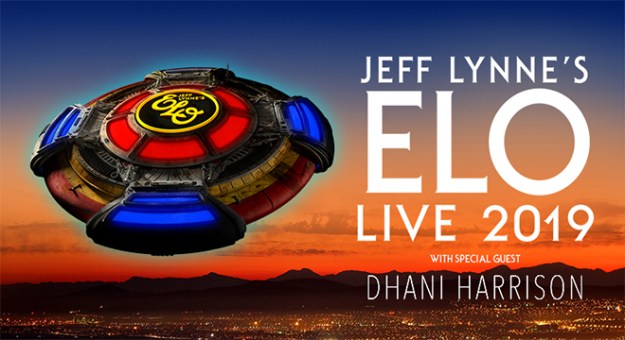
elo_660x360-b7cf1f0f60Electric Light Orchestra (ELO) In Pittsburgh, Thursday evening, Aug 1 with Jeff Lynn and surprise (to me) Dahni Harrison Band opener (yes, George’s son).  ELO started in England in 1970 by songwriter, multi-instrumentalist and producer Jeff Lynn. Their music has from the beginning been Beatlesque rock interfused with classical arrangements and a monster light show. Through its recording and touring career, ELO sold over 50 million records worldwide and collected 19 CRIA, 21 RIAA, and 38 BPI awards. ELO was inducted into the Rock and Roll Hall of Fame in 2017.  They are an authentic supergroup.

They played Thursday night, August 1 here in Pittsburgh and I went out of my way to get good seats through StubHub. A fact of life. If you want regular ticket price, you get regular seats a half mile from the stage. You get what you pay for and I did. I did notice that there were a few seats open in the front rows for US$1600. A little rich for my blood.

Normally, I pay little attention to “opening acts” as most are local and not very good. However, this time I didn’t want to get stuck in a parking dilemma so I arrived pretty early. Hordes of people were descending on the PPG Paints arena, home of the Pittsburgh Penguins- 20,000 seats. At some point in the concert they turned the house lights on for the musicians and every single seat was filled. The acoustics in the arena were world class.

As we were seated, I started picking up on the opening band. I didn’t know who they were but I was increasingly impressed with every number. They played different instruments, electronic keyboards and they were really, really good. World class musicians. The lead singer came up focused on huge TV screens we could see easily and I didn’t recognize him. I checked my phone to see if I could find the band and it turns out it was the “Dhani Harrison” Band. Yes, that Harrison. Jeff had chosen him to open for the entire twenty city tour, of which Pittsburgh was the last. It was an excellent start.

I first saw ELO in the opening year of MTV which would have been 1981. The MTV concert began with a huge flying saucer on stage, pulled up slowly by cables revealing the band that started their set with the saucer hanging over them. This time, there was no saucer, the show started with a huge light show complete with multiple modalities and lasers. It was just about the right number of decibels. Loud enough to push out anything else in your soul but not to do serious hearing damage. Loudness is important to Rock.

That said, there’s something really existential about a real “live” concert as opposed to listening to a record or something off a portable device. I’ve had the dumb luck to play rock music with a great band in front of hundreds of people in venues like “The House of Blues” around the country. I could see what was happening in the crowd from my vantage on the stage and this was the microscopic minor leagues. If you are the proper connection, the vibration of the music from a  20,000-seat auditorium simply fills your soul to the brim. The music grabs you so tightly there is no competition from anything else.

ELO blew the audience away when they hit:

“In this life I’ve seen everything I can see, woman
I’ve seen lovers flying through the air hand in hand
I’ve seen babies dancing in the midnight sun…….”

BUT I…I….I….I NEVER SEEN NOTHING LIKE YOU!”

at full volume with blinding multicolored lights. The aisles were full of dancing people, many my age. The old guy to my right was in tears. Everything  from our youths in the 70s came back in a flood. Unclear how that connection was made but it was absolutely there.

“Twilight” blew me away:

“Twilight, I only meant to stay awhile
Twilight, I gave you time to steal my mind
Away from me”.

At this point, old memories previously forgotten rushed back into me.

Then Jeff introduced his acolyte Dhani Harrison to do a duet of the first song the Travelling Wilburys sang as a group. “Handle With Care”, written in 1988 by George Harrison with specific intent for Roy Orbison to sing a specific section. As the song was being fleshed out in the acoustics of Bob Dylan’s garage, it had no title. Harrison looked around and noticed a label “Handle With Care” on a shelf box and that’s what he named it. The song “Handle With Care” is beautiful and meaningful music.

“I’m so tired of being lonely
I still have some love to give
Won’t you show me that you really care
?”

 “I’ve been uptight and made a mess
But I’ll clean it up myself, I guess
Oh, the sweet smell of success
Handle me with care”

This music has intense meaning to a lot of people. A lot of people. When Dhani came out and ELO began this song, I was immediately in tears. Again, no one has explained the emotional connection but it is intense. I think I can die now. I’ve heard ELO and Dhani Harrison speak to me.

And so it goes, the entire concert was an intense emotional experience, and accordingly, I have provided for you some of the intensity in the form of YouTube clips that will show you some of it.  First is the original Wilburys singing “Handle With Care” back in 1990-I think. Since then Tom Petty, George Harrison and Roy Orbison have passed, leaving Jeff Lynn and Bob Dylan. I think one of the most musically beautiful songs that can be sung by humans. After than, I found a clip of Jeff Lynn and Dhani Harrison reprising the song from this year’s concert. It spoke to me.

After that, I have given you some classic ELO songs that you should all hear and I hope you will as a favor to me.  First is “Roll over Beethoven” from the Rock & Roll Hall of Fame induction in 2017, tribute to Chuck Berry, featuring ELOs magnificent string section. Then “Twilight” and “Do Ya” (The song that made the Pittsburgh crowd absolutely delirious, including my wife who cares nothing about any of this-slapping her knee), both masterpieces of performance art. Please give them a look. You can’t possibly be disappointed.


“Handle With Care” (Travelling Wilburys)


“Handle With Care” (ELO with Dhani Harrison)


“Roll over Beethoven” (ELO)


“Do Ya” (ELO)


“Twilight” (ELO)


Film review” “Yesterday” (2019)

0

What an interesting concept! Think for a minute if no one in the world had ever heard of the Beatles and you were a struggling singer/songwriter no one ever heard of who inadvertently covered “Yesterday” for some friends which was greeted with blank looks. A parallel universe where the Beatles never existed. Slowly it dawns that he has a grasp of the genius and as he passes them off as his own from memory. His fame increases and he inevitably enters the fame/money zone recreating the songs.

This constitutes about the first half of the film, following which the film deteriorates into a seemingly endless sappy, dreary romance putting every diabetic in the house into shock, obliterating the original concept. About the time you think it couldn’t get worse…..it does. The last 30 minutes is so bad all that can be heard in the theater is the clank of jaws dropping.

The protagonist Jack does a yeoman job singing all the selections himself. Kate McKinnon as a shark-like record exec tries to save the film and does a great job but she’s isolated. Toward the end of the film Jack has a meeting with someone interesting that alters his perceptions, a plot diversion completely underdeveloped and just plain silly. The film could have been saved by simply better writing. What would the world have been like post-Beatle influence? How would the state of musicology have changed. I guess how would lives have missed what they never had? None of these interesting ideas were explored, the plot endlessly revolving around when a romance will finally bloom.

The film began with a very interesting image that changed from John Wayne to Ratso Rizzo in the space of a few minutes. I cannot recommend this film. It’s an embarrassing flop. Wait till it comes to HBO. I give this film one Martin D-28 acoustic out of five.

David Crippen, MD, FCCM
Professor Emeritus
University of Pittsburgh Medical Center (Ret)