Film Review: “Ready Player One” (2018)

0

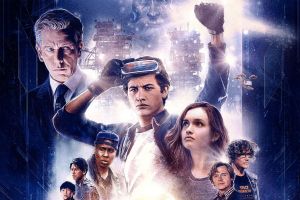
Stephen Spielberg is an interesting director. Over the years he’s terrified us (Jaws), invoked science as reality (Close Encounters…), made Harrison Ford a superstar (Indiana Jones X 2), viewed the love of a child for a space creature (ET), had dinosaurs chasing the park visitors (Jurassic Park), depicted war as it really was (Saving Private Ryan) and brought viewers to sober reflection (Schindler’s List). The list goes on. He is the highest grossing director in history. Two Oscars and five nominations.

“Ready Player One” would not seem like a typical Spielberg effort, but he’s proven to be extremely imaginative over the years. I think Spielberg looked into the future and saw that CGI (Computer Graphic Interface) is going to be a permanent vision of film. I think he figured that this being the case, why not make a film that combines typical Spielberg story line quality with totally state-of-the-art computer graphics as a point toward the future. Spielberg is successful in “Ready Player One”. He hits both nails on the head, presenting a high quality story line with truly amazing graphics, especially in the 3D version.

The storyline, set far in the future involves an adolescent boy who escapes the desolation of the real world by a virtual reality game called “Oasis” in which any player can be anyone he wants, anywhere he wants in a fantasy world that’s as real as the player wants it to be. The original creator of this game (played by Mark Rylance) dies, but before his death understood that the game and the world needed to be protected from corporate suits that would do what Comcast is currently doing to the Internet. He established a game where only the smartest of potential players could possibly get to the end and inherent the ownership of the virtual world, saving it from the suits.

The interface between real humans and their virtual reality counterparts is fascinating. The graphics of the virtual world is spellbinding. The characters are well played, the production is immaculate and, of course, the direction is pure Spielberg. There are tips of the hat to many 1980s zeitgeists and I loved the 80s soundtrack.

Parenthetically, I waited to the end to see the cast and I recognized exactly one name. The wonderful actor (my age) Mark Rylance in a throw away role in which he did well anyway. I recognized none of the other actors that reminded me that am approaching three generations removed from them. I picked up a “People” magazine in my dentist’s waiting room and I knew exactly none of those people focused in it.

The professor in my Pitt class asked the youngsters if they had ever seen “Dr. Strangelove”. Not one hand went up. Even Rolling Stone, a magazine I have had a subscription to since it was a tabloid in the 60s (I wrote an article for them once), is now filled with musicians I never heard of or have not the slightest interest in. I only have two channels on my satellite car radio. 60s and 70s. I’m slowly but most assuredly drifting off into the sunset, filled with irrelevancy.

It’s a really good film. Recommended by me.


Antarctica, February 2018. Crippens.

0

They made it clear from the beginning; “This is not your father’s cruise”. This was an exploration, not a cruise. The plan was to traverse the usual peri-Antarctica islands and peninsulas to make our way through the Antarctic Circle to actually set foot on the continent. A rare event due to quirky weather and shifting ice masses.

The good ship Akademik Sergey Vavilov is a high tech wonder, outfitted with two fully functional engines, each with all redundant outfitting. Powered by a high efficiency fuel that if spilled, would float on top of the sea to be broken down by ultraviolet rays. 117 meters long, top speed 14.5 knots and strengthened for dealing with ice. She holds 97 souls and ten “Zodiacs” (outboard powered rubber boats each seating up to ten people and all their camera gear). The ship can go where most ships can’t and the Zodiacs can and do go anywhere.

Getting to the jump-off point, Punta Arenas, Chile was a very long and stressful series of airplanes and airports. For the trip to the Antarctic Peninsula, we flew in what appears to be the standard for crossing the infamous Drake Passage (more about that later). A curved wing, four engine plane built in England I suspect set up for short take-off and landing. We landed at the Chilean Air force Base on one of the peri-Antarctic peninsulas, basically a strip carved into the rock covered with permafrost.

We were really not prepared for the shock of our introduction to Antarctica. The aircraft landed on it’s left wheels down, right wheels up to assuage against the 30 knot 90 degree cross wind. It took three hops to get on all the wheels. The landing strip was build of rock and sand. On departing the plane we were greeted by intense cold, wind and snow. A barren landscape that could have been the moon. Then a one-mile walk from the landing strip the moored ship about a mile offshore, all the participants transported by Zodiac. Once on board the ship we were made very comfortable. Bunks and a shared bathroom.

The ship is of Russian registry and staffed by an all Russian crew and staff. When not touring in season, it goes back with Russian scientists to study the Antarctic area. The exploration was exceptionally well organized and operated by a Canadian group, “One Ocean”. They were magnificent and we felt very well cared for along this highly stressful trip. The food was excellent.

https://www.oneoceanexpeditions.com/antarctica

60% of the participants signed up through Cheeseman Ecology Tours but those guys were pretty much passive observers, having little if anything to do with running the ship and tour. They were available to discuss the ecology of the area and they did an excellent job. Ted Cheeseman is doing a PhD in Whale studies through an Australian university.

On the first day into the trip it all began. Up for breakfast at 7 am, donning heavy layers of dress and boots for cold conditions, out exploring in the Zodiacs till noon-ish, back for lunch, then out again in the afternoon till supper around 7 pm. Three or four layers of clothing takes about 30 minutes to get on, including heavy clunky rubber boots. Waterproof backpack to hold camera gear adds weight. Walking with all this stuff was like walking in a spacesuit.

Then climbing down a gangway from the ship deck to the Zodiac, gauging the bounce from waves to step in, hopefully not falling. Seats are along the sides of the rubber boat, I think a real risk for falling in the 2 degrees C water if the boat zigs and you zag. There were near misses. The Zodiac, armed with an experienced pilot and a 60 horsepower outboard, went on its way to search for things of interest and no-where was off limits. All of us on board were experienced photographers. Weather variable. Sometimes bright, sometimes wind, snow and freezing rain. Camera gear protected by waterproof sleeves. It got cold and miserable out there. Trying to get out of the Zodiac by swinging legs over to slippery rocks, then climbing varying distances was extremely difficult for me. Many times no place to sit.

At this point the best way to show you the trip is to show you the photos. I will introduce you to the Youtube videos I made from this trip.

The Youtube presentation photos were all taken with my Sony and high resolution. Watch it in full screen. I sorted through about 1000 photos to get what’s in these presentations, so they might be a little long but I could have easily put 500 photos into a collection.

https://youtu.be/gCWJ6uN51-I

This was a ten-day, high-energy expenditure, high stress endeavor, not counting getting to the ship from Pittsburgh. My aging physiology hit the wall about day 6. I learned that my physiology’s response to high-energy expenditure and high stress was to set limits on what it was prepared to mount to meet it. My body simply de-tuned and refused to meet any challenges. So I began to function at a de-tuned level. My appetite went completely, and the food aboard was great. I developed increasing weakness in my left leg, then all over and required assistance on the rolling decks. Urinary incontinence at night. My thinking processes slowed down. I became listless and apathetic, having to force myself to move.

So I learned I had to lower my energy expenditure, beginning day 6 limiting myself to one Zodiac excursion a day instead of two, sleeping in- skipping breakfast and taking my time dressing. I thought clinically about what I really needed to do to get through the day and worked to cut out any excess for the last four days. I may have missed some things but I’m pretty sure I didn’t miss much.

Then the coup-de-grace, crossing the brutal Drake Crossing from Antarctica to Ushuaia, Argentina (considered a necessary part of the Antarctic experience). The Passage divides the cool, sub-polar conditions of southernmost South America from the frigid, Polar Regions of Antarctica. 600 miles and two days of reliably bad weather, high waves and rolling, bouncing decks. Passengers were lined up in front of the ship’s doctor’s door. Mercifully, I did not get seasick but it was pretty uncomfortable trying to eat and sleep when you’re chasing food across the table and holding on to avoid being tossed out of my bunk.

It was a hard trip from stem to stern and when I finally got home after two days in airports and airplanes, I just collapsed for a day. But it was truly a once-in-a-lifetime event not many get to experience.

Addendum: a word about Whales.

99.9% of the entire whale population was decimated before the year 2000. It became obvious that something had to be done so an International consortium was formed to regulate the issue and harass scofflaws (Japan). Most of the blubber rendered in Norway is used to make margarine. Today, the hunting and killing of whales is no longer the main cause of their population decline. It’s now them getting snagged in lobster and shrimp traps and getting hit by fast moving ships in shipping lanes. Strategy for “saving whales” is ongoing by very hard working scientists and populations are increasing.

Whales have to “think-to-breathe” because they must coordinate a deep breath every time they dive. They can dive to very deep regions and stay down a long time. They collapse their lungs when they dive. They can regulate their heart rate (slow it) so blood flow to blubber is minimized and flow maximized to internal organs. Their hemoglobin is specialized to allow a much longer period of time for absorption of oxygen to the tissues.

Besides humans, their only natural enemy is the Orca, (Killer Whale- not a whale, a dolphin). Orcas are the “wolves of the sea”. An Orca will place itself on top of a whale not allowing it to surface to breathe. They can tag team a whale, another team Orca taking over when one gets tired. The whale eventually drowns and is made a hearty meal for every Orca in the vicinity.

Interested in such a trio? Be sure you’re ready for a LOT of stress and energy expenditure. There is nowhere to go if you get sick or hurt. Contact me if you are considering such a trip.

The CODES in LA and the Moody Blues in Vegas, January 2018

0

The venerable CODES, now pushing 11 years playing together, longer than most marriages, had a fabulous gig at the famous Globe Theater in downtown Los Angeles on January 24. We have a very serious following at the yearly International Stroke Symposium and hundreds of fans reliably show up for our gigs. This time we had a great light show to augment our usual fare, and, as always, some new material. It all went extremely well.

I then hopped up to Vegas to catch the last of the Moody Blues road shows. They ended their tour on Jan 26 at the Wynn Theater. I managed pretty good (but not great) seats as the show was quickly sold out and I ended up with StubHub tickets, all of which sold out quickly as well. The theater was nice, the acoustics were perfect and it wasn’t too loud.

The Moody Blues started their career in 1964, but really struck pay dirt in 1967 with the release of their second album “Days of Future Passed”, a fusion of symphonic classical music and rock, eventually termed “progressive” or “art” Rock. The two singles from that album “Nights in White Satin” and “Tuesday Afternoon” are Rock standards. This album was quickly followed up by “In Search of the Lost Chord” in 1968 featuring flute solos by the late Ray Thomas.

These guys have been playing music, making albums and touring for 50 years. They did a Caribbean Cruise with the Zombies in 2014 (a friend attended). I saw them live in 1980 and again sometime in the 2000s here in Pittsburgh. They always have a great show. They have sold 70 million albums world-wide and were (finally) inducted into the Rock & Roll Hall of Fame in 2018.

This particular tour in Vegas was interesting in several respects.

There are three remaining members of the band, lead singer Justin Hayward as been there since 1966 and has won virtually every award possible as a songwriter. Bass player John Lodge has also been there from the beginning. Drummer Graham Edge doesn’t appear to be in the best of health and I noticed there were two drummers, the younger guy assertively pounding the skins as Graham kind of went on a relaxed cruise mode. Mellotron Player Mike Pinder quit in 1979 to develop new artists. Ray Thomas died recently. The three surviving Moodies are all over 70 years of age.

They came out to a really beautiful stage, a large screen behind them showing clips of them at a much earlier age. It was an interesting dynamic. The problem then was which of their massive catalog of songs to do before they moved on to play “Days of Future Passed” in it’s entirety, (the symphonic sections were canned). So they picked some pretty good selections, including “The Story in Your Eyes” which almost brought a tear to my grizzled eye as it brought back times and relations in my early life. But they only played for 45 minutes, then took a 20 minute break before coming back with the album.

That seemed a little bit brief to me. I played three hours straight two nights before and I’m older than all of them, but truth be told, I sure as Hell don’t do it every week for a full three month tour. They looked tired and I bet they were. They didn’t have time to play some of the classics I think they should have, but time doesn’t heal all ills. Ray Thomas was replaced by a female flutist and she was very good. Overall the production was very good but it was very obvious that Justin Hayward was losing his voice. He soldiered on but he was close to croaking.

All in all, it was a very serious remembrance of my past. “For our Children’s Children’s Children”, Every Good Boy Deserves Favour” and “Seventh Sojourn” got me through medical school in the early 70s and are vivid, painful markers of some relationship’s I’ll never have again. I was near tears at some of these markers. I’ll probably never see them again.

Video Clip is me pulling out my iPhone and taking a brief video of the boys singing a song I didn’t come on to for a bit later. I then hooked this video onto one I took of the Moody Blues in performance.


“Travelling eternity road
What will you find there?
Carrying your heavy load
Searching to find a piece of mind.”

From Children’s Children, 1969)

David Crippen, MD, FCCM
Professor Emeritus
University of Pittsburgh (Ret)

Film Review: “The Post” (2018)

0

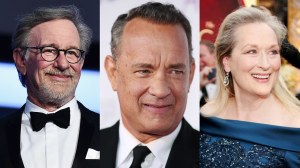
“The Post” is fairly dry history made more interesting by putting two world class actors Tom Hanks and Meryl Streep together with Steven Spielberg. Other major players include Bob Odenkirk (“Better Call Saul”) and Matthew Rhys (“The Americans”). It’s the story of how the press handled the infamous “Pentagon Papers” in 1971, leading to one of the most important Supreme Court decisions in modern history.

June 30, 1971- Justice Hugo Black: ” Madison and the other Framers of the
First Amendment, able men that they were, wrote in language they earnestly
believed could never be misunderstood: “Congress shall make no law . . .
abridging the freedom . . . of the press. . . .” Both the history and language
of the First Amendment support the view that the press must be left free to
publish news, whatever the source, without censorship, injunctions, or
prior restraints”.

The production and, of course, direction of the film is immaculate. Hanks and Streep are the world class performers that they are. It all comes together to form a very convincing potboiler, but the real history of Ellsberg and the Pentagon Papers is diluted somewhat by the drama surrounding owner of the Washington Post, Katharine Graham’s quandaries as to whether to go against Nixon et al, who promised to destroy the paper. Frankly, I think the producers of the film thought the hand wringing Kate Graham was more interesting than the Papers, especially in this era where women want to be portrayed as more decisive than they have been portrayed in the past. Of course, Streep does a masterful job.

But I thought the history of the Pentagon Papers is much more interesting and not explored fully in the film. The film actually starts with the collection of the Papers but the history behind that collection is important. Accordingly, what follows is an explanation (by me) that lays out the real history of how the Pentagon Papers came to be. The film then explains their importance in terms of the attempt by Nixon to undermine a free press. The film does a good job of that.

So, brace yourselves, here is a mercifully brief history of what happened that set the stage for Daniel Ellsberg copying the 7000 or so pages that describe in detail how the American public was systematically lied to regarding a conflict no one believed could be won but refused to quit and appear as “losers”. If you understand the history, the film makes more sense.

————————————-

The history behind the “Pentagon Papers” (Daniel Ellsworth, 1971) The 19th and early 20th century were the years of colonialism, powerful countries conquering and occupying foreign areas mainly for the purpose of acquiring natural resources. Following World War II, the Japanese overthrew the French Colonial regime but were overthrown in 1945 by Ho Chi Minh and it’s military arm, the Viet Minh. The anti-communist State of Vietnam was established under Bao Dai in 1949.

Ho Chi Minh extended the conflict to unite Vietnam under communism until the French were defeated at Dien Bien Phu in 1954 the French departed Vietnam. Following the Geneva Accord of 27 April 1954, agreements were made granting Vietnam independence from France. On July 20, 1954, the countries attending the Geneva Conference agreed that there should be a cease fire and a partition line at the 17th parallel should be established to separate the powers and that free elections should be held to establish reunification in July of 1956. This accord was signed only by the French and the (Northern) Viet Minh, who were assured of winning any such election because of their national popularity. However, the United States (under then President Dwight Eisenhower) and the anti-communist portion of the country in the south, under it’s president Bao Dai refused to sign the accord, essentially guaranteeing free elections would not occur.

The communist influenced north under Ho Chi Minh then continued active warfare against the south to unify the country under communism. This was the beginning of President Dwight Eisenhower’s influence in the evolution and revolution of Vietnam. Eisenhower was very wary of what’s popularly been called the “horizontal spread” of communism, a political culture anathema to the United States. This notion was created following the Soviet Union’s violent annexation of numerous border states following World War II. Eisenhower and others believed that if Vietnam were allowed to unify under communism, it would be impossible to curtail the spread to other neighboring countries. Eisenhower didn’t want to be accused be accused of having lost Indochina to the Communists as Truman had lost China after communists had been successful in capturing that country.

Accordingly, Eisenhower began that strategy of military assistance to the anti-communist forces in the southern area of the country under Ngo Dinh Diem who refused to hold national elections. He had previously assisted French military actions in the action before Dien Bien Phu. Eisenhower’s role in the evolution of Vietnam as a country is important for the following reasons:

1. His fear of the spread of communism overwhelmed the premise that countries should have the right to self-determinism, and that they may freely choose outcomes not necessarily friendly to all other countries.

2. His “cold war” bias obliterated the fact that he was supporting a brutally repressive regime, at least as unacceptable as and probably worse than any communist regime.

3. Eisenhower continued the political objective began by Truman in 1950 to contain the spread of communism by providing military assistance to the non-communistic forces.

In 1955, Eisenhower provided the Military Assistance Advisory Group” to train the South Vietnamese troops. This action begins the “official” military action in Vietnam and American soldier deaths from this point on are memorialized in the Vietnam Veterans Memorial in Washington, DC. In 1967 and especially 1968, the Democratic Party in the United States was in turmoil over the Vietnam conflict. The 1968 Democratic Convention on Chicago escalated to a full-scale riot, contributing to the spin off violent activists. Bowing to increasing criticism of the war effort, especially following the violent Tet Offensive in January of 1968, President Lyndon B. Johnson withdrew his candidacy for the 1968 election.

The assassinations of and Martin Luther King on April 4,1968 and Robert F. Kennedy on June 6, 1968 further threw the Democratic Party into shambles. Nixon shrewdly assessed the situation as amenable to a Republican candidate to gain a strong portion of the voting public looking for stability in the country. This was a correct assessment. Running on a “unite the country” and “End the Vietnam conflict (Peace with Honor)” platform, Nixon was elected by a wide margin against his opponents Hubert Humphrey and Alabama Governor George Wallace who may have split the Democratic vote. When Nixon took office on January 20, 1969, the war was extremely unpopular in the United States and there were violent protests against it, including attacks on military installations and providers of military supplies.

In mid-1969, Nixon began negotiations with North Vietnam to find a peaceful solution. Peace talks began in Paris but did not produce any significant accord. Meanwhile, Nixon had approved secret bombing missions in North Vietnam and also in Cambodia. Every month that elapsed between Nixon’s promise to end the war and its continuation resulted in hundreds of American troops killed. The tragic massacre at My Lai in March of 1968 and the shooting of four students at (then) Kent State College on May 4, 1968 sparked International outrage as to American conduct during the war.

The Nixon administration was viewed as callous and indifferent to the escalating outrages related to the deteriorating war effort. In 1971, Daniel Ellsburg, a former State Department operative and anti-war activist, surreptitiously copied a study prepared by the Department of Defense showing that the Johnson administration had systematically lied to the public and congress about the potential for the Americans to actually win the war. Nixon was aware of the content of these missives and reacted by trying to obtain an injunction for their publication, which failed via the Supreme Court.

The so-called “Pentagon Papers” revealed that the Eisenhower, Kennedy, and Johnson, had progressively misled the public regarding reality of the war intentions and possible outcomes, especially Eisenhower negating the Geneva Accords of 1954. However, Nixon reasoned that the actions of past presidents might soften his own actions. Ellsburg was important also as he provided the incentive for Nixon to break the law in search of future “leakers” of sensitive government documents, eventually leading, of course, to the Watergate drama. The film is world class good. It gets four and a half Hairpieces. Could have explained the history a little better.

David Crippen, MD, FCCM
Professor Emeritus
University of Pittsburgh (Ret)
Film Review: “Molly’s Game” (2017)

1

Jessica Chastain and Idris Elba in MOLLY’S GAME

There was a discussion a while back as to the difference between “artistic” and “entertaining” in film. A lot of Artsy stuff with big name actors got high ratings for artistry but were virtually unwatchable (anything by Ingmar Bergman) and a lot of poorly rated films were magnificent (“Used Cars” (1980). But occasionally you run across one that’s both incredibly well produced and spellbinding. “Molly’s Game” is such a film.

First thing you do is look for the performers’ pedigree and track record. Idris Elba- Multiple nominations for everything. Golden Globe for “Luther” (2012). Incredible performance in “The Wire” (2005). Jessica Chastain. Golden Globe nominee for “Zero Dark Thirty” (2012). Nominated for two Oscars. Nominated for Best Actress tonite- Golden Globes 2018- Multi-Oscar winner and multitalented Kevin Costner. Director Aaron Sorkin (The West Wing (’99-’06), “A few Good Men” (1992). “Steve Jobs” (1015). “The Newsroom” (’12-’14).

With talent like that all in the same film, it’s usually worth a look and I was not disappointed. Based on a real person (who will be attending the Golden Globes tonight, for which Molly’s Game is nominated for two) who had a disappointing sports career, ultimately finding she had a knack for organizing a high end poker game that made her millions, only to eventually to be busted for illegal gambling activities.

The real jewel in this film is Idris Elba from “The Wire”, a TV series everyone needs to see before they die. He is simply magnificent. Jessica Alba portrays the nuts and bolts of how to create a masterful organization from scratch and you might learn a bit about “Texas Hold’em” the classic poker game in which some players at the table gamble and others play poker.

The plot is intelligent, strong and holds interest. There are no appreciable lags. All the actors do a great job of bringing the plot to life. Aaron Sorkin stacks the poker table with wonderful characters. Kevin Costner drops a jewel of a brief performance near the end but never overshadows Chastain who nicely holds her own through the array of other excellent actors, capturing her character to perfection.

“Molly’s Game is a tour-de-force highly recommended by me. Exceptionally produced, directed and entertaining.

I give it four and a half cleve-dresses. A little too long and a few more or less maudlin scenes that went over budget but nothing serious.


Star Wars “The Last Jedi” (2017)

0

Star Wars “The Last Jedi” (2017) is a study in contrasts, some extreme. It’s also an interesting study in aging.

In a previous interview with Charlie Rose, George Lucas, the creator of Star Wars, famously rolled his eyes and opined that the series had been worked as hard as it possibly could and there wasn’t much if any room for fresh material. The original three Star Wars films are among the most entertaining movies ever made. What followed held up the sagging premise with increasing CGI (Computer Generated Imagery) to maintain the interest of the faithful. In the end, he was happy to sell the franchise to Disney (for something like 40 billion$). So on it marched with a different director for each one.

The previous version: “Rogue One” (2016) made amends with the tired plot and mediocre performance art, got OK reviews but most of the top watchers said the same thing, that the war should have been won by the evil alliance many episodes ago.  Luke, Han, and Leia were originally interesting characters in an interesting plot, but subsequent characters couldn’t hold up a sagging, seemingly perpetual story line. Subsequent iterations of Star Ward could be accused of being an assembly line product slickly produced to generate a LOT of money.

Now we come to the latest product, “The Last Jedi” featuring the same tired story line about the seemingly endless war between the vastly outnumbered rebels against the infinite evil empire, now headed by a facially damaged skeletor and an upgrade to Darth Vader (Adam Driver) who makes a pretty convincing bad guy as he has a fundamentally convincing malevolent aura about him even in real life. The Last Jedi is the last film of Carrie Fisher who definitely appears her age and has little to do but offer up stern glares. Laura Dern’s performance, such as it was, should probably be forgotten as quickly as possible. The other major characters would be quite at home in the current blitz of comic book movies.

What’s quite remarkable is Mark Hamill at age 66. Last we saw him he was age 26 and although not getting stellar notices for his acting ability, he did fit beautifully in the original three episodes because he integrated so well with Carrie Fisher and Harrison Ford. I think he looks damned good for his age but he wasn’t given a lot of room for performance art, relegated instead to variations on the theme of moodiness.

This is a film that hangs its hat on CGI pure and simple. There are explosions and other variances of violence pretty much continuously, and they’re all state of the art. So if you like computer generated effects, this is really as good as it gets. Some very striking as the instant appearance on screen of huge battle ships, presumably coming out of light speed.

However, if you come to see this film expecting stimulating dialog and masterful performance art, it simply isn’t there. The aging originals aren’t given any meaningful dialog or discourse. They’re there as a nod to the past and that’s about all it was. The new, young actors are one dimensional, plying variations on the themes of the tired fight against an omnipotent enemy just like they did it in 1977. And of course, a hint of a new young Jedi or something similar at the end for the inevitable episode 9.

I was watching the news and they noted long lines to get into theaters to see this film, many moviegoers dressed in various themes of Star Wars attire. At the small, local theater where we saw this film, there were no lines and the theater was about 80% filled, but there were authentic characters wandering around the lobby, including a very convincing R2D2 (Photos). I vividly remember when I saw the original Star Wars film in 1977. I was a resident at NYU and the film was playing downtown at one of the big theaters but no one thought it would be what it turned out to be, a quantum change in moviemaking. My then girlfriend and I stood in a moderate line but got OK seats. I (and a lot of other people) were just blown away by this film. The actors worked, the plot worked, the cinematography worked. It was a masterpiece and I’ll always remember it as such.

This 2017 iteration? I’ll give it split reviews:

* If you like continuous CGI visuals, I give it a solid 5 deep space mega-explosions. The computer effects are not matched anywhere.

* If you like performance art……Mmmmm…..this film gets a weak, sagging 3 Mark Hamill sad faces for characterizations and plot development.

Godless” (Netflix mini-series streaming 7 episodes) Review

1

A really intense film review.  “Godless” (Netflix mini-series streaming 7 episodes)

https://www.youtube.com/watch?v=toCP7yUqGEs

Just happened to stumble upon this gem of a mini-series and I wanted to make sure you all check it out.

Pay cable companies have the option and ability to portray life is it is, or how we might view it, rather than how ratings shape it. On network programs, stunningly bad pseudo-comedies with irritating laugh tracks prompting those with an IQ under 50 to guffaw on cue. “Two broke girls”? Seriously?

HBO pretty much owns the Emmys for their series but It pays to sniff around sometime to see what’s out there on the other cable channels. Netflix is coming up very quickly. And again, before you start perusing too many “reviews” (always check out mine), you’ll always check rottentomatoes.com first for the most honest and objective numbers.

This month on Netflix resides an absolutely fantastic series with some big name actors and writers. It’s a morality play set in the old West with several tips of the hat to “Deadwood” aura, probably the definitive “Western” of all time.

Godless” is about the search for mysterious loner Roy Goode (Jack O’Connell), by a sheriff (Scoot McNairy), a US Marshall (Sam Waterston) and the fearsome embodiment of father issues Frank Griffin (Jeff Daniels). The plight of women who lost all their men in a mining accident. The showcase is the stunning, rugged landscape of the West and the stark hardships of those who live there. The interaction between Roy and the horses is spellbinding. I don’t know how they could have trained either to do that.

“Godless” features some really awesome performances by some world class actors, most noticeably Jeff Daniels (Yes, the same guy that did “Dumb & Dumber). Daniels’ portrayal of the complex character of Frank Griffin is stunning and spellbinding. Look for very convincing performances by Michelle Dockery as Alice and Cree Indian lady Tantoo Cardinal. Interestingly, several of these major players are born & raised Brits affecting a Southwestern accent (a cross between South Georgia and Valley Girl).

Uppers: “Godless” is a visual masterpiece. Stunning if you happen to have 4k electronics. Most flat screen TVs are now affordably in 4k and it’s highly recommended. The difference is very noticeable and for epic scenery it matters. Westerns are interesting because of the visual texture of the landscapes, caught extremely accurately now on 4k visual.

Downers: It takes some time watching this epic before you’re convinced to care about these people but it eventually sucks you into their lives and their complexities. There are a lot of flashbacks and it takes some figuring out as to where they fit in.

I give it a 4 ½ stunning New Mexico landscapes. Must-see.


Three Billboards Outside Ebbing, Missouri (2017)

0

Some may remember “In Bruges” (2008), (Golden Globe for Best Actor Collin Farrell). The writer/Director of that underrated masterpiece (Martin McDonaugh) now presents this film, an epic about anger and its results all around.

Frances McDormand has lost a daughter to a heinous crime, it’s been seven months and the case seems to have gone cold, so she rents three billboards in succession chiding the police department in her town for not working hard enough to solve the crime. This sets off a rapid succession of events that change the total complexion of the town most of those that live in it.

The Chief responds to pressure by fruitlessly trying to reason with McDormand. His first officer tries to get the billboards taken down by intimidation. The town citizens get involved and the result is a masterpiece of writing and character development that never follows expected paths.

McDormand, Woody Harrelson and especially Sam Rockwell command the film, each in world class roles. McDormand’s speech to a priest offering counsel is as world class good as it gets. There are no easily identifiable heros or villians and most importantly, the progression of events is never predictable or even logical. It’s something that could more likely happen in real life as in a movie.

Frances McDormand accurately portrays every conceivable real emotion as she proceeds to get her case, and it’s accompanying pain, pushed to the front burner. She’s simply amazing; you can’t take your eyes off her. Sam Rockwell spans the breadth of a basic aggressive police officer to violence to compassion, wearing the observer out.

The film is incredibly well written, the performers are all immaculate, the characterizations are impeccable and I truly believe there will be a row of Oscars around for this excellent film.

Just a little too long and sags just a little in the middle. Otherwise, highly recommended by me.

Easily four of five Steely-eyed stares.

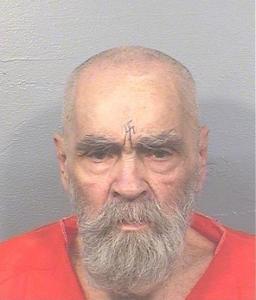
A passing: Charlie Manson (1934- 2017)

1

Books have been written and movies made about Charlie over the past 50 years. It’s a little surprising that he lasted in what amounted to a cloister for this period of time.

A lot is said today about Charlie’s personality, but I think he’s at least as important as a signpost for the era in time he was a part of. An era in which none of the Pitt students enrolled in my “America in the 60s” class were alive. At some point, the professor asked how many in a class of 50 students had seen “Dr. Strangelove”. No hands went up. Earlier, she asked how many were watching “Vietnam”, the groundbreaking documentary by Ken Burns and Lynn Novick. One person.

The 60s came and went with a lot of notice at the time but quickly forgotten by Generation Z. But it’s important for little other reason that because Charlie and his girls probably could not have prospered in any other era. A world with no limits. A world of “Easy Rider” and “Groupies”, a universe of unlimited expansion of the individual and rejection of conformity.

A spontaneous pilgrimage of the faithful, Woodstock (August, ’69) symbolized 60s idealism, but it only hinted at the final demise of the decade of love. The Vietnam War continued, the subservient role of women in the counterculture continued, LSD use diminished and most of the illustrious musical groups of the age died or broke up.

The real end came almost simultaneously with Manson and Altamont, both in the fall of 1969. Manson et al “expanding” their consciousness to forge conflict in a country of “peace & Love” based on rock lyrics eventually leaving the “Family” on top. Altamont, a “free concert” where everything possible to go wrong did, including violence and death.

One of the fundamental myths that the sixties articulated was that some benefit accrued from testing the bounds of human capability and expansion of the mind. It was an era in search of the lost chord. Dissonant notes from political, spiritual, chemical, historical and media influences that come together to form a homogenous chord. The object of total freedom was to find Nirvana, but with little guidance, free-living tribes of the late 60s could just as easily evolve to their lowest denominator. “Freedom’s just another word for nothing left to lose”.

Perhaps prior lessons learned from the existential philosophers, most of whom went mad or suffered violent deaths, should have been heeded. Jim Morrison searched for his soul by bolting through the “Doors of Perception”, immersing his persona in cathartic rock music masquerading as social profundity. In the end, Jim never found the values of freedom and self-expression his performance stood for, reaching too far for answers unobtainable. Janis Joplin made love to thousands of adoring zealots at the Fillmore, then ultimately died alone and lonely.

The Manson Family remains a vision of the “dark side” of the 60s era, the line no one knew was there till they crossed it. If there is an afterlife, one might rightly think that Charley will meet the same people going down that he met coming up.

David Crippen, MD, FCCM
Professor Emeritus
University of Pittsburgh (Ret)

Film Review: Blade Runner 2049 (2017)

2

“Blade Runner 2049” (2017)

Yes, the very, very long awaited “sequel” to the 1982 masterpiece, loosely taken from the Philip K. Dick short story: “Do androids dream of electric sheep”.

First, a housekeeping issue. You have a choice of seeing this very visual epic in 3D, XD and on a regular screen. I elected to see it in XD at the McCandless Cinema and it didn’t disappoint. The SD is a huge wall-to-wall screen and state-of-the-art surround audio. I think all that really enhanced the film and I recommend it. However, you’ll notice that the film does not cover ALL the screen available so it’s not shot in 70 mm wide angle. It’s shot in 35mm and so you’re not watching the full impact. But the sound system is better so it’s still a better deal for not too much more $$. If you’re too close the screen size can be daunting. I don’t think 3D on a normal screen would have been as good. Definitely don’t waste this film on a normal size screen.

Many have waited a long time for this film to possibly answer some lingering questions following the original film 35 years ago (said to take place in 2021). There have been books written about it and to this day there are continued arguments about whether Deckard was a replicant. Harrison Ford was on Charlie Rose the other night and, of course, Charley asked if Ford thought Deckard was a replicant. Ford howled in laughter and cackled: “Don’t go there” (and never has elucidated).

If you have not seen the original film, it is a must before you see the new 2017 version. It will be very difficult to understand the nuances without knowing the history. The actors and actresses in the original film were simply perfection. Like Van Gogh’s paintings in 1873, the film was not appreciated much in 1982. Rutger Hauer (Roy Batty) is said to have advocated boycotting the new film, as it would only diminish the impact of the 1982 version like adding a few notes to a Chopin sonata. Harrison Ford has opined in the past that it was not one of his best efforts, which is a lot like saying Van Gogh didn’t think much of his paintings at the time he painted them. The 1982 film is an absolute masterpiece, I truly believe at the table with the top five films ever made. Films you must see before you die.

Here is one of the very famous clips from the ending of the original film, one of the replicants running out of steam and philosophizing about his “life” such as it might have been. You’re watching genius:

https://www.youtube.com/watch?v=HU7Ga7qTLDU&t=28s

So I arrived with high expectations but, alas, after much thought, I must post a rather mixed review. The major thrust of the film is interesting but very diluted out by nonsense diversions that simply wasted time.

The cinematography and production details are magnificent. Ryan Gosling is a world-class actor, as are most of the others. They don’t disappoint. The CGI is good- watch for the scene where a female hologram “links” within a “real” woman’s body to produce a creature Gosling would recognize and have a very physical interaction. The hologram that hangs out in his apartment that he cannot touch or feel. Very interesting.

If you recall, the human Rick Deckerd falls in love with the beautiful and desirable high-end replicant Rachael (Sean Young) in 1982 and they steal away to an uncertain future, not knowing how long she will live, accepting what time they may have. They both simply vanish from sight.

Now in 2049, replicants have been refined to the point where there are very few replicant outlaws like Roy Batty, only docile servants from the new iteration of the Terrell Corporation (Wallace). A Blade Runner still roams around retiring the odd “skin job”. Gosling is one such and he is a replicant and he knows himself to be so. After retiring an older model hiding out as a farmer, he notices some odd things on the farm and begins an investigation that opens up a lot of things the Wallace Corporation (the next iteration of Tyrrell) is very interested in pursuing to their own ends.

It slowly comes out that replicants have reached the point in their evolution that they may be so close to human that it’s impossible to tell them apart, they may have real memories and they can perform other strictly human functions machines can never do no matter how sophisticated. And so it becomes unclear exactly what Gosling is. Ultimately, he seeks out a former blade runner, Rick Deckard (Harrison Ford about halfway through the film) to answer some questions about his relationship with Rachael. He was told at some point that the Rachael/Deckard liaison was staged for experimental purposes. But how? Did they just put the human and the replicant together hoping they would bond or were both replicants and Ford was ordered by an internal chip to fall in love with her? Then a lot of things happen that you’ll have to watch closely.

The thrust of the film in the nature of “life” and how closely it can be built with super-technology under the direction of a super-genius. Can such a creature be constructed that can perform ALL the functions of a real human? If so, its creator would know the mind of God but how would such a creature feel within? If so, how much if anything would they know about their “life”? Would their life consist of real memories or memories that can be constructed in perfect detail. The Director works very hard to flesh these things out in somewhat diluted form.

Now for the not so strong news, and there is some. The plot of the film is interesting but underworked and made to be too complex and obscure- it doesn’t become clear till the last scenes (no spoilers here). It takes the audience a while to figure out where this is all going, muddied by non-sequiturs, dead ends, micro-plots that don’t go anywhere and actors that don’t really contribute much (Jared Leto). The thrust of the plot is spread over almost two and a half hours while the audience looks at their watches. Its TOO long and it dilutes things out dramatically. It’s hard to remember where the plot’s going when it meanders as it does.

The Deckard character was not fully fleshed out here. You get the impression that Harrison Ford is in the film for his commercial namesake and to provide an action figure. He doesn’t act like the old Deckard. Rachael is no longer with him and it’s unclear why at first but is slowly bleeds out. Little is known about her fate or his life since 1982. As the plot progresses, it becomes more clear but you have to watch closely for it. Otherwise, Harrison Ford doesn’t really contribute much other than fight scenes that don’t go anywhere.

Now, the appearance of the 1982 version of the high-end (Nexus 6+) replicant Rachael as she appeared then (hot babe) is a closely guarded secret. Sean Young is now 67 years of age and obviously doesn’t look as she did then. No one is saying how they did it, other than with her help and assistance but it was very effective. Her 1982 likeness is perfect. I think they used a body double and used CGI to superimpose Rachael’s face to it. They’re definitely good enough to do that. At any rate, it’s pretty surprising and realistic.

Director Denis Villeneuve works hard to slip away from the shadow of Ridley Scott who moved heaven and earth in 1982 to make this film in his image. He does, in fact create a separate plot, loosely attached to a portion of the old one that remained unexplained. Does the new version explain it? Maybe. I think it puts to bed the thought that Deckerd is (was) a replicant. Replicant’s don’t age and Harrison Ford ages plenty. And certain other bodily functions replicants cannot do because they contain life, which cannot not be created by any machine. Yes, I believe Deckard is human and that’s what they needed him to be chosen for. What happens next is a logical extension of where that premise might go, and Villeneuve did a good job, probably with some advice and consent from Ridley Scott.

I have tried hard not to slip in any spoilers. This is a very, very complex film and will require you to assimilate a very lot of things over 2 & 1/2 hours but it does eventually come together. There are a lot of diversions that go nowhere and then you have to figure out how to get back to the point, a point that moves around some and might be a little hard to follow.

This is a very interesting film, flawed in many places I think but worth the effort to sog through it. In the end, some questions are answered that are very interesting commentaries as to the state of the art of creating alternate forms of of life, a day that might come someday.

I give this film 4 of 5 Scuzzy Harrison Ford grimaces.