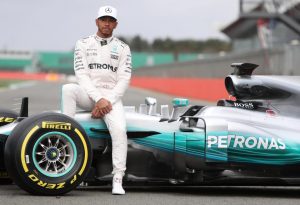
Formula One at Monza today 9/3/17

0

Some issues about Formula One for those interested. At Monza today, Mercedes one-two win at Monza, Ferrari third.
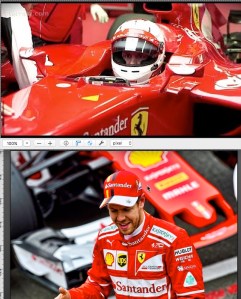


In order to understand the passion for Formula One you have to understand the Passion for Ferrari (demonstrated massively at Monza,

the Italian Grand Prix). Ferrari is not a brand, it’s an obsession. The proprietary passenger automobiles are not motorized vehicles; they’re living beasts that envelop their drivers who become integral parts of the car. Their owners/drivers are insanely passionate about them. The cars rarely diminish much in value with age and some of the older ones enter the upper ionosphere of value, with no end in sight. A 1962 Ferrari 250 GTO became the most expensive car in history, selling in a private transaction for US$38.1 million.

This race at Monza marks 70 years of the Ferrari badge in motorcar racing. The first Ferrari-badged car was the 1947 125 S, powered by a 1.5 L V12 engine. Enzo Ferrari’s only real interest was racing so in order to finance these efforts, Enzo developed and sold proprietary automobiles to fund “Scuderia Ferrari” (Ferrari Stable). Ferrari is the most successful racing team in Formula One history, holding the most constructors championships and producing the most winning drivers.
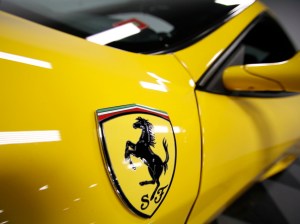

The prancing black horse on a yellow background with green, white and red stripes is one of the most recognized brand icons in the world.

That design originally graced the fuselage of a WW I Italian fighter plane flown by Italian Ace Francesco Baracca. After his death, Francisco’s wife asked Enzo to use this horse on his cars, suggesting that it would bring him good luck. Ferrari chose to have the horse in black (as it had been painted as a sign of grief on Baracca’s squadron planes after the pilot was killed in action) and he added a canary yellow background, as this is the color of the city of Modena, his birthplace. All racing Ferraris and most of the passenger cars carry this badge on the front flank of the car by tradition.

Only a few American drivers have consistently driven for the Scuderia, most notably of whom would be Mario Andretti, pound for pound maybe the most skillful driver still living. Through the years, Phil Hill from the 50s is included in the thin Americans list. I ran into Phil Hill at Leguna Seca in the mid 80s during my tenure as an assistant medical director of CART and we spoke a bit about the old days. He was a fantastic guy and I was lucky to know him. I have an autographed photo somewhere.

At any rate, Formula One has evolved to be one of the most popular and best-attended sporting events in history, commanding a total global television audience of 425 million (in the 2014 season). Many of the incredible technological advances are handed down to passenger cars including tire design, disc brakes, aerodynamics and many safety issues. It’s said that the engines in Ferrari passenger cars are essentially retired F1 engines.
.
Formula One cars are the fastest road course racing cars in the world, owing to very high cornering speeds achieved through the generation of large amounts of aerodynamic downforce. Formula One cars race at speeds of up to 233 mph with engines currently limited in performance to a maximum of 15,000 rpm. The cars are capable of lateral acceleration in excess of six g’s in corners. The cars are very dependent on electronics and are said by some to be computers chauffeured by humans. They have radically evolved and changed through the history of the sport. I have always suspected that Ayrton Senna was killed at San Marino 1n 1994 simply because his ability to out-think the on-board computer lapsed for an instant and the computer made a bad decision at speed Ayrton was too slow to correct.

Posers competing with Formula One include NASCAR and the reconstituted IndyCar Series (from CART- Championship Auto Racing Teams). I have never understood the lure of a huge pack of cars traversing an oval track in a mob, but that’s just a personal observation. I know Indy Cars well but it isn’t your father’s sport anymore. Many of the drivers came from Formula One or other foreign venues and all the guys I used to know are retired so it’s lost it’s interest value for me. It’s a very “American” endeavor where F1 is a truly global sport, encompassing races in 42 countries.

There are two things wrong with Formula One right now that really need addressing.

  1. Current World Champion Lewis Hamilton (UK) is winning too many races and it’s bad for the sport. The real competition in F1 occurs after the usual 4th place finish, back in the pack where there are some really excellent drivers. Watching Hamilton (and his team mate Bottas at Mercedes) win all the time is starting to get tedious, but the history of this kind of thing is replete in F1 (Michael Schumacher). Eventually the rest of the pack will catch up but the Hamilton era isn’t without controversy.Louis isn’t a particularly well-liked competitor and routinely gets boos from the crowd. Unclear why, other than his “jet set” lifestyle off course. Also unclear is whether Louis is really “that good” of a driver, his car being the winning component. The Mercedes “Silver Arrow” is clearly the fastest and most reliable car on the circuit. If Louis is on the poll, it’s very difficult for anyone else to pass him. It would be interesting to put some of the really strong middle-of-the-pack talents into Hamilton’s car and see how they did. Especially Max Verstappen (Holland) and Dan Ricciardo (Australia). It would not surprise me in the slightest if either of these drivers walked away from the pack in Hamilton’s car. That said, the two Ferrari drivers have done well, Sebastian Vettel (Germany) holding the lead in the points until Monza, but the Ferraris are simply not as fast as the Silver Arrows. They made a lot of advances from 2016 but not good enough. So Ferrari is still faster than Red Bull but they have to come up with a better car for 2018. Also, we’ll also see who’s sitting in what car during the “Silly Season”; drivers signing contracts with teams. Sometimes big surprises.
  1. The strict FIA rules regarding changes in the cars after qualifying and before the race need to be looked at because they’re unfairly penalizing the younger teams, still sorting out their cars. This race, outstanding driver Daniel Ricciardo got a “grid penalty” (dropping his previous line in qualifying) because his team had to change a gearbox. This is ridiculous. Daniel is an excellent driver and had a really good shot at the podium (finishing first, second or third). Instead he dropped to the back of the pack, as did hot shoe Max Verstappen for a similar technical offence, an out of place engine change. These rules hurt the sport and should be re-thought.

That’s it for the European races. Next race is Singapore Sept 17.

Mergers & Acquisitions Dept: New Chevy Bolt

0

As many of you might recall, I predicted a long time ago that within five years or so (as of that prediction), American highways would be replete with electric cars. At that time I really wanted the Lotus Ethos, but Lotus fell on hard financial times and it never came to fruit:

http://www.bestgreencars.com/all-green-cars/2015/1/11/lotus-ethos-plug-in-hybrid-mini-car-concept

2017 Chevrolet Bolt EV

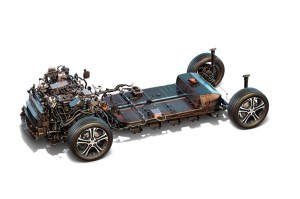
Complaints and sour grapes that the current lithium battery technology is inadequate for widespread use and potentially dangerous have not stopped innovation and the proliferation of all-electric cars. Now virtually all the major car companies have a model either in production or on the drawing board.

The first was the Prius Hybrid that simply used electric power to augment its pretty standard engine. Mainly what it did was shut off the engine during stops, a huge gas savings. The early Prius got nearly 50 mph which was a big deal in the age of four dollar a gallon gas. Later iterations of the Prius were more efficient but it still ran mainly on a gas engine.

When the Tesla first came out in 2008, it was an electric engine in a Lotus Elise body. It was heavy and ponderous but went over 200 miles on a charge, a radical departure from the hybrids. Then the expensive model S came along in 2012 and sealed the deal. The only car Consumer Reports in it’s history gave a 100% rating. The more affordable model 3 is due for wide distribution in about a year.

Tesla has done two things, they proved that wide use of all electric was feasible and they’re leading the charge in recharging innovation. What’s coming down the road, so to speak, with Tesla is a wide network of 90-second battery changes. Down with the spent battery, up with a new fresh one. But when considering Tesla, one must remember that their re-charging hardware is proprietary. Only works with Tesla, which would be a bit of a logistics problem as standardized connections proliferate across the country.

So I have a car coming up to the end of the lease and I will be turning it in. My wife started to develop an interest in electric cars. She would be the perfect person to use one. She rarely makes long trips (can use another car if needed) and there are dedicated recharging stations at the hospital where she works and they’re free. Technically, she could use those stations every day to keep the car charged. She’s never seen another electric car parked at those stations and at the time she arrives (6:30 am) she would always have one available.

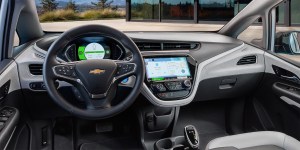
After much research, she decided to purchase a new Chevy Bolt (with a “B” not the Volt). Chevy’s new all-electric, said to have (all other things equal) a range of well over 200 miles per charge. The price was reasonable, under $40,000 with all the trimmings and safety equipment. Side mirror blind spot indicators, backup warning, “all around the car” camera that shows the entire circumference of the car, back up camera and most interestingly, the rear view mirror isn’t glass, it’s a camera that shows a wide view of the rear of the car when underway. Said also to carry a $7500 tax break for purchasing one.

When I looked into this, what surprised me most was the exploding number of re-charge points around the country. Most at restaurants and hotels but most along major highways. You really can go 150 miles, plug in somewhere and continue this indefinitely, even in lesser States than California.. There’s one at the Dunkin’ Donuts right down the road from us. Free. Google Maps now shows charging stations nationwide.

But it turns out that understanding charging points is a bit of a learning curve. One would think that the connectors for charging stations would be standardized, but noooooo, there are three different female receptors out there. One for “Asian” cars, one for American and European cars and one for Tesla. They are not interchangeable. Nissan one only works installed the charging center down at the local “Drunken Donuts” for the Nissan Leaf. The manager of the facility knows nothing about the charging station. Nissan just used their property.

So in planning trips, one has to specifically look for the “right” kind of connector. At home, the car plugs into any normal two-prong 110 wall receptor and takes about 20 hours to fully charge on 110. Much faster on 220 but an electrician has to set that up. My wife charges every day at the Receptors located where she works at UPMC St. Margaret, where she’s never seen another car charging there. Yet. All the hospitals now have plug-ins.

When I got to drive this thing, I was also surprised at how quick and quiet it is. There is virtually no sound other than some minimal road whine. 0 – 60 mph in about 6 seconds, which is pretty quick and instant, torque. That works for me as I’m constitutionally incapable of getting to 60 in more than 6 seconds, four is better. But my wife is worse which is why I carry a lot of insurance on her. The dash has a huge computer screen where everything can be viewed. Car has Bluetooth, a rolling WiFi hotspot, pretty good radio, comfortable seats and adequate creature comfort. There is no routine maintenance. Rotate the tires once a year.

There is a handle on the left side of the steering wheel that when applied as the car goes down a hill, applies the brakes progressively and re-charges the battery, extending it’s road life somewhat.

Like I said before, this is an idea that’s time has definitely come. This car, the Bolt, has won both Car & Driver and Motor Trend car of the year. There was a minor crump of some of the batteries recently affecting less than 100 cars and it’s been fixed. Battery warranty is 8 years.

Look for a massive splash of these cars, and dramatic improvements in road-ability, as the technology gets better in time.

I’m a car-guy of the first order and I’m definitely impressed with this car. Check it out if you have an interest.

David Crippen, MD, FCCM

Film review: “Wind River” (2017)

0

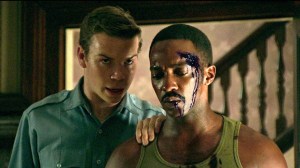
Desolation angels. “Wind River” is an example of truly phenomenal components of a great film. Phenomenal, riveting performances by really excellent actors. Incredible cinematography on location in the Utah Mountains. A spellbinding story line that drags just a little. When put all together and stirred, the result is just a bit less than the sum of its parts, but much of that lack can be forgiven because of the quietly spectacular actors.

Although true in its essence, Director Taylor Sheridan (who wrote the excellent “Sicario” in 2016) uses the same nuts & bolts in Wind River but comes off just a bit politically charged about the abuses of native Americans that are all too apparent from history and in the present. Sheridan also tends to maybe overwork the hard-times-in-the-country theme; you’ll note an upside down American flag on the reservation.

If there are very minor philosophical deficits in the story line, there are none for the actors. Jeremy Renner (The Hurt Locker 2008) is absolutely riveting. Elizabeth Olson moves from tranquil to aggressive in a heartbeat. But deserving of special accolades is native American of Comanche ancestry Gil Birmingham. His performance is simply incredible.

https://www.youtube.com/watch?v=1B7zhlGkJmQ

Even at 90 minutes, the story line drags just a little. This film could have been a very taut HBO hour-long drama. It starts out slow but progressively drags the viewer into a very shocking and violent end that a potential viewer should consider if they’re a little on the squeamish side. All things considered, the 87-94% rating from Rotten Tomatoes.com is definitely deserved.

BTW, there are emerging articles suggesting that a LOT of potential audiences check <rottentomatoes.com> before considering overpriced tickets and popcorn to see a dud. It’s changing the way studios make and market films.

https://www.vanityfair.com/hollywood/2017/06/how-hollywood-came-to-fear-and-loathe-rotten-tomatoes

Here’s a trailer for “Wind River”

https://www.youtube.com/watch?v=tCuzMG3enK4

One of the top five films this year. I think a “must see”, especially for Gil Birmingham’s performance. I have absolutely no doubt that there will be a lot of Oscar talk about this film and it’s principal characters. Highly recommended by me for the performance artistry and cinematography. I give it four and a half of five bloody snow tracks.

David Crippen, MD, FCCM
Professor Emeritus
University of Pittsburgh (Ret)

Film review: “Detroit” (2017)

0

This new film by the director of Zero Dark Thirty and The Hurt Locker is generating a bit of buzz, including some from me. Katherine Bigelow is a world-class director and rave reviews and Oscars have greeted her previous films. This film requires a little more perspective. No spoilers here. Look up the story line on “rotten tomatoes.com” or IMDB.

The film brutally depicts some events embedded in a 1967 race-related riot in the city of Detroit. The use of a historical backdrop as a base for drama involving named individuals for whom a story is told as technically a “docu-drama”. Facts and factoids are depicted according to the recollections of some individuals involved that are still alive, which is a dangerous thing.

People involved in any “real-life” drama remember things differently depending on their perspectives and biases. The film is unclear which of these players are spinning the story line and where the biases lay. The “real” facts according to some completely objective observer are largely unknown but the aftermath was clear.

Also unclear how the story might be biased according to Katherine Bigelow and writer Mark Boal, both of whom are white and Bigelow known for biasing toward the utility of torturing to obtain information (in Zero Dark Thirty). Finally, unclear also as to what the necessity was for a whole lot of seemingly endless gratuitous brutality. A story that could equally be told with more subtlety.

As I have mentioned before, there’s a whole lot of difference between a documentary (read- Ken Burns) and a docu-drama that can and frequently does take a “creative” liberties to tell a story sellable to the ticking purchasing audience. Did Bigelow and Boal specifically intend to over-emphasize graphic, gratuitous violence to wag their fingers at society because these things happen or to be historically accurate? If so, how that that improve the aura of the film? Very unclear to me and I’m quite suspicious of it.

Failing all the above, the actors are outstanding, the camera work is riveting and the story line is interesting to say the least. I think it merits a very hesitant and skeptical recommendation. It’s too long and the brutality becomes overwrought quickly. We’ll never know the stark reality what happened that day, but we’ll see one viewpoint of it, and that should be kept in mind.

The actors, writer and director on Charlie Rose Friday night:

https://charlierose.com/videos/30851

With some hesitation, I give it four of five baby-faced cops. See with realistic expectations if you have an interest.


An editorial comment on Trump at 6 months

0

DISCLAIMER: What follows is a piece I just wrote for a political blog. It is a personal opinion and nothing else. I’m sending it to you simply because I can (occasionally). I am not using a UPMC server and this is not a comprehensive list of everyone in any Department. Enjoy if you have an interest. Dump if not.


From Mike Allen of AXIOS this morning:

“Trump is at real risk of losing his party. His base voters are remaining steadfast,
but Republican senators are getting increasingly impatient and resistant.
Sen. John McCain’s surprise thumbs-down on health care is likely the beginning
of a wave of defections from establishment Republicans. It’s rarely discussed
publicly, but people in government say that a domestic attack — although unlikely
to be on the scale of 9/11 because of all the countermeasures that have been
added — is a constant possibility. And critics and skeptics worry about ways
Trump could consolidate power in the wake of such an event. We put
Bob Mueller last just because the special counsel gets so much attention.
But make no mistake: The special counsel’s investigation remains the
existential threat to this presidency. Reuters reported that Mueller just added
a 16th lawyer to his team — Greg Andres, who has experience prosecuting
illegal foreign bribery.”

“Also on the WashPost front page … “Senate GOP’s frustrations with Trump
bubbling up,” by Sean Sullivan: “Some are describing the dynamic in cold,
transactional terms, speaking of Trump as more of a supporting actor than
the marquee leader of the Republican Party.”


I say: I’ve always thought that Trump’s “base” will never desert him no matter what he does or how he does it. The point of being tipped into power by relatively dogmatic rednecks is that they obviously believe what he says (in his tweets) other than what the reality is. Several interviews with groups of his “supporters” in Kentucky and Ohio show that they simply don’t believe anything the nightly news reports and they don’t read the Grey Lady or the Washington Post. Trump says his first six months have been absolutely stellar and they hang on his every word.

However, the “base” that tipped him into this unexpected (by everyone else) victory was a relatively small number, and that number is slowly but progressively decreasing. Unclear if the same election was held tomorrow, that tip would occur. There have been defections. The base will always remain but may not be politically active in 2018, and especially 2020. The American voters may still prefer conservative politicians, but that doesn’t necessarily include Trump.

If and when Trump goes down, it won’t be because of style but substance. Few if any of his promises to his base have much chance of coming to pass. The incredibly bad health care bill is mercifully dead, hopefully forever. His promises to “drain the swamp” simply diverted the swamp to the White House. Promises to save coal are ludicrous. His disbelief of global warming is harmful. It isn’t up to him to “increase jobs”. It’s up to many factors he has no control over. The “wall” is a joke, especially the Mexicans paying for it. But some very big issues remain. Whether or not his rabid base chooses to see it, the Russian thing has now developed into a very, very big problem for Trump. The obvious Russian thing plus the intentional lying and deception Trump is caught in by Washington Post reporters who have devoted their lives and 18 hour days to ferreting out these lies shortly after he utters them. The intentional deceptions may not be noticed by the rabble, but you can be sure they are by the Republican establishment, few of whom supported Trump initially and most of whom are only paying lip service to him today.

Fewer Republicans are smiling. That John McCain and the two women Senators made a big splash of defying him in the face of personal threats would have never happened six months ago. The new book by respected Arizona Republican Senator Jeff Flake raggedly trashing Trump and the horse he rode in on would never have seen the light of day last December. The Republicans are decidedly as worried so much about being ravaged by Democrats in 2018 or even 2020 as they are their own party ultrastructure collapsing. Since there are no clear Democratic threats showing up, that could happen. If it does, they will lose everything pretty much by default.

The “Great Man” theory suggests that times of crisis creates a “Great Man (or Woman)” to arise and lead the population out of danger. In fact, Contrary to Trump’s tweets, our population is in crisis indeed, and great danger. We’re led by a President who makes decisions capriciously, impulsively, with little or no thought as to long range implications and sometimes according to the last “authority” that advises him. This kind of leader is a serious problem in a world where long range missiles are aimed at us from one side and malicious computer experts on the other. A world where the Middle East can explode at any time and the Chancellor of Germany publicly states that Europe has no confidence in Trump and they’re on their own. A scary place indeed, with a blundering incompetent leader of the free world at the helm.

The burning question at the moment is what, if anything, can be done to minimize the danger of Trump. There continues to be some interest in some quarters to remove him by impeachment, but that’s highly unlikely in a regime controlled by Republicans. If Clinton couldn’t be found guilty in impeachment, Charlie Manson probably wouldn’t either. Besides, if Trump were removed, a smiling, dapper Mike Pence would ascend, a man who really believes ultra conservative Republican nonsense and enthusiastically putting the country under it’s jackboot. Trump is a better deal than Pence if for no other reason than his inherent inefficiency makes it harder for his party to establish it’s black-hearted goal.

I suspect nothing can be done about Trump for the near future and we’re all going to cross our fingers and hope that ineffectualness will breed less danger than a committed charge into guaranteed danger. At Trump’s current rate, little if anything will change and little will get done. In addition, Trump doesn’t see this light yet but Robert Muller is lurking in the background with a bevy of very knowledgeable specialty lawyers and they’re digging like Robert Costa of the Wash Post does, just not reporting any of their findings yet. You can bet they have Trump’s tax forms. When Muller does come to light, and it’s likely to come before 2018, it will be a blinding flash that no one sill be capable of ignoring, not even the “base”. But the base won’t matter then. It will matter to the Republicans, and matter a lot.

I mentioned the “Great (Wo)Man Theory” a while back. Unclear if this will happen before 2020, but we might see signs of it in the Senatorial race of 2018. Will Democrats get a majority of either house, making it virtually impossible for Republicans to get anything meaningful done? Unclear yet. Despite all the pleas for bi-partisan discussions on just about everything, it isn’t happening, and few pundits suggest it ever will. Either side has more to lose than gain by doing so. It will always be a scorched earth battleground, whoever survives the carnage wins (need I mention the Toomey vs McGinty Senate race in Pennsylvania, 2016).

There are some interesting possibilities on the horizon, many of whom have guested on the Charlie Rose show (a really excellent forum). Republican Senator (R. Utah) started out life as a Tea Partier but has become more moderate. He related some good ideas on Charlie Rose a while back. A little too conservative to my taste but I think might be up and coming.

https://en.wikipedia.org/wiki/Mike_Lee_(U.S._politician)

Even Jeff Flake (R. Arizona) has been a round for a long time and has emerged as pretty much a voice of reason.

https://en.wikipedia.org/wiki/Jeff_Flake

On the Democratic side, forget Elizabeth Warren, she blew it all out for Hillary. Al Franken? Maybe, but not terribly well thought of by the power structure. Keep your eye on South Bend Indiana Mayor Pete Buttigieg.

https://en.wikipedia.org/wiki/Pete_Buttigieg

He has impeccable credentials and could arise to be a force for the Democrats?

At any rate, it appears that, like it or not, we’re stuck with trying to limit incompetence for the foreseeable future, not forge ahead constructively. We will be what we are, a large group of “The Apprentice” contestants, overseen by the master who know how to get the best ratings. In the end, much drama and confusion, but ratings likely to drop as the short-span-of-attention audience gets bored, then dropped by the networks. We’ll see in 2018.

Addendum 08/0317

On the NBC News last night, the talking head mentioned that the economy is doing pretty well for the last couple of quarters, even as the White House quagmire continues unabated. I would be pretty happy about this as far as it goes, but be very wary of Wall Street in general and bull markets in particular for at least two good reasons:

  1. None of this has anything to do with Trump other than he’s loosened some regulations that protect consumers. Amazon is booming because no one goes out of their house to a store anymore. That will all come tumbling down when these huge storefronts that employ millions of people come tumbling down. Apple is booming because everyone in the country continues to purchase various stripes of computers with no end in sight and the new iPhone 8 is getting a big push. None of this has anything to do with Trump who if you recall promised to get all the coal mining jobs back. Many other businesses continue to move overseas.

  2. Wall Street variations are, by their nature, fickle, based on smoke, mirror and vapor. Recall that Wall Street goodies also increased after George W. Bush and Obama, larger than what’s happening under Trump. It’s all just based on expectations. Recall the “dot.com” boom a while back thought to never end. Recall the housing boom of 2006 based on lack of regulation, no one watching them. Don’t worry. Business thinks they’re getting a pass on regulations that will allow them to take risk with someone else’s money for a while. But in the end, all risky maneuvers flop and when they do, it’s the public’s money that will be lost. Recall also that not one of those that caused the recession of 2008 are in jail today. Ups always turn to downs, and now that regulations are lax, it’s only a matter of time.

Wall Street is a VERY bad proposition to hang hopes on. The Trump presidency is in VERY deep trouble, and Wall Street is a very fat red herring.

Film Review: “Dunkirk” (2017)

0

We live in an increasingly, for want of a more descriptive term, “technological” society that can be effortlessly depicted in soulless, technological terms. Witness the rise of “superhero” films with computer generated special effects (CGI- Computer Generated Interface) to make the impossible (even the ridiculous) amenable to the visual imagination. Comic books for the new Millennium.

One would think that the history of film has come to a real bifurcation. One road, reality in the personal experiences of real people on real film (Manchester by the Sea- 2016) and the other computer creations saving the world from other computer creations (The Avengers- 2012). The “artistic” value of one road seemingly balanced by the pyrotechnic value of the other. However, those roads are melding somewhat as filmmakers learn to judiciously use computer graphics to make very artistic films.

In “War for Planet of the Apes” (2017), one might consider the incredible facial ape morphing to human qualities, including a wide range of emotion, fear, anger and frustration. Combined with a fairly rational plot line and stunning cinematography, the Apes film is really very interesting and worth a look for this masterful use of CGI to mimic an alternate quasi-human reality.


“Dunkirk”- (2017) is one such film that couldn’t have been made without computer graphics, but it doesn’t let that fact interfere with the incredible visual and emotional effect of the film, given stellar ratings by virtually all the critics this week.

The film depicts a campaign that began in late May 1940 in the French port city of Dunkirk, where nearly 400,000 Allied soldiers were trapped on a vast beach by the Germans, whose aircraft picked at them like fish in a barrel. The British faced the capture or possible annihilation of their troops. Rescue seemed impossible as German artillery and torpedoes vanquished any approaching ship.

338,226 men escaped aboard 861 privately owned small vessels, of which 243 were sunk during the operation. British Fighter Command lost 106 aircraft dogfighting over Dunkirk, and the Luftwaffe lost about 135. It was a truly awesome feat.

Directed by Chris Nolan (The Dark Knight- 2008). A world-class cast including Sir Kenneth Branagh, Mark Rylance and especially Tom Hardy whose entire character as a Spitfire pilot is emoted from his eyes and gestures. One of the most incredible performances I’ve ever seen, worth the price of admission just for Tom Hardy’s incredible performance in which he had only ten lines.

“Dunkirk” is one of the most finely textured and nuanced films of this decade. It’s a film where the cinematography tells the story, allowing the audience to understand the goings on with minimal spoken dialogue. It falls into place because the images tell the tale. Yes, there is CGI in place mainly to show the vastness of the scenes that could not have been depicted any other way. But the CGI does not interfere with the artistry which is world-class masterful.

This is the most visually stunning film this year, as good as it gets. I enthusiastically give it five of five burning Spitfires. Absolutely a must see.

“The Mummy (2017): Anatomy of a truly bad movie.

0

Opened with scathing reviews (“Deserves a quick burial”) and a whopping 18% on the Tomatometer, maybe a new low. So I had to see it. Now that it’s mercifully over, I’m sitting back reflecting on the nature of bad movies.

Good movies are easy to dissect. Cinematography, directing, performances, plot all come together as in “Manchester by the Sea” (2016) and “The Revenant” (2016). Bad film is a little more difficult to understand the nuts and bolts, although in the immortal words of SCOTUS Justice Potter Stephens’ comment “I know it when I see it”.

There are really two different kinds of bad films. Bad production and bad writing.

“Cleopatra” (1963) wasn’t bad, just expensive.

https://en.wikipedia.org/wiki/Cleopatra_(1963_film)

The gold standard of bad production is “”Plan 9 from outer space” by Edward D. Wood in 1959.

https://en.wikipedia.org/wiki/Plan_9_from_Outer_Space

Bella Lugosi died halfway through the film and was replaced by Edward’s chiropractor in a hood and cape. The production was insanely amateurish using common household items as props.

But much can be forgiven in 1959 low budget productions. The new millennium produced bad writing and very bad screenplays, the gold standard of which is “Stayin’ Alive” (1977), said by critics to be a vision of the end of film as an art form. “Showgirls” (1995), feminine beauty molded into bad taste. “Patch Adams” (1998), did for doctors what Theodoric of York did for the Renaissance. “What Dreams May Come” (1998), a film so profoundly depressing half the patrons went straight home to stick their heads into an oven.

Then came the unchecked hubris of directors/actors. “Battlefield Earth” (2000), the most universally shellacked movie maybe of all time. “Heaven’s Gate” (1980), an incredibly bad film that failed on every possible level, brought down the studio that produced it and destroyed the director’s career. Books have been written about it.

The list goes on and on.

‘The Mummy” with an otherwise stellar cast of Tom Cruise, Russell Crowe and Courtney B. Vance (Law & Order back in the 90s) is in a class by itself.


Bad plot, bad script, bad screenplay, bad acting and gratuitous CGI special effects. A vacuous Full Monte. Possibly the most inane and absurd interpretation of plot particulars by experienced actors I’ve seen in many years.

(Warning: gentle spoiler ahead). Tom Cruise and his pal, “real” soldiers in Iraq said to be out on a “Long Range Patrol”, (presumably for information gathering) but actually sifting through ruins looking to grab artifacts for the black market? In civilian clothes? Then conferring with a colonel right off a helicopter who seems to know them and what they’re up to? An LRRP? A Field Grade officer that even knows what any low grade enlisted guy look like? Think it couldn’t get sillier? Oh, but it does, and never lets up.

One might think that the director is intentionally trying to make a campy film but I don’t think so. Tom Cruise acts like this is a “real” production. Russell Crowe can barely keep a straight face during his antics. I think this was meant to be a serious “horror thriller” film and it definitely succeeds but for all the wrong reasons.

The Mummy is truly a bad film on every level, a frenzied quest for the summit of Mount Bad. A plot so silly it defies rational explanation. Overwrought actors trying to look dignified in simply ridiculous plot lines. What criteria did experienced actors use to choose this script? It’s worse than “Springtime for Hitler” (“The Producers”, 1968). Career enders for all involved?

Probably not. Tom Cruise is a good actor and will go on to make better films. Unsure about Russell Crowe. Critic Glenn Kenny made an excellent point writing for Roger Ebert.com: “As Richard Harris and Richard Burton found out many years before Crowe came along, there comes a time in the career of every loose-cannon macho actor where the any-port-in-a-financial-year-storm approach to career management is all for the best”.

This is a truly terrible experience. Everyone connected with this film should be embarrassed and ashamed of this production, especially outstanding actor Russell Crowe whose contemptibly stupid performance should earn him every Razzie in the book.

I give it ZERO stars out of five creepy CGI manipulations.


Further reflections on a U2 concert, Pittsburgh, 6-7-17

0

There’s something about the energy of a world-class rock band playing to a throbbing throng of 40,000 people in a stadium. It’s infectious and a rare opportunity to people watch.

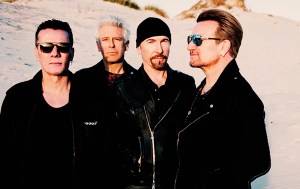
So it was with the Irish band U2 Wednesday night at Heinz Field in Pittsburgh. Normally, I would watch them on TV to avoid the obligatory expense and congestion of getting to and from such a huge venue, but the first on-stage performance of The Joshua Tree piqued my interest. It is the 30th anniversary of the time I saw them perform it last in 1987.

It was in Indianapolis and I happened to be there visiting family. I had had just started my career as a junior attending at St. Francis at the time. The event was at the then Market Square Arena that I think might have held about 15,000 souls. U2 was not nearly as famous as they are now and the event was not sold out. I had a good seat.

As a personal aside, at the end of the concert when the lights came up, I happened to turn to face a kid sitting next to me and we caught each other’s eye for a moment. I was 44 years old starting my life and he couldn’t have been more than 18 starting his. We silently connected for a moment, smiled at each other and went on our way. I thought about that encounter all the way home in my car, ultimately to pull out a sheet of paper & pen and write a hasty poem about the encounter, I will provide at the end of this missive for anyone interested.

I loved that album and still do. I think The Joshua Tree is among the top collections of incredible music ever put on vinyl. It transformed a post-punk U2 to a world-class phenomenon where they reside today, but they never matched that album again. U2 is a very unique band if for no other reason that they continue to like and respect each other from the time they started playing together in high school in Dublin. That’s VERY unusual. The never lost the focus that made them great.

But at age 57, the heart and soul of U2, Bono (Paul Hewson) is getting a little long in the tooth for these kinds of gigs. These days, he’s more of a full time social and political activist. He’s always been that way but nowadays, he has a lot more money to plug into it. They’ve been doing this for a long time, not as long as the Rolling Uglies, but long enough to where it’s getting just a little strained. I think that the Foo Fighters, only a few years younger, have ascended to that rarified air maybe gently pushing at them. But, all that aside, so begins my many complaints with this gig.

Firstly, it was expensive. Very expensive to get seats where much can actually be seen live. That’s just the way it is for stadium performances of any stripe. The closer to the podium, the more expensive it got. I was willing to sport for this expense because I really wanted to “see” the band. So perusing the seating map of Heinz field, I selected two seats that would be to the side, closely visualizing the stage at about a 45 degree angle, halfway up. Perfect vantage according to the map.

Then came parking. Oh, you want to park? Maybe somewhere less than a mile from the stadium? Well, those spots are “available” at exponentially increasing prices. So more money outlay, all pretty smoothly from StubHub by the way. Legalized scalping but necessary to get any efficiency in a huge congested area.

Safety measures at the arena were in place of course. No purses over a few inches in length. No full sized cameras. Metal detectors for all. iPhones OK. Close observation of everyone entering. However, once inside, I didn’t see any police. The stadium is exceptionally well laid out, with plenty of bathrooms and food between every entrance to the seating area. A hot dog and small coke $11.25.

Once in the seating area, I found that the stage had been moved forward significantly from where it was supposed to be on the previous map. From my vantage, I was looking at the stage from a 90-degree angle, unable to see the huge screen behind them. The actual performing area was far enough away that no details could be made out. The promoters should NEVER have allowed these seats to be sold, and there were only a few there. No one to my right, even further out. These were terrible seats.

Then to add insult to injury, when the band emerged at about 9 pm, they played their first set from a “B Stage” on the opposite side of the field!! It might as well have been an ant colony from where I was. The people had had less expensive seats on the other side of the field had incredible views and the “standees” were right next to the stage. I was furious. The band should never have allowed this insult to those on the opposite side of the field.

They did eventually move to the center stage to play the Joshua Tree standards but they weren’t playing them the way they were on the album and I know every note on the album. It’s probably impossible to play a complex studio album live anyway but it wasn’t the same and it showed. I was disappointed. The iconic song “Streets with no name” was done much, much better in 2009. Please watch it all the way through. It’s spellbinding.

https://www.youtube.com/watch?v=GzZWSrr5wFI

The musicology of the band was pretty well preserved. Bono hit the high notes pretty well, better than Roger Daltrey I think. The Edge (Dave Evans) played masterfully from his guitar effects rig, as complex as a Boeing 747 dashboard. Bass player Adam Clayton was typically reserved. But the really interesting observation was the drummer Larry Mullen Jr. He was the hardest working man on the stage. He was amazing, in constant motion, working all of the skins to perfection. Neal Pert of Rush is considered a “greater” drummer but he has a stage full of drum kit completely surrounding him. Mullin has a “standard” kit and he uses all of it to perfection.

Here’s a passable previous performance of my favorite song off the album: “One Tree Hill”, not as good as the vinyl but showing off the entire band. This is a truly great song; one of the songs that made them stars, I think.

https://www.youtube.com/watch?v=VrlmhnBlH0Q

All things considered, I was very disappointed. I think the band is losing its musical edge as Bono spouts some of his political displeasure from the stage and increasing pyrotechnics slowly displaces intricacy. I paid a lot for really crummy seats that the promoters knew were crummy when they sold them. The band favored one side of the arena, stiffing the other side. They surely must have known this in advance.

I give this event a miserable one and a half of five bright lights. Be very careful before you buy tickets to this event. Find out more about seating before you lay a lot of money out.

REFLECTIONS AT A U-2 CONCERT

“Warily we fix each other,
this testament to my immortality and I.
All of fifteen, a shock of blond hair,
jacket collar insouciantly upturned.
I stand a paradox to him.

Similar in garb, but with an air of cynicism
born of war and pestilence,
The burden of human life balanced upon my fragile whims,
and having been to a county fair or two.

When I became a man, I did not put aside childish things.
He weighs this curiosity in silence,
portending a specter of myself in another lifetime,
for now an intruder in his world.

The band dispenses promises of hope and fulfillment;
deafening undercurrents finding common ground within us,
plucking his imagination as it once did mine.
But that was another time, another world.

I thoughtfully study technical nuances.
He conjures revelations of peace and love from nonsense,
and eyes me with curiosity
and rejoins me with an unexpected smile.

Behold my apocalypse,
this child, father to the man, prophesy yet to be fulfilled,
destined to go forth into the darkness, as I have done,
and keep the candle burning”.

David Crippen, MD, FCCM
Professor Emeritus
University of Pittsburgh (Ret)

The Crippen visit Alaska (May, 2017)

0

We had decided to visit the Alaska coast and glaciers before global warming melted it all. Much of it is only accessible by either aircraft or boat, so a formal “cruise” seemed to be the best way to see it all in comfort. There are many of them registered in several countries; we chose the “Princess” line for no particular reason, and for the most part it worked well for us. I’m told that most other lines are similar and they all plod the same route.

I’ve already mentioned the nightmare of having to get into Canada through the monstrously huge port of Vancouver, standing for hours, then standing for hours again getting back into the USA to get on the ship. Then came the comical x-raying of all luggage entering the ship looking for any form of alcohol (they discard it).

Yes, no one can bring any alcohol aboard. They sell it to you at a tidy profit, along with any other form of liquid other than water and coffee or tea. Every can of coke, mixed drink, glass of wine, cup of hot chocolate must be individually signed off against your tab and it piles up quickly. I must say an extremely irritating nickel & dimeing for their profit margin.

Otherwise, the stateroom was quite comfortable and accommodating. Each has a private deck overlooking the water. A TV set with a pretty lousy array of programming. Internet access was satellite and expensive, 69 cents a minute and each minute trying to connect to the system was counted. I spent ten minutes waiting (and paying) before I figured out the system was too slow to work.

The ship was a huge, Leviathan-like beast that cruised along about 16 knots or so but was big enough that seasickness wasn’t an issue. All the logistics of moving about the ship were flawless. No standing in line anywhere. There were multiple restaurants of all types, the food was excellent and there was a lot of it. All kinds of things, art shows, live entertainment, lectures by experts in various things, exhibits. There was plenty of room on various decks to lounge around. The staff were all very kind and accommodating.

First stop was Ketchikan, Alaska where we had arranged a seaplane flight up into the rain forest fiords. This was an interesting trip but the pilot was particularly interesting. The woman bush pilot that owned and flew the plane originally came from Nebraska to visit and she stayed. She started out with a light Cessna 172 carrying people around, then graduated to a more powerful 182 then finally she ended up with an old but venerable 1959 de Havilland Beaver, the classic work horse of Alaskan bush pilots.

This beast has a rotary piston engine, can take off and land in short distances and carry a lot of weight (see photo in my youtube presentation at the end). We had a great flight into the wild and I got some good photos. No way to see any of this except by air. No roads at all.

This gal exemplifies “fiercely independent” doing it all her way all the way. She’s in her 50s now, flying since she was 16 years old. But she’s worried about her future. This (and most of the other) aircraft use 100-octane low-lead aviation gasoline, which is expensive. The maker of that fuel isn’t making enough profit and so they’re threatening to quit making it, which will bring most of these kinds of aircraft to a halt.

Also, 9 pistons in a rotary fashion move the unique crankshaft of this engine and it needs to be re-built every so often as there are a lot of stresses on it. These planes are getting old and are disappearing as they age. The numbers of serviceable crankshafts are slowly disappearing and no new ones are being made. This aircraft could die on the vine in time. They’re already expensive to maintain, around US$100,000 a year for an aircraft that costs half a million dollars to buy To convert to a turbine engine probably a million $.

Speaking of aircraft in Alaska, only about 10% of the flying pilots have a “real” pilot’s license. There are a lot of pilots. 90% of the state is wilderness only approachable by air. There are no four-lane interstates in Alaska and few roads. Driving into any of the airports, there are hundreds of small aircraft, many on pontoons that can cost US$10,000 for a set. One of the favorites is the venerable Cessna “Super-cub” an extremely light plane that can take off and land in very small fields. When fitted with oversized super-fat tires, it can take off and land virtually anywhere in the bush. Cost US$4000 per tire. Slots for pontoon craft at one of the connecting lakes near Juneau are a 15 year wait to get one, sort of like Pittsburgh Steelers season seats.

In Juneau we boarded a helicopter to go out and view one of the big glaciers, then actually land on it and walk around with a lecture for about 30 minutes. It was a fascinating experience and none of this could have been seen by any other than air transportation. Photos later.

Ultimately the ship entered a large fiord where at the end of it several glaciers emptied into the water. It was deep water so the entire ship turned 360 degrees twice, affording spectacular views of the glaciers from any spot on the ship. The weather was perfect, cool, clear and blue sky.

The glaciers were stunning, but in the middle of the pack lay one particularly large glacier that didn’t look like one. It was pointed out as a glacier “in trouble” as it wasn’t moving. Normally they advance in the winter and recede in the summer. This one receded and then just stopped like a dying star. Just a flat line of rocks. Maybe the fate of all of them eventually as global warming takes its course.

So, if any of you are thinking of taking this trip, here are the pros and cons:

Pro: The trip is not terribly expensive as 6-day full service tourist trips go. The logistics of the trip are well thought out and very smooth. I think probably cheaper than Disney World with no standing in line, a deal breaker for Disney. The accommodations are very nice and roomy, the food is excellent, there’s a lot to do and see on the ship, seasickness is rare and the sights are spectacular. The logistics of coming and going in ports are flawless.

There are lots of side trips at each port, mostly air trips that we enjoyed. You can also go out with a musher on a dog sled trip and do some hiking, small boating and similar athletic things in the area. The cities ported are amenable to “walking around” and some of the local handcrafts are excellent quality and real art, not cheap tourist junk. Food is good on shore. Photographic opportunities are excellent.

Cons: Flying from Pittsburgh to Vancouver is a long trip. Getting into Vancouver, through Canadian customs, then back through USA customs just to board the ship is a terrible, exhausting trial. I guess technically that’s how it needs to be done. Once on the ship, the only nickel & dimeing is for drinks of any kind. Mainly for any kind of liquid other than water and coffee. Want a glass of wine at dinner or a glass of Coke? Sign here first. I found that extremely irritating. Otherwise passengers are quickly made comfortable.

The Anchorage International Airport is rudimentary by most standards, and for unclear reasons, most flights depart from 9 pm to 2 am daily. Since most ships dock at 8 am on the day of home departure, you’ll get to sit around somewhere all day and most of the evening before departing out on a red-eye. Quite irritating. This is an overbite trip but Delta doesn’t treat it like an intercontinental voyage so seats in first class go back about three inches. I can’t sleep that way so I completed a full book read all night long while my wife sawed logs next to me. I think women can sleep anywhere.

Everything considered, I definitely do recommend this trip as the benefits outweighed the detriments. The sightseeing possibilities are diverse and always interesting (not cheap but affordable). Very much OK for kids to enjoy. I can honestly give this trip 3 of 5 spinning ships. I’d give it 3.5 but the extra half-ship would sink. Probably a once in a lifetime for most. See it before it all melts, I think. I would take this trip before going to Disney World in a heartbeat.

Here are some of my photos I’ve made into youtube. It’s high resolution so you can watch full screen:

https://www.youtube.com/watch?v=HsrDEtSrowc

passing: Greg Allman

0

Gregg Allman, the last vestige of the Allman Bros Band is gone, and with him goes a massive history. Rock Photographer Jim Marshall told me they were the best he’d ever seen and he’d seen them all.

“Southern Rock” was philosophically different than the rest of the genre. It was harsh but always melodic and to technical perfection. Other exponents, The Charlie Daniels Band, The Outlaws and The Marshall Tucker band had a southern flavor but were more countrified. Molly Hatchet claimed to be a Southern band but their aura could be more compared to Black Oak Arkansas. The Allman Bros really stood alone. They were legends at the Fillmore East.

My sister was a scrub nurse at what was then the Macon Medical Center when Duane Allman was brought to the operating room after a motorcycle crash in which he was injured trying to pass a truck that made an unexpected left turn. It was 1971 and no one knew who he was, just another disheveled, long haired hippie. The woods were full of ‘em. SO he got no “real” attending surgeon. He was relegated to the surgical chief resident’s service. On opening his abdomen, an un-fixable liver injury was found and he of massive bleeding. I often wonder if we could have saved him in 2017 at UPMC had we got the chance.

I saw Gregg when he came to Athens for a one night stand at a local bar, I believe it was early 1972. He was stoned insensible, really unable to play and actually fell off the stool. I saw an interview with him in the 80s where he tearfully said he never really got over Duane’s death. But the Allman Brothers did survive and persist with Dickie Betts at the helm, an authentic wild man fond of trashing hotel rooms (“takin care of business”), marrying women, writing songs about them, then dumping them (“Blue Skies”). The reconstituted Allmans finally had enough and fired him (notified him by sending him a fax) in 2000. For those with an interest, Dickie played an authentic 1957 Gibson Les Paul Gold Top.

Duane Allman’s response to an interviewer’s question: “How are you helping the (anti-war) revolution?” Allman replied, “There ain’t no revolution, only evolution, but every time I’m in Georgia I ‘eat a peach’ for peace.b The post-Duane album “Eat a Peach” (1972) did well, much like the post-Bon Scott AC/DC album “Back in Black”, indicating that the magic was still more or less there. ” The Allmans went on starring Gregg on piano and organ, Derek Trucks on slide and guitarist Warren Haynes, both stellar talents who jelled well with the Allman Bros vibe. I think Warren Haynes is one of the top five most talented guitarists alive today. He’s the only player I’ve ever heard that could approach Duane Allman, although the vibe is a little dated now.

Duane Allman’s original ’59 Gibson Les Paul is enshrined at the Rock & Roll Hall of Fame in Cleveland. I broke the rules and actually touched it, hoping a spark would pass through it to me. Unfortunately it didn’t. I’m still a mediocre player.

Duane and bass player Berry Oakley (killed in a similar motorcycle accident a few blocks from where Duane was killed year after Duane) are buried together in the Rose Hill Cemetery in Macon, Ga. The same cemetery they used to hang out, the inspiration for the song “In Memory of Elizabeth Reed”- spotted on one of the head stones).

Gregg was a serviceable keyboard player and an excellent voice, but Duane was a true virtuoso. Like many artists, some of their best work was never popular enough to get on the radio. If you want to hear a totally awesome song featuring Duane on lead guitar, listen to the brief (truncated by me) live performance in a small club MP3 I am providing on this missive. Listen to the incredible subtlety and the touch that made Duane a legend.

The end of an era. A complex life well lived, all factors considered.

It’s difficult to find a good video of the original Allman Bros band in 1970. Try this one from the Fillmore East in 1970.

https://www.youtube.com/watch?v=FUvxRjYqjEQ

Also, this one:

https://www.youtube.com/watch?v=qqKrRATxHXY

Originally and masterfully performed by Sam Cook in 1964, a classic. It’s beautiful, listen to it here:

https://www.youtube.com/watch?v=wEBlaMOmKV4

And BTW, a fascinating biography of Bill Graham and the Fillmores is here at:

https://www.amazon.com/dp/B00QK3BMJ4/ref=dp-kindle-redirect?_encoding=UTF8&btkr=1

David Crippen, MD, FCCM
Professor Emeritus
University of Pittsburgh (Ret)