Trump and his future (March 2017)

0

There’s pretty good evidence that there is a contingent of Trump
supporters that will NEVER give up on Trump no matter what he does.
Every stupid lie over a Tweet brings them closer to him. However,
after the events of the last two months, including but not limited to
the fact that he has achieved nothing, especially any of his loud
promises, will result in a cumulative deterioration in that group in
time. It’s a long game.

They were not ALL nitwits, some just thought he would be the one to
“shake up the system”, not realizing he was a full-on sociopath capable
of destroying the system. As time progresses, many of those will see the
light and split to other factions, leaving a bare bones contingent of
those that will always find excuses for Trump’s behavior, and an
open-ended ability to blame others for his gaffes.

Trump thought he was invincible because of his radical core of
supporters would push anything home. He thought his deal making ability
was inviolate.He really thought he could arm twist his way to putting
this ridiculous bill into law. He, like Obama, got introduced to the
realities of congress. The honeymoon, if there ever was one, is
definitely over. Nancy Pelosi smirked that the author of the “Art of the
deal” made a rookie mistake. Now, the entire game has changed and will
not go back to the old days two months ago.

This would-be health care bill is as dead as a roadside roadkill skunk
and will never come back. The Donald, skulking back to lick his wounds,
realizes that. So now the game plan is to “allow Obamacare to explode,
following which the Democrats will come begging us to fix it” (a phone
communication to Bob Costa of the Washington Post yesterday afternoon.)
Of course, the reality is that there is no evidence Obamacare is
exploding, or will do so in the near future. It simply needs
adjustments.

Chuck Schumer hit it on the head yesterday. Obamacare is in place and it
can be adjusted so why not everyone get together and do that rather than
trying to craft a replacement that would take years to make everyone
happy. The incentive to do that may hopefully be approaching, but it
will probably only be after congress is thoroughly shaken up in the 2018
elections which I think is coming.

I think, as do a lot of other experts (not necessarily me in that group)
that this isn’t just a forgettable loss that happens every day in
congress. This is an unqualified Richter 10 disaster that actively
undermines Trump’s ability to lead. Virtually everything he’s done in
the last two months has failed and the number of flat out lies that roll
off his tweet machine continues to astound and continues to undermine
his credibility, if he ever had any. The combination of having
everything he signed tied up in legal quagmire, quietly asking the
taxpayers to fund the impeccably silly and ill-advised wall the Mexicans
gleefully refused to even talk about now combined with his inability to
get ANY health care law passed. Never mind that NONE of it fulfilled
his loud previous promises that everyone would be covered cheaply.

He’s now skulking, contemplating his next move (probably) in his
multi-million dollar estate in Florida wasting millions of dollars of
taxpayer money, disrupting the local economy with hundreds of guards and
restrictions while the rest of his family wastes other millions needing
to be guarded when they take a walk down fifth avenue to window shop.

Well, folks, there are some likely scenarios. I think next up on the
ledger is Trump and his conservative friends fucking up the economy by
cutting out everything and anything that might actually benefit people,
but saving a lot of money to be spent elsewhere. Now that he’s found out
congress is a little tougher than he previously thought, and congress
has figured out they don’t have to be bullied, this will be a very
interesting game, indeed. It’s not out of the question that Cruz et al
will try to sink the government again, but this time Trump is in a
different position than he was a year ago, a position of being
responsible for the ship’s safety.

I think also that Trump’s silly tweets and wild, unsupported accusations
will continue and he will double down on all of them, slowly but
progressively eroding his credibility and also eroding his “base”. At
some point, the Republican majority, becoming more terrified at losing
their majority in 2018 will start doing some interesting things we don’t
really know the nature of yet. I think it’s highly unlikely Paul Ryan
will ever trust Trump again and vice versa, so Trump’s relationship with
congress will be non-existent.

First time, I’m wondering if this continues, will there be an attempt to
evict Trump from office in 2018 simply on the basis of his inability to
lead, much less his ability to fuck up the world. And BTW, we haven’t
seen any world crisis yet this month for Trump to fuck up. We don’t yet
know how bad or how dangerous it could be.

Pence, conservative wog that he is, comes off infinitely more
“presidential”, and might attract a lot of Trump’s more realistic
followers. I’m wondering if this could happen.

The CODES: Old and New

0

The CODES: Old and New

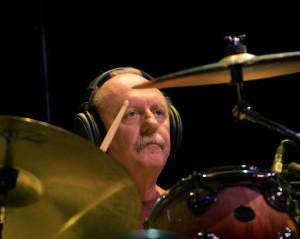
picture-clippingThe CODES have been playing together for over 10 years. First gig was for a Neurocritical Care Society banquet, November 2006 in Baltimore. We had no equipment other than personal instruments, so we hired another local band “Rockgut” to set up their stuff and let us play as their opener. We created and gave away “Codes t shirts” to anyone wanting one at the gig. I still have mine. We weren’t very good but we had limited time to practice. We got better.

Since then we’ve put out a CD in 2009 and I wrote a coffee table picture book of the photographs taken of us through the years.

https://www.amazon.com/CODES-David-Crippen/dp/1364974150/ref=sr_1_21?ie=UTF8&qid=1488045444&sr=8-21&keywords=David+Crippen

Over the years we’ve played for various medical meeting banquets all over the country, several House of Blues venues, an SCCM symposium, a sleazy back street bar in New Orleans, a Texas Juke Joint and private invites. We opened for a great metal band in Germany and played for a meeting in Manchester, UK.

We were never a band that traded on four doctors playing novelty stuff. Our set list consisted of what used to be called “soft rock”, even “classic rock”. Very listenable covers of numerous famous hits from the 60s, 70s and 80s mostly, I think. We became fairly serious musicians and knew our way around technical arrangements.

https://www.youtube.com/watch?v=NYo6QbKKgBQ

But we started getting older through the years and the lives of each member inevitably changed. There were job changes, marital changes, sick kids and limited time to practice as we all lived in different cities. I’m 73 years of age. I haven’t looked at their drivers licenses lately but I’m pretty sure the rest of the group are at or near their 50s now. We’re changing with the times, but in a rather unusual way for our idiom.

We’ve embraced and absorbed a much younger member into the CODES. That would be Dr. Mohan Kottapally, currently assistant Professor of Neurology at the University of Miami heath center in Miami, Fla.

http://uhealthsportsmedicine.com/sports-medicine-team/mohan-kottapally-md

This addition has fomented a fairly radical change for us. It’s pushed toward a much harder edged musical direction.

Mohan is one of those charismatic guys with a stage presence that has changed the way audiences view us. I see his style as a bit of of Prince, I think. He interacts in that manner with the audience, very aggressively. He is in constant motion, flaunting and vaunting. He’s an excellent guitarist; I think a world-class rock lead singer and the woods ain’t full of ‘em. I think we’re lucky to find him and he has changed our world.

He has made my role in the band easier as my age advances and generalized arthritis and deteriorating physicality takes its toll. I can do lead guitar and I have done it in the past but it’s harder for me now, just like you can be sure it is for Eddie Van Halen. The most important base of a rock band pyramid is the drummer, followed by the bass line, then the rhythm. The fingers don’t fly like they used to, but I’m still an OK guitarist and I can definitely hold down a needed and necessary serviceable rhythm floor.

So we decided to re-invent ourselves as a much more modern band, discarding a lot of the material we’d played for years in favor of new material. That material became much more what I would call “hard edged rock”. Not metal or especially death metal, as most of that is simply a cacophony of high volume din that renders the listener eventually hearing impaired.

“Hard-edged rock” is loud but much more technical in its arrangement, a little unusual for guys of our generation to be playing. A lot of it is lead guitar driven which brings me to the subject of one of our songs now. That would be, of course, a hard-edged classic if there ever was one: Sweet Child O’ Mine” (Guns & Roses, 1987). An insane initial lead guitar solo that is said by many critics to have changed the face of Rock drives this song. Check out the lead intro in this amazing music:

https://www.youtube.com/watch?v=1w7OgIMMRc4

CODES lead guitarist Gary Bernardini must have played with effects pedals for weeks before he got the tone nailed down, and it definitely works. Mohan can definitely do Axl. This is an amazing song for us as a band. I was surprised to see how many in our crowd instantly recognized this song and responded vividly to it. Many were kicking the slats of their playpens in 1987. Of course, Guns & Roses, being the volatile mixture they were, imploded after a fairly short period of time.

We played as the headliners for the International Stroke Conference in Houston, Texas on February 22, for a very large group of I believe as many as 300 people. Standing room only in a very big auditorium. We had a huge stage with professional sound technicians doing the auditory honors. We played three full sets over four hours, starting at about 8:30 pm and ending at 12:30 am. Between sets there was a DJ playing songs off his computer, and an “ice sculpture artist” that really entertained the crowd by forming a detailed cowboy boot from two big chunks of ice.

I put together a bit of a slide show to tell some things about The CODES, old and new.

https://www.youtube.com/watch?v=fxAIbVyPBBc

Make sure you tick off the High Def option and it’s best watchable on full screen.


On Suicide…..assisted or otherwise

1

originalRecall that in England, back in the day, it was technically illegal to commit suicide. Actually the English cared nothing about whether they offed themselves, it just gave them a chance to confiscate their property. This from the guys that shipped the Irish to America because it was cheaper than feeding them during the potato famine and shipped social undesirables to Australia simply to get rid of them.

Taking one’s life in America is not technically illegal, but very, very unfashionable. Any unsuccessful attempt landed the individual in a position of “substituted judgement” where they can land in an emergency department or a psychiatric facility with no civil rights until they “get their mind right”.

https://www.youtube.com/watch?v=8CBqjZX6FjE

Suicidal ideation has been a marker for “incompetence” to understand that “life”is always better than death” (italics mine), and choosing death for whatever reasons is a marker for “involuntary treatment” to get the afflicted person to understand that reality. After treatment, the afflicted person has their mind right and voluntarily chooses life because they have come to understand it’s always preferable.

However, as I mentioned in my previous missives about aging musicians and others choosing death, those rationales are different than endogenous depression. They feel they lived what they wanted to and after the blaze of their streak across the sky extinguishes, they no longer have any desire to live in the new world. That’s a different thing, and we’ll see much more of it as there are a LOT of persons out there (much of it because of the baby boom) that are out of the loop and life in the new loop doesn’t work. That said, many are prosperous in their 70s (Paul McCartney, Neil Young et al). But there are a LOT of their ilk out there that no one hears from till their obit appears.

29906170001_3726240352001_video-still-for-video-3726115417001Now, in the new millennium, a whole different agenda for suicide is appearing, that of terminally ill persons that aren’t quite bad off enough for traditional hospice but definitely suffering with no respite. The classic example that has been brought up is that of Robin Williams, deciding to cope “his way” with progressive Lewy Body Dementia, a particularly cruel, progressive disease that doesn’t spare the victim any misery

https://en.wikipedia.org/wiki/Dementia_with_Lewy_bodies

Again, traditionally, the best course for many is hospice where suffering can be alleviated by a titrated treatment plan. But Hospice is usually thought of as an end stage remedy, when it’s “time to die”. Because of our ability to “prolong life” by a high intensity clinical care program, we’re lengthening the distance between ambulatory, functional suffering and the “death spiral”. As this distance increases, suffering persons want the legal and moral ability to decide when they’ve had enough, and that time may come before the “death spiral”.

More people are now deciding it should be their call as to when to end their suffering, but the nuts & bolts on how to accomplish that goal remain murky. The way out for some of these afflicted is sometimes painful and uncomfortable. Death by hanging or shooting. Robin should not have had to hang himself when he decided his time was up. He should have received “humane” treatment by someone that cared enough about him to respect his wishes and that he was competent to express those wishes.

This will inevitably become a legal issue, the reciprocal of the issue of a woman controlling what goes on within her own body, a firestorm that’s on the way. There are a few States that allow physicians to assist in a suicide and as far as I can see, those plans work well and are not misused. I think it’s time for us as physicians to start looking at this issue through the lens of the new millennium. It’s isn’t our father’s world anymore.

A great many of us are aging reasonably well but the specter of “not so well” is always shadowing us. At age 73 I’m still doing pretty much everything I want to do, albeit a bit more clumsily but I still feel the same passions I felt in my 20s. I’m working pretty hard to maintain my physical strength to match my expectations for as long as I can. But the day will come when I will not function as I desire due to progressive age and God knows what other disease that could grasp me.

When that day comes and I’ve hopefully reached the bottom of my bucket list, I could deal with lying around in a personal care home for a while, photos of glory days on the wall, with a cable TV and a laptop to keep up with what’s happening in the world. If the day came where I was a burden to anyone, was uncomfortable and unable to get around, I have a hidden stash of sixty tabs of 10 mg Propranolol and ninety 10 mg Ambien tabs. I might very well decide when it’s right to exit stage left, and you know me, I’m neurotically maintaining notebooks of virtually everything I’ve ever done in my life so those that come after me will get a chance to know me.

Do not go gentle into that good night,
Old age should burn and rave at close of day;
Rage, rage against the dying of the light.

Though wise men at their end know dark is right,
Because their words had forked no lightning they
Do not go gentle into that good night.

Good men, the last wave by, crying how bright
Their frail deeds might have danced in a green bay,
Rage, rage against the dying of the light.

Wild men who caught and sang the sun in flight,
And learn, too late, they grieved it on its way,
Do not go gentle into that good night.

Grave men, near death, who see with blinding sight
Blind eyes could blaze like meteors and be gay,
Rage, rage against the dying of the light.

                  Dylan Thomas (1952)

David Crippen, MD, FCCM
Professor Emeritus
University of Pittsburgh (Ret)

A passing: Butch Trucks (Allman Bros Band) Jan 24, 2017

0

170125-butch-trucks-2005_f1bdfd6a8199b71fad90385f71f2d1e6-nbcnews-ux-2880-1000Sadly, another rock musician now taking his own life: Allman Brothers Band Percussionist Butch Trucks, age 69.

http://www.syracuse.com/entertainment/index.ssf/2017/02/police_death_of_allman_brothers_drummer_butch_trucks_was_suicide.html

The Allman Bros were legends in their own time and continue to be important for the history of rock. One of the most influential bands in rock history. Butch was there from the beginning in 1969.

They lived fast, peaked early and died young. They headlined one of the biggest outdoor rock concerts in history (Atlanta International Pop Festival, 1970). Crowd estimates range as high as 600,000. Their album “Live at the Fillmore” continues to be one of the classics of all time, Rolling stone lists it as #49 in the top rock albums.

24-year-old Duane Allman died in a motorcycle crash in Macon, Georgia in 1971, bassist Berry Oakley, age 24 followed in another bike crash a year later four blocks from where Duane lost his life. Brother Gregg Allman carried on with various iterations of the band until finally calling it quits in 2014. But the band was never the same, essentially playing the same material with increasingly younger musician replacements until it became seriously dated.

There are some emerging issues in the arena of maintaining a passion for over 50 years, then finding out it’s irrevocably done. We’re an older population now and we’re living long enough to become irrelevant with unforeseen consequences. In the year 1965, 50% of the population was under 25 years of age, 41% under age 20. In contrast, in 2012, only 23.5 % of Americans were below the age of 20 *. I was 22 in 1965. I’d hazard a guess that in 2017, close to 50% of the population is over 60. That’s a different world.

People flash across the sky and then there is an end to that trajectory. They get old and find out they’re irrelevant as new generations crowd them out. It’s hard to let go of that and some poor souls are unable to do so. They observe from the outside what they can no longer do for various reasons, not the least of which is they can no longer relate to the new generation.

I’ve mentioned in the past that infamous 60s writer Hunter Thomson took his life when he discovered he was simply out of date and couldn’t relate anymore to the 21st century. When the world changed from the 60s he couldn’t adapt to the process of adapting. It wasn’t fun anymore. Keith Emerson (Emerson, Lake & Palmer) took his own life when he discovered he could no longer play the keyboards as in his glory days. Ronnie Montrose of “Montrose” (spawned Van Halen’s Sammy Hagar) took is life in 2012; he just didn’t find it fulfilling anymore. Bob Welsh, formerly in the formative stages of “Fleetwood Mac” took his life in 2012 in failing health and enduring the frustrations of the group’s success without him. Robin Williams at age 63- career waning and health issues.

These lives and deaths are radically different than young people with fertile lives killing themselves. David Foster Wallace, one of the most influential and innovative writers of the last 20 years, unexpectedly killed himself at age 46. Kurt Cobain kilted himself at age 27 at the peak of his musical career. These guys succumbed from endogenous depression, not an inability to cope with aging and an emerging generation that made them irrelevant.

Like it or not, time passes, things change and new generations emerge. The ability to survive is the ability to adapt and with a rapidly aging population, that ability isn’t guaranteed. Butch Trucks, a world-class musician in his glory days is collateral damage to this phenomenon. I fear he won’t be the last.

* Braunstein, Carpenter, Edmonds: “The Sixties Chronicle”, pp 263

Crippen Mergers & Acquisitions Dept: a mini-hot rod

0

“Collector Car” nuts are rarely happy with their wares for long. It’s part of the craziness. There’s always the next desirable one. Great ad on cable, a guy standing next to an immaculate ’60 Jaguar XKE asked what his dream car was. ’67 Ferrari 275GTB. Jay Leno is said to have one of every vehicle ever built, including motorcycles and he’s still looking for more barn finds.

sprite-frontAccordingly, I have a new acquisition, a hot rod (sort of).

Some history: Back when the World War II ended, a lot of young men with extensive military training in welding and fabrication came home to find a fairly boring life in the Eisenhower administration. White picket fences. The cars of the day were boring as well, so these guys began to look at these vehicles with a different perspective. Older cars from the 20s and 30s could be purchased cheaply and re-built for lightness and simplicity. Engines extensively re-engineered for speed.

Check out this fascinating brief show of some classic rods:

California had an extensive racing culture for years and abandoned airports throughout the state were perfect for marked courses. Of course, “street rodding” became popular as well and the stage was set at that time for the “muscle cars”. The era of “drag racing” began on ¼ mile asphalt tracks. All this was popularized in the early 60s by the musical exponents of the car (and surf) culture including the Beach Boys & Jan & Dean.

Typical hot rods were chopped up 1932 Ford bodies containing huge modern supercharged V-8 engines capable of 600 horsepower. They go in a straight line only and few are legally road worthy. They are, of course, frighteningly instable and dangerous. Modern nitromethane burning “top fuel” dragsters are earth shaking beasts, the engine of which can reach 10,000 horsepower and can reach speeds of 335 mph (in 3.7 seconds) on a ¼ mile track, which is why the National Hot Rod Association has recently shortened the length of their run to 1000 feet.

But hot rods don’t necessarily have to be earth-shattering beasts. The hot rod feel and technology can be scaled down to relatively tiny vehicles without the fear and danger. Such a beast now resides in my back garage, and an interesting beast it is if you have a bent toward this sort of thing.

It’s a 1959 Austin Healy Sprite, with a 948 cc engine, not as big as modern Harleys and BMW motorcycle engines. It’s previous owner, however, hot-rodded this car to the bursting point, then got tired of it and went on to start restoring a Porsche 356. This guy lovingly put a TON of money into this car to discover that his three kids all wanted to ride in it at the same time and it would hold only one kid at a time.

So, to make a long story short, this car started life in 1959 as a 42 horsepower 2-seat mini-sports car, the power of which fell off dramatically over 4000 rpm. About comfortable 65 mph cruising speed. The previous owner, a very handy guy with a huge garage who loved to work on cars. He decided to create the maximum power and performance possible for this little engine just to see what he could get out of it.

Disclaimer: Esoteric technical details follow:

Cylinders bored out 40 thousands of an inch, increasing displacement. New balanced flat top pistons and rods. Chrome-Moly rings. Engine “ported and polished”, a trick right out of the hot rod age. Intake and exhaust ports drilled out to increase their diameter, then polished to a mirror finish to decrease gas/air flow turbulence. New valves and valve seats (for gas containing ethanol nowadays), strengthened valve springs.

Then an “Isky” camshaft (right out of the 50s) the legendary Ed Iskenderian sold “3/4 cams” in the 50s- held the valves open a little longer and closed them a little later, Increasing horsepower. New high-pressure clutch and reinforced transmission, rear axle and differential. Four wheel disc brakes to replace the old drums. New Bilstein shocks. Aluminum radiator, electronic ignition and alternator.

Then….the piece de resistance…..a period correct, completely rebuilt Judson supercharger with water/methanol intercooler (cooler air improves octane and decreases pre-ignition at hot temps). The supercharger creates about 9 psi pressure “boost” behind the air/fuel mixture through a new Weber carburetor. The engine now probably doubles it’s output (pushing a 1300 pound car) and will easily reach 7000 rpm still creating torque. There is also no “check valve” on this setup so the supercharger will continue to create boost as long as the throttle is pegged right up till it blows the engine up, which it will, so the driver must have a grain of common sense in driving this car.

Back in the late 50s and early 60s, Judson superchargers were relatively popular for Volkswagens, cheap, easy to install and increasing the normally miserable VW performance dramatically (blowing up more than a few of them). Some were also made specifically for period Sprites and MGs. They are virtually impossible to find now and if one is found they are extremely expensive. They require very little “tuning”. This one is immaculate.

So…..the classic car mania strikes again. Like Leno has said before, no one is ever really satisfied with what they have. There’s always something more interesting out there. This one is exceptionally interesting and you’ll see me hot rodding around with it come spring.

https://youtu.be/8UQWrSOCp1U

Here’s a neat (quick) video of what a supercharged Sprite typically feels and sounds like on a car identical to mine:

https://www.youtube.com/watch?v=o3Ssl1AlJyQ


Film review: “Jackie” (2016)

0

02-jackie-portman-w529-h529“Jackie” (2016), interestingly not yet released in wide distribution is playing at the Manor in Shadyside, one of my favorite theaters. The Manor gets everything first.

Unclear what the incentive is to re-explore this history, arguably the worst saga that the emerging modern United States ever endured. Some things should maybe be relegated to dry history books rather than Natalie Portman’s wrenching performance of a woman in the public eye’s unimaginable shock and grief. Maybe not many of you in this group were there on November 22, 1963. Like Zelig, I was and I remember the fine details to this day. The news break-in from a soap opera:

Followed by a profound shock that covered the country like a big wet blanket. Everything, EVERYTHING stopped dead in its tracks. No one went to work, businesses closed, no traffic. Every American that had one was glued to (then) ancient black & White televisions or radios. Schools closed. Crowds gathered to storefront picture windows to watch. There was an eerie silence everywhere. The radio stations played funeral dirge music continuously. Children were terrified as were their parents. No one really knew what was possible next.

Natalie Portman is an excellent, multi-decorated actress and she poured herself into the persona of a woman in the public eye who very intimately experienced the destruction of her life and the life of her country in a virtual heartbeat. Losing a husband on the world’s largest stage. In all seriousness, I can’t think of another contemporary actress that could have brought this to a screen. Her physical similarity to Jackie is striking as is her voice and manner.

But there was a lot more to this woman than her ability to stand and persist following this unqualified disaster. Jackie knew two things intuitively. That the American public, millions of them, were watching her during this aftermath and counting on her to show strength and resilience. No one in post-modern America had ever experienced anything like this and they clearly needed pillars of strength to point toward a better future. Mrs. Dead president was clearly that person.

Jackie also knew that the remembrance of history is the written word, written after facts, suggesting the initial scenes where a world-class writer is engaged to write the intimate history of the aftermath insuring her husband’s rightful place as Jackie saw it, not as a politician might. (That actor, Billy Crudup is based on presidential biographer Theodore H. White, who wrote “For President Kennedy: An Epilogue,” a Life Magazine article that ran one week after Kennedy’s assassination).

http://time.com/4581380/jackie-movie-life-magazine/

Toward both of those ends, Jackie demanded a spectacle for the funeral and burial of JFK, and she very nearly didn’t get it, as there were concerns that there may be more shooters out there. In the end, the entire pageant played out to her specifications. Mother and children front & center at the Rotunda, followed by all marching to St. Mathews, a distance of 8 city blocks behind a rider-less horse with boots reversed in stirrups. Watched by millions along the route and on television. It was a spectacle no one believed could have ever happened.

Parenthetically, following the assassination of Jack Kennedy’s brother Bobby, a train carrying the body to it’s final resting place was met by literally standing room only people along the route for it’s entire length. I think would have been a radically different world had Robert F. Kennedy lived.

This is a “historical figure contemplates self” film that relies completely on Natalie Portman’s ability to morph into her subject. She becomes Jackie Kennedy is a very real and convincing way, warts and all.

Interestingly, watch for something I noticed. During the film, the director portrays some of Jackie’s 1962 tour of the White House, using ancient 16 mm cameras and film digitally doctored to appear as early ‘60s black & white viewing screens. These scenes are scattered throughout the film. Keep your eye out for one of these scenes near the end of the film. You’ll notice that in this one clip, the audio of Jackie (Natalie) speaking for the camera doesn’t match. Look closely at the woman in this clip. I’m VERY convinced they slipped a clip of the real Jackie in there and most of the audience didn’t notice. The resemblance is nearly perfect except the real Jackie as a bit larger mouth. The director, Pablo Larraín, later hinted that they played around a bit with some of these clips. Jackie had to stand for herself as an ordinary woman but also for Jackie the historical figure, the myth, especially for the myth of Camelot she embraced and promoted.

Predating the Kennedy assassination by three years, the “real” Camelot on Broadway starring Richard Burton and Julie Andrews played for 873 performances in 1960 and earned four Tony’s. It got mixed reviews at the time but spawned an eponymous movie in 1967 (Richard Harris, Vanessa Redgrave). The sound track album topped the charts for 60 weeks. The plot of Camelot involved a mythical kingdom of equal peers that functioned to political and social perfection, much like Sangri la. Then, inevitably, jealously, greed, covetousness and dishonor color the perfection, bringing it to ground, never to resurrect. Richard Burton’s speech reminding Arthur of the idealism and hope that he had as a young king haunts to this day. “For one brief shining moment…….there was Camelot”.

Jackie knew that the three years of her husband’s presidency resembled the myth of Camelot in many respects and she nurtured that image which persists to this day.

This is a very, very intense film interpreted to perfection by Natalie Porter and director Pablo Larraín, who gives her free reign. There are some issues. The extreme close ups become a bit irritating after a while. Jackie ignores or dismisses some of the more controversial facets of the Camelot myth, infidelity and having to fix disasters of his own making.

If you’re up for some serious melodrama, I recommend it. I give it 4 of 5 gloomy flag draped caskets.

David Crippen, MD, FCCM
Professor Emeritus
University of Pittsburgh (Ret)

A political/medical care observation for the New Year

0

donald-trumpIt is after all Sunday and this is a bit more of a time for a “Village Green” observation by your FL, for what it might be worth. What I’m about to say involves an obligatory observation on National politics because it impacts what’s happening in medicine today and in the near future. My observations are NOT so much for public debate here as they are simply pointing out facts, as they are readily apparent. Please just reflect on this, not start arguments. Med-Events does that very nicely. If you want to argue about politics, join Events.

A paper came across my desk (enclosed) suggesting that the potential for health care providers’ autonomy is under assault and eventually will all but disappear. I think there are clear reasons for this. The demand for medical care continues to increase but the supply remains relatively static. All kinds of schemes have been developed though the years do decrease the demand (cutting the price). Denying service for pre-existing conditions, “managed care”, “rationing by inconvenience” and yet the cost of health care continues to increase yearly.

The “Affordable Care Act of 2008” (Obamacare) hoped to put a dent in that by spreading the cost out over a very large population, some sick, some well, and of course, “opt-outs” wouldn’t be allowed, as they would eventually turn up in emergency rooms demanding care even though they hadn’t paid the premium. Part of this plan would have been the “public option” to take care of outliers.

There isn’t really much argument that this plan would have worked pretty well, allowing for adjustments, had it been implemented as formulated. Not perfect but a very good start to get people covered for their health care affordably. What happened was a bit unexpected. We didn’t realize at the time that opponents of the President became the “party of no” vociferously obstructing, delaying and destroying everything and anything that came out of that White House. The ACA then became a political issue and was widely advertised by the Party of No as something it wasn’t. Then the Public Option was killed, removing much of the efficiency of the entire program, followed by allowing healthy people to opt out of the program leaving a large population of sick ones.

Of course, as a natural consequence of supply and demand, the price per individual rose, as it would have (and did) for any kind of health care indemnification. Blamed on the program, of course. I had lunch with a very intelligent, perceptive friend (not the only one I have that supports repeal of the ACA) who solemnly advised me that she couldn’t wait to see the ACA repealed because middle class people couldn’t afford it and it was literally bringing the economy down. Never mind that any- and every health care indemnification program in the country was similarly raising their rates, including mine.

Enter the stimulus for all this, the current President-Elect of the USA, Mr. Trump, and his new best friends, ultra-conservative Republicans now in control of congress and soon to be also in control of the Judiciary. Mr. Trump, a very talented and experienced huckster knows nothing about any of it, but his new friends do and they’re now after many years of trying, in place to do damage to health care and a great many other things in our lives.

As is widely observed, the election of Mr. Trump caught virtually every observer by surprise, but not me. They that Pennsylvania is a state with two cities on either end (Pittsburgh & Philadelphia) with Alabama between, and that turned out to be true last Nov 8). I saw it coming as I rode bikes around the rural center of Pennsylvania, spotting Trump signs on virtually every home or business in small towns and country areas. I knew all these people would vote and they intended to “shake up” the establishment that no longer worked for them (not suspecting they had the potential to destroy it).

So now, before the new President-Elect actually takes power, we’re already getting a view of how it’s going to be.

  1. The institution of a Presidential Cabinet full of officers dedicated to untried and unlikely theoretical political ideals, not necessarily the benefit of the population.
  1. The dissolution of a health care system that currently serves about (said to be) twenty million should to one degree of another with the promise of something to replace it someday.
  1. A President-Elect that has publically disputed the opinion of every single individual in every single intelligence and law enforcement office regarding the illegal and intrusive activities of Russia in our political-social system. “The difference between skepticism and disparagement”
  1. As of Friday, the funding of a wall separating the USA from Mexico asked to be funded by congress with a bill to be sent to the other side with no mechanism to collect it. Estimated cost ~ 25 billion $ and estimated by most experts to be worthless.
  1. Active plans to decrease any and all funding for the poor and disadvantaged, active plans to decrease taxes for the well-off, active plans to get more guns on the street and eliminate “Planned Parenthood”, a service that benefits many women.

All this even before January 20.

Now, again, I ask not for argument. The above remarks are above argument, they simply exist and can be substantiated anywhere. It’s just my humble personal observation and it all matters in our health care future, which is why I bring them up.

Our current health care situation is quickly falling apart for at least two reasons (I’ll omit my scathing remarks on what’s going on in medical education).

1. I honestly believe that there is about a 50-50% chance that Mr. Trump’s coalition will collapse completely within 30 days of Jan 20. He has no clue about the delicate realities of global politics and his Cabinet members have no real experience in any other than “business” and that isn’t the way any of it works. Any number of other countries in the world could hurt us more than we could hurt them if they took a mind. Mr. Trump’s coalition fully intends to create a society built on unlikely or untried theoretical political conditions as a practical matter. It is absolutely not out of the question that the fabric of our society could be ripped apart into chaos and very quickly.

It’s already started. An increasing number of Republicans, his own party, have figured out he has no firm foundation for any of his Tweeted opinions, all capricious ramblings of what he happens to think at the moment. They’re making it known they’re re-thinking their support for him. This brings up another potential reality, that Mr. Trump et al will become very quickly bogged down in a system of government meant for- and created for bipartisan cooperation to get things done. If Mr. Trump’s coalition descends into the same kind of stubborn non-participation that has marked the past eight years, then nothing (again) will go forward and our system of government will descend into vicious and bitter fighting, wasting time and money in a very dangerous world. So much for “fixing” broken government. I do NOT see Mr. Trump actually achieving many if any of the advertised platform (such as it was) that elected him.

2. If any of that hat happens, our currently fragile health care provision system will collapse, if for no other reason than our current strategy to cope with administrative rationing will fail with it. Insurance and government strategy is to make reimbursement increasingly complicated so that those unwilling or unable to comply don’t get paid. What we’re doing now is allowing “middle management” and “financial specialists” to deal with the increasing complexities of reimbursement.  There are now an entire hall full of administrators and financial people where a lot of doctors used to be (including me). These guys peck at computers all day long all getting excellent salaries and benefits.

Now, at this point, everyone on this List should download and read every word of the following Time Magazine site (let me know if it doesn’t open for some reason).

http://content.time.com/time/subscriber/article/0,33009,2136864-1,00.html

Pay particular attention to the justifications given for incredibly outrageous charges by an automated service “Chargemaster” for patient caught in the middle- too young for Medicare and too many resources for Medicaid. Both Medicare and Medicaid pay providers only a small fraction of “Chargemaster” bills and they’re accepted. Also pay attention to the salaries for middle managers, CEOs, COOs and the like. You’ll note somewhere in the middle that the CEO of the University of Pittsburgh Medical Center’s salary (before bonuses) was close to 6 million $ per year. The same guy that mandates draconian budget cuts for the clinical departments, including mine every year.

W
e as providers are losing the battle of self-determination. We are losing that battle because we’re handing middle managers and financial officers the authority to order health care in an administrative system that considers us irrelevant. It considers us providers that create demand and they want to limit demand. They formulate policy and let us know how we fit into it, which is why the majority of us are not “hospital employees”. We can be controlled.

This is the state-of-the-art now for providing medical care for our population and I can assure you that if the administration, such as it is, of Mr. Trump collapses, this will all collapse with it. If Mr. Trump’s administration becomes embroiled in an endless fight with everyone creating chaos and stasis, this system will follow suit. If Mr. Trump is successful in killing the ACA, there will be a lot of people left wondering what and when their promises will be kept, even if it could be financed which is unlikely if he spends 25 billion on a useless wall. It took Obama two years to formulate the ACA and it wasn’t perfect. We’ll see what Republicans dedicated to “conservative principles” can come up with and when they can come up with it.

To end this diatribe as I sit here “retired” with a cup of coffee and my trusty iMac, I am very, very fearful for the future of the country, the health care system or the world for that matter and I’m not by nature a terribly pessimistic person. I am now an observer. We’ll all observe in time.


Film Review: “Passengers” (2016)

0

neg9fdpg9qkckg_2_bA very interesting film. You’re a 30 year old guy, one of 5000 suspended animation passengers on a star ship bound for a new world; a 120 year trip. You are accidentally roused from your sleep only 30 years out (with 90 to go) due to a technical malfunction and you are the only animated person on the ship. There’s no way to re-hibernate. You will live and die on that ship before it reaches its destination. Solitary confinement even with the run of the ship’s resources.

How long would it be before you figured out you could defeat the hibernation on another passenger to keep you company on the duration of the lonely flight? A beautiful young female passenger, of course. But of course, she would die with you. How long would you last marooned alone before you’d commit what amounts to first-degree murder to get some company?

Such is the ethical quandary of Chris Pratt. He lasts a couple of years, and nearing insanity and suicide, he finally resolves to pull the trigger, awakening Jennifer Lawrence, who of course, eventually figures out her release from hibernation isn’t an accident.

The quandary and it’s progression is very imaginative in the first half of the film, following which it deteriorates a bit into melodrama that’s pretty far fetched. We’re asked to believe that something this huge (references to The Titanic) had no potential to fix a monumental technological problem that should have been anticipated. The couple’s ability to actually “Fix” the issue is even more far fetched.

However, one has to make allowances for dramatic intent. Even with its inadequacies, the story line is imaginative, the special effects are good (especially the zero-gravity swimming pool scene) and the actors do a good job, especially Jennifer Lawrence. It’s an interesting story and some convincing suspense at the end. I thought it was entertaining and interesting. Definitely worth a watch in 3-D.

I give it three and a half massive water balls (containing a human goldfish).

But wait, good stuff potentially coming.

Probably this summer, the “update” of “Blade Runner” (1982) is coming with some heavyweights involved. Directed by Denis Villeneuve who did “Sicario” (2015), and “Arrival” (2016). It will be called “Blade Runner 2049” and will star Ryan Gosling and, of course, Harrison Ford, the Original “Deckard” in 1982. Arguments still abound as to whether Deckard was a replicant. Perhaps we’ll find out.

http://www.imdb.com/title/tt1856101/


Film review: Manchester by the Sea (2016)

0

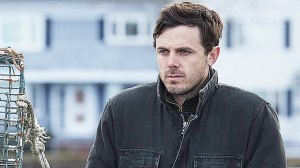
maxresdefaultManchester by the Sea (2016)

As I mentioned before, if you see a film go by that has 97% on the <rottentomato.com> “Tomatometer” and all the principals show up at Charley Rose’s oak table, you can pretty much bet it’s worth a look. Accordingly, “Manchester by the sea” is definitely worth a look, but with a bit of a caveat.

“Manchester…” is another film where the director simply sets the stage and lets the principal actor loose to show what he has without much if any restriction. Similar recent films are Robert Duvall in “Tender Mercies” (1983) and “Get Low” (2009), and Michael Keaton in “Birdman” (2015).   All the other cast members point toward the leading actor doing his tour de force.

Similarly, Casey Affleck really does do a magnificent job in a very textured, restrained performance as a man who has suffered an unspeakably terrible event in his past and doesn’t really want to continue living, much less be responsible for a precocious adolescent. You can literally watch his gears work it out as best he can and it’s a pretty tough mechanism.

And thereby goes the caveat. It’s a very slow and ponderous process that loses touch with the audience’s span of attention in parts. The film is too long and doesn’t really explore the plot in a consistent, steadfast manner. It plods and even the outstanding portrayal by Casey Affleck, not previously known as a heavyweight, can save it in places. That said, watch for a brief two-minute blast from Michelle Williams about having lunch. She blows the film away.

Like the guy on “What’s my car worth” who sadly reports that he must give the car a “3” (of 6) for “condition” because there are a few scratches, bumps and worn spots, but the car is still pretty collectable, I must give “Manchester” 3 (of 5) gloomy expressions because it’s just too interminably somber but it’s still pretty collectable.


Retrospective: John Kay and Steppenwolf

0

For no particular reason, I occasionally come upon a very interesting person not many know much about. Sitting at my computer working on something else and playing from my collection of 60’s songs, one popped up I had never heard before and the lyrics caught my attention.

Rock music is not usually noted for insightful lyrics. It’s unusual for rock lyrics to do much else but rhyme with the pentatonic scale. If you want discerning lyrics, you switch to Bobby Dylan. Rock is not a medium of libretto. It is a medium of rebellion and insurgence. It’s loud, raucous and in your face. The music is written to pull at the right heartstrings, the lyrics are added later. This was true for McCartney and Lennon. They hummed a tune to each other, then wrote the words to fit. Elton John played the chords and Bernie Taupin fit the lyrics. The list goes on.

john-kayThe band was named after the novel Der Steppenwolf by German author Hermann Hesse. Lead singer John Kay is an interesting outlier in some, not all of his writing. Real name Joachim Fritz Krauledat, age now 72, was born in East Prussia, Germany, in 1944 (now part of  Russia).  Another interesting facet- John was born with a rare ocular anomaly, achromatopsia – complete color blindness – a defect of the cone cells in the eyes which causes him to see only with his rod cells and thus only in black and white and grey shades.  He has no concept of color, and this disorder also causes increased sensitivity to light so he usually wears sunglasses, not as a fashion statement. Technically, he’s legally blind.

The band Steppenwolf’s glory days were 1968 – 72. They sold 25 million records and had eight gold albums. Like many bands of the time, they couldn’t get along with each other and after 1972 they never ascended to former glory. Many critics think they broke up at the top of their game.

But John Kay was a very interesting songwriter. He was unique in the field of most of them in that he was able to fit meaningful, intelligent lyrics into the more-or-less usual rock melodies. He had a penchant for describing the drug habits of his era in very vivid language. He didn’t hold back much. Some of his lyrics are brutal and uncompromising. Give a look briefly.

“Stoned on some new potion he found upon the wall

Of some unholy bathroom in some ungodly hall

He only had a dollar to live on ’til next Monday

But he spent it on some comfort for his mind

He said he wanted Heaven but prayin’ was too slow

So he bought a one-way ticket on an airline made of snow”

https://www.youtube.com/watch?v=OMxCi3ljWEg

I think he’s most famous for the “The Pusher”, actually written by Hoyt Axton in 1968 and featured in the classic film “Easy Rider” in 1969. The lyrics of the song distinguish between a “dealer” in drugs such as marijuana—who “will sell you lots of sweet dreams”—and a “pusher” of heroin- a “monster” who doesn’t care if you live or if you die”. The song is fitted to a rather funereal chord progression of E7 – Dm7 – A7 – F#7 that drones on as Kay “sings” (closer to melodic talking) the verbiage. It’s pretty raw, quite so for 1968. It’s a very interesting song, give it a listen.

“Well, now if I were president of this land

You know, I’d declare total war on the pusher man

I’d cut if he stands,

And I’d shoot him if he’d run

Yes, I’d kill him with my Bible

And my razor and my gun.

God damn, the pusher

I said God damn, God damn the pusher man”.

https://www.youtube.com/watch?v=3XqyGoE2Q4Y

Several members of the original band still play occasionally on the nostalgia circuit.