Stress, physicians and age

0

Physician “burnout” is defined as loss of enthusiasm for work, feelings of cynicism, low sense of personal accomplishment.

I think the factors involved are infinitely complex. I will also hazard a guess that the issue of burnout builds on two fronts:  Stress and Age, and the nomenclature for each is radically different.

Front 1– The peak “burnout” in the age group of 36-45 comes on two groups:

Group 1.  Doctors that emerge from the long training grind to find out they’ve bitten off more than they can chew and are having trouble digesting it. Too many responsibilities, too much work load combined with the era of mortgages, spouses, kids and mounting expenses acquiring the creature comforts lacking in the austere training days.

Group 2.  Doctors that emerge from the grind to find out that their reward was a false promise and they really don’t like living with the end product. The difference between training for a career and the nuts/bolts of the career don’t match and they’re miserable locked into the saddle with no escape.

The salvation of group 1 is usually that the personality type that thrives in this environment is selected out during the gauntlet. Those that can’t hack it fall by the wayside during training, like Navy Seals in boot camp that ring the bell when they’ve had enough. I think this is an unusual burnout group.

I think group 2 is much more common and not necessarily amenable to filtering by the gauntlet. By and large, there is a big qualitative difference between trainees and attendings, and the realities of that difference are not necessarily apparent before the fact. Some seemingly high quality trainees go bust quickly in the clinch and vice versa, and as far as I can tell, it’s very difficult to discern which is which before the saddle is cinched.

I’d hazard a guess that this group is at highest risk for becoming functionally incapacitated, call it what you will, and also I might add a risk for suicide if there is no escape valve.

All complain about the following factors, but most realistic physicians understand these factors are identical to working for any major corporation in any career position.

Bureaucratic tasks, Too many hours, Compassion fatigue, Difficult employer, Difficult colleagues, The Affordable Care Act of 20008

I don’t think I have ever met a doctor that burst into tears at the thought of onerous paperwork. I do know some however that started drinking heavily at the thought of the Affordable Health Care Act of 2008. The stark reality is that all these things are the price of admission to medicine highly unlikely to cause significant lack of professional fulfillment for no other reason than they are ubiquitous to nature.

Front 2-  aging physicians are a much more convoluted and textured phenomenon- physicians who have successfully run the gauntlets to arrive at a place of relative safety only to discover seniority is a new liability. Inevitable physical limitations and the duty and obligation to make way for others climbing up the same ladder behind them. A different and much more subtle order of “burnout” from the rest.

The limitations and hassles of old age are not linear. They escalate rapidly after a variable certain age”. At 65 I was doing four night calls a month and bounced back easily. I was racing motorcycles and doing high-speed track days at 66. I thought of myself as limitless.

Then I slowly discovered my concentration on the track at 120 mph was fading and I started crashing, once twice in the same corner. I quit at age 66+ before I hurt myself or someone else. Night call quickly became difficult to maintain concentration and the day-after became more difficult to bounce back. I still had the same knowledge base but not as much concentration ability to apply it under stress.

At age 70, I have the exact same drive and passion to be the best I can as when I was at the top of my game at 36.  The only limiting factor is my physical ability to bring it all to bear as effectively and efficiently in a world of emerging young people with the same fire in their bellies. Thereby burns the age related “burnout” flame- the fear of becoming irrelevant. An absolutely terrifying, life threatening burden.

That will be the burnout issue that I think will require some creative thought on how to rectify, if it’s even possible.

Epitaph on my headstone:

“This is my generation…..

Hope I die before I get old”

Pete Townshend, 1965. (BTW, Pete is 71 this year)


The “new brain death” in 2014

0

<http://usnews.nbcnews.com/_news/2013/12/30/22114290-brain-dead-teen-to-remain-on-life-support-pending-appeal-by-family#comments>

We now have a completely different complexion on the brain death = death issue.

Back in antiquity (1968) brain death was defined objectively as death so we could get dead people off ventilators. Organ issues came later.  But 1968 was a different world of “life support” than it is now and many of the fine points were unknown then. We can now maintain “lifelike” cadavers indefinitely.

Brain death = death has never rested on structurally firm ethical ground. Brain death persons maintain some bodily integration and have been maintained for months so they could deliver healthy babies. We just drew a line in the sand and made objective criteria for brain dysfunction as a practical matter. Not every cell in the brain stone dead. Brain dead persons were simply “dead enough”.

We also now live in the age of surrogates that don’t want their relatives to die and we accommodate them by maintaining warm cadavers in a lifelike appearance on “life support”. Increasingly they’re demanding their relatives stay that way because if they give the appearance of life, there is always a possibility of unexpected reanimation.

Getting surrogates to accept the concept of brain death = death has never been easy in the best of worlds. A cadaver in the morgue looks decidedly dead. A brain dead cadaver on a ventilator looks decidedly comfortable, even animated. The only reason we’ve gotten away with selling brain death so far is the preponderance of multidisciplinary certitude to families.

The number of surrogates who demand futile care for near-dead persons is increasing anyway. Because of “life support”, they simply don’t believe our prognostications of doom and gloom. Their eyes and emotions tell them differently. With this case, it’s now escalated to brain dead persons, and this has the potential to change the complexion of organ donation.

Surrogates have figured out that they don’t have to accept medical prognostication they never fully believed anyway, and now enforce it legally. The groundswell for maintaining this warm cadaver is astounding.  An Internet site to raise money for her “life support” maintenance containing at last count US$28,000, all from the grass roots. Pastors of local churches imploring the court to “save this poor innocent’s life”, 60’s style marches chanting “Don’t kill Jahi!”. The child’s uncle declaring on NBC Nightly News that the child’s mother is certain she responds to her.

This is not a fluctuation in the ether. This is a gift that will keep on giving and will grow like a sunflower seed in the noon day sun. An increasing number of surrogates have now figured out they can get their way, any way they want, simply by calling a lawyer. Once it gets into court, the justice system always errs on the side of “life” as the court understands it. Sustenance of vital signs.

This is now a totally new paradigm in organ donation. It’s been a long time coming and it’s now here.

——————————————–

CCM-L Member Response: An element that you don’t discuss below is the question of reimbursement. According to news reports, her family’s insurance continues to cover her care while hospitalized. If this becomes more of a trend, I suspect that the carriers will quickly stop that sort of “flexibility” around reimbursement.

I say;  Health care insurers understand the reality that hospitals must continue to care for patients whether they get paid or not. So they routinely get away with rationing and conserving at the provider level, not at the level of their insured. They cut payments to providers retrospectively on the basis of paperwork while assuring their clients they are fully insured. This is a political reality.

The truly significant part of this travesty is the groundswell at the grass roots level. People contributing to the on-line fund. The 60’s, Berkeley style marchers carrying placards, just like “End the Vietnam War”. The public media revelation that the mother “feels like the child responds to her”.

All that means that the groundswell here is NOT limited to this particular family as outliers. It’s broken into the mainstream now, and you can bet your sweet bippy it will “go viral” like a youtube video of Britney Spears naked.

As of now, the “law” pertaining to death by neurologic criteria is moot. Anyone that simply doesn’t believe in death by neurologic criteria can trump it quickly and efficiently by getting a lawyer and petitioning the court. Hungry lawyers looking for work will fall all over this. The precedent is set and a significant portion of the public seems to support it. Do you see marchers today with “This is ridiculous” placards?

This has MASSIVE implications for organ donorship.

CCM-L Member Response: Not intending to make a political statement, but I suspect even more strongly that someone covered by Obamacare will find that reimbursement stop even more quickly.

I say: There is no currently convincing evidence that the Affordable Care Act of 2008 will act any differently than any other “private” company, equally as reluctant to face the political firestorm of “saying no” to their insured. Tradition has it that “saying no” to providers is the path of least resistance.

———————————

Update:  (1/1/2014)

The family’s court filings said New Beginnings Community Center in Medford N.Y., is willing to take Jahi and provide 24-hour medical care. The center was founded by a former hair stylist whose father suffered traumatic brain injury after a 2007 motorcycle crash. New Beginnings founder and owner Allyson Scerri shared a statement on her Facebook page Tuesday explaining how her facility “is about preserving life and treating brain-injured patients with care and dignity.” “We do encourage every citizen to take the time to educate themselves more clearly on the issues of what brain death is and what it is not,” the New Beginnings statement read. “This child has been defined as a deceased person, yet she has all the functional attributes of a living person despite her brain injury.”

(Did I mention radical right-to-lifers…….)

On Tuesday, the Terri Schiavo Foundation, named for the Florida woman who provoked a national debate about end-of-life-issues when she was diagnosed as being in a persistent vegetative state, said it had been helping Jahi’s family find a facility that would take the girl.

Some thoughts on mandatory influenza prophylaxis

0

This month marks a year since I got a demyelinating spinal cord disorder a week after getting the same flu shot I had received every year for at least 20 years. This one happened to be the one that liked me spinal cord better than the virus. It is very slowly improving but definitely still there.

Both of my lower legs are on fire 24 hours a day. Just like both legs immersed in a bath of hot water. Both hands are the same. It appears to be completely sensory in nature but now maybe not. My personal gym trainer noticed that all my muscle groups are consistently tight, then nagged me for months to have a massage therapist check it out. So I finally relented and had one bend my bones for an hour, She said every muscle group was tighter than a turkey’s ass, especially the muscles of my feet and lower legs and that was unusual. So there may be some long-term motor stuff as well.

Neurologist says it might go as long as two years but if it goes longer; I’m probably stuck with it. I’ve learned to live with it and it rarely interferes with my daily life.

I DO believe in immunizations, especially as it pertains to children. I fervently believe Jenny McCarthy, who made a career as a dumb blond really is one as it pertains to children’s immunization and she has all the credibility of Sarah Palin.

And that said, I hope the efficacy of flu immunizations are at least better than chance for adults. If so,then complications such as mine for a few are collateral damage that must be accepted to gain the benefit of many. But there are some problems as it pertains to mandatory injections for all health care workers.

First, I would like to see more convincing evidence that the flu shot actually works. People get the shot every year and are relived that they didn’t get the flu. I have elephant repellant in my back yard and I’ve never seen an elephant back there. Does that mean the repellant works? What if they do get the flu after accepting the shot? Is it the old Christian paradox, if you have good luck, its God’s working in your life. If you have bad luck, it’s still good, you just don’t understand the big picture of God’s will. If I am to accept the bad luck component for me, I’d like a little more evidence that the flu shot has a better than chance potential for mass benefit.

Second is the consent issue. I can assure you after going through this that there is NO informed consent involving potential complications of the flu shot. Anyone who asks is told that the occasional complication may occur but it’s minuscule compared to the benefit for all so don’t worry abut it. If asked specifically about the potential for Guillian-Barre, they are told this possibility is shown in the literature to be about the same as chance. BTW, this year I had a woman with Guillian-Barre that developed a week after her flu shot in my ICU. That’s two cases in this hospital this year.

So, everyone lining up for the shots are overwhelmed by good news and any potential for bad news buried. Fine. But we are a society that runs on informed consent, so much so that it frequently gets ridiculous. So should everyone in line be told that there have been two potentially serious complications of the flu shot this year in this hospital (that we know of).

But that implies they have the option to decline the shot, an option that is rapidly disappearing. The crushing wave of optimism for an injection containing various iterations of virus has now reached the point where the issue of informed consent is crushed with it. The prevailing opinion that darts thrown at a list of a thousand potential damaging viruses will hit the right ones has obliterated the issue of options.

In New York, a law is being considered, and will probably pass, that will create incentive for getting the flu shot by punitive measures. If anyone opts out, they must wear a “surgical mask” everywhere in the hospital. Now the wave of optimism for flu shots turns into a gun to the head.

This is straight up coercion with an empty gesture. There is NO evidence in any world literature that suggests ANY efficacy for surgical masks preventing spread of virus or anything else. When the ‘bird flu” came along a few years ago, I attended a mandatory lecture and fitting of a “real” effective mask we would be wearing. It was bulky, heavy and incredibly uncomfortable. The audience was told in no uncertain terms that surgical masks were worthless and no one would be wearing one.

So the mandatory wearing of a surgical mask to prevent spread of virus is not to prevent spread of virus. It’s to provide an incentive to avoid having to wear a mask everywhere. We’ve now entered theater of the bizarre.

I continue to be conflicted. On one end, I do believe in immunizations and I support them, even accepting the occasional complication. On the other end, I’m not so sure about FORCING health care workers to line up and get with the program in the face of weak evidence and known life threatening complications, however rare.

Patients, prospective or otherwise, are said to have a right to determine medical treatment on the basis of informed consent. Every other hospitalized patient can, and frequently does refuse treatment even when informed the benefit greatly exceeds the marginal risk. And they do so with total impunity. Are we now suspending that societal maxim for the flu shots because our optimism exceeds theirs?

So, I will be watching all this unfold from the sofa of fraternity rejects of “Animal House”.

How to deal with psychiatrists

0

tumblr_lv6alyj3O71qz9ffqPsychiatry is a different world, a different universe. So when some medical guy in a white coat, lots of badges and a stethoscope in the pocket goes over there, it’s a big entertainment deal, like half of LA showing up when U2 plays “Street with no name” on the top of a building. They come from all over and hang from the rafters.

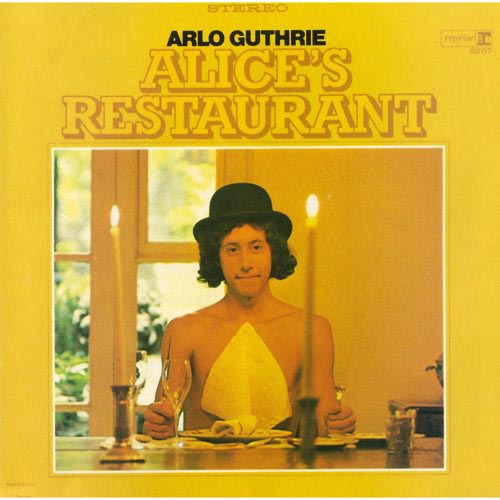
So, the most effective way to deal with Psychiatry is to walk in there with a totally authoritative air….fix them all with a withering sneer and…..of course……sing a bar of “Alice’s restaurant”.

(in A minor) “So I wanted to look like the all American kid from New York City.
I wanted to BE the all American kid from New York City,
So I walked in, sat down, I was hung down, brung down, hung up, and all
kinds o’ nasty ugly things. And I walked in and sat down and they gave
me a piece of paper, said, “Kid, see the pyschiatrist, room 604.”

So I went up there, sat down and I said, “Shrink, I want to kill.
I mean, I wanna, I wanna kill. Kill.
I wanna, I wanna…….. I wanna see blood and gore and guts and veins in my teeth.
Eat dead burnt bodies. I mean kill, Kill, KILL, KILL.”
And I started jumpin up and down yelling, “KILL, KILL, KILL” and
he started jumpin up and down with me and we was both jumping up and down
yelling, “KILL, KILL KILL.” And the sargeant came over, pinned a medal on me,
sent me down the hall, said, “You’re our boy.”

Then of course, nail down the group experience:

…….the only reason I’m singin’ you this song now is cause
you may know somebody in a similar situation, or you may be in a
similar situation, and if your in a situation like that there’s only
one thing you can do and that’s walk into the shrink wherever
you are ,just walk in say “Shrink,
You can get anything you want, at Alice’s restaurant.”. And walk out.

You know, if one person, just one person does it they may think he’s really sick and
they won’t take him. And if two people, two people do it, in harmony,
they may think they’re both gay and they won’t take either of ’em.
And three people do it, three, can you imagine, three people walking in
singin a bar of Alice’s Restaurant and walking out. They may think it’s an
organization. And can you, can you imagine fifty people a day, I said
fifty people a day walking in singin’ a bar of Alice’s Restaurant and
walking out. And friends they may thinks it’s a movement.
And that’s what it is , the Alice’s Restaurant Anti-Massacre Movement,
and all you got to do to join is sing it the next time it come’s around on the
guitar. (With feeling).

So we’ll wait for it to come around on the guitar, here and
sing it when it does. Here it comes-

“You can get anything you want, at Alice’s Restaurant
You can get anything you want, at Alice’s Restaurant
(patient chimes in “excepting Alice”)
Walk right in it’s around the back
Just a half a mile from the railroad track
You can get anything you want, at Alice’s Restaurant

Some late breaking comments on medical politics (from Med-Events)

0

>The system in US is now designed

>to fail. The AHCA of 2008 will destroy

>American Healthcare as we know it.

>It is all over. “The government is here

>and they are here to help”.

Crippen:  The above cluster of sour grapes is political in nature and ordinarily, I would scotch it immediately but I can’t let you get away with it as a stand-alone without an alternative view.

In 1965, the medical establishment, including the AMA and my father the surgeon loudly exclaimed that Medicare and Medicaid would “destroy American health care as we know it”.  In fact, those services made my father’s generation of physicians rich and created the Medical-Industrial Complex which has now grown to the point where it threatens to “destroy American health care as we know it” by it’s sheer volume and weight. The Affordable Health Care Act of 2008 is not needed to hasten that eventuality.

The bill for a typical 6-day hospital stay for childbirth in 1951 was $85—well within the out of pocket range of most families. A 6-day hospitalization for cardiac workup at a large urban hospital in 2010 has recently been calculated to be $19,254; the facility lost $2,695 of that amount after reimbursement.

This cost situation arose in part because physicians in such a system have little motivation to reduce costs, given that the care is paid for by a third party relatively unable to process the value of need versus desire. Similarly, consumers of health care are not the purchasers thereof and so have little motivation to assess cost versus value. More is always better, especially when it is free.

Virtually every other civilized country in the global village has evolved to lowest common denominator of health care for ALL of their citizens, and that is single payer, government sponsored health care indemnification. The price paid for that is enforced prioritization of entry and “saying no” to expensive treatment that has a dismal benefit at great cost. It isn’t perfect, but in the end, everyone is covered and it’s more or less affordable. America runs on a consumer satisfaction mode, a situation that everyone agrees is unsustainable even if it were not for the global recession of 2008.

In 2009, the USA spent (all told) twenty five trillion dollars on health care but only indemnified about 40% of its population (some are underinsured). That’s US$8,000 per person, 17.3% of the GDP and increasing about 6% annually.  The USA ranks below Portugal in preventable mortality.  California increased its cost of health insurance 20% this year and there is no end in sight. As the price of health care goes up, fewer businesses can afford health care for their employees.  62% of all personal bankruptcies involve medical bills in 2010.

So, the AHCA of 2008 is not anywhere on this screen. We’re on our way to insolvency all by ourselves right now, and we’re still only covering a small portion of our population doing it, expensively and inefficiently.

The AHCA of 2008 purports rectify three glaring omissions we don’t have now. It effectively ends insurance payment discrimination, adds an estimated 31 million needy potential patients to an already overloaded system and it’s portable. These are all GOOD things, and I might add GOOD things that most if not all of the other civilized countries in the global village provide for their citizens.

The argument against the AHCA of 2008 is twofold:  a) Straight up political partisanship. ANYTHING that comes out of this sitting President is spawn of the devil, and: b) It will be expensive.  However, complaining that the AHCA is going to break the bank implies that the bank would remain solvent without it. Nothing could be further than the truth. The bank is hemorrhaging right out into the street and is reliably headed for insolvency all on it’s own. The worst that can be said about the AHCA is it will hasten the process. Maybe.

So if you ignore the political aspects, which you definitely should, what remains is how to finance it. Of course the best way is to mandate everyone buy into it to keep the cost of participating down. If anyone is allowed to opt out, our culture mandates we still have to treat them anyway. So if opt-out is allowed, it will collapse instantly. We’ll see how that works out.

Otherwise, there is another reality that must be faced. There is NO possibility of a system that creates demand and then supplies it in a customer satisfaction mode can remain solvent. So, if the whole system is swirling around the bowl, which it is, there are several options available, two of which are painful prescriptions for providers.

1.    Allocate resources toward health care and away from other previous priorities such as entitlement programs, military security, and bureaucratic priorities.

2.    Pay providers less for the same (or increased) workload.

3.    Reorganize health care spending so that more money is spent on some services and less or nothing is spent on others; essentially, say no more often.

History suggests that it is unlikely any modern society can or will decrease support of entitlements such as social welfare, unemployment insurance, social security benefits, or retirement benefits that citizens depend on and have paid into during their working careers. Cutting military security funding is equally unlikely. Most if not all national budgets include little else that can be reallocated in any meaningful amount. That leaves options 2 and 3. It is virtually certain that providers will have to reorganize their priorities one way or the other, and accept less remuneration in the process.

So denigrating the AHCA because it will break the bank is (I think) a “straw man” argument. We’re pointing our finger at something that hasn’t even happened yet as we descend into the depths. We can continue on the path we’re on into insolvency while indemnifying only a portion of our patients at huge expense and great inefficiency, or we can continue toward insolvency indemnifying 96% of our patients more efficiently avoiding personal bankruptcies, asking our providers to work harder for less pay. Then we can just pay for it and get over it.

If we decide not to just pay for it and get over it, we’re going to crash, and when we do, we’ll discover the reason why most of the other civilized countries of the global village have evolved to single payer system, prioritization, saying no and standing in line.

BTW, the government is indeed here and it’s helping. MOST health care in this country is government funded. All care for Washington politicians, military, VA system, Medicare, Medicai

>In critical care, the trend is to use Nurse

>Practitioners and Physicians

>Assistance to do the grunt work,

>especially at night, with the physicians

>evolving to executive managers.

Crippen:  The problem of course is the eventuality of all chiefs and no Indians. Critical Care fellows are clearly showing signs of wanting to get away from clinical responders to become managers. So the practical problem then becomes who will do the grunt work to be managed by suits. I see the model as the rise of NPs to fill the available niche field where doctors once grazed.

I would be surprised if Physicians Assistants moved much into that niche, not because they are any less competent than NPs but simply because the NPs have more experience in ICU patients care. Most of them, including ours are former ICU nurses. That’s just my initial thought, and again, I hasten to add that I know PAs here and elsewhere and I would NOT disparage them, all other factors remaining equal. It’s a matter of local experience in the field where they work.

The issue of ICU (in my case, NICU) nurses taking orders from NPs is going to be interesting to sort out. In my case, the NCU nurses feel a bond with Danielle because she is one of them, and also of course, that she knows how to generate confidence and when to call me to get involved when needed. So they feel comfortable with her because they trust her nursing judgment that has come u a level and they know she knows when to call, and if she doesn’t, they know they can call me anytime. This issue has not expressed itself with Danielle, but it might in the future with others. I might add that I am also impressed with the NP over in the neuro-trauma unit next door to me and she has similar trust and acceptance from their nurses. I think this issue will sort itself out in time for no other reason than if an individual is found wanting, they won’t be working here.

I am very concerned that doctors are abdicating direct patient care because it’s too time and energy consuming and there are too many hassles.  OK, here comes the “I slogged to school in three feet of snow” speech.  When my ilk and I were residents, we were expected to have a head of steam because that was how the game was played, and the rules had been established long before us.  Our job was to deal with ALL the patient care issues, and do them well or we would be fired. Every buck stopped with us. If any of us couldn’t take it, there were lots of other things to drop out into, like dermatology and ophthalmology.

The upscale of that, especially in surgery and critical care is that helpless, defenseless people had at least a shot at reversal of a death spiral, especially after hours when it was inconvenient and everyone was tired. Maybe not perfect, but at shot at it.  Once “intermediate” providers replace that ethos, then the disasters in the middle of the night will have a shot, but that shot will be holding on till the suit arrives. Better deal? More cost effective? Depends on which side of the bed you’re on.

Will NPs eventually evolve to the former expertise and experience of doctors, rendering them moot?  It’s possible. Is that a good thing?  I don’t know. Remains to be seen. Will NPs be more “cost effective”?  Not as they increase in expertise and experience. They’ll unionize and get into collective bargaining. (Unless they live in Wisconsin).

I lament the hard working, chronically tired resident that held the seams of the hospital together.

I am the last of my kind.

>WASHINGTON – The Obama administration

>said Monday that states could cut

>Medicaid payments to many doctors

>and other health care providers to hold

>down costs in the program, which insures

>60 million low-income people and

>will soon cover many more under the new health >care law.

Crippen:  You and I and everyone else knew this was coming.  If you’re a conservative Republican you lay it all at the feet of ANY Democratic President, but it goes infinitely deeper than that, deeper than even the Prince of Darkness himself (Bush).

The fact is that all of it has been going bust for a very long time. Long enough for each political party in turn to blame the other for having to do what it takes to control it. The fact also is that there is no inherent limit to the expenses of government funded health care programs because they are consumer satisfaction driven. There is no upper limit of expense and no one can “say no”.  This in the face of a virtually unlimited demand.

It’s political malfeasance to tell consumers in this kind of market that you’re “limiting” their care, especially if it in evolved saving YOU money. They don’t care about YOUR money. They go on TV talk shows and whine about how the “government” is trying to kill them to save a buck or two. Anyone that advocates limiting anything it immediately voted out of office with a strong odor of tar & feathers in the air.

So you can bet your sweet bippy no one on the reimbursement side is going to the demand side talking resource allocation. They have NO choice but to go to the supply side because that’s the only side there is.

Go to providers and ask that they voluntarily become more efficient (saving money).  Ha. When was the last time you saw that happen? Providers make their living by doing as much as they possibly can, and in the process expending other people’s resources. In an ICU, an empty bed is a loss so it’s filled with whatever comes down the line. An ED bed that isn’t filled is a money loss.  So, if the reimbursers don’t do SOMETHING, they will quickly go broke in a scheme of maximum demand and providers happy to fill it.

In the past they have tried limiting access to the system by the Clinton Plan (refuse to let them in on pre-determined algorithms). That resulted in anger and retribution that waxed political. Then they tried rationing by inconvenience (didn’t pay for paperwork omissions). Providers became expert paper shufflers. Then they devised DRGs, but followed quickly by endless outliers that still paid.  Providers are like terrorists. They’re always one step ahead of any attempt to limit them. The American way of resourcefulness.

So now that everything else has been tried, there are only two ploys to avoid going broke left.

1.  Simply pay providers less and let a bunch of them go out of business or quit.

2.  Bundle everything and don’t pay a cent for anything extra.

For # 1, the long-term detriment will be some hospitals will go belly up and some providers will quit in fits of pique.  The reimbursers don’t care, and the big hospital systems that can negotiate sweetheart deals don’t care either. You hear all the time doctors loudly claiming “I’ll quit if they do X…Y  or Z”.  Trust me, they won’t. They all have mortgages, kids in private school, Jaguars and high maintenance females on the side (for the males. Maybe for some females too). Remember back in the 70s on Saturday Night Live, the gaggle of adolescent girls at a slumber party discussing what it might feel like (to them) to have sex?  They all said “Ewwwwwww  I’d never do that!!!.  All but one in the back who quietly opined: “Well….I might”.  That’s the way it will go. It doesn’t matter how much of a cutback, there will always be those that will work. The “best and the brightest”?  Maybe not, but the establishment doesn’t care.

#2 is the almost perfect relief. A patient comes in for treatment or hospitalization and the reimbursement is what it is. No more. Just like DRGs except ironclad and no “DRG creep”.  The fallout will fall out on providers and institutions, neither of who will have any wiggle room because the patient anger and frustration will fall on them, not the reimbursers.

So the hospitals will admit a 90 year old with unresponsive Grade 5 subarachnoid hemorrhage and maintain them in an ICU as long as the family wants, but only at a flat rate. The hospital and/or provider get to decide whether to tell the unrealistic family “no more”.  The reimbursers say: “not our problem, you’re (patient) “insured” as we promised, work out the details with those other guys”.

Hospitals going belly up rather than offend patients and their families?  Providers quitting in fits of pique?  So much the better. The point was to limit demand and also limit the supply induced by it.

>The issue of providers as popularity

>contest- about an ER doc who was

>called in to the admin office for making

>the highest score on a patient survey.

>He made the first 100% ever and

>everyone was so impressed.

>They were all showering him with praise…..

Crippen:  It should be well understood that no hospital administration anywhere cares even a little bit about who’s naughty or nice in terms of direct patient care. It’s straight up marketing.

Previously they did more or less “anonymous” polls, then they advertise to the public that they have “nice” doctors (ergo, they must be “good” doctors as well) so prospective visitors to an ED should take this information into account.

Shortly before the late St. Francis Medical Center went under, the administration allotted a bunch of money to advertise their ED. The gist was to get more ED admissions by advertising convenience and rapidity of service. I told them they would lose money, but they, being the power players, disagreed, and so several weeks thereafter, several big billboards went up in the area featuring the then head of the ED sitting on his bed putting on a pair of running shoes.

The blurb went something like: “Dr. X X is getting ready for his day serving you and he will be running all day doing it”, or some such. So of course, months later, the statistics showed a decrease in hospital revenue (but an increase in the revenue of the private group running the ED. Convenience clinic patients that liked fast service increased, but none of them were admitted, most had trivial complaints that didn’t bring in any billing and many of them were not insured.

To a hospital, EDs are all about getting their clutches on patients that need to be admitted. That’s where they make their money. Admissions occurred when family practice and Internist types admitted patients from their office or electively.

No now a new tack of actually identifying specific doctors that are naughty, not nice. Everyone knows good” providers are nice. This is now a ploy for identifying individuals that can be moved to lower reimbursement because if they’re not nice, they must be poor quality providers.

And what does “nice” entail?  Do they give out clear, understandable information? Do they pay any attention to the patient? Did the patient get better?

Maybe.  Or does the patient feel like his or her “customer satisfaction” needs are met irrespective of how realistic or how stupid they are? Do you think an “administration” is capable of sorting out these concepts on the basis of a poll?

>”Welcome back my friends to the

>show that never ends

>We’re so glad you could attend

>Come inside! Come inside”!

ELP from Brain Salad Surgery (1973)

>Medicine keeps getting harder.

>And fewer and fewer folks are doing it.

>America has no idea that the weight of

>it all is falling on the shoulders of the

>emergency physicians and hospitalists

>who lurk inside the trauma rooms and

> inpatient floors, the fast tracks and

>ICUs of their community and university

> hospitals.

>The pasty-pale, coffee-sucking,

>junk-food-eating Spartans of health

>care who will bear the full assault

>of health care reform when there

>aren’t enough primary care doctors

>to manage an AARP convention,

>much less all of America.

Edwin Leap, Emergency

Medicine News,

January 2013.

Crippen:  Maybe not much longer. I continue in touch with a congressional committee on some of these things (as a resource for my last book), and it is clear that the government has the above issue in its cross hairs. It takes the government a while to sort these things out but when they finally do, they’re pretty ruthless and efficient in fixing it. And by fixing, I mean fixing by two means:

1.  Insuring it’s someone else’s problem

2.  Not suffering any liability for cost

There are numerous literature cites stating that the number of patients entering an overheated (ED) provision system could be reduced safely and effectively by simply identifying those that don’t need urgent care and referring them elsewhere. This would, of course, go a long way in solving the overcrowding problem. It would also deep six the need for building and staffing more EDs to handle the load, so ACEP has reliably come out against it much like the NRA reliably comes out against gun control. Lobbyists are as lobbyists do.

It has been the thesis of ACEP that a runny nose only a runny nose until meningitis is ruled out (by an emergency physician) and that since Americans have zero tolerance for mistakes, these patients must be seen anytime they feel like it and someone must pay for it. I think as I sit here the current charge for actually walking into an ED and sitting down breathing room air is somewhere in the range of US$300.00. That’s before anything else is done. Most folks get a few tests. EGKs and CXRs are read (and billed for) by ED physicians and cardiologists and radiologists later.  It isn’t uncommon to ring up a bill for US$1000.00 to evaluate a common cold. After all, pneumonia and early system sepsis must be ruled out, after all:” can be sued if I’m wrong and I don’t do enough tests”. And so it goes.

Some (not all) insurance grudgingly pays for that, but as I remark freely, the bottom of the barrel is slowly coming into view. So now as the worm slowly turns, we are hearing the President of the United States decry overcrowding in EDs and people using EDs as primary care facilities. This was a good selling point for expanding health care benefits via the Affordable Health Care Act of 2008. But not so fast…..Expanding health care benefits and paying for it by blank checks are two different things. It’s possible, even likely that expanding health care benefits may also come to pass by directing patients to the “right” venue (cost effective) instead of allowing them to go where it’s most convenient.

Now, I hasten to add that this was tried under Clinton and was an abysmal failure. But remember that the government is slow to learn from its mistakes but they eventually get around to it. Denying admission to an ED at the door for a seemingly bullshit complaint historically doesn’t work, but actually screening a patient (EMTALA style) and THEN referring them elsewhere is a different breed of cat.  Patients MUST be admitted to an ED on demand (EMTALA) but after screening, they don’t necessarily have to stay there.

So I’m told by somewhat occult sources, the government is considering a new reimbursement deal where it will pay (presumably doctors or even NPs) not to evaluate and treat in the ED, but to screen for need to be in an ED. Naturally, that reimbursement will be dramatically less than an on-site E & M. If no emergent issue found, they will be referred out.  The ACEP lobbyists will squeal like pigs in hot oil, but anymore, those holding the purse strings define the rules of the game. ED’s refuse to screen?  The President of the United States then decries the Medical Industrial Complex holding up fiscal responsibility progress for their own pocketbooks. Here we have a way of saving money and increasing efficiency of medical care. Why are these guys dragging their feet?

Next problem is where are all those ragged unwashed found wanting for ED care going to go?  Unclear how that will work, as it is as unclear how the AHCA of 2008 will work. Probably make a lot of it up as it goes along.

The point is that using EDs for convenience care at exorbitant prices enriches individuals (ED provider groups.  Remember “Coastal”?  These guys operate to their own benefit and to the detriment of the whole system.  They bill differently than hospitals and they have no incentive to conserve anything. Those paying for health care have an intense incentive to bring providers’ incentives into line with global conservation. That fact has been identified and will be fixed. As I have mentioned before, I think my bias is that Private Practice is going the way of the funny looking animals in Stephen Streat’s back yard.  Any “independent” provider has a much stronger incentive to enrich him or herself at the expenses of the system and must be controlled by the system. There is no guarantee it will be fixed efficiently or even effectively, but it will definitely be fixed.

Pin me to a guess after marinating in hospital/ED soup for 30 years, I look down the road and I see three species of “Emergency’ Services”. Joe Lex’s mileage will probably vary.

1.  Straight up convenience clinics, staffed by NPS, reasonable out of pocket fees. No insurance.

2.  Screening centers. Authentic “urgencies” identified?  Transfer to a mother ship by ambulance or private car if the relatives are willing and it’s deemed relatively safe. Insurance will pay for this service, but not anywhere near what an ED bills for an ED evaluation.

3.  A genuine “Emergency Center”. No walk-ins. Only referrals. Insurance will pay for all of it.

Will that “solve” the problem of inappropriate ED admissions and people using EDs as convenience/primary care centers? Will it save money? Maybe, maybe not, but it will definitely invoke the Principle of Unintended Consequences that will then guide future evolution.
Withdrawing life support after severe brain injury (complicated post)

0


Is Life Support Being Withdrawn Too Soon After ICH?
Medscape Medical News, 2013-02-13

Claude Hemphill et al have written about this concept for years.  Claude’s enormous heart is in the right place. He and everyone else for that matter desires to do the right thing in terms of maximizing treatment to get the best outcome possible.  However, the author here is preaching to the wrong choir. This is not an article per se, but a review of a concept by “Medscape”, the “People Magazine” of medical information.  The information therein is just vague enough to potentially suggest to family practitioners and patient surrogates that read Medscape that the “more is better” theory is synonymous with “if more is better than more than that might be better yet.”

The issue of prospective living wills and powers of attorney for health care delivery is not mentioned, so one might get the impression that a good course might be to suggest that an incompetent patient who has previously opted out for extended ICU care on “life support” might have made a “better” decision on the basis of this data. If that’s the case, then as the French say: “Ze worm….. it is out of ze can” as it pertains to other prospective wish issues.

This article opines:  “Those outcomes in these patients may not still be true today with our sophisticated medical care”.  There is no convincing data to suggest this is true in many, many ICU treatments, many of which convert death to life-in-death ensconced in skilled nursing facilities. The “we can do so much more than we used to” argument is directly responsible for many surrogate demands for open-ended ICU care. The mortality and morbidity statistics for ICU care have changed little in the past 20 years, and recent evidence of an intensive four year study by Levy and Chalfin et al rather convincingly suggest that the odds of hospital mortality were higher for patients managed by ICU physicians than not *.

3.  The article does not mention any limits as to how much longer an ICU admission will take to generate how much improvement in a patient to break the threshold of “acceptable quality of life”.  So, which scenario do you believe according to the ongoing clinical evidence, not the prospective optimism:

A. Each additional day of ICU care has
increasing potential to generate a viable
patient and each additional treatment
has more potential to improve outcome?

B.  Each additional day of ICU care
Does not show any improvement and each additional
therapeutic treatment has more potential
to prolong length of stay?

If you take the position that each additional day of ICU care has diminishing potential to generate a viable patient, but each additional therapeutic treatment has more potential to increase length of stay based on “hope”, then you have elevated “hope” to a self fulfilling prophesy. Your responsibility to your resource allocation system is to give up.  It isn’t a “right thing to do” anymore. It becomes practical economics. There IS a limit and you’ve reached it.

If, however, you take the position that each additional day of ICU care has increasing potential to generate a viable patient, and each additional treatment has more potential to improve quality of life than the one before it, then you will be asked to support that position not as the “right thing to do” in a perfect world but in terms of cost/benefit. When is it a straight up money issue.

In 2009, the USA spent (all told) twenty five trillion dollars on health care. That’s US$8,000 per person, 17.3% of the GDP and increasing about 6% annually. But we only fully indemnify about ~ 60% of our population and the USA ranks below Portugal in preventable mortality. California increased its cost of health insurance 20% this year and there is no end in sight. As the price of health care goes up, fewer businesses can afford health care for their employees. 62% of all personal bankruptcies involve medical bills in 2010. The whole system is swirling around the bowl and the advent of the AHCA of 2008 (fully implemented in early 2014), will radically change the whole concept of health care indemnification.

There are several fixation options available, two of which will painful prescriptions for providers.

1.      Allocate resources toward health care and away from other previous priorities such as entitlement programs, military security, and bureaucratic priorities.

2.      Pay providers less for the same (or increased) workload.

3.      Reorganize health care spending so that more money is spent on some services and less or nothing is spent on others; essentially, say no more often.

History suggests that it is unlikely any modern society can or will decrease support of entitlements such as social welfare, unemployment insurance, social security benefits, or retirement benefits that citizens depend on and have paid into during their working careers. Cutting military security funding is equally unlikely. Most if not all national budgets include little else that can be reallocated in any meaningful amount. That leaves options 2 and 3. It is virtually certain that providers will have to reorganize their priorities one way or the other, and accept less remuneration in the process.’’

That said, if the patient is not better in a week, then how long are you wiling to wait on hope-based criteria?  Two weeks?  Six weeks? Indefinitely?   UPMC bills NICU care (full support) at around US$12,000 per day of which it collects about a third from most indemnifiers. I figure the real cost of an ICU day to the hospital is about break even, maybe slightly below. When will the moneymen find a break point instead of you? None of them have arrived in your (or my) office yet, but that day is coming, and when it does, defense of your resource allocation decisions will not be credible if it’s anecdotal. Providers will squeal like pigs in hot oil to be greeted by the stone faces of suits

“All the voyeurs and the lawyers
who can pull a fountain pen,
And put you where they choose,
With the language that they use,
And enslave you till you
work your youth away”

Don McLean (Bronco Bill’s Lament, 1970)

*  http://www.biomedcentral.com/content/pdf/cc8910.pdf

(Sorry- Typos are routine for me. I never proofread. Write it once and never read it again)

Dr. Crippen gets an EMG (almost)

0

EMG Doctor (Thick Eastern European Accent, one eye patched): “Yas…yas….my lovely…..ve vill INTERRIGATE ze nerves and ve vill find ze TRUTH….you and I…… ze truth will try to hide, but we VILL find it……you and me…..together…..(slurp)”

(Cut to routine meeting with maximum administrative leader and pillar of wisdom, Dr. X

Dr. X: “So…..how’s Guillian and Barre. I see you’re walking”

Moi: (Idly) “Yeah, getting better…..scheduled for an EMG at two”

Dr. X: “WHAT!!!! What do you need that for? You said you’re getting better!”

Moi: (suspiciously) “Dunno, Max said I needed it for completeness”

Dr. X: (Sneers)” Yeah? Well, you tell Max you’ll get one right after he gets one, if he can still walk. Do you know those things hurt like a BITCH. It’s medieval. They stick needles in you and then run electricity through them. If it doesn’t seem like it hurts enough they turn the juice up. You can hear the screams all over the 8th floor!”

Moi: (sharply clinical interest developing) “HUH…..I didn’t sign up for that! He didn’t say anything about HURTING!!

Dr. X: (Smirks) “Well unless you want to squeal like a pig in hot oil and be carried out of there covered in cheap Walmart band-aids, you better call Max up and re-negotiate!”

Moi: (Cheerfully) “Hi Max……(imitating Monty Python) “I’m getting better”

Max: (jovially) “No you’re not, you’ll be stone dead in a minute”.

Moi: (whines hopefully) “Um…(explains situation)……do I really need this EMG if I’m getting better……?

Max (whispers to companion): “Damned doctor patients…biggest pussies in the universe”.

Of cash cows and cookie jars

0

In the Sunday Pittsburgh Tribune-Review.  The sad story of a physician gone very, very bad,

Oliver Herndon, MD. 40 year old guy, trained at some of the most prestigious institutions in the country. UCLA, Stanford. Specialized in pain management, Board certified in Internal Medicine and Palliative Medicine. Said by many to be a regular guy, worked hard, did a good job. Internet patient ratings three stars out of four (for what that’s worth). Married, five kids, living in an upscale community.

Pleaded guilty last Monday to defrauding insurers and drug trafficking. Finally busted by a DEA undercover plant who made an appointment and received a prescription for Oxycontin for a trivial complaint after a brief interview and no physical exam.

http://triblive.com/news/1867518-74/herndon-patients-investigators-prescriptions-employee-pharmacists-doctor-drug-federal-2011

How can this be?  Here’s a hard working guy with a family, trained in the big leagues with impeccable credentials, committed specifically to helping those with pain and suffering.

It’s the old, old story. Herndon entered the world of expensive interests that turned into obsessions exceeding his ability to finance them.  Multiple expensive homes. Big game hunting junkets to Africa. Once he tasted them, it was impossible to go back. He found it only too easy to finance them by alternate means. His waiting room was packed with dirt balls urinating on the walls. His office is said to have taken in US$60,000 cash in one week. Average time interviewing a patient was under three minutes. “Investigators described him as the largest source of illegally obtained oxycodone and oxymorphone in Western Pennsylvania and said his March arrest cut supplies so much that the street value of oxycodone doubled to $40 a pill”.

More importantly, how did he get away with for as long as he did. It was all there, local pharmacists refused to fill his prescriptions for weeks. Herndon told his patients the further they got from Pittsburgh, the easier it would be to get them filled. His patients when squeezed by the police, turned him in as their source. Like Bernie Maddoff, he surely must have known he had a limited time to make this work and presumably tried to enjoy it to the inevitable end.

It’s a scary prophesy with the potential to plague us all. Applicants to medical school are said to be carefully screened for honesty and an authentic  service orientation? Not necessarily. They’re screened for grades, book learning and community service they all commit to because they know admissions panels desire it. They can be all those things but they don’t have to. They know what’s expected and they know how to play the game.  The reality is there is no way to screen out potential Herndons. We just hope for the best.

Physicians have the potential to live the dream, and common sense would dictate a desire and ability to do so within the limits of their better-than-average income and social status. But the cookie jar is always there and it’s always open. Once the taste for La Dolce Vita occurs, it’s a vice that can be hard to regulate.

Herndon will appropriately go to jail and the DEA will continue to ferret out the many similar physicians still out there, some more successfully than others. Some physicians will continue to commit fraud in their billing and dispense anything that brings in cash.  If there is any way to fix this situation, I don’t know what it might be. The rest of us will live the dream also, knowing that the hazards are always present and those hazards don’t necessarily select for the weakest of us. We are all at risk and that bears some recognition.

Career advice from me

0

Dr. Crippen:

“I am curious as to whether I should pursue medical school, or graduate and post-graduate studies.  I would not be applying to either sort of programs for another two years. I am intending to take the pre-medical course load regardless, however, any insight to the medical field, research, and the realm of neuro-psychology would be greatly appreciated”.

Thank you very much,
XXXXXX

——————————–

I am not currently recommending a career in medicine for a number of reasons.

1.  The amount of money needed to finance a four-year medical education is simply prohibitive.  Most of the kids I know are in for somewhere in the range now of $150,000 or more in loans, all of which come with interest and will take most of their career to pay back. That’s not including four years of college or university.

2.  There is no question at all that the financing of health care is destined to include decreasing resources for providers. The current health care reform plan, if it gets implemented, will instantly inject at least 31 million people into a system already overloaded. There is only one way to finance this increase, pay providers less and have them work more.

The only physicians making big bucks are specialty surgeons doing complex procedures. Neurosurgeons and cardiac surgeons.  The residency programs for these programs are seven and eight years after medical school and they are brutal. They make a lot of money when they get out and they break their asses doing it.

“Most” non-surgical physicians (including neurologists) spend at least three to four years after medical school making yeoman wages and doing a lot of “service” (scut) work for the hospital to justify them getting paid for medical education. Then they don’t make enough money (and will probably less in the future) to comfortably pay off the huge debts incurred.

It’s a radically different world and I have lived and functioned in both. When I was your age, there was no liability in going to college. It was cheap and many kids had little other option other than the military, which wasn’t very popular or getting an entry-level job in some industry that would probably be a dead end. College was cheap, available and socially popular. Everyone that could did.  And when they got out, they entered a job market amenable to “college graduates”.  Didn’t matter what it was, if you had a diploma, you here hire-able because you had the price of admission.

Some time in the late 90s I think, It was found that having a degree in something unrelated to a specific job skill was non-contributory even as a price of admission. So, it slowly evolved that a college degree in functionally inconsequential things like history, English, biology and art appreciation became a very expensive diversion following which one then had to be trained for increasingly skilled employment.

Advanced college degrees are even more iffy. BS or BA degrees, especially in the pure humanities or science are worthless. The amount of money it takes to get an advanced degree with no guarantee of employment is off the screen, and is soon to change the entire spectrum of education if it hasn’t already. Masters Degree isn’t much better unless in the realm of teaching. It takes at least 6 years to get a PhD and can cost $130,000 educational debt. I know some that went a year without getting a job and finally landed one at a private college teaching with a salary of $48,000 a year.  The paybacks for educational loans are $600.00 per month for a LONG time.

If a kid gets out of high school and takes a two-year tech course in auto mechanics, he can get a job immediately and make a reasonable wage to support a family that’s pretty cost/benefit effective.  If a kid goes straight to college and ends up with a Masters 6 years later, he might get a job in a tight market as a high school teacher and make about the same as the mechanic.  But he can discuss Chaucer with his friends at parties and wear a sport jacket out to dinner.  Pay your nickel and take your choice.
That said, there is and always will be a place for higher education.  There will always be those that will rise to the top in any endeavor, but it cannot be counted on. The bad news is its connection to gainful employment is capricious and unreliable.

The reality” – your interest in higher education must eventually be directed toward getting someone to pay you for that knowledge.  That requires some hard scrutiny.  Do you have the resources required to simply make yourself more well read as a matter of personal desire and thirst for knowledge as an end in itself? Are you willing to pay a lot of money to become an interesting conversationalist at cocktail parties?  To rub shoulder with a higher class of friends? If you have the resources, that’s a perfectly OK goal. The issue of making an issue is separate. Or do you want to proceed toward a livelihood that will pay you a living wage?  If so, that requires a separate path, also becoming quite expensive.

In the end, you must work and you must make a living wage to put a roof over your head and food in your mouth. That’s the human condition. And you don’t have an unlimited time frame to get it done. The clock ticks, and the longer you’re out there figuring out what you want to do without actually doing it and getting paid for it, the harder it will be to get moving to it. Trust me on this. I have been there and done all of it.

On The Affordable Health Care Act of 2008

0


Here is the website for Dr. Levin’s highly biased personal  opinion.

http://www.therightscoop.com/shock-brain-surgeon-confirms-obamacare-rations-care-has-death-panels/


Dr. Levin is a conservative pundit that interprets and spins political issues according to his personal opinion, not accepted as mainstream by many other physicians.


Here is an alternative opinion:  I have read “Obama care” from stem to stern as it will directly affect everyone when fully implemented. Technically it’s formal name is the  “Affordable Heath Care Act of 2008” (AHCA 2008).  The cold reality: there is absolutely nothing in it (except in the mind of Dr. Levin and other wing-nuts) that proscribes treatment for needy patients of any age. What the law does include is an end-of-life facet, commonly misinterpreted, usually intentionally.


The law allows payment for physicians to include discussions of end-life care preferences and what’s available to them, not what they are mandated to do. That means that a discussion of whether such aggressive measures as CPR, endotracheal intubation and mechanical ventilation, dialysis, vasoactive medications to stabilize blood pressure, IV medications for cardiac arrhythmias and other similar measures are desired under the circumstances of admission or if the patient suddenly or unexpectedly deteriorates.


That means that if I land in the trauma bay at age 68, and I’m all other factors equal in pretty good baseline health and I have good family support systems, and I get operated on and I land in an ICU for a while, the discussion of my care would be what modalities were available, what could be effectively applied and what my expected outcome would be. The discussion of  “end-of-life” would ONLY occur to determine my  (prospective) wishes should I suddenly and unexpectedly have a cardiac standstill, or major full hemispheric stroke, or big intracranial bleed…….something that dramatically changed my potential for an  outcome I or anyone else would want. I would have an opportunity to determine what my wishes might be in such circumstances BEFORE I became incompetent to speak for myself. Then that discussion would revolve around goals of care, what it’s surmised that I might want for myself, what my wife would want for me.  Does that sound reasonable?


Would I want to be fully maintained with a tracheostomy, feeding tube  and skilled nursing home admission on the long shot chance I might  unexpectedly get better? Or would I or my wife want to opt for “comfort  measures”, letting nature take it’s course as it will anyway.  It’s all about choice, not demands of arrogant surgeons that some politician is mandating something or nothing.


The “Death Panel” ploy was originated in 2008 by the impeccably ruthless, self-promoting political opportunist Sarah Palin who knows nothing about any health care formulation. Palin took the above and bastardized it to a tortured interpretation.  That discussions of  end-of-life care necessarily allowed the Federal Government to use those  discussions as a foot-in-door, then inform the patient or their family  that the physician would deny care unilaterally by some structured  mandate. She then famously told audiences that Obama would have let her kid with Downs Syndrome die, which should give you a pretty good view of what she’s capable of.  There is not a single syllable in the AHCA of 2008 that even remotely suggests that ANY needy patient will be denied care on the basis of their age or any other objective factor.


And thereby hangs a dilemma.


The United States is the ONLY country in the global village that allows patients and their family’s wishes to drive the health care industry.  That’s good news and bad news. The good news is you can pretty much name your poison.  The bad news is that in allowing this, the cost of health care is unbelievably expensive and increasing arithmetically every year, actually every month.  What that means as a practical matter is that someone somewhere is eventually going to have to start making decisions about the appropriateness of flying 95 year old Hunt & Hess grade 5  (unresponsive) intracranial bleeds to hospitals like mine in helicopters so they can run up a big bill before we stop the nonsense. We have the ability now to pretty accurately access outcome for virtually any disease process. That means that sooner or later, patients and their families desiring extremely long shot cures for vanishingly small outcome potential are going to have to back off or pony up the cash.  Who will make those decisions?


Unlikely I will, nor should I.  Traditionally my role is as a patient advocate. I am expected to defend my patient against the vicissitudes of any bureaucratic body tending to use them as isolated cost-savers. That means that it’s a conflict of interest for me to have anything to do with conservation of resources at the macro level. My job is to do the best I can with what I have to work with. In a perverse way, Palin is right. Death Panels will probably eventually arrive, but it won’t be for the purposes of saving the government money. It will be because it’s medically inappropriate to spend money on patients without a meaningful potential to survive with a quality of life any normal hominid would desire. That day is coming, but it wasn’t Palin that accurately predicted it.


You want to be scared?  I’ll give you a good scare. A family of four,  Mama, Papa both work to make ends meet, two kids both in grade school  making a combined income of under US$50,000/Year. They make ends meet as long as there are no unforeseen emergencies, but it’s tight. In this kind of job market, it’s highly unlikely either of them receive any meaningful health care indemnification from their jobs. Jobs that pay these kinds of wages rarely offer affordable medical insurance. If it is offered, it’s extremely expensive and increasing in price anywhere from 9% to 15% a year. They probably don’t opt for it in order to afford kids clothes and school expenses.  Then the patriarch has a car accident, lands in a trauma bay, ends up in the operating room.  Worse, they look up and and see ME. Neurological injuries are particularly devastating and expensive. A three hour neurosurgical procedure later, they land in  a Neuro-ICU intubated and it takes three days to get them extubated,  then another week treating other disasters, transfer to the ward for  another three days and home but unable to work for a while due to  residual deficits. Then expensive physical rehab.


Now this family is running on ONE income, less than half the funds available before the accident just about what it takes to pay the  mortgage on their modest home. Now they are in a DEEP financial bind, and since the patriarch is not in a union and there is no right to work  law, they give his job to the next in line and he’s out of work. THEN the hospital presents them with a total bill for about US$100,000 and demands a payment schedule be set up about the same as purchasing a  Mercedes. The hospital then issues a legal claim and gets a judgment allowing them to garnish the wages of the one remaining worker.


This scenario happens every day and it breaks my heart. I never send anyone a bill for anything. I am an employee of the medical center and I deal with everyone and everyone that comes my way. I don’t know nor do I care what their financial status is which one of the reasons I’m here. It’s the hospital that acts as the bad guy and they have no problem with it.  It’s cold, impersonal business.


The reason I support the AHCA of 2008 is not because it’s perfect. It isn’t. I support it because it does SOMETHING to rectify the outrageous inequity of people getting sick and ruining the rest of their lives. The AHCA of 2008 adds 31 million hard working needy persons to the roles of an indemnification plan that literally saves their lives in the event of   medical emergency. It forces greedy and heartless insurance companies to quit cherry picking only healthy clients, ignoring those most likely to need medical care, and it also forces them to stop arbitrarily and capriciously refusing to pay for care after it’s already been rendered.  It’s a start and it’s better than what we have now.  You don’t see any members of the aforementioned family out in Tea Party lines carrying  “repeal Obamacare” signs. You see idealists that don’t understand the situation, or don’t care about their fellow Americans.

Because of Clark’s Law, there is a whole contingent out there dedicated to opposing everything and anything the current sitting President does,  including anything that might be beneficial. A lot depends on if he is re-elected, which as a practical matter is likely when the smoke from the Republican circular firing squad clears. If the AHCA clears the Supreme Court, which its likely to all other factors being equal, I think it will be beneficial for the public. If not, the current stockholder driven health care insurance companies will continue to drive the price (profit) to unaffordability for all.


Worried about the cost of the AHCA/2008?  Worry more about the cost without it.  Something like the AHCA of 2008 is necessary to protect the public from exorbitant costs of health care in the USA. The rates are exorbitant because they’re geared to the insurance trade, which pays ten cents on the dollar, so if they bill ten times more than they expect to get, they break even. But for the uninsured, they pay the ten times rate. Access to health care is DIRECTLY related to indemnification.  Paying up front for them is cheaper than paying MORE for them once they put off medical care and get sicker. Because of HIPPA and COBRA, EVERYONE must be treated when they show up.  As soon as they land in an ER, they must be treated, admitted and kept till they can be put back on the street. Taxpayers are going to pay for them in any event. If the health care services get them earlier, the taxpayers pay lass for them.