Film review: “Loving” (2016)

0

If you want to see evidence of a good film, look for two things

* Over 90% on rottentomatoes.com

* The Director and a quorum of the actors showing at the oak table on Charlie Rose

mildred_jeter_and_richard_loving-xlarge_transahd6x3lw3lgv45ug3tlonfkd4w7tvk-zqpixarbayny“Loving” sports both, so you always know it’s worth a look.

In the 50s, there really was a law in the South prohibiting interracial marriage and it was enforced. The issue was that the politics of the day frowned on creating interracial children. This very loving couple were caught up in this and their true story has been chronicled elsewhere. The film centers on the emotions of the time, not so much the politics and does so very successfully.

Despite convincing Southern accents, neither principal actor hails from the South, or even the USA. One is Australian and the other is Irish. Both do incredible jobs of creating the persona of real Southerners. Richard Loving is a classic Southern working guy, a man of simple pleasures and few words. Mildred Loving is perpetually afraid and for very good reason. The sheriff ( Paul Csokas -born and raised in New Zealand) is totally chilling and will raise your hackles.

Of course you know what I notice.  Everything and I mean EVERYTHING in this film is totally period perfect, and this is the mark of a master director. The actors do their job and he does his.  The massive collection of 1950s cars.  All the dwellings in the rural South. The clothing. Richard Loving’s 1956 Ford Victoria V-8 hardtop with an aftermarket tachometer screwed to the top of the dash. You can’t afford that car today.

This is a deeply emotional film that takes its time in the progression of events, the actors given free reign by the director and it works exceptionally well. In the end, the SCOTUS ruled that who we love is no one’s business. A landmark civil rights decision.

I give it a solid four and a half patches of condensation on the inside of the lawyer’s watch crystal (look for that).  I do believe that both these actors will be in the hunt for an Oscar this Spring. I think must-see.


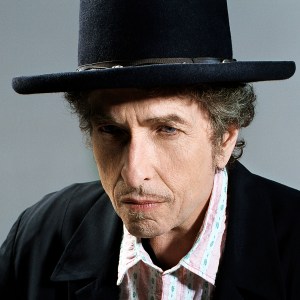
Bob Dylan- Nobel laureate

0

“It’s been a long, long time coming

But I know a change gonna come

Oh, yes it will”

Sam Cooke (1964)

BD_Claxton_1.jpg HAND OUT PRESS PHOTOGRAPH. PROVIDED BY parris.oloughlin-hoste@sonymusic.com

It has been a long time coming, indeed. The Nobel Prize has expanded its previous boundaries to accept lyrics put to music, lyrics composed of the same elegance as the masters. This is absolutely the right thing to do; should have been done long ago.

Dylan’s lyrics transcend almost all of what constituted text for music, especially rock. Most song lyrics don’t really hold up without the music. Most if not all of the lyrics are either nonsense or superfluous, created to match the “feel” of the melody and largely ignored. Dylan changed all that radically.

Dylan’s eponymous first album full of standards in1962 didn’t create much stir. It was his second album, “The Freewheelin’ Bob Dylan”, containing 11 of 13 original songs (1963) that pretty much single handedly created the “folk” era and put Greenwich Village on the map. The litany of his continued work has never been equaled, now finally to be recognized in traditional literary circles.

Not everyone is thrilled with the prospect. An editorial yesterday in the New York Times decried the choice, opining that the Grammies are the right place for songwriters, not the same company as Steinbeck, Sartre and Beckett. But this is the nonsense of supercilious purists. The lyrics are what they are and they are the product of the same species of genius.

There is precedent for alternative views of classical literature. It isn’t the first time that a Nobel has been awarded to a non-writer. Winston Churchill won in 1953 for his oratory. In 2015, when the prize went to the Belarussian journalist Svetlana Alexievich for her historical narratives.

Mr. Dylan is the first American to win the prize since Toni Morrison in 1993. Thick books have been written exploring his lyrics. Classes at universities are taught about him. For the first time, Mr. Dylan’s lyrics are considered to stand alone as poetry. He has been compared to Homer and Sappho, whose works were delivered orally.

Through the years, Dylan has changed his visions according to the tempers of the times. His many honors include Grammys and Academy and Golden Globe awards. He was inducted into the Rock and Roll Hall of Fame in 1988, won a special Pulitzer Prize in 2008 and was awarded the Presidential Medal of Freedom in 2012.

He is a stellar American literary icon and most deserving of this Nobel honor. Hearty congratulations to him.


Syd Barrett remembered (1946-2006)

0

Last summer marked the 10th anniversary of the death of Roger (Syd) Barrett the original heart and soul of the mega-band “Pink Floyd”. Syd was the lead singer and principle songwriter, credited with naming the band in the mid-60s.

I mention Syd for a reason, yet to come.

First, a brief background history: Syd’s brilliance flashed across the sky for only about 3 years, beginning at the band’s inception around 1965 and pretty much ending around 1968. The band’s seminal album: “Piper at the gates of dawn” was recorded in 1967 and put them on the map in the UK. His instrumental “Interstellar Overdrive” (10 minutes long) marked the Brit interpretation of psychedelia. Of the eleven songs on “Piper”, Syd wrote eight and co-wrote two.

During the latter part of 1967 into ’68, Syd’s behavior became increasingly erratic, blamed on his use of LSD, which at the time was pervasive in the youth culture. His ability to perform on stage progressively deteriorated and in late 1968, his school friend David Gilmour gently replaced him in the band.

After leaving Floyd, Syd tried his luck at several solo projects but none went anywhere. By 1972, Syd’s functionality had degenerated to the point where he ensconced himself in a small flat in Cambridge and rarely emerged except to get the mail. Royalties continued to come his way and he remained essentially in custodial care until his death on July 7, 2006 at the age of 60 years. Cause of death said to be pancreatic cancer.

There has been much speculation about Syd’s state of mind over his few productive years. Much has been made of his fondness for LSD as a precursor and catalyst for psychosis. His sister Rosemary Breen said that his mental abilities and inconsistencies were consistent with Asperger’s Syndrome. In fact, many who have studied him feel that he had classic delayed adolescent schizophrenia and his deterioration was an incurable self-fulfilling prophesy.

I have seen several schizophrenics through the years. They are usually highly intelligent and creative in their young years and they flash brightly but quickly across the sky. Their deterioration is progressive, sometimes lasting into their late 20s. One I knew deteriorated in her last year of medical school. It’s right out of that film a while back “A Beautiful Mind” (2001). The signs and symptoms actually started much earlier but were as ascribed to the eccentricity of genius.
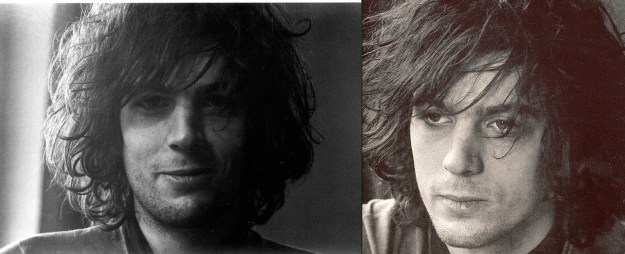
photo-oneAt any rate, my point, and I do have one is for you to now peruse this photo. Syd in his glory days, early 20s.

Now, much is made of Architectural feminine beauty, in the range of Victoria’s Secret models. A face that launched a thousand ships (a mini-Helen, of course, would launch one ship). The media is plastered with it selling everything from bug spray to diapers. But, alternatively, Syd was a drop-dead beautiful young man. Look at that face. A face that would generate madness in an alternate universe.
photo-three
Then, sadly, peruse this photo to see Syd in his late 50s shortly before his death. Rode hard and put away wet for too long. What a strange and terrible transformation that quietly awaits most of us. Unfair that we must eventually suffer the ravages of time and age. Almost an incentive to get in as much as possible for as long as possible before we go gently into that good night.


Car stuff for November, 2016

0

The soul in the machine

Everyone is a “car guy” of some variety. It’s just a matter of taste, or lack thereof.  Some care so little about style or substance that they purchase the rock bottom minimum that will get them from point A to point B. That’s a choice. On the other end of the spectrum, there’s Jay Leno who cares nothing about anything but cars and motorcycles. He has no other interests or hobbies, no kids, a ton of money and owns probably one of every car or motorcycle ever built stashed in warehouses around LA. He works on them and drives them all. Somewhere in the middling are guys (and less frequently women) that have a preference for style and substance, and that preference usually matches their basic personality. Mercedes, Audi, BMW and all the rest of the “high end” automobiles as a show of their taste and frequently their economic status. Fords, Chevys, Kias, Hyundais dressed up to appear more exotic than they are.

One of my colleagues heavily lusts after a Bentley. Another of my colleagues has a “Volt”, the electric car and he’s more of the “I’m interested in technology” type.  Another has a red 1979 Porsche 911 he continually restores.  Others drive plain vanilla SUVs with kid seats in the back.  Myself, I’m the kind of guy that likes the driving experience, and I also like to go back to find things that bring me back to my youth, and I have a short span of attention, so I rarely keep anything for more than two or three years.  I especially like motorcycling because of the pure driving (riding) experience (said to be close to that of flying) and because I can obtain machines exactly like those I loved in my youth. I’m exceptionally lucky to have the resources to possess some of these things (within reason). I’ll never be Leno but if I had unlimited resources, I would buy “classic” cars and motorcycles, warehouse them and drive/ride them every day. I would attend the Barrett-Jackson auctions and buy on impulse, like the rest of the car nut-cases there.

sideNow, speaking of Barrett-Jackson auctions (Vegas, this year), I mentioned before that I nearly jumped over the fence and demanded to bid (I wasn’t an authorized bidder) on a magnificent 1967 Pontiac GTO (photo) with three carburetors and a four speed on the floor. It was monumentally perfect condition, completely original. That car went for $32,000 and if I had been in place, I would have written a check for it on the spot.  However, in retrospect, that might not have been a good thing to do as a practical matter. That’s a big car, almost 5000 pounds. The chance of that car fitting in my garage alongside my wife’s car would be pretty slim, and you can be sure my wife’s car goes in there first. Also remembered is the “premium”, 10% of the hammer price to Barrett-Jackson for their trouble, so the price of the car is actually $32k plus another $3,200.  Then another thousand, fifteen hundred or so, probably more to get the car from Vegas or Scottsdale to Pittsburgh.  THEN a mechanic going over the car to find out what’s wrong with it that didn’t show up in my auction-fueled fantasy. Of course, B-J takes no responsibility for any of that. It’s cash and carry.

If you watch an interesting car show on the cable Velocity Channel, “Fantomworks”, you’ll see that Dan Short takes in cars that look great to restore them to former greatness for their owners. I recall one 1967 GTO that looked great on casual observation. Then his mechanics got to work tearing things down and of course found all kinds of very expensive things to fix. The crankshaft was cracked and it took months to find another serviceable one. The parts for these old cars are getting harder to find and are more expensive when you find them.  So as a purely practical matter, if you really lust after the dream car of your youth, you must have a pretty much unlimited bank account.  And the dream cars of my youth are getting exponentially more expensive with every year that goes by.  If you watch “What’s my car worth”, again on the Velocity channel, each car has a little graph under it showing what it sold for five years ago. Every one shows a big increase every year. Most are now pretty unaffordable and difficult to find competent service or parts for. They will remain the dreams of my youth.

I had a Ferrari in the 90s. It was an old 1980’s 308 and it was an “entry” car, sticks and bones to what’s out there now.  It had a lot of engine problems. I kept it a couple of years and sold it. I wasn’t particularly impressed with it. Now comes the later iterations of Ferraris that I just happened to be reading about as I’ve become a big Formula 1 fan, an event that Ferrari figure prominently in. To make a long story short, I happened upon a doctor in North Carolina that had several Ferraris and had just purchased a new one. He was looking to sell one of his others for a quick influx of cash. He had, unfortunately for him, put a lot of money into this car before he had decided to sell it. New stainless steel exhaust, new black wheels to set off the yellow paint, new tires, a full (and expensive) service with changing out of the timing belt (every 15,000 miles). So after talking to everyone involved with this car, including the Ferrari mechanic that went over the car 500 miles ago, I got the car for a price about 20% less than most are going for right now.

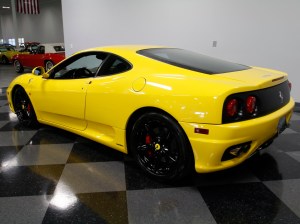
ferrari-1This car is the 360 model, a 2001. This car is said by Ferrari to be a much more reliable and drive-able car than it’s previous model, the F355. Many of those previous issues were solved, especially the fact that the engine doesn’t have to come out for major service. The mechanic said he has one client with 80,000 miles on his 360. Many drive them every day.

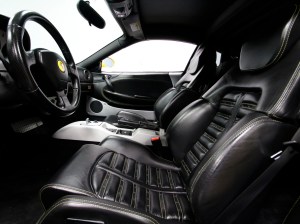
Once started the car emits a classic Ferrari exhaust note, even better than stock since the previous owner recently installed a popular aftermarket free flow muffler system ($2,000) that’s all stainless steel, will last forever. For that matter, the entire car is aluminum including parts of the frame so it’s pretty light for it’s size. 400 horsepower is VERY potent for a 3000-pound car.  It is totally the most comfortable car I’ve ever sat in. I can get in without dipping my head. Once in place, the seats are electric and fully adjustable for lots of lateral support and thigh support. Power steering makes it a lot easier to maneuver. Vision is good all around. It’s very, very comfortable.


ferrari-7The exhaust note is actually pretty loud and must be gotten used to. The engine sits actually inside cockpit about two feet back from my head. Yes, that’s the muffler back there too.


ferrari-4The F1 shifter is a paddle on either side of the steering wheel; pull one to upshift and the other to downshift. It isn’t an “automatic” transmission. It has a clutch but a computer driven hydraulic to engage and disengage. Just like a Formula 1 car. Shifting is instantaneous and a little clunky at slow speeds since it’s really made to shift at full throttle, something not advisable to do anywhere in town since that high revving 400 horsepower engine doesn’t have any good sense. When asked, it goes to the rev-limiter at 8500 RPM in an incredibly short period of time and the acceleration of this car is startling. It is said to be capable of 180 mph.

Now, as I go down the road, so to speak, with this car, I’m learning a lot of new things. It’s taken me a few days to actually learn how to drive it. It’s not like driving anything else. I got stuck at a stoplight because it wouldn’t shift from neutral to first. I didn’t know I had to have my foot on the brake to do that. I’m also learning that Ferrari isn’t a car company, it’s a culture and an institution, like Harley-Davidson. You become embroiled in the culture quickly. The car stands out like a sore thumb and turns every head in its vicinity.

I also quickly figured out that not just anyone can work on this car. Much of what happens inside this car is computerized and the only guys with the Ferrari computers to access the stuff that work the car (cost a bundle) are factory trained and experienced Ferrari “technicians”.  The computer inside the car talks to the technician’s computer and literally tells it what’s going on inside the car. To make a long story short, after much research, I settled on a Ferrari shop just outside Philadelphia, a four-hour drive for me. Their shop is bright and spotless (photo). Beautiful Ferraris hanging around the parking lot. (Photo) They went over the car completely, changed from fluids and pronounced the car in excellent condition. So I dumb lucked out purchasing a “used car”.

Driving to Philly on the tollway was an interesting experience. At 80 mph, the engine hums like a hummingbird at around 3500 rpm. The engine is inside the car, just behind the driver, under glass. It’s loud enough that most drivers wouldn’t like it much, but the driving experience so greatly exceeds the hum that you get used to it quickly. The driver becomes part of the driving experience, becomes part of the car, feeling everything that occurs. It’s difficult to explain. The car and the driver become whole. You don’t drive the car; you become part of the car. At 80 mph, giving the car gas results in an instant acceleration. The brakes are phenomenal. To my mind, 80 mph is the perfect highway speed, not enough to tempt most cops.

Interestingly, he Pennsylvania Turnpike, west-east (Route 76) has become the American Autobahn. The speed limit is technically 70 mph. But at 80 mph, everything on the road was consistently passing me: jeeps, SUVs, family sedans, small economy cars, all going at least 90 and most probably around 100. So, for a short while I kicked the Ferrari up to 100 mph, (in about three seconds). The hummingbird increased it’s wing flapping and I was STILL getting passed.  Now, 100 mph on any highway is comfortable in this car but is a very bad thing as if you are busted for that speed. It isn’t speeding, it’s reckless driving and it comes with a huge fine and standing before a judge who has the power to put you in a jail cell for a while.

Many drivers (including me) are using an iPhone app called “Waze” (made in Israel) that allows drivers to signal things going on in their path: accidents, junk on the highway, traffic jams and the like, including police that are noticed.  So for the entire trip from Philly, five cops location popped up. Two of those popups were actually police doing radar. So the police avoidance industry previously confined to radar detectors has evolved to real-time police location, and speeds on these highways are heading up toward Autobahn-land.

But it CAN (and will) be driven sedately by me. The 360 was really the first of that series that was specifically crafted as a car that can be driven like a normal car, even daily, and maintenance on the engine is easier and cheaper than the previous F355. It isn’t a “car”, it’s a machine with a soul that integrates itself into the driver. Not everyone would want one, certainly not many would want to pay the dues, but for the few, it’s a joy to drive, amazing handling and performance. Not so much a joy to maintain but that’s the price to be paid (in a manner of speaking) for being a Ferrari owner.

To the real nut-cases, there really is Ferrari and there’s everything else.

Film Review: “Arrival” (2016)

0

maxresdefaultA VERY intricate and interesting film that is commensurately difficult to understand. I brooded through the film and I “thought” I figured out what happened but my wife vehemently disagreed. So I tracked down and read the original short story the film by Ted Chiang and now I “think” I understand it and my wife (the mistress of non-verbal thought process) was mostly right. It was not an easy interpretation.

I cannot dissect any of the plot for you as to do so would necessarily expose spoilers. You must broaden your concept of time. You’ll have to sort it out for yourselves and, trust me; it will be a labor of alternative reasoning.

A minimalist abstract: 12 seeming spaceships drop into the globe in random locations for reasons unknown. Linguist Dr. Louise Banks (Amy Adams) is promptly pressed into service as an interplanetary translator, teamed with physicist Ian Donnelly (Jeremy Renner). Together, these two venture into the void of one “pod”, attempting to converse with creatures seen through a clear barrier and who communicate via inky circles.

The film lightly explores the nature of language, including such complex concepts as the Sapir-Whorf hypothesis, a theory that language defines cognition. Through Louise’s linguistic looking glass, the world looks different. Louise finds her world reordered by alien semantics in a linguistic Stargate and at this point I cannot reveal any more. You have to be very observant and remember seemingly insignificant occurrences. If you can’t figure it out, post me off line and I’ll divulge.

Masterfully directed by Canadian Denis Villeneuve (Sicario). Outstanding acting roles and cinematography. It’s an alien landing film for those that hate alien landing films. BTW, director Denis Villeneuve is soon to present the sequel to 1982’s “Blade Runner”, titled “Blade Runner 2049”. Eagerly awaited.

I give it 4 of 5 blurry heptopods.


Trump as POTUS: an editorial comment

0

unknownWe should have all seen this coming. The favorability ratings of the entire Washington bureaucracy had been in the cellar for years and decreasing. Partisan political activities consisted of bitter hatred of each other’s side and resolve to insure nothing the other wanted ever came to fruit. Ted Cruz worked as hard as he could to completely sink the government and go down with the ship. All progress in Washington stopped dead in its tracks with no potential for moving it.

What we didn’t know was the sheer size of Trump’s support. Michael Moore predicted Trump from the beginning and he never wavered. We should have noticed that Trump won most of the primaries by big votes against all odds. We also should have noticed that none of his support ever wavered for a second despite ALL his antics. None of it mattered. I should have known watching all those Trump signs while riding out in central Pennsylvania. My friend the ICU Nurse laughed and told me he cared nothing about any of that- Trump was chosen to “shake Washington up”.

So to the surprise of all of us, especially the pollsters, all of whom were wrong, we are now witnessing a full blown REVOLUTION in which the population of the USA has spoken loudly. It’s classic democracy at work. The populace is NOT happy with what’s happening in Washington and they have chosen the individual furthest from the archetypical Washington politician, Hillary Clinton, a candidate with so much baggage it would fill a train.

It’s difficult to comprehend anyone less likely to be elected President by an intelligent, perceptive voter. She was projected to win not for her plan but because everyone with an opinion in the media thought she was the lesser evil. But the “real” voters weren’t talking on the media. The “real” voters that knew Hillary would perpetuate the exact situation in Washington they loathed and they didn’t believe a word that came out of her mouth. The pre-election activities were all a waste of time and money. Trump was a self-fulfilling prophecy.

So here we are. The public has served notice that they expect the entire fabric of the Washington bureaucracy to be torn to shreds and a new order emerging, more efficient and favorable to the common man. So that’s where it is as I sit here on 11/11/16. It is a done deal so no use crying over spilt milk. It is what is, so we must now consider where this is likely to go.

Donald Trump will quickly develop some new best friends, conservative politicians, all of whom distanced themselves from him during the campaign. Don’t worry; they’re all back and planning to re-forge the country into an ultraconservative dark age. They now own both houses so there will be virtually no effective opposition to any of it.

No more Obamacare, with nothing of any consequences to replace it, leaving 22 million out in the cold. Repeal the Iran deal, leaving them to continue making a bomb as rapidly as they can. Repealing the climate accord because they choose to disbelieve 99% of the experts. Cutting taxes preferentially for the super-rich, choosing to believe that “trickle down” works (didn’t work for Reagan in 1980). Unlimited weapons of any kind on demand from anyone. Destroying Planned Parenthood and quickly repealing Roe v. Wade, following which an enormous cottage industry of abortion will develop, an underground economy impossible to stamp out. They will of course blame the victims. Getting an ultraconservative judge onto the SCOTUS, rubber-stamping all their plans. Never mind the impeccably ridiculous Mexican wall and goon squads to seek and destroy illegals.

That is EXACTLY what Trump’s new best friends have in mind and they’re all in the process of planning it.

However, there are jokers in this deck. All of Trump’s new best friends might consider that Trump really isn’t a conservative Republican at all. Never has been. He was once a Democrat. He chose to run as a Republican because it was the most expedient path He has frequently opined on policy that is not conservative at all. And it also must be remembered that Trump has an extensive history of only listening to Trump. He’s found out what works and it isn’t free advice, especially from folks he doesn’t trust. So there is no guarantee at all that Trump will blandly follow through with all the plans of his new best friends. He might just have the “right thing” in mind, and the right thing might be more “right” than we currently imagine.

Recall that in 2008, Obama ran on a very solid “change Washington” platform. When he actually arrived, he tried to gather all the Republicans together to talk out their differences and form some kind of body that worked for the best benefit. They all ignored him and vowed to insure nothing he wanted to do happened. The majority speaker opined that their job was to insure he was a one term President and this is exactly how they acted. It’s also very interesting that despite his best efforts, Obama was chewed to pieces by the bulletproof Washington establishment, not even making a dent in it. Washington changed him as it did everyone that came before him.

So there is also no guarantee that Trump will get all he wants in a system that’s preternaturally designed to NOT be changed by anyone. He is more likely to become meshed in the gears to find out that “deals” don’t work the same as in his previous career. He will have to learn an entirely different and unfamiliar “art of the deal”, especially with China and Russia.

So, I think that just like the previous predictions of the election, there is no more likelihood of predicting what Trump will do, or what he’s able to do once in office. All the claims of what he wants to do are now enmeshed in gears he really knows nothing about and when extensively evaluated, may simply not be realistic for Trump to actually accomplish. It will be VERY interesting to see how Trump explains repealing the ACA, even if he’s technically able to do so, to 22 million of those affected, many Trump supporters.

Once into the realities of the world sociopolitical situation, “bombing the Hell” out of ISIS never had any possibility of working. There are probably realities of the Middle East, Iran, Turkey, Syria and Russia that he had no idea about when he made some of his ridiculous vows. He will find out that the realities of foreign policy are extremely dangerous and he will have to tread as lightly as Obama did, with open-ended criticism from all sides.

It should also be obvious that none of the above works for his committed base that want’s it all fixed in a few months, for ISIS and Iran to go away, more money in their pockets, better jobs and unlimited milk & honey. His base in W. Virginia and Kentucky want coal to become the energy of the land. Working class white men want to make more money and promotions. It’s VERY unclear whether Trump will even have a shot at any of that in a Washington that doesn’t run as his previous career did. Making promises is cheap. Delivering them in THAT Washington is a separate issue and he, like the rest will probably learn to obfuscate those promises with great facility.

So, the bottom line of this conversation is that we really know little or nothing about how The Donald will function in the same environment that gutted Obama and others. I’ve mentioned before that like it or now, Trump is OUR President now and continuing to grouse about this or that is meaningless now. It’s time to support the President by simply being reactive to what’s going on. A lot of Republicans are NOT extremely conservative and will not necessarily rubber-stamp every program that emerges from Trump’s new best friends, or even Trump.

There is a lot of sound & fury but in the end these things have a way of settling down. The majority of the public has never supported the Sarah Palin brand of conservative politics. It’s unlikely that they will now. They want “real change”, a political body that serves them. Conservative Republicans don’t serve, they break things and the majority of the public will not allow that.

What Hillary said is correct now. Trump IS the President and he needs a chance to lead. It’s not unreasonable to give him our support while he explores that chance. Who knows, he may actually “do the right thing” to the best of his ability and surprise us all. If he can’t or doesn’t, then another voting cycle will come around in 2018 and 2020. We can then do what Trump supporters did in 2016; assertively change the order of things.

So I say lets all just watch for a while and see how things go. It doesn’t have to be a disaster. When the dust settles, it might be OK and Washington might actually become more responsive to the greater good. There’s at least as good a chance of that as the collapse of society. Society is pretty resilient. I would be inclined to see the glass as half full rather than half empty.

We’ll all see in time.


I get a self indulgent gift to myself (A Ferrari)

0

For a lot of reasons, mostly just because of self-indulgence, I have held my breath and purchased a lifelong dream I hope won’t turn and bite me.

So here’s the background:

  1. My career is history. (Still doing some teaching and medical college admissions work).
  2. I’ve already written my memoirs and they are in 15 or so bound volumes.
  3. I’m lame and will be the rest of my life.
  4. My kids are gone and now have their own lives.
  5. By wife has a career requiring her perpetual attention that keeps her out of my life during most days.
  6. I’m struggling to find an interest in my life by myself every day here at home.

I’ve been thinking about what to do now that I’m a gentleman of leisure, and “classic” cars loom large in my legend.

My ’74 Karmann-Ghia is paid for and pretty much low maintenance. It’s the obligatory convertible. No point in selling it as long as I enjoy it. After a lot of research, it’s actually pretty hard to find a “classic” car under $30k that isn’t in need of some kind of expensive servicing. I saw a lot of them at Barrett-Jackson and there were a few potential bargains, but very few and B-J takes no responsibility for the condition of the car once it’s sold. The other problem with 30 – 40 year old cars is parts and service. There aren’t many old guys that can really service them and it’s frequently hard to find parts. Most if not all these cars are for “collectors” that have a “stable” of classic cars and a lot of money tied up in them.

If you watch Wayne Carini on “Chasing Classic Cars”, you’ll see guys with literally spotless warehouses full of classic cars that mostly sit there for years. Where do those guys get that kind of money? Carini finds “barn cars” all the time, my God- ’60s Ferraris that have sat in garages for 40 years, then the (always) male owner drops dead and his wife calls Wayne to sell the car. Many are worth millions.

In fact, most if not all the cars I saw that I might have an interest in were “really” in the $40-$50k range. I’m not a collector. I want ONE “Classic” car (all right, technically two) that I can drive and enjoy while it holds its price or appreciates. I don’t move cars around like speculators, making or losing money on each deal.

I can just get interested in a self-indulgent present to myself for 30 years of hard work and success. I’m closer to the end than the beginning now and I can look back on a life and career that, well, fills 15 bound memoir volumes. There are things I can productively do now for the rest of my life and things I can’t. Ever since Barrett-Jackson in Vegas a few weeks ago, I’ve been thinking I’d really like (another) “classic” car to dote on. I really am a car guy and we’re all unhinged like salmon swimming upstream. The fish hear their song and I hear mine. I have a very comfortable retirement fund, but not bountiful. I can afford a limited number of indulgences.

If I’m going to scrounge up somewhere in the range of $40-$50k for a car that has some historical interest but will be pretty fragile as a car to actually drive much, then I would just as soon scrounge up $70k for a car that’s totally unique and can be driven (on nice days) for a couple of years (under 10K miles), and guaranteed will retain it’s value when I go to sell it. Yes, maintenance is more expensive and that has to be accepted, You can probably guess where this is going.

ferrari-1I have stumbled into a rare deal that I hope works out and doesn’t turn and bite me. I have purchased an immaculate 2001 Ferrari 360 Modena coupe from a physician in a city about the size of Pittsburgh about 400 miles away. (see photos at end) This guy has SIX Ferraris at home and last month purchased another new one. So he put up his Modena for consignment. The good doctor had put a LOT of money into it in the year he owned it. The car has 19,000 miles and the FULL ($5000) service was done 500 miles ago. That’s the big expensive one every 15,000 miles. Why so much money in such little time? Because, compared to a Ford of Chevrolet engine, a Ferrari is the London Philharmonic compared to the 86-year-old choir soloist at a local church.

ferrari-2Last year, in addition to the big 15k service, he put in new mufflers, new black wheels and tires, a new clutch and a lot of other things. He just wanted to sell it quickly to put the money into his new one and I stumbled into this thing. It’s immaculate. He has all the records and paperwork and after we talked, he gave me the car for a VERY good price. About $20,000 less than most of them are going for today. A price such that I can drive this car for two years, put 10,000 miles on it and sell it for at least what I paid for it, maybe more.

The later years Ferraris are definitely said to be more reliable and drivable. The F355 series up till 1999 was a dramatic improvement but the engine still had to come out every 15,000 miles to refurbish a lot of things, not the least of which was the timing belt, for if it skips a notch from wear, he engine explodes. To see a Ferrari engine dropped out of the bottom and splayed out all over the floor is a sight I really don’t want to see. The newer series starting in 2000 were friendlier to mechanics; engine didn’t need to drop to get the job done. As of that year, the standard notch 6-speed transmission evolved to the “paddle” shifter automatic, built like the Formula One cars. Instant shifts up and down just like Lewis Hamilton does it. This with 400 horsepower and a red line of 8500.

ferrari-4“Used cars” of any variety depreciate. Ferraris never depreciate. That Ferrari shield on the side of the fender is worth a lot on virtually every level, but maintenance always involves more money. That just has to be accepted. Service is expensive on these things and other expensive things wear out more quickly because of the high performance engines. Ferrari doesn’t make cars; they make engines and farm out the rest. Coachwork by Pininfarina, wheels and all the rest are built by others. Each Ferrari engine design sat in a Formula One car 10 years earlier and is simply detuned a bit. The same technology goes into every engine and they can be/are finicky and idiosyncratic. That has to be accepted too. But in the immortal words of Steve Jobs, “The journey is the reward”, or something like that.

There really is Ferrari and then there’s everything else.

ferrari-6Speaking of Formula One, the Prancing Black Horse has the most extensive history of any four-wheel vehicle.
Ferrari is the most powerful brand according to Brand Finance. Like Harley Davidson, it’s a culture, not a vehicle. Ferrari is the most successful racing team in history and holds the most constructors championships (sixteen) and produced the highest number of winning drivers in Formula One (fifteen). It is the only team to have competed in the Formula One World Championship continuously since its inception in 1950.

The most famous drivers in history drove for Ferrari: Juan Manuel Fangio, (Americans) Phil Hill, Mario Andretti, Niki Lauda, Gilles Villeneuve, Nigel Mansell, Alain Prost, Michael Schumacher, and today Kimi Räikkönen, and four time world champion Sebastian Vettel. Some died in one: Peter Collins, Wolfgang von Trips, Gilles Villeneuve

ferrari-8So I have become a minor league “collector” of “classic” vehicles, including vintage Triumph motorcycles. Technically, an investor in vehicles that possibly will bring a greater return than the stock market, especially if it collapses following November 8. A LOT of things are going to change after that and I’ve chosen to cling not to my guns and bibles, but my Cars and bikes. 🙂 We’ll all see how that works out soon enough.

ferrari-7Here it is (see photos). The black wheels and interior sets off the yellow very strikingly. It’s totally flawless (so far). You can see the magnificent engine through the back window.

“Eight Days a Week” (2016 directed by Ron Howard)

0

unknown“Eight Days a Week” (2016 directed by Ron Howard)

This film is simply one of the most incredible things I’ve ever seen on a screen. I have no earthly idea why it isn’t in wide release. Rolling Stone gives it out-of-the-ballpark reviews. Rotten Tomatoes gives it 95%. It’s only playing in one very small, one-screen neighborhood theater in Pittsburgh and I have to brave 45 minutes of traffic and road construction to get there. It was only on four nights out of the last seven.

Ron Howard’s ‘Eight Days a Week’ chronicles the Beatles’ amazing ride as a touring band

It’s the masterful, visual chronicle of the Beatles growth from about 1962 through their last public performance on a roof in London in 1969. There are clips and films of them that I’m certain few if anyone in the general public has ever seen, masterfully edited and created by Ron Howard. It’s absolutely one of the very best films I have ever seen. Someday perhaps it will be released in wide distribution and if so, it’s a must-see.

The Beatles changed the entire landscape of music and popular culture, propelling them toward their fate at literally the speed of sound. They fulfilled a lot of what Americans were looking for post-Camelot collapse. Something harder edged, innovative but in-touch. Beatles were “cute”, had different hair, different attitude and they might be just a little dangerous but within limits. They played their own instruments with a defined danceable beat, wrote their own songs the lyrics of which American youth could identify with and looked cool in their mop tops, matching outfits and Cuban heel boots.

American kids latched onto the Beatles phenomenon like pit bulls on a poodle. A new life-style emerged around them in the summer of 1964 fueled by a need for a new order in musical expression. Other groups evolving vertically from the stage that fostered the Beatles quickly followed to as the “British Invasion”.

At the end of this film, the editors and various technicians have isolated a 30 minute series of clips from the Beatles performance in 1965 at Shea Stadium in New York City in front of 55,000 screaming fans, mostly girls. In the real world, the sound system was woefully inadequate, 100-watt Vox amps that might have been OK for a big dance hall. No one could really hear them and they couldn’t hear each other. The police worked full time catching breakthroughs and tossing them back into the fray. It was as Paul McCartney said later, “a circus” and contributed to their mutual decision later to stop touring.

For this 30-minute clip, engineers reconstituted and refurbished the video, colorized it, infiltrated the correct audio and generated the whole thing in 4K high-resolution film. It’s simply amazing. They look as if they’re playing this afternoon. They are fresh and young again 50 years later. It’s positively amazing. I’ve never seen anything like it.


If you can find it on a big screen, “Eight Days a Week” is absolutely mandatory. It is history brought to you as today. 70 year old men playing life in their 20s in 4K high resolution. If there’s ever such a thing as immortality, this is pretty close. It has to be seen to be believed.

Five of Five mop-tops with a bullet. Must-see

A TV version of “The Exorcist” with historical baggage (2016)

0

hqdefault“The Exorcist” (Fox 9 pm  Fridays)

A plain-vanilla re-make of the original but it brings back psychic phenomena for many who were around for the original.

It’s been Forty-three years now since the release of William Peter Blatty’s “The Exorcist” in film version directed by William Friedkin. I wonder haw many of you saw it in December of 1973.

I was a second year medical student at Georgia. I sat absolutely terrified down to my toenails. It was simply the most frightening spectacle I ever witnessed. It made “Jaws” look like “Mister Rogers’ Neighborhood”. I slept fitfully with the lights on for two weeks. I have never watched it since.

The book was inspired by the 1949 exorcism of a 12-year-old boy in the Washington, DC area. By history, there were a number of people that witnessed this alleged demonic possession and there were a number of opinions about it ranging from the real thing to fabrication. There is no way to fact check any of it. To psychiatrists, the boy suffered from mental illness. To some priests, this was a case of demonic possession.

But whatever happened, Blatty imagined it in truly demonic detail, his book landing on the New York Times bestseller list. The film was nominated for 10 Academy Awards but was pretty much passed over, only winning two minor ones. Martin Scorsese places The Exorcist on his list of the 11 scariest horror films of all time.

Zelig that I am, turns out I had a thought-provoking connection to exorcism. When the lights went out in New York City on July 13, 1977, I was a second year surgical resident at NYU. I happened to be rotating at Midtown Hospital, up around 50th street and 2nd ave. I think (no longer there today). It all happened in the blink of an eye. A very, very strange vision- the entire of New York City suddenly pitch dark. Then the screams and confusion.

Standing on the roof of the facility, I was confused too. Since Midtown was a small “community” level hospital with no emergency department, I figured I would not be of much value to anyone there as most of the injuries would be transported to Bellevue, or (then) University Hospital down on 34th or 27th streets. So I found a flashlight and set out for Bellevue, something like 15 blocks or so on First Ave. I knew that’s where the action would be, and I was right.

crippen-nyuIt was a zoo. All the generators had instantly failed and everything was done by flashlights and candles. Volunteers were turning cranks for ventilators in the ICU. Everyone was doing what he or she could for the steady stream of injuries into the ED. My friend and same year resident Greg Spiegel got written up in the Post (see article). So I set to work doing what I could with sticks and bones.

One of my patients was a Jesuit priest from somewhere nearby who injured himself falling down darkened stairs trying to get out of a building. I was sewing up his scalp by candlelight and we got into a conversation about life in general when I brought up the subject of exorcism and what did he think of it as a sort of insider. What followed was a very scary conversation as he opened up to me about things he didn’t regularly talk about.

Turns out he had some experience in exorcism, a subject not advertised by the Church. He said he thought it did happen but was very rare and always with a “mental health” portal of entry (to malevolent spirits). “Normal” people are never possessed. He’d personally seen “possessed” people, frequently kids, do truly supernatural things not possible based on insanity or fabrication, including true levitation, superhuman strength and speaking in very well constructed “tongues”.

Also ruthless one-on-one communication with the exorcizing priest of a truly bizarre nature was the benchmark, VERY much like Blatty’s book. He had read that volume and was quite surprised at how much of the nuts and bolts Blatty knew. This guy had a PhD in something related to psychology in addition to his Jesuit education. He looked me in the eye and told me he BELIEVED that this sort of thing happened when there was a portal of entry and several other criteria were met. The few priests that actually do these things never speak of it and can be summoned for long distances if the call from another priest comes and it seems legitimate. The progress of an exorcism is never revealed nor is the outcome.

Well, trust me, this guy put the fear of God, Jesus and all the Disciples in me and I quickly lost all interest in the subject. I’m not a Catholic nor am I a terribly religious person but I found this guy just a little too knowledgeable and convincing on his discussion. If such things do occur, I want to be as far away as possible from them.

As far as the original film in 1973 goes, it inspired rank terror in filmgoers. Father Merrin (Max von Sydow) steps out of a cab and stands in front of the child’s residence, silhouetted in a misty streetlamp’s glow and staring up at a beam of light from a bedroom window above is one of the most famous scenes in film. I was mortified, unable to watch and unable not to watch the two priests slowly climbing the stairs to what awaited them.

People were carried out of theaters. Some theaters provided “Exorcist barf bags”. It’s said that the Academy Awards snubbed it because they were afraid of it. There was a huge controversy about allowing previously sweet and gentle Linda Blair play Regan. She has said since that it screwed up her life and she was rarely heard from again.

So if you choose to watch the watered down Fox TV version on Friday nights, remember that there’s a lot of history behind it. Maybe you won’t be so interested.

Excellent TV coming soon to a cable box near you:

“The Fall,” Oct. 29, Netflix

“The Affair,” Nov. 20, Showtime

“Homeland,” Jan. 17, Showtime


Film review: “Sully” (2016)

0

0_086-year-old director Clint Eastwood spent just a few hours talking to the real Chesley Sullenberger in the living room of his home and departed with a vision of how he wanted to portray the “Miracle on the Hudson” (January 15, 2009).

Clint masterfully hit the crux of the situation dead center. The Miracle had much more to do than the nuts and bolts of handling an aircraft in adverse circumstances. It had everything to do with Sullenberger’s depth of training and experience. Mastering any number of very precise conditions needed to be addressed accurately over a very short 208 seconds with no way to have known the right course. It then had to do with all those in the area of this forced landing that stopped in mid-stride without hesitation to assist in the rescue, 24 minutes. A coming together of the tribes in the truest sense.

The real meat of the film, and the experience, not widely publicized, was the aftermath of the inevitable National Transportation Safety Board (NSTB) investigation as to the circumstances of the event. Captain Sullenberger clearly saved 155 lives, but could he have saved the aircraft as well? Several computer simulations showed he could have made it back to LaGuardia had he persisted rather than “we’re in the Hudson!”. Saving an expensive aircraft of great interest to US Airways.

This issue becomes the focal point of the film and Clint Eastwood scrutinizes it well, if not a bit laconically. It becomes clear that in any decision anywhere about anything, there are always alternative explanations as to the “right thing”. It also becomes clear that in the end, human judgment is a quality that cannot be second-guessed by technology. A theme that recurs in professions other than piloting.

A human decision is what it is and would be difficult or impossible to dissect unless the observer was in place while the decision was made. Clint very strongly feels that a second guess of a human decision by cold technology rigged by nerds is a very, very dangerous thing and he makes no bones about criticizing it on screen. Without giving you any spoilers, I would say masterfully as Mr. Eastwood’s stature as a director would mandate.

The story line moves along impeccably, just the right amount of visual input to yield just the right amount of audience discomfort, not overbearing. Tom Hanks is simply magnificent in this outstanding film. Maybe a little too laconic in his affect but he can be forgiven for this minor gaffe. Aaron Eckhart’s understated performance was exceptional. The traumatized air-traffic controller who blames himself for the crash was wonderful. At the end of this film, the entire audience in the theater broke into spontaneous applause.

“Sully” is why we go to movies. We’re masterfully allowed to feel what it’s like to be part of a life threatening dilemma. we can briefly live the captivating lives of others. This film is a near perfect such experience.

I give it four and a half “Sully” drinks, (Grey Goose with a splash of water).