TN Film Review: “True Detective” (HBO, Sunday night)

0

HBO’s “True Detective” (Sunday night) is a major step forward in TV excellence. Putting big league actors Matthew McConaughey and Woody Harrelson together with a well-written plot is a masterstroke. The season opener was exceptional, I think can be mentioned in the rarified air of the best TV productions of all time: “The Wire”, “Deadwood”, “The Killing”, “Breaking Bad” and “Homicide: Life on the Street” to name the top five.

“True Detective” is on the short list of game changers not so much because it’s good performance art, but for how it became good. The vision, perseverance and authority of the diminishing supply of writers that created it. David Milch wrote every word of “Deadwood” and his word was absolute law.  Vince Gilligan demanded his vision of “Breaking Bad” be portrayed the way he saw it and accepted the risk and hassle. Kurt Sutter owns “Sons of Anarchy” and lets his vision run completely free.

 Similarly, novelist, screenwriter, and producer Nic Pizzolatto writes each episode of “True Detective” and demands that his vision be interpreted the way he wants it and no other way.  There is no interference allowed from sponsors or network wonks. HBO is famous for staying out of the way of genius. The risk is the occasional flop along the way. There’s no guarantee every production will be a hit. Milch’s next productions “John from Cincinnati” and “Luck” were flops.

 These writers create fewer episodes per season with more energy and creativity packed into each episode. Eight episodes of meat & potatoes versus 22 episodes of massive sponsor advertising. They also elect to quit before the plot gets stale. “Deadwood” went only three seasons as Milch though he had maxed out everything he wanted to do with it and it was time to move on. “Justified” is scheduled to quit after one more season.

Returns from the season opener suggest that “True Detective” is a creative masterpiece and a popular hit. It carries the distinctive mark of creative writing and directing that HBO is committed to. See it this season. The chances of McConaughey and Harrelson signing up for another season is pretty slim. 


Returns from the season opener suggest that “True Detective” is a creative masterpiece and a popular hit. It carries the distinctive mark of creative writing and directing that HBO is committed to. See it this season. The chances of McConaughey and Harrelson signing up for another season is pretty slim. 


Film Review: “Lone Survivor” (2014)

0

Among other things, this extremely well done film points out the radical differences between the warriors of Vietnam and the new breed of super-warriors of the new millennium.

45 years ago in Vietnam, we were average guys plucked out of our livelihoods for “duty”.  None of us had any choice. If any of us ended up in the upper echelon of soldering (special Forces or Rangers), it was because we exhibited a reckless yearning for adventure we later regretted.  If we acquired any expertise in the strategy and tactics of warfare, it was by attrition.  Learning street smarts by surviving.

The new super-soldiers are volunteers who righteously train to the physical and intellectual limit and beyond.  Their accouterments and resources are beyond anything we comprehended in Vietnam. They are equipped for phenomenal feats, such as the apprehension of Osama bin Laden and the rescue of Captain Phillips from Somalian pirates.

This film bountifully portrays a lot of war drama and male bonding that’s been done endlessly before, but with a bit of a twist. The viewer knows the outcome as the players are trying to figure out how to make the best of a bad situation. The thrill of watching a really crack team of warriors at work is somewhat dulled by the self fulfilling prophesy of bad planning, bad luck and bad communication.

The film is well paced and consummately directed. The actors, especially Mark Wahlberg and Ben Foster are convincing in their roles but little can compensate for the title that accurately forecasts the futility and doom before it happens.

An excellent film if you like the genre.

Best part:  Excellently photographed, perhaps to a fault of being graphically ultra-violent.

Not so best part:  The graphically violent scenes of the solders in contact the Taliban were a little too drawn out.

I give it a solid four of five gory gunshot wounds, with a bullet.

Film Review: “The Killing” (AMC Channel 2011-2013)

0

KillingTrolling the cable channels looking for something interesting, I stumbled upon a rough diamond on the AMC Channel worthy of a focused review.

“The Killing” was adapted from a previous Danish TV production. Two seasons, 2011 and 2012 followed by an abbreviated third season on a separate plot ending summer of 2013. I’ll limit my remarks to the first plot, seasons 1 and 2. Season 3 will deserve a separate review.

Relatively unknown French-American actress Mireille Enos is a phenomenon.  As detective Sarah Linden, she specializes in murders of young girls and she becomes so absorbed in investigations she decompensates, fails to sleep or eat and isolates herself from other human contact. After a previous investigation she landed in a psych hospital for a month. She closes her eyes at crime scenes and suffers every vibration of the act. Her intensity and focus burns the screen.

Equally obscure Swedish-American actor Joel Kinnaman as Detective Stephen Holder maintains a deadpan cat-like expression that burns with a breathtaking intensity. Other notable actors include Michelle Forbes (Dr. Julianna Cox- Homicide: Life on the Street) and Brent Saxton (Harry Manning- “Deadwood” and Sherriff Hunter Moseley- “Justified”).

“The Killing” expands the usually jejune format of the police drama, empowering it with greater depth and artistry, devoting a full season to the investigation of a single murder case. The progression of events peels away one day per episode in a “Blade Runner-like” environment of constant rain and dreary landscape.

The search for the killer expands into a visceral stream of consciousness diegesis, bleak and oppressive but so well told that it’s beyond obsessively addicting. The characters come alive in the extreme and the viewer dives in at their peril. The peripheral characters especially the Larsen family are equal in fervency and ferocity.

The series was nominated for several major awards but drew a mixed reception from critics probably because of the burning intensity and convoluted plot requires more focus than “2 Broke Girls”. The series was also felt by some critics to be too derivative of David Lynch’s “Twin Peaks” (1990-1).

A major complaint of the critics was that the writers refused to concoct a pleasing ending for season 1, relying on stellar but isolated performances by the actors. That said, it must be remembered that, in their quest for originality the writers have no particular obligation to please their audience. The greatest TV dramas, “Deadwood”, “The Wire”, “Breaking Bad” all took risks exploring the vehicle in an intrepid, imaginative and inventive mode. The audience is free to find their way if they choose, but they are not the prime mover.

“The Killing” is a slow burning, eerie, multi-dimensional exploration of how a teenage girl’s murder impacts the lives of others in and out of the event circle. Exceptional writing, credible characters and intense performing arts mark the plot. The cinematography is exceptional.

I found “The Killing” one of the most incredible viewing experience in television media I have ever become immersed in. Maybe not for everyone. Give the first episode a watch and you’ll know one way or the other. If you stick with it, you’ll find “The Killing” an absolutely visceral experience, the top of the performing arts heap.

Best part:  The odd-couple detectives. The Larsen family.

Not-so-best part:  Could have been shortened to 10 episodes instead of 13. Some of the emotional wrenching could have been shortened a bit.

I give “The Killing” 5 (yes FIVE) of five dreary Seattle landscapes. You can find it on Netflix and the torrents.

Film review: “The Wolf of Wall Street” (2013)

0

Martin Scorsese is the Peter O’Toole of directors. He does great work that never got an Oscar.  Nominated seven times then finally got one for a mediocre film, The Departed-2006. O’Toole was also nominated eight times and never won for a starring role.

Martin is responsible for some incredibly Oscar worthy films, Taxi Driver, Raging Bull, Goodfellas, Gangs of New York, The Aviator, Hugo. But in “The Wolf of Wall Street”, he sinks to an embarrassing De minimis, spending a lot of energy on a very bad re-do of “Wall Street: (1987).

The plot is based on the life of Jordan Belfort, who built a huge financial empire out of duping investors into buying worthless penny stocks. The film interpretation is three agonizing hours of white-collar crime, drug abuse, lust for money, tribal male bonding and open-ended debauchery that would make the Marquis de Sade blush.

Unclear if the moral issues raised in this film fall on the deaf ears of those who continue to emulate Gordon Gekko to this day. Oliver Stone didn’t think he was inventing a role model for a million young would-be finance guys, but that’s exactly what happened. One can only wonder if the real Jordan Belfort grew up in that shadow.

Leonardo de Caprio gives an exuberant performance exploring the consequences of unlimited money as a drug, to the point of exhaustion. Yes, those consequences ultimately end in death or destruction but in the end three hours of naked people emulating the Kama Sutra is a bit much. After the first two hours it becomes repetitive and exhausting.

Cameos:  The real Jordan Belfort introduces Leo as Belfort the motivational speaker in the end scene.

Best scene:  On the yacht when the FBI comes to visit Jordan and a fascinating conversation ensues.  Scorsese at his best.

Worst facet:  Three hours of repetitive debauchery becomes tedious and stale.

I give this two of five 2-million dollar one-night parties.

Not recommended.

A New Year’s Film Reivew Twofer: American Hustle” and “Blue Jasmine”

0

American Hustle (2013)

Very interesting Director David O. Russell told the cast of “American Hustle” to fully explore their characters, sparing nothing. So, during the shooting Christian Bale told the Director “You realize that this is going to change the plot greatly down track.” To which the director replied, “Christian, I hate plots. I am all about characters, that’s it.”

So that’s exactly where it went. The plot loosely involves the “Abscam” sting of the late 70s. A quest for local corrupt government officials using a fake Arabian Sheikh to lend classiness to the operation and inadvertently ended snaring major criminals. Against this backdrop, the world-class actors, Christian Bale, Amy Adams, Brad Cooper, Louis C.K, Jennifer Lawrence and Jeremy Renner go to work exploring their characters magnificently.

These actors are as blue chip as it gets in our generation. They are given a free reign to do what they do best by a director who knows how to guide them while maintaining continuity. There is no CGI, no explosions, no aliens, no floating around in space, no metropolitan destruction. Just the best actors of our generation given a masterful chance to show their chops.

The real fireworks come from the women, Amy Adams and Jennifer Lawrence, both of who explode off the screen. Amy Adams explores the would-be fraudsters moll with brilliant precision. In a dramatic change for her, Jennifer Lawrence morphs into a meddling two-dimensional, part harpy, part temptress New Jersey housewife. Jeremy Renner shines as the politician that can’t believe wrongdoing exists if it’s all for the people of his jurisdiction.

Best part:  The plot twist at the end. Un-credited Robert DeNiro.

Not-so best part:  Film is too long and the characterizations tend to be too overwrought.

It’s an excellent film, I give it four of five bottles of toupee’ glue.

———————————————————-

Blue Jasmine (2013)

Woody Allen started out as a neurotic stand up comic, progressed to the star of some really funny comedies and ultimately to a world-class director of some fine films.

I can picture Mr. Allen sitting at a desk somewhere reading the saga of master financial scammer Bernard Madoff and wondering if it would be possible to accurately portray the aftermath of his actions on those close to him. It could not be done without the right actors, but this selection process is Mr. Allen’s stock in trade.  He made it happen and the result is simply spectacular.

Cate Blanchett is perfection languishing in endless luxury as the wife of convincing financial magnate Alec Baldwin. Waited on hand and foot, private jets, surprise diamond trinkets, mansions around the world. An idyllic, limitless existence. Then it all ends as Alec is arrested for massive fraud schemes and it sent to prison where he hangs himself. Cate is hauled through the courts for years where everything she has is appropriated to re-pay those defrauded by her husband.

Ultimately she’s turned out on the street with nothing but the clothes on her back. Her only recourse is to move in with her estranged working class sister, who she had previously treated as poor relation. She is then immersed in and must accommodate to a rambunctious, beer swilling, potentially violent minimum-wage culture she previously had no conception of.

Cate Blanchett turns in a suburb, world-class interpretation of the self-delusional socialite fallen on hard times. Sally Hawkins is perfection as her hardscrabble antipode sister. Alec Baldwin exhibits just the right formula of arrogance and smarmy aplomb. Peter Sarsgaard and Bobby Cannavale are excellent. The audience feels for and with the characters.

I think this is Mr. Allen’s masterpiece. He has chosen the right actors and directed them in the right way to show the aftermath of disaster in a passionate but empathetic production worthy of F. Scott Fitzgerald. In Cate Blanchett, Mr. Allen has uncovered a female lead with previously undiscovered depth, texture and pathos.

Blue Jasmine is an elegant, witty and sophisticated film, highly recommended by me.

I give it four and a half of five black frame glasses.

Film Review: “The Hunger Games: Catching Fire” (2013)

0

One of the most incomprehensibly bad films I’ve ever seen, the dense culmination of many pernicious factors.

The plot was incomprehensible and excruciatingly boring. Any character development the book had has been left out. The corrupt society tale and the pyrotechnic manipulations thereof made no sense even by a stretch of the imagination. Obtuse and impossible-to-follow action. Train wrecks of improbable circumstances, scenes that in real life would reliably kill off most life on earth, much less the impossibly durable actors.

Jennifer Lawrence showed two expressions- boredom and cold-blooded mayhem, within seconds of each other, and to no particular consequence other than to appear to have constipation throughout the movie. Actors pop in and pop out for no explainable reason. Donald Sutherland looks bored.  Philip Seymour Hoffman should be ashamed of himself for appearing in this turkey. He probably demanded a ton of money to assuage his embarrassment.

This film is about as interesting as a forced two and a half hour walking tour of your living room. A desultory quest for the summit of Mt. Bad, dragged up the aisle toward the Film Hall of Shame like fat eunuchs, to reside the company of stinkers like “Heaven’s Gate”, “Battlefield Earth”, “Howard the Duck”, “Gigli” “Mars Attacks” and of course “Glitter”, each with their own foul excuse.

I give this turkey 1 of 5 blank Katniss expressions. Yes ONE, with heavy eyeliner.

Film Review: “Captain Phillips” (2013)

0

A more or less docu-dramatic reenactment of the daring rescue of Captain Richard Phillips from Somali pirates in 2009. An intricate and precisely modulated thriller that’s…..(pause for effect, Pawn Stars style….AUTHENTIC! (Smiles all around).

The film is extremely well done on every level. Hanks channels Daniel Day-Lewis in an intense and convincing performance. Newcomer Barkhad Abdi, said to have been recruited from a large Somali population in of all places Minnesota, is brutally magnificent. He has no acting experience, picked out of 700 applicants from a cold casting call, but he masters the role of the antagonist in a masterful fashion.

The film takes pains to show the Somali’s incentive for piracy without excusing it. Abdi’s native astuteness counters all the defense mechanisms of the ship’s captain. He is at once terrifying but heartachingly human. This is a truly masterful performance from his heart, not theatrical training.

THe real white knuckle portion of the trip begins with the arrival of the seal team, heeded by cold blooded team leader Max Martini, who icily demands “Gentlemen, I need three green screens”, following which an incredible rescue takes place that could never have been dreamed up. Well done, Gentlemen.

Parenthetically, it seems that the speed and complexity of society have bred equally complex dangers to us and we are very effectively training a class of super warriors capable of rescuing us from increasingly composite dangers. Viz: “Zero Dark Thirty” (2013).

Best features: Clearly Barkhad Abdi. He upstaged Tom Hanks at every scene. Seal team leader Max Martini. The ultimate fixer, ice water running through is veins while toying with the pirates. You can’t take your eyes off him.

Not so best features: Jiggly, extreme closeups don’t work well, tend to cause viewer vertigo.

I give it 4.5 of 5 wild eyed AK-47 wielding pirates. Must see.


Film Review: Gravity (2103)

0

Heavily hyped space opera starring bankable actors doesn’t disappoint on a visual level, but I remain not terribly impressed with the thin story line and predictable plot.

Heavy pre-debut media machinations such as: “life-altering,” “stunning,” “A great leap forward in film making” need to be taken with a liberal dose of perspective.  There’s nothing in “Gravity”, (the sacrifice of one to save the other, hypoxic hallucinations generating sudden revelations to survive rising from the ashes of despair), that hasn’t been done endlessly before.

Yes, the visual effects are really world class, but in the end this film chronicles two people floating in space for an hour and a half set in very visual and loud amusement park destruction derby. There’s only so much actors can do with that before getting pretty predictably embellished. Sandra Bullock stripping down to her skivvies as a tribute to Sigourney Weaver in “Alien” (1979).

Aside from the visual effects, the film undercuts the human element by using Sandra bullock as a “woman-in-distress” as a set-up for the next pyrotechnic blowout accompanied by a mercilessly loud sound track. If you’re left speechless is more likely because of sensory overload than interacting with the actors.

All that said, “Gravity” masterfully overwhelms the senses.  The suspense is on a par with but not as consistent and pervasive as “Aliens” (1986). It cannot be compared to “2001: A Space Odyssey (1968) filmed 45 years earlier.

Best scenes:  The beauty of the earth from 600 kilometers above.

Not-so-best part: The side story of Ryan Stone’s child- goes nowhere.

Cameo:  Ed Harris as the voice of Houston.

I give this 3.5 of 5 damnations by faint praise. Definitely must be seen on IMAX/3D.  Don’t wait for it to come on TV.

Anxiously awaited: “Captain Phillips”.


Film Review: “Rush” (2013)

0

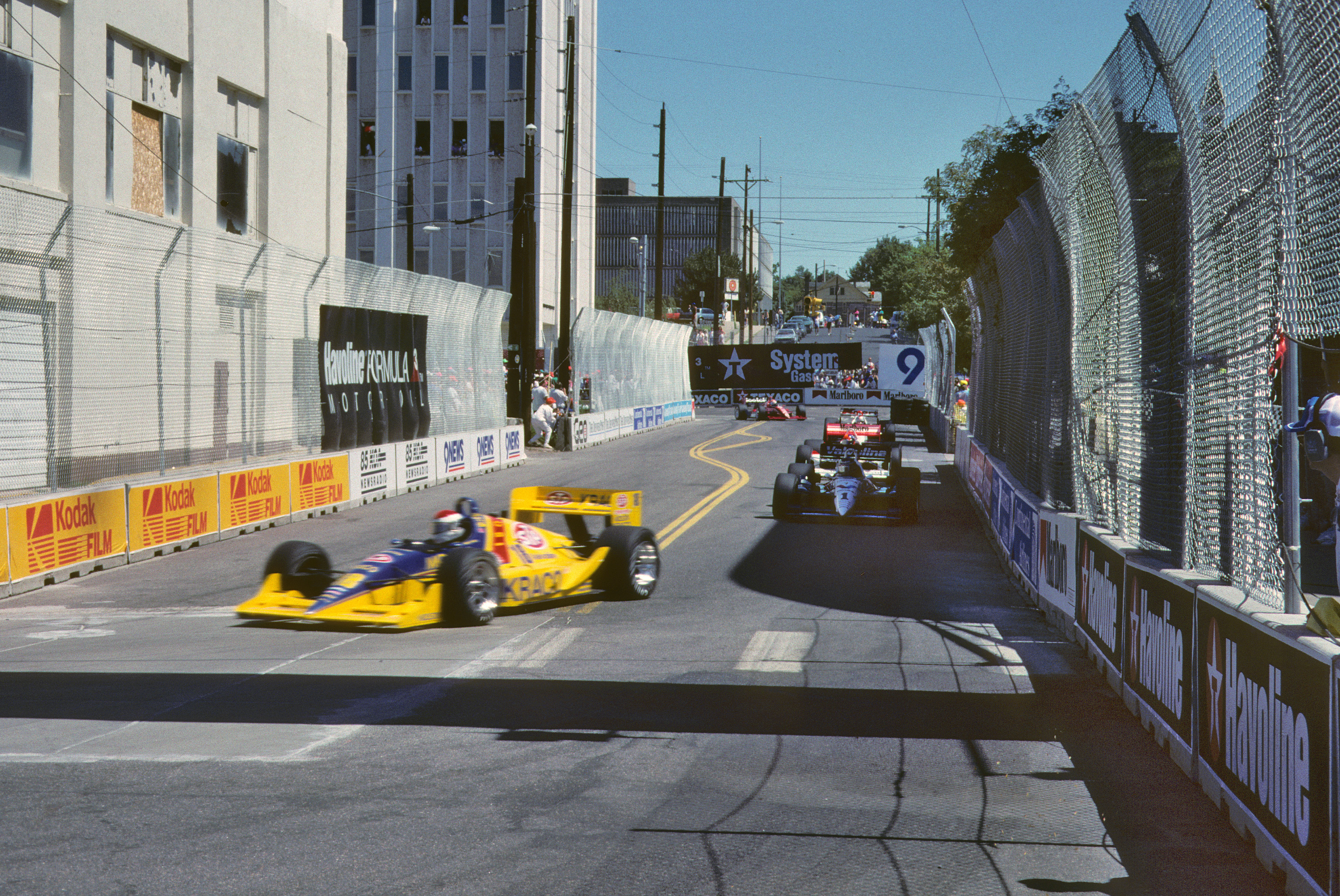
me7Winning in Formula One for the World Championship of Drivers from two extremes of skill.

In 1976, one end of the spectrum contained British driver James Hunt, a fashionably longhaired blond darling of the media and not a few females. Hunt had no concept of fear. He won races by blundering around the track at speeds unapproachable by mere racing mortals, surviving by natural talent and dumb luck.

On the other side of the spectrum was the Teutonic technocrat of the track, Austrian Nikki Lauda, who won races by figuring out the track dynamics as a quadratic equation. Nikki won by superhuman consistency around the geometrically determined shortest point between numerous lines.  One could place a toothpick lengthwise on the fast line of a corner and Lauda would put the outside of a tire on it every lap for an entire race.

The new Ron Howard film “Rush” brilliantly explores the area in between these extremes, the clash of these personalities. Possibly the greatest dual in the history of Formula 1, decided in the final minutes of the final race, by one point.

It also must be remembered that in 1976, drivers actually piloted and controlled the cars, unlike the new F1 cars that run by multiple computers manipulated by the chauffeur  once removed. As it turns out, the computers are quite capable of speeds beyond the capability of even immortals to control as the best F1 driver in the world, Aryton Senna, sadly found out in 1994 at Imola.  (“Senna”: 2010).

The human stories between these two mostly exhibit how polar human extremes relate to each other. Howard masterfully explores them and the actors flesh out their roles to perfection, especially Daniel Bruhl, whose performance is nothing short of brilliant. The cinematography is amazing, much more textured than was previously done in “Grand Prix” (James Garner: 1966) and “Le Mans” (Steve McQueen: 1971).  Unclear how Howard pulled this off with a limited budget, but he definitely gets it done.

Disclaimer:  I was the Assistant Medical Director of Championship Auto Racing Teams (Indy Cars) from 1980 through 1995, and I was present in the pits and around the track at several Formula One races here in the USA, Watkins Glen in 1980 and the Detroit street race around the Renaissance Center in ‘82.  The F1 Medical Director at that time was Professor Sidney Watkins, a neurosurgeon in London and I knew him on the track, talked to him at length about F1 racing. I also spoke several times to Nikki Lauda but James Hunt died unexpectedly of cardiac arrest before my time and I never saw him.  Burned out rather than faded away.  Somewhere Neil Young was smiling.

Nikki Lauda was a consultant for this film and blessed it.

History not mentioned:

*  Nikki crashed at Bergwerk, the the Nürburgring’s  north loop, perhaps the most dangerous corner of the most dangerous track in the world, and its left-hand kink is now referred to as the Lauda Links.

*  Clay Regazzoni was severely injured at the Grand Prix of the United States at Long Beach in 1980 and was paralyzed from the waist down, ending his F1 career.

Best quip: “James is a good driver but an immortal ****” (Clay Regazzoni)

Hunt’s will stipulated that £5,000 be set aside so that his friends could give him a proper send-off. Loved ones received invitations that read, “It is James’ wish that you get pissed.”

For my money, the Formula One circus is one of the most exciting and colorful sporting events in the world. The skill and intensity required to compete at nineteen international circuits, rain or shine is unimaginable. I was lucky and proud to have been a tiny part of it at some point in my life. The saga of Hunt and Lauda is an accurate representative sample. This is brilliant film making. Go see it and feel the rush.

A little slow in the first half but catches up quickly. I give it four and a half of five 18,000 RPM wails. (Must See)

Image086

Sons of Anarchy update, season 6, Episode 1

0

Five season, Golden Globe award winning drama about the workings of a motorcycle gang in California. Working class stiffs with incredibly tight bonds with each other as members of “the Club” and as an ancillary issue, with their women. In the words of Gemma Teller-Morrow: “You love the man, you learn to love “the Club”. Motorcycles serve not so much as the transportation but as the vehicle that explores the limits of fealty and loyalty.

Their roots are much like the original Hells Angels MC whose earliest members came back from Korea bored with civilian life and found a common bond in motorcycling. Looking for “adventure” eventually taking the form of illegal activities bringing tension relieved as intense group bonding. The Sons of Anarchy are similar, wearing “colors” (identifying leather jackets) loudly advertising their bond, scruffiness and attitude. The ultimate expression of male bonding.

They all work in an auto repair shop which hides their money making enterprise; running guns to anyone who’ll purchase them, including those they know will use them for mayhem. However, they draw moral line at drugs and abusing otherwise innocent women, endeavors they consider anathema for their town. They work with the town lawmen to keep these entities at bay, and the police look the other way as it pertains to guns.

These guys then get into incredibly complex adventures with various levels of the law and each other. They emerge as classic anti-heros in the Marlon Brando-Lee Marvin mold from “The Wild One” (1953). Alternately mean and self-serving then loving and caring for others in various capacities. Sonny Barger, the original Hell’s Angel President and Maximum Leader is a perfect role model for Clay Morrow.
Hunter Thompson described the Angels to perfection in his 1966 book “Hell’s Angels: A Strange and Terrible Saga”.

“They were a bunch of overgrown adolescents, stuck in their religious mind-set as a way of life. They defined themselves by their opposition to any and everything. The strength of their antagonism was the source of their faith, and like all holy wars, their greatest enemies and their greatest source of bloodshed was from within, battles against rival factions competing for bottom of the barrel status”

Murder and mayhem come easy for them if it’s in the best interest of “The Club”. Revenge and retribution are their stock in trade. The viewer finds him or herself liking and even grudgingly respecting them despite their shortcomings if for no other reason than they’re such an interesting side of an alternative life. The characters come alive in a hierarchy of texture and subtlety.

The creator and maestro of the Sons is Curt Sutter, who plays off-the-wall lunatic biker “Big Otto”. Shutter was completely nuts before and is now over the cliff completely in episode 1 of Season 6 but he has an uncanny ability to create. Sutter is a totally fearless writer, everything is fair game. He’s outdone himself this episode, with promises of more to come.

The boys have decided to quit their previous avocation of running guns as it turns out to be too dangerous. So their new chosen endeavor is prostitution, a much safer occupation. The cops aren’t interested and many of them are clients. The profit is high and the overhead is low.

Remember, however, these are guys will kill you and their hart rate would never break 80 if you violate one of their mores, especially a club issue. Their morality is non-linear; they get all upset over punks violating women and take them out as a matter of good taste. One has a habit of creative killing when he isn’t lavishing love on his dog. The look on his face when the boys raided an illegal dogfight is worth the entire series.

So everything seems to be moving forward in episode 1 of Season 6, were it not for an isolated shot or two of a clean cut 10 year old kid in a private school coat and tie that doesn’t fit anywhere in the plot. Except for one cryptic shot of the boy’s face morphing into Jax’s face. Even though disconnected, you get the impression this kid is going to be important somewhere along the line.

Then the kid calmly removes a full automatic submachine gun from his book bag, pockets an extra clip full of rounds, strolls into his school and kills everyone in sight. Subsequently, the connection to the boys emerges. The gun is one that the boys sold to an un-named customer when they were in the gun business.

Much more remains to be seen as the moral code meets the past.

This is just an interesting aside. You cannot get the thrust unless you watch it from Episode 1, Season 1. Not for everyone, but if you like intensely creative writing, with no limits, it’s worth a look.

I give it 4 of five black leather jackets with colors. Caution: Habit forming.